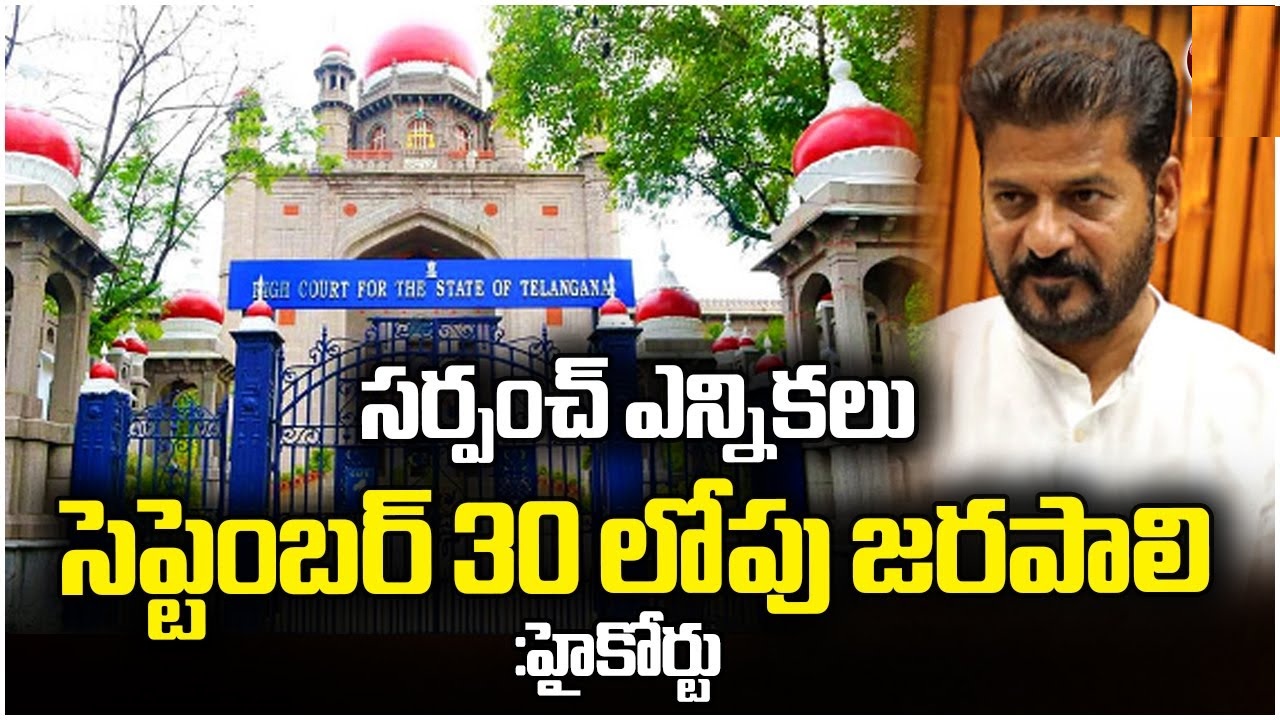
The Telangana High Court has issued a pivotal directive, ordering the state government to conduct local body elections, including sarpanch elections for gram panchayats, by September 30. This landmark ruling addresses long-standing delays in local governance elections, aiming to restore administrative functionality and democratic processes in Telangana’s rural areas. The decision has far-reaching implications for local governance, community development, and the state’s political landscape. This article delves into the details of the court’s verdict, its background, the challenges faced, and what it means for Telangana’s gram panchayats.
Understanding the High Court’s Directive on Sarpanch Elections
The Telangana High Court’s bench issued a clear and firm order, mandating the state government to hold local body elections, particularly for gram panchayats, before September 30. This directive came after a series of petitions highlighted the administrative vacuum caused by the expiration of sarpanch tenures, which ended on January 31 of the previous year. The court’s ruling is a response to the state government’s and the State Election Commission’s delays in conducting these elections, which have disrupted local governance and development activities.
Key Points of the High Court’s Ruling
- Deadline for Elections: The court has set September 30 as the final deadline for conducting sarpanch and other local body elections.
- State Government’s Request: The Telangana government sought a one-month extension to prepare for the elections.
- State Election Commission’s Request: The commission requested a two-month timeline to organize the electoral process.
- Court’s Final Decision: Despite these requests, the High Court firmly upheld the September 30 deadline, emphasizing the urgency of restoring local governance.
This ruling underscores the judiciary’s role in ensuring timely democratic processes and addressing administrative lapses in Telangana’s rural governance.
Background: Why Were Sarpanch Elections Delayed?
The delay in conducting sarpanch elections stems from a combination of administrative, logistical, and procedural challenges. The tenure of elected sarpanchs across Telangana’s gram panchayats expired on January 31 of the previous year, leaving many villages without elected representatives. This created significant hurdles in local administration, as sarpanchs play a critical role in implementing development programs, managing funds, and addressing community needs.
Reasons for the Delay
- Administrative Challenges: The state government cited ongoing caste-based surveys and other administrative tasks as reasons for the delay in election preparations.
- Logistical Constraints: Organizing elections for thousands of gram panchayats requires significant planning, including voter list updates, polling station arrangements, and security measures.
- Petitions by Affected Parties: Six petitioners from various districts filed cases in the High Court, highlighting the governance issues caused by the absence of elected sarpanchs.
- State Election Commission’s Preparedness: The commission argued that it needed 60 days to complete the necessary arrangements, including voter verification and election logistics.
These delays led to a governance gap, with many gram panchayats struggling to function effectively without elected leaders. The High Court’s intervention aims to address this crisis and restore democratic processes at the grassroots level.
The Role of Sarpanchs in Telangana’s Gram Panchayats
Sarpanchs are the elected heads of gram panchayats, the smallest unit of local governance in India. They play a pivotal role in rural development, acting as the bridge between the community and the state government. Their responsibilities include:
- Implementing Development Schemes: Sarpanchs oversee the execution of government schemes, such as rural housing, sanitation, and infrastructure projects.
- Managing Finances: They handle the allocation and utilization of funds for local development activities.
- Addressing Community Needs: Sarpanchs resolve local disputes, manage public resources, and advocate for the community’s needs.
- Ensuring Accountability: As elected representatives, they ensure transparency and accountability in local governance.
The absence of sarpanchs has led to significant disruptions, with many villages facing delays in development projects and administrative inefficiencies. The High Court’s directive seeks to rectify this by ensuring the timely election of new sarpanchs.
The High Court’s Scrutiny of the State Government
During the hearings, the Telangana High Court questioned the state government’s inaction in conducting sarpanch elections. The bench emphasized the importance of timely elections to maintain the functionality of gram panchayats. The court also raised concerns about the government’s proposal to reappoint outgoing sarpanchs as a temporary measure, urging instead for fresh elections to uphold democratic principles.
Key Questions Posed by the Court
- Why has the state government failed to conduct sarpanch elections despite the expiration of tenures?
- What measures are in place to ensure elections are held promptly?
- How will the government address the administrative challenges faced by gram panchayats in the absence of elected sarpanchs?
The court’s scrutiny reflects its commitment to ensuring that local governance remains robust and responsive to the needs of rural communities.
The State Government’s Response
In response to the court’s queries, the state government, represented by the Additional Advocate General, presented its case. The government acknowledged the delays but attributed them to logistical and administrative challenges, including the ongoing caste survey. It requested a 30-day period to prepare for the elections, citing the need for comprehensive planning to ensure a smooth electoral process.
Government’s Arguments
- Caste Survey: The government highlighted that it was engaged in a caste-based survey, which delayed election preparations.
- Logistical Needs: Organizing elections across thousands of gram panchayats requires significant resources, including personnel, voter lists, and polling infrastructure.
- Commitment to Compliance: The government assured the court that it would expedite preparations to meet the September 30 deadline.
Despite these arguments, the High Court rejected the request for an extension beyond September 30, emphasizing the urgency of restoring local governance.
The State Election Commission’s Role
The State Election Commission also presented its perspective, requesting a 60-day timeline to organize the elections. The commission highlighted the complexities involved in conducting elections across Telangana’s gram panchayats, including:
- Voter List Verification: Ensuring accurate and updated voter lists to prevent discrepancies.
- Polling Station Setup: Arranging polling stations and ensuring accessibility for voters.
- Security Arrangements: Coordinating with law enforcement to maintain peace and order during the election process.
The commission assured the court that it would work closely with the state government to meet the deadline, intensifying efforts to complete the necessary preparations.
Implications of the High Court’s Ruling
The High Court’s directive has significant implications for Telangana’s rural governance and political landscape. By setting a firm deadline of September 30, the court has ensured that the state government and the State Election Commission prioritize the restoration of local democracy. The ruling addresses several critical issues:
1. Restoring Local Governance
The timely conduct of sarpanch elections will restore elected representation in gram panchayats, enabling effective administration and implementation of development programs. This will address the governance vacuum that has persisted since the expiration of sarpanch tenures.
2. Empowering Rural Communities
Sarpanchs serve as the voice of rural communities, advocating for their needs and ensuring access to government schemes. The elections will empower communities to elect leaders who can address local challenges and drive development.
3. Strengthening Democratic Processes
The High Court’s ruling reinforces the importance of timely elections in upholding democratic principles. It sends a strong message to the state government about the need for accountability and adherence to constitutional mandates.
4. Addressing Administrative Delays
The directive puts pressure on the state government and the election commission to streamline their processes and overcome logistical challenges. It sets a precedent for addressing delays in other local body elections across India.
Challenges in Conducting Sarpanch Elections by September 30
While the High Court’s directive is a step in the right direction, conducting elections by September 30 poses several challenges for the state government and the election commission. These include:
1. Time Constraints
With less than a month to prepare, the government and the commission face significant pressure to complete voter list updates, polling station arrangements, and other logistical tasks.
2. Security and Law Enforcement
Ensuring peaceful and fair elections requires robust security arrangements, particularly in areas with a history of electoral disputes or violence.
3. Voter Awareness
Educating voters about the election process and encouraging participation within a short timeframe is a critical challenge. The commission must launch awareness campaigns to ensure high voter turnout.
4. Coordination Between Agencies
The state government and the election commission must work in tandem to ensure seamless coordination, from voter verification to result announcement.
To overcome these challenges, the government has already begun intensifying preparations, including mobilizing resources and coordinating with local authorities.
The Path Forward: Preparing for Sarpanch Elections
To meet the September 30 deadline, the Telangana government and the State Election Commission are taking several steps to ensure a smooth electoral process. These include:
- Accelerating Voter List Updates: The commission is working to verify and update voter lists to ensure accuracy and inclusivity.
- Setting Up Polling Stations: Arrangements are underway to establish polling stations across rural areas, ensuring accessibility for all voters.
- Enhancing Security Measures: The government is coordinating with law enforcement agencies to maintain peace and order during the elections.
- Launching Awareness Campaigns: Efforts are being made to inform voters about the election schedule and the importance of participation.
These measures aim to ensure that the elections are conducted transparently, fairly, and efficiently, in line with the High Court’s directive.
The Broader Context: Local Body Elections in India
The Telangana High Court’s ruling is part of a broader effort to strengthen local body elections across India. Gram panchayats, municipal corporations, and other local bodies form the backbone of India’s decentralized governance system, as enshrined in the 73rd and 74th Constitutional Amendments. Timely elections are critical to ensuring that these institutions function effectively and deliver on their mandates.
Challenges in Local Body Elections Nationwide
- Delays in Election Schedules: Many states face delays in conducting local body elections due to administrative and political reasons.
- Funding Issues: Local bodies often face financial constraints, which can delay election preparations.
- Political Interference: Political considerations sometimes lead to delays in announcing election schedules.
- Judicial Interventions: Courts across India have frequently intervened to mandate timely elections, as seen in Telangana’s case.
The Telangana High Court’s ruling sets an important precedent for other states, highlighting the judiciary’s role in upholding democratic processes at the grassroots level.
What This Means for Telangana’s Rural Communities
The restoration of sarpanch elections will have a transformative impact on Telangana’s rural communities. Elected sarpanchs will be able to:
- Resume Development Projects: Address delays in infrastructure, sanitation, and housing projects.
- Improve Access to Funds: Ensure timely allocation and utilization of government funds for local development.
- Enhance Community Engagement: Foster greater participation in decision-making processes at the village level.
- Resolve Local Issues: Tackle issues such as water supply, road maintenance, and public health with greater efficiency.
This will empower rural communities to take charge of their development and ensure that their voices are heard in the governance process.
Conclusion: A Step Toward Stronger Local Governance
The Telangana High Court’s directive to conduct sarpanch elections by September 30 is a significant step toward strengthening local governance in the state. By addressing the delays that have plagued gram panchayat elections, the ruling ensures that rural communities regain their elected representatives and the administrative support they need. The state government and the election commission now face the challenge of meeting this deadline, but with concerted efforts, they can restore democratic processes and empower Telangana’s rural population.
As the state prepares for these elections, the focus must remain on transparency, fairness, and inclusivity. The successful conduct of sarpanch elections will not only address the immediate governance gap but also set a positive example for local body elections across India. For rural Telangana, this is a moment of renewal—a chance to rebuild trust in local governance and drive meaningful development at the grassroots level.