In today’s fast-evolving financial and industrial landscape, India stands at a critical juncture. From the Reserve Bank of India’s (RBI) monetary policy decisions to groundbreaking deals in the aerospace sector and transformative corporate strategies in the automotive and financial industries, recent developments signal both opportunities and challenges. This comprehensive article explores the latest updates, including the RBI’s rate cut outlook, Hindustan Aeronautics Limited’s (HAL) collaboration with ISRO, Tata Motors’ Annual General Meeting (AGM) insights, and the much-anticipated IPOs of HDB Financial Services and Tata Capital. Designed to inform investors, business enthusiasts, and market watchers, this guide offers actionable insights into India’s dynamic economic environment.
Understanding RBI’s Monetary Policy: Rate Cuts and Future Outlook
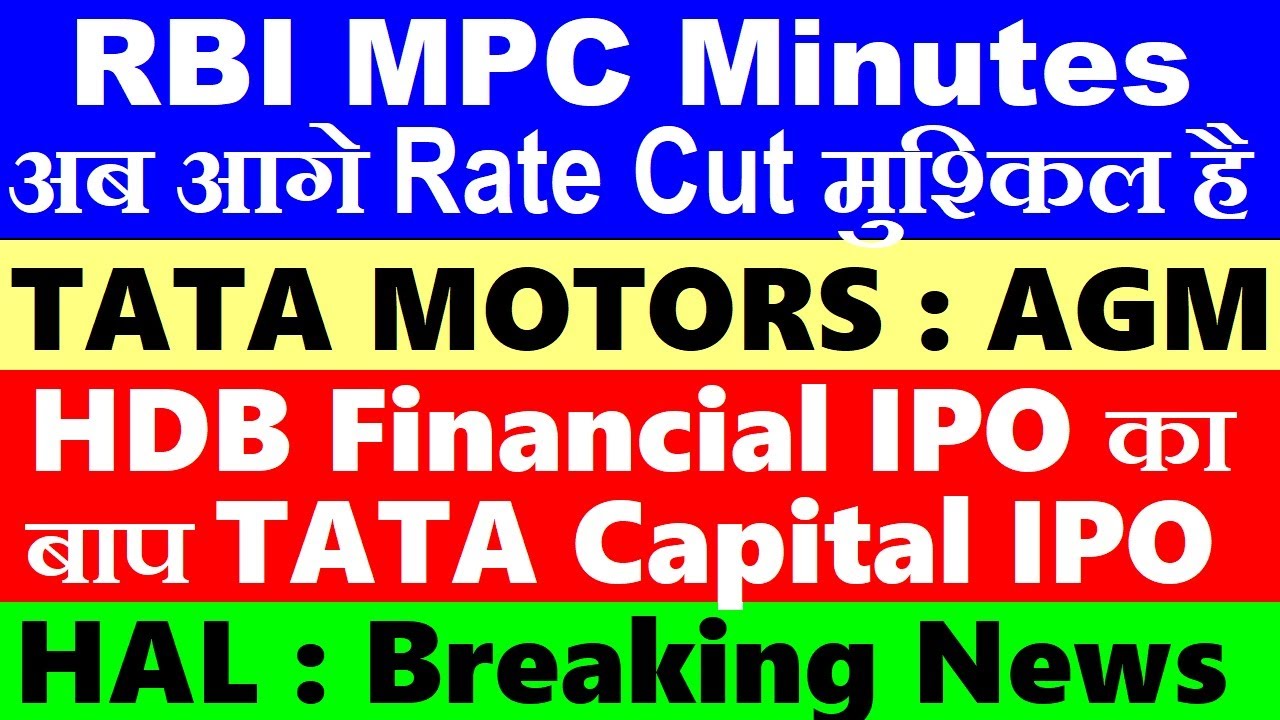
The RBI’s Monetary Policy Committee (MPC) plays a pivotal role in shaping India’s economic trajectory by adjusting key interest rates, such as the repo rate. In its latest meeting, the MPC made headlines with a 50 basis point rate cut, bringing the repo rate to a level aimed at stimulating growth. However, the minutes of this meeting, released on June 20, 2025, reveal critical insights into the committee’s thinking and the challenges ahead.
What Are the Minutes of the MPC Meeting?
The minutes of the MPC meeting provide a detailed record of the discussions and decisions made by the committee. These documents offer transparency into the rationale behind monetary policy actions, such as rate cuts or hikes, and outline the members’ perspectives on economic conditions. Globally, central banks like the U.S. Federal Reserve and the RBI follow this practice to ensure stakeholders understand the factors driving policy decisions.
In the latest minutes, the MPC highlighted its decision to implement a 50 basis point rate cut to support economic growth amid global uncertainties. The unanimous vote for the rate cut, led by RBI Governor Sanjay Malhotra, underscores the committee’s commitment to bolstering liquidity in the market. However, one member advocated for a more conservative 25 basis point cut, citing global economic volatility and the need for caution.
Why Does the Repo Rate Matter?
The repo rate, the interest rate at which the RBI lends to commercial banks, serves as a cornerstone of monetary policy. A lower repo rate reduces borrowing costs for banks, enabling them to offer cheaper loans to businesses and consumers. This, in turn, stimulates investment, consumption, and economic growth. Conversely, a higher repo rate increases borrowing costs, curbing inflation but potentially slowing growth.
The recent 50 basis point cut aims to inject liquidity into the market, encouraging borrowing and spending. For businesses, this translates to lower financing costs, while consumers benefit from reduced interest rates on loans, such as home and auto financing. However, the MPC’s minutes caution that the scope for further rate cuts is limited due to fragile global conditions, including elevated crude oil prices and geopolitical tensions.
Limited Space for Future Rate Cuts: What It Means for Investors
The MPC’s outlook suggests that future rate cuts may be constrained unless global conditions improve significantly. With crude oil prices hovering between $70–$80 per barrel and global economic uncertainties persisting, the RBI remains cautious. The next MPC meeting, scheduled for August 4–6, 2025, will provide further clarity, with Governor Malhotra’s announcement expected on August 6 at 10:00 AM IST.
For investors, this signals a need to temper expectations for aggressive monetary easing. Sectors sensitive to interest rates, such as banking, real estate, and consumer durables, may face limited upside if rate cuts stall. However, the current liquidity boost from the 50 basis point cut offers short-term opportunities for growth-oriented investments.
HAL’s Game-Changing ISRO Deal: A Leap for India’s Aerospace Industry
Hindustan Aeronautics Limited (HAL), a leading public-sector defense and aerospace company, has secured a landmark deal with the Indian Space Research Organisation (ISRO). This collaboration positions HAL as a key player in India’s space ambitions, further diversifying its portfolio beyond defense manufacturing.
HAL Wins ₹511 Crore Contract for Small Satellite Launch Vehicles
HAL has clinched a ₹511 crore contract to build Small Satellite Launch Vehicles (SSLVs) for ISRO, following a successful technology transfer. This deal marks HAL as the first Indian company to develop a full rocket system, a significant milestone in the country’s aerospace journey. The SSLV, designed to launch small satellites into low Earth orbit, aligns with India’s growing demand for cost-effective space solutions.
This partnership not only strengthens HAL’s revenue stream but also enhances its technological capabilities. By leveraging ISRO’s expertise, HAL is poised to play a pivotal role in India’s space commercialization efforts, catering to both domestic and international clients.
Why This Deal Matters for HAL Investors
For investors, HAL’s ISRO deal signals robust growth potential. The company’s diversification into space technology complements its established defense portfolio, which includes fighter jets, helicopters, and missile systems. The ₹511 crore contract, while modest compared to HAL’s overall revenue, opens the door to future high-value space contracts as India’s space sector expands.
Moreover, HAL’s status as a public-sector enterprise ensures government backing, reducing execution risks. With India’s space market projected to reach $13 billion by 2030, HAL’s early mover advantage positions it as a top pick for long-term investors seeking exposure to aerospace and defense.
Tata Motors AGM: Navigating EV Growth and Global Challenges
Tata Motors, a leading player in India’s automotive industry, recently held its Annual General Meeting (AGM), where Chairman N. Chandrasekaran outlined the company’s strategic priorities. From expanding its electric vehicle (EV) and SUV portfolios to addressing global trade challenges, Tata Motors is charting a bold path forward.
Tata Motors’ Focus on EVs and SUVs
Tata Motors remains optimistic about its EV and SUV segments, which have driven significant growth in recent years. The company plans to expand its EV portfolio with new launches, capitalizing on India’s push for sustainable mobility. Government incentives, such as subsidies under the Faster Adoption and Manufacturing of Electric Vehicles (FAME) scheme, further support Tata Motors’ EV ambitions.
In the SUV segment, Tata Motors aims to strengthen its market leadership with models like the Harrier, Safari, and Nexon. These vehicles cater to India’s growing demand for premium, feature-rich SUVs, positioning Tata Motors to capture a larger share of the passenger vehicle market.
JLR Faces $2 Billion Tariff Setback
Despite its domestic success, Tata Motors’ luxury subsidiary, Jaguar Land Rover (JLR), faces significant challenges due to proposed U.S. trade tariffs under President Donald Trump’s administration. Chairman Chandrasekaran warned that these tariffs could result in a $2 billion financial hit, threatening JLR’s profitability.
To mitigate this, Tata Motors is exploring strategies such as cost optimization, supply chain diversification, and potential price adjustments. While the tariff issue poses a near-term risk, JLR’s strong brand equity and global demand for luxury vehicles provide a buffer against these headwinds.
Rare Earth Magnet Sourcing: A Geopolitical Challenge
Tata Motors is also addressing its reliance on rare earth magnets, critical components for EV motors, which are predominantly sourced from China. Geopolitical tensions have highlighted the need for alternative supply chains. By investing in domestic sourcing and partnerships with non-Chinese suppliers, Tata Motors aims to reduce risks and ensure long-term sustainability in its EV production.
Investment Outlook for Tata Motors
For investors, Tata Motors presents a balanced opportunity. The company’s EV and SUV growth strategies align with market trends, offering upside potential. However, the JLR tariff risk and rare earth dependency warrant caution. Investors with a high risk tolerance may find Tata Motors an attractive bet, given its leadership in India’s EV transition and diversified product lineup.
HDB Financial Services and Tata Capital IPOs: A New Dawn for NBFCs
The non-banking financial company (NBFC) sector in India is poised for a transformation, with two blockbuster IPOs on the horizon—HDB Financial Services and Tata Capital. These public offerings promise to reshape the industry, driven by regulatory mandates and investor enthusiasm for high-growth financial stocks.
HDB Financial Services IPO: A ₹1,500 Crore Opportunity
HDB Financial Services, a subsidiary of HDFC Bank, is gearing up for an IPO worth approximately ₹1,500 crore. As a leading NBFC, HDB offers a diversified loan book, including personal loans, business loans, and consumer financing. Its strong parentage and robust financials metrics make it a compelling IPO candidate.
The IPO aligns with RBI’s directive for upper-layer NBFCs to list publicly within three years, ensuring transparency and market discipline. For investors, HDB’s IPO offers exposure to a well-managed NBFC with a proven track record in India’s underserved credit market.
Tata Capital’s Mega IPO: ₹17,200 Crore in Focus
Tata Capital, another upper-layer NBFC, is reportedly preparing for a massive ₹17,200 crore IPO, based on SEBI’s approval of its confidential Draft Red Herring Prospectus (DRHP). While not yet finalized, the IPO is expected to be one of the largest in India’s financial history, reflecting Tata Capital’s scale and market confidence in the Tata brand.
Like HDB, Tata Capital’s listing is driven by RBI’s mandate for upper-layer NBFCs. The company’s diversified portfolio, spanning retail loans, SME financing, and wealth management, positions it as a market leader. However, investors should note that that Tata Capital is exploring options to reduce its debt, which could delay or alter its listing plans if it exits the upper-layer NBFC category.
Why NBFC IPOs Are Attracting Attention
The NBFC sector’s listing wave is fueled by RBI’s push for transparency and India’s growing demand for credit. Upper-layer NBFCs like HDB and Tata Capital, Bajaj Finance, and Bajaj Housing Finance have demonstrated strong market performance, making IPOs in this space highly anticipated.
For investors, these IPOs offer a chance to invest in India’s financial growth story. However, careful valuation analysis is essential, as high IPO valuations can lead to post-listing volatility. Diversifying across NBFC stocks can help balance risk and reward.
Key Takeaways for Investors and Market Watchers
India’s financial and industrial sectors are undergoing a dynamic phase of growth and transformation. The RBI’s cautious approach to rate cuts signals a balanced strategy to support growth amid global uncertainties. HAL’s ISRO deal highlights India’s aerospace potential, while Tata Motors navigates EV expansion and global challenges. Meanwhile, the HDB and Tata Capital IPOs promise to unlock value in the NBFC sector.
Actionable Insights:
- RBI Rate Cuts: Focus on interest rate-sensitive stocks like banks and real estate, but monitor global crude prices and the August MPC meeting for updates.
- HAL: A strong buy for long-term investors seeking exposure to defense and aerospace, given its ISRO deal and government support.
- Tata Motors: A high-risk opportunity with EV and SUV growth potential, but JLR’s tariff risks require careful monitoring.
- NBFC IPOs: Prepare for HDB and Tata Capital IPOs by analyzing valuations and diversifying across NBFC holdings.
By staying informed and leveraging these developments, investors can position themselves to capitalize on India’s economic opportunities. Whether you’re a seasoned investor or a business enthusiast, these insights provide a roadmap to navigate the market’s complexities.