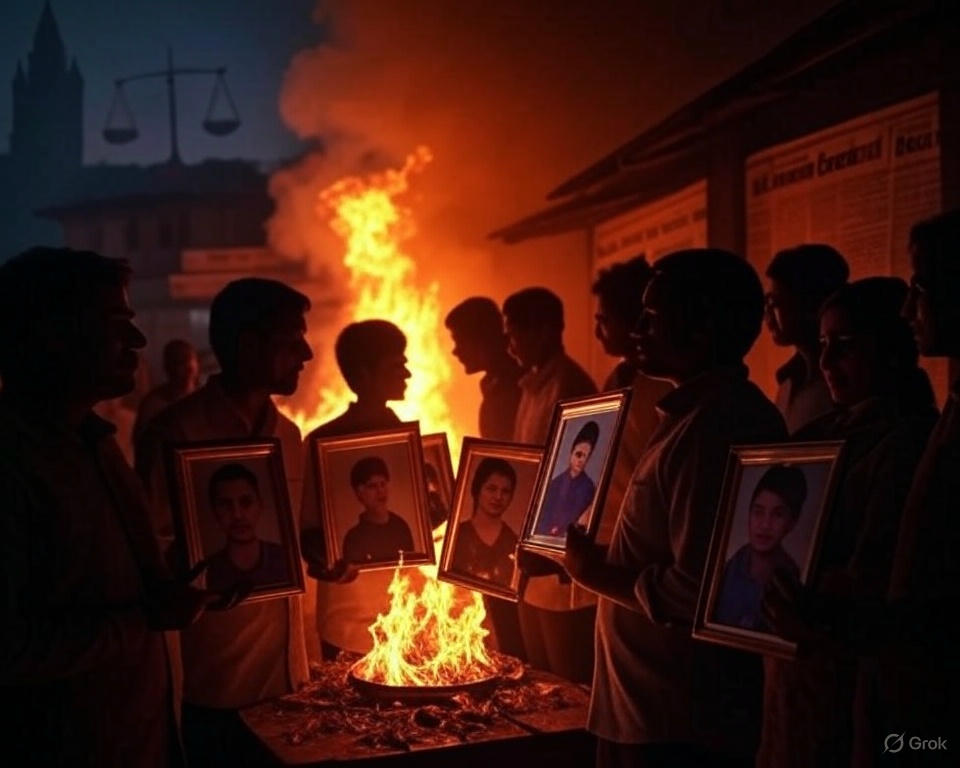
In a landmark ruling, the Bombay High Court has directed the Brihanmumbai Municipal Corporation (BMC) to compensate the families of eight young adults who perished in a devastating fire at Hotel City Kinara in Kurla, Mumbai, in 2015. Each family will receive ₹50 lakh for the tragic loss of life, primarily of students aged 18–20, who were dining on an illegally constructed mezzanine floor when the blaze erupted. The court’s decision underscores the BMC’s gross negligence as the primary cause of the tragedy, holding the civic body accountable for failing to enforce fire safety regulations. This article delves into the details of the case, the court’s rationale, and the broader implications for public safety and municipal accountability in India.
The 2015 Hotel City Kinara Fire: A Preventable Tragedy
On October 16, 2015, a catastrophic fire engulfed Hotel City Kinara, a popular eatery in Kurla, Mumbai, claiming the lives of eight young adults. Most victims were students between 18 and 20 years old, enjoying a meal on an illegally built mezzanine floor. The fire spread rapidly, exacerbated by the presence of improperly stored commercial LPG cylinders and the absence of a mandatory fire No-Objection Certificate (NOC). Investigations revealed that the mezzanine floor, an intermediate level between the main floors, lacked proper exit routes, trapping the victims in a deadly inferno.
The tragedy shocked Mumbai, raising critical questions about fire safety compliance and the role of civic authorities in preventing such disasters. The families of the victims, devastated by their loss, pursued justice, arguing that the BMC’s failure to act on known violations directly contributed to the fatalities.
What Is a Mezzanine Floor and Why Does It Pose Fire Risks?
A mezzanine floor is an intermediate platform constructed between a building’s main floors, often used to maximize space in commercial establishments like restaurants. While practical, mezzanine floors can pose significant fire hazards if not designed or regulated properly. Fires originating on or near a mezzanine can spread quickly to both the lower and upper levels, creating a deadly trap. Limited exit routes and poor ventilation further amplify the risks, as seen in the Hotel City Kinara fire.
In this case, the mezzanine floor was illegally constructed and used for dining without proper authorization. The presence of LPG cylinders in the loft area violated fire safety norms, and the lack of a fire NOC meant the eatery was operating without essential safety clearances. These lapses, combined with the BMC’s inaction, set the stage for the tragedy.
Bombay High Court’s Ruling: Holding BMC Accountable
The Bombay High Court’s Division Bench, comprising Justices BP Colabawalla and Firdosh P Pooniwalla, delivered a scathing judgment against the BMC, ruling that its negligence was the proximate cause of the 2015 fire. The court allowed a writ petition filed by the victims’ families, overturning an earlier Lokayukta decision that had dismissed their compensation claims.
BMC’s Failure to Enforce Fire Safety Regulations
The court highlighted multiple instances of the BMC’s failure to uphold its statutory duties under the Mumbai Municipal Corporation Act (MMC Act). Between 2012 and 2015, inspections by the BMC’s Medical Officer of Health documented serious violations at Hotel City Kinara, including:
- Use of unlicensed spaces for cooking.
- Improper storage of commercial LPG cylinders in the mezzanine area.
- Lack of a mandatory fire NOC.
- Unauthorized use of the mezzanine floor for dining.
Despite these findings, the BMC did not revoke the eatery’s license under Section 479 of the MMC Act, seize the LPG cylinders under Section 394, or prohibit the use of the hazardous mezzanine floor. A report submitted just 44 days before the fire confirmed ongoing violations, yet no corrective action followed.
The court emphasized that the BMC’s inaction was not a mere oversight but a gross breach of its obligation to ensure public safety. It stated, “Had the BMC promptly discharged its statutory duties by addressing the fire safety violations, the fire would definitely not have occurred.”
Applying the “But For” Test
The court applied the “but for” test to establish causation, concluding that the fire and subsequent loss of life would not have occurred if the BMC had enforced compliance. By allowing Hotel City Kinara to operate without a fire NOC and failing to address the illegal mezzanine floor, the BMC created conditions that directly led to the tragedy. The court’s application of this legal principle underscores the civic body’s liability for the preventable loss of eight young lives.
Compensation for Fundamental Rights Violations
The families of the victims argued that the BMC’s negligence violated their loved ones’ right to life under Article 21 of the Indian Constitution. Citing Supreme Court precedents on public authority liability, they sought exemplary damages to address the profound loss and hold the BMC accountable.
The BMC, in its defense, argued that the restaurant operators bore sole responsibility for the fire. It also claimed that compensation disputes should be resolved through civil suits and cited limited manpower as a constraint on its enforcement capabilities. The court rejected these arguments, stating, “This was one of the most egregious breaches committed not only by the owner and operator of Kinara but also by the BMC by issuing an eating house license without obtaining any fire NOC.”
The court awarded ₹50 lakh per victim, considering their young age, educational background, future potential, and inflation since 2015. It clarified that compensation in writ jurisdiction aims to vindicate fundamental rights, not merely to address pecuniary loss. The BMC has 12 weeks to comply with the order, failing which it will incur an additional 9% interest. The court also noted that the BMC could recover the sum from other responsible parties, such as the restaurant operators, in accordance with the law.
The Broader Implications of the Ruling
The Bombay High Court’s decision has far-reaching implications for municipal governance and public safety in India. It sets a precedent for holding civic bodies accountable for negligence in enforcing safety regulations, particularly in high-risk commercial spaces like restaurants and hotels.
Strengthening Fire Safety Compliance
The ruling underscores the need for stricter enforcement of fire safety norms. Municipal corporations across India must ensure that establishments comply with fire NOCs, proper LPG storage, and structural safety standards. Regular inspections, timely action on violations, and license revocations for non-compliance are critical to preventing similar tragedies.
Accountability of Public Authorities
The court’s emphasis on the BMC’s statutory duties highlights the broader responsibility of public authorities to protect citizens’ lives. Negligence by civic bodies can have catastrophic consequences, and this ruling serves as a reminder that such lapses will not go unpunished. It also reinforces the judiciary’s role in upholding the right