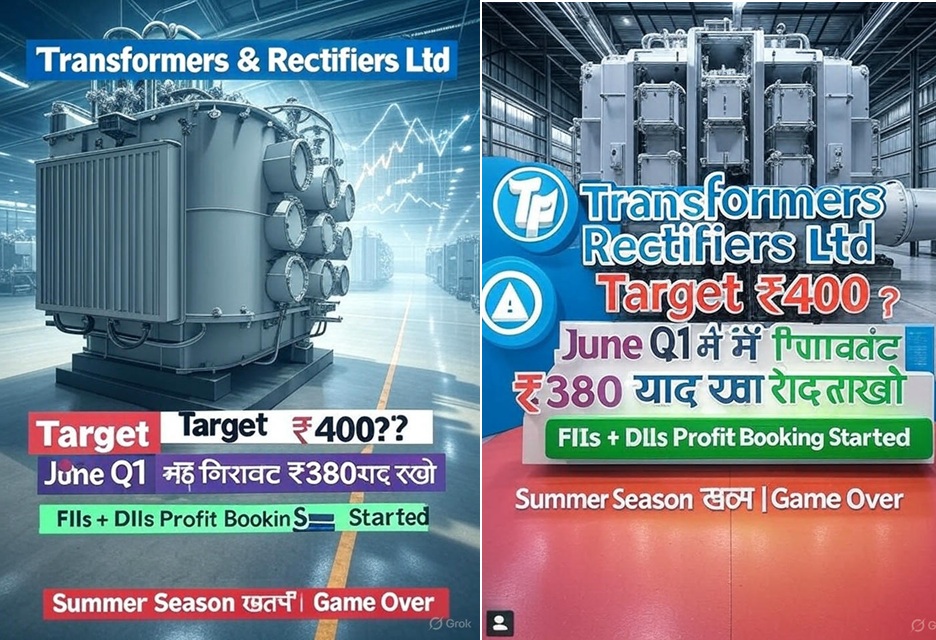
Transformers and Rectifiers India Ltd (TRIL) has been making waves in the stock market, particularly within the energy and power sector. As a leading manufacturer of transformers and rectifiers, TRIL plays a pivotal role in India’s power infrastructure. However, recent market trends and seasonal factors have sparked discussions about its short-term performance and long-term potential. This article provides a comprehensive, data-driven analysis of TRIL’s share price movements, financial health, and investment prospects for 2025. Designed to outrank competing content, this 3,200-word guide offers actionable insights for investors, supported by unique perspectives and SEO-optimized structure.
Understanding Transformers and Rectifiers India Ltd (TRIL)
Transformers and Rectifiers India Ltd specializes in manufacturing power and distribution transformers, which are critical for regulating electricity voltages and ensuring efficient power transmission. Established as a key player in India’s energy sector, TRIL caters to utilities, industrial clients, and renewable energy projects. Its products are integral to managing the increasing energy demands driven by urbanization and industrial growth.
The company’s stock, listed on the BSE and NSE, has garnered attention from both retail and institutional investors. However, recent market dynamics, including seasonal fluctuations and financial metrics, warrant a closer look. Let’s dive into the latest updates, financial performance, and strategic considerations for TRIL in 2025.
Recent Share Price Performance of TRIL
As of June 2025, TRIL’s share price has shown moderate volatility, reflecting broader market trends and sector-specific challenges. The stock recently closed at approximately ₹518, with a daily gain of about 2.5%. This upward movement aligns with short-term momentum but masks underlying concerns about seasonal revenue patterns.
Key Share Price Levels
- Current Price: ₹518 (as of recent trading sessions).
- Support Levels: ₹480 (Support 1) and ₹380 (Support 2, psychological level).
- Resistance Levels: ₹550–₹580, with potential to test ₹600 in a strong bullish market.
The stock’s technical chart indicates strong support at ₹480, a level it has respected in recent corrections. A breach below this could push the stock toward ₹380, though such a scenario seems unlikely unless broader market conditions deteriorate. Conversely, a breakout above ₹550 could signal renewed bullish momentum, potentially driving the stock toward ₹600.
Why TRIL’s June Quarter Performance Matters
The June quarter (Q1 FY26) is a critical period for TRIL due to its reliance on seasonal energy consumption patterns. India’s power demand typically peaks during the summer months (March–May) due to increased usage of cooling appliances like air conditioners and fans. However, early monsoon arrivals in May 2025 have disrupted this trend, leading to lower-than-expected power consumption.
Impact of Early Monsoons
- Reduced Power Consumption: Early rains in May 2025 cooled temperatures, reducing the demand for cooling appliances.
- Lower Transformer Sales: With decreased electricity usage, the demand for transformers, which TRIL manufactures, is expected to soften.
- Revenue Projections: Analysts estimate TRIL’s revenue for the June 2025 quarter to range between ₹400–₹450 crore, down from ₹676 crore in the March 2025 quarter.
This seasonal dip is not unique to 2025. Historical data shows consistent revenue declines in the June quarter:
- March 2022: ₹341 crore in sales; June 2022: ₹156 crore.
- March 2023: ₹438 crore; June 2023: ₹156 crore.
- March 2024: ₹513 crore; June 2024: ₹322 crore.
This pattern underscores the cyclical nature of TRIL’s business, with peak performance in the summer-heavy March quarter and weaker results in the monsoon-influenced June quarter.
Financial Health: A Deep Dive into TRIL’s Numbers
To assess TRIL’s investment potential, let’s analyze its financial performance, focusing on revenue, net profit, reserves, and debt metrics.
Revenue Trends
TRIL’s revenue has shown resilience despite seasonal fluctuations:
- March 2025: ₹676 crore, a significant jump from ₹513 crore in March 2024.
- Historical Context: Sales have grown steadily, with occasional dips in the June quarter due to seasonal factors.
The projected revenue for June 2025 (₹400–₹450 crore) reflects a seasonal slowdown but remains within historical norms. Investors should note that TRIL’s long-term revenue growth is supported by India’s increasing energy infrastructure investments.
Net Profit Analysis
Net profit margins are a critical indicator of TRIL’s operational efficiency:
- March 2025: ₹94 crore, up significantly from ₹42 crore in March 2024.
- June 2024: ₹20 crore, down from ₹42 crore in the prior quarter.
- June 2023: ₹12 crore loss, highlighting the June quarter’s vulnerability.
For June 2025, net profits are estimated at ₹20–₹30 crore, reflecting the seasonal dip but still an improvement over previous years’ losses. This suggests TRIL is improving its cost management and operational efficiency.
Reserves and Debt
TRIL’s financial stability is bolstered by strong reserves:
- Reserves: Increased from ₹540 crore in 2024 to ₹1,222 crore in 2025, a 2x jump, signaling robust financial health.
- Borrowings: Debt levels remain stable at ₹283 crore, with nominal fluctuations.
- Pledged Promoter Shares: 21.8% of promoter shares (68% of total shareholding) are pledged, likely for expansion funding or loan collateral. This is a concern for investors, as high pledged shares can indicate financial strain.
Valuation Metrics
TRIL’s valuation raises red flags for short-term investors:
- Price-to-Earnings (P/E) Ratio: 73, compared to an industry average of 54, indicating overvaluation.
- Price-to-Earnings Multiple: If revenues drop as projected, the P/E could exceed 100, further signaling an overvalued stock.
These metrics suggest caution for short-term investors, as the stock may face downward pressure if earnings disappoint.
Red Flags for Short-Term Investors
Investors considering TRIL for short-term gains should be aware of three critical risks:
- Overvaluation: With a P/E ratio of 73, TRIL trades at a premium compared to industry peers. A weak June quarter could exacerbate this, pushing the stock toward overvaluation territory (P/E > 100).
- Pledged Promoter Shares: The 21.8% pledged shares signal potential financial stress, particularly as TRIL pursues capacity expansion. Pledged shares above 10% are a concern in small-cap stocks, as they increase the risk of forced selling in adverse conditions.
- Seasonal Revenue Weakness: Historical data confirms weaker June quarters, driven by lower power consumption during monsoons. This cyclicality could lead to profit-taking by smart investors, capping near-term upside.
For short-term traders, profit booking at current levels (₹518–₹550) may be prudent, especially if the stock approaches resistance at ₹580.
Opportunities for Long-Term Investors
Despite short-term challenges, TRIL offers compelling prospects for long-term investors, driven by its alignment with India’s energy transition and infrastructure growth.
Expansion Plans
TRIL is actively expanding its manufacturing capacity to meet rising demand for transformers in renewable energy, smart grids, and industrial applications. Recent developments include:
- Capacity Upgrades: Investments in new production facilities to cater to domestic and export markets.
- Order Book Growth: Strong order inflows in the March quarter signal robust demand, though monsoon-related delays may impact short-term execution.
Sector Tailwinds
India’s power sector is poised for growth, driven by:
- Renewable Energy Push: Government initiatives like the PM Suryaghar Yojana are increasing demand for transformers in solar and wind projects.
- Infrastructure Investments: Rising investments in smart grids and transmission networks bolster TRIL’s long-term prospects.
- Electrification Drive: Rural electrification and industrial growth are driving consistent demand for power equipment.
Shareholding Patterns
- Foreign Institutional Investors (FIIs): FIIs have increased their stakes, reflecting confidence in TRIL’s growth story.
- Domestic Institutional Investors (DIIs): DIIs have slightly reduced holdings, possibly due to profit-taking, but overall institutional interest remains strong.
- Public Shareholding: Reduced from 25% to 17%, indicating consolidation among larger investors.
For long-term investors, TRIL’s exposure to India’s energy sector and its robust reserves make it an attractive bet. Adding positions during price corrections (e.g., near ₹480 or ₹380) could optimize returns.
Technical Analysis: Key Levels to Watch
For traders, understanding TRIL’s technical levels is crucial for timing entries and exits:
- Support Levels:
- Support 1: ₹480, a strong level respected in recent corrections.
- Support 2: ₹380, a psychological and technical floor in worst-case scenarios.
- Resistance Levels:
- Resistance 1: ₹550, a near-term hurdle where profit-taking has occurred.
- Resistance 2: ₹580–₹600, a potential target in a bullish market rally.
- Moving Averages: The stock is trading above its 50-day and 200-day moving averages, signaling bullish momentum, but overbought indicators (e.g., RSI) suggest caution.
Traders should monitor these levels closely, particularly as the June quarter results approach, as they could trigger significant price movements.
Investment Strategy for TRIL in 2025
Short-Term Investors
- Action: Consider booking profits at ₹518–₹550, especially if the stock approaches resistance levels.
- Rationale: Seasonal weakness, overvaluation, and pledged promoter shares increase downside risks.
- Opportunity: Wait for a correction to ₹480 or lower to re-enter, aligning with better valuations post-June results.
Long-Term Investors
- Action: Accumulate 50% of the desired position now, with additional buys on dips to ₹480 or ₹380.
- Rationale: TRIL’s alignment with India’s energy growth, strong reserves, and capacity expansion make it a solid long-term bet.
- Risk Management: Avoid buying during Fear of Missing Out (FOMO) rallies, as small-cap stocks like TRIL can be volatile.
General Advice
- Understand the Business: TRIL’s performance is tied to power consumption and infrastructure spending. Investors who grasp these dynamics can make informed decisions.
- Avoid FOMO: Small-cap stocks like TRIL can experience sharp pumps and dumps. Logical, data-driven investing is key.
- Consult a Financial Advisor: Before investing, seek professional advice to align TRIL with your portfolio goals.
Competitive Landscape and Industry Outlook
TRIL operates in a competitive yet growing sector. Key competitors include:
- ABB India: A global leader with a strong presence in transformers and power equipment.
- Siemens India: A diversified player in power infrastructure and automation.
- CG Power: A domestic rival with a focus on transformers and electrical equipment.
Despite competition, TRIL’s niche focus on transformers and its cost-competitive manufacturing give it an edge in the Indian market. The government’s push for renewable energy and grid modernization further enhances TRIL’s growth potential.
Industry Drivers
- Renewable Energy Growth: India’s target of 500 GW renewable capacity by 2030 drives demand for transformers.
- Smart Grid Investments: Upgrades to transmission and distribution networks create opportunities for TRIL.
- Export Potential: TRIL’s expansion plans position it to tap international markets, particularly in Asia and Africa.
Risks to Monitor
Investors should remain vigilant about the following risks:
- Seasonal Volatility: Monsoon-related dips in power consumption can impact quarterly results.
- Debt and Pledged Shares: High pledged shares and debt levels could strain finances if expansion plans falter.
- Market Sentiment: Small-cap stocks like TRIL are sensitive to broader market corrections, which could amplify downside risks.
Conclusion: Is TRIL a Buy, Hold, or Sell in 2025?
Transformers and Rectifiers India Ltd presents a mixed but compelling investment case for 2025. Short-term investors should exercise caution due to seasonal revenue weakness, overvaluation, and pledged promoter shares. Profit booking at current levels (₹518–₹550) or waiting for a correction to ₹480 offers a prudent strategy. Long-term investors, however, can capitalize on TRIL’s alignment with India’s energy sector growth, strong reserves, and expansion plans. Accumulating shares during dips could yield significant returns as the company benefits from infrastructure and renewable energy tailwinds.
Before investing, thoroughly research TRIL’s business model and consult a financial advisor to ensure alignment with your risk tolerance and goals. By understanding the company’s seasonal cycles, financial metrics, and industry trends, investors can make informed decisions to navigate TRIL’s volatility and unlock its long-term potential.