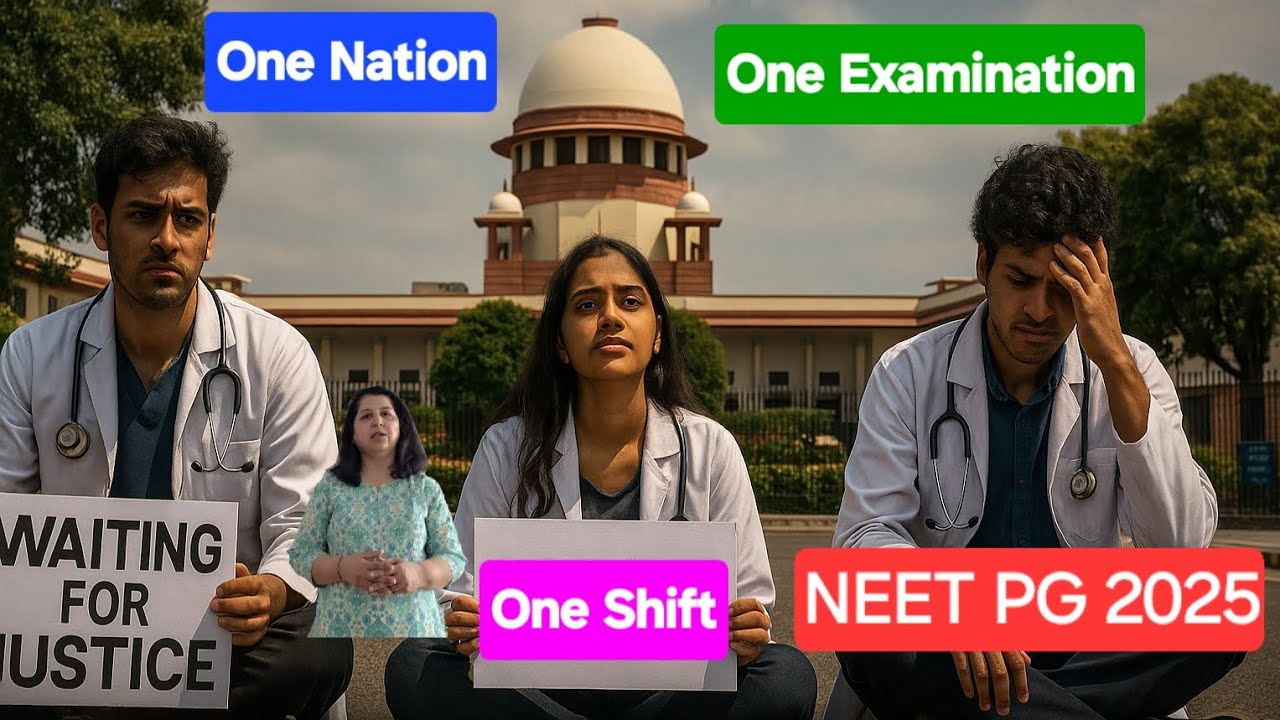
On May 30, 2025, the Supreme Court of India issued a landmark ruling, directing the National Board of Examinations (NBE) to conduct the NEET-PG 2025 examination in a single shift. This decision overturns the NBE’s earlier plan to hold the exam in two shifts, citing concerns over arbitrariness and the inability to ensure a level playing field for all candidates. With the exam scheduled for June 15, 2025, the Court emphasized the importance of transparency and fairness, ordering the NBE to secure sufficient examination centers to accommodate a single-shift format. This article explores the Supreme Court’s ruling, its implications for NEET-PG aspirants, and the broader context of the decision, providing a comprehensive guide for candidates, educators, and policymakers.
Why the Supreme Court Intervened: Addressing Arbitrariness in NEET-PG 2025
The Supreme Court’s decision stems from a batch of petitions challenging the NBE’s two-shift policy for NEET-PG 2025. The petitioners argued that conducting the exam in two shifts introduces arbitrariness, as question papers across shifts inevitably vary in difficulty. This variation undermines merit-based evaluation, prioritizing luck over skill and violating candidates’ rights to equality under Article 14 of the Indian Constitution.
The Issue with Two-Shift Exams
The Court highlighted that holding NEET-PG in two shifts creates disparities in question paper difficulty, which cannot be fully addressed through normalization processes. Normalization, a statistical method used to adjust scores across different shifts, is not foolproof and may fail to account for subtle differences in question complexity. The bench, comprising Justices Vikram Nath, Sanjay Kumar, and NK Anjaria, emphasized that even slight variations in difficulty can significantly impact rankings, especially in a highly competitive exam like NEET-PG, where over 2.5 lakh candidates are expected to appear.
Violation of Constitutional Rights
The petitioners contended that the two-shift format compromises fairness, violating Article 14 (right to equality) and Article 21 (right to a fair process) of the Constitution. The lack of transparency in the normalization process further exacerbates these concerns, as candidates have no insight into how their scores are adjusted. The Supreme Court agreed, noting that routine normalization is not a viable solution and that a single-shift exam is essential to ensure equitable competition.
Supreme Court’s Directive: A Single-Shift Exam for NEET-PG 2025
The Supreme Court’s order is clear: the NBE must make arrangements to conduct NEET-PG 2025 in a single shift on June 15, 2025. The Court rejected the NBE’s argument that insufficient examination centers necessitated a two-shift format, citing India’s technological advancements and infrastructure capabilities.
Ensuring Transparency and Fairness
The Court mandated that the NBE identify secure examination centers to accommodate all candidates in a single session. It emphasized the need for transparency in the examination process, ensuring that all candidates face the same question paper under identical conditions. This directive aligns with the Court’s broader goal of eliminating arbitrariness and fostering a merit-based evaluation system.
Flexibility for Compliance
Recognizing the logistical challenges, the Court allowed the NBE to request an extension if it cannot secure enough centers by June 15. However, the bench firmly dismissed the NBE’s claim that a single-shift exam was infeasible, urging the board to leverage available resources and technology to meet the deadline.
The Hearing: Key Arguments and Court Observations
The Supreme Court’s ruling followed a heated hearing where petitioners and the NBE presented contrasting arguments. The bench’s probing questions and observations underscored the need for a fair and transparent examination process.
Petitioners’ Case: Merit Over Luck
Senior Advocate Shikhil Suri, representing the petitioners, argued that a two-shift exam prioritizes luck over merit. Candidates in one shift might face a more difficult question paper, putting them at a disadvantage compared to those in another shift. This randomness undermines the exam’s credibility and fairness, particularly for an exam as critical as NEET-PG, which determines admission to postgraduate medical courses.
NBE’s Defense: Logistical Constraints and Normalization
Senior Advocate Maninder Acharya, representing the NBE, defended the two-shift format, citing logistical constraints such as limited examination centers with adequate infrastructure (e.g., Wi-Fi, secure computers). She argued that normalization ensures fairness by adjusting scores to account for differences in difficulty. Acharya also noted that other major exams, such as CAT, JEE, and CUET, successfully use a two-shift format with normalization.
However, the bench was unconvinced. Justice Vikram Nath questioned the necessity of an online exam for a multiple-choice question (MCQ) format, suggesting that offline exams could simplify logistics. Justice Sanjay Kumar pointed out that NEET-UG, which has a larger candidate pool, is conducted in a single shift, challenging the NBE’s justification for a two-shift NEET-PG.
Court’s Rebuttal: Normalization Is Not a Routine Solution
The bench firmly rejected the NBE’s reliance on normalization, stating that it is only suitable for exceptional circumstances, not as a standard practice. Justice Nath emphasized that no two question papers can be perfectly equivalent, and normalization cannot fully compensate for inherent differences in difficulty. The Court also dismissed comparisons to other exams, noting that NEET-PG’s high stakes and unique context require a tailored approach.
Background: The Two-Shift Controversy in NEET-PG 2024
The Supreme Court’s ruling is informed by the controversies surrounding NEET-PG 2024, which was conducted in two shifts and faced significant backlash. Candidates and coaching platforms reported disparities in the number of questions per subject and perceived differences in difficulty between shifts. These inconsistencies led to litigation, with candidates alleging that the second shift was easier, potentially giving an unfair advantage to some candidates.
Lessons from NEET-PG 2024
The 2024 exam highlighted the pitfalls of the two-shift format. A prominent online coaching platform’s analysis revealed variations in subject-wise question distribution, which affected candidates’ performance and rankings. For instance, a shift with more questions from a candidate’s strong subject could inflate their score, while another shift might disadvantage them. These discrepancies prompted the Supreme Court to intervene, ensuring that NEET-PG 2025 avoids similar issues.
Broader Implications for Medical Education
The NEET-PG exam is a gateway to postgraduate medical education in India, determining admission to MD, MS, and other specialized programs. Any perceived unfairness in the examination process can erode trust in the system, affecting candidates’ morale and the credibility of medical education. The Supreme Court’s ruling aims to restore confidence by prioritizing transparency and equity.
Implications for NEET-PG 2025 Candidates
The Supreme Court’s directive has significant implications for the over 2.5 lakh candidates preparing for NEET-PG 2025. Here’s what aspirants need to know:
A Level Playing Field
A single-shift exam ensures that all candidates face the same question paper, eliminating concerns about varying difficulty levels. This change promotes fairness, allowing candidates to compete based solely on their knowledge and preparation.
Logistical Considerations
The NBE must now secure additional examination centers to accommodate all candidates in a single shift. Candidates should stay updated on any announcements regarding exam centers and schedules, especially if the NBE requests an extension.
Preparation Tips for NEET-PG 2025
With the exam date approaching, candidates should focus on the following strategies:
- Strengthen Core Concepts: Review high-yield topics across all 19 subjects, prioritizing areas like medicine, surgery, and pharmacology.
- Practice Mock Tests: Simulate exam conditions with full-length mock tests to build stamina and time-management skills.
- Stay Informed: Monitor official NBE announcements for updates on exam logistics and guidelines.
- Mental Preparation: Maintain a positive mindset, as the single-shift format ensures a fairer evaluation.
The Role of Technology in NEET-PG 2025
The Supreme Court’s confidence in India’s technological advancements reflects the potential to conduct large-scale exams in a single shift. Modern examination centers equipped with secure infrastructure, high-speed internet, and robust cybersecurity can support a seamless NEET-PG 2025.
Overcoming Infrastructure Challenges
The NBE’s claim of limited centers was met with skepticism by the Court, which highlighted India’s progress in digital infrastructure. By leveraging existing facilities and collaborating with educational institutions, the NBE can meet the logistical demands of a single-shift exam.
Enhancing Security and Transparency
To address concerns about malpractice, as seen in the NEET-UG 2024 cancellation, the NBE must implement stringent security measures. These include biometric verification, real-time monitoring, and secure question paper distribution to prevent leaks and ensure a fair process.
Comparing NEET-PG with Other Competitive Exams
The NBE’s reference to exams like CAT, JEE, and CUET sparked debate during the hearing. While these exams use a two-shift format, the Supreme Court emphasized that NEET-PG’s unique context—its role in medical education and high stakes—sets it apart.
Why NEET-PG Stands Out
Unlike management or engineering entrance exams, NEET-PG determines candidates’ eligibility for specialized medical training, which directly impacts healthcare delivery. The Court’s insistence on a single-shift format reflects the need for absolute fairness in this critical domain.
Lessons from NEET-UG
The NEET-UG exam, which caters to a larger candidate pool, is conducted in a single shift, demonstrating that logistical challenges can be overcome. The Supreme Court’s reference to NEET-UG underscores the feasibility of a single-shift NEET-PG, provided the NBE prioritizes resource allocation.
Legal and Ethical Dimensions of the Ruling
The Supreme Court’s decision is grounded in legal and ethical principles, particularly the right to equality and a fair examination process. By addressing the petitioners’ concerns, the Court reinforces its role as a guardian of justice in education.
Article 14: Right to Equality
The two-shift format’s potential to create unequal opportunities violates Article 14, which guarantees equality before the law. The Court’s ruling ensures that all candidates have an equal chance to succeed, regardless of external factors like question paper difficulty.
Article 21: Right to a Fair Process
A transparent and equitable examination process is integral to Article 21’s protection of life and personal liberty. The lack of clarity in normalization and the risk of arbitrariness prompted the Court to mandate a single-shift exam, safeguarding candidates’ rights.
Challenges for the NBE: Implementing the Single-Shift Mandate
The NBE faces significant challenges in complying with the Supreme Court’s order. Securing 900 additional examination centers, as estimated by the NBE, requires meticulous planning and coordination.
Logistical Hurdles
Identifying centers with adequate infrastructure—secure computers, reliable internet, and robust security—is no small task. The NBE must collaborate with government and private institutions to expand its network of examination centers.
Time Constraints
With less than two weeks until June 15, 2025, the NBE must act swiftly to meet the deadline. The Court’s provision for an extension offers some flexibility, but delays could disrupt the academic calendar and affect candidates’ plans.
Balancing Security and Scale
Conducting a single-shift exam for over 2.5 lakh candidates requires robust security measures to prevent malpractice. The NBE must invest in technology and personnel to ensure a smooth and secure examination process.
The Road Ahead: Ensuring a Fair NEET-PG 2025
The Supreme Court’s ruling marks a pivotal moment for NEET-PG, setting a precedent for fairness and transparency in competitive examinations. As the NBE works to implement the single-shift format, stakeholders—candidates, educators, and policymakers—must collaborate to ensure a successful outcome.
For Candidates
Aspirants should focus on preparation while staying informed about logistical updates. Joining online forums and coaching platforms can provide valuable insights and support during this transition.
For the NBE
The NBE must prioritize transparency, communicating clearly with candidates about exam centers, schedules, and security measures. Investing in technology and infrastructure will be crucial to meeting the Court’s mandate.
For Policymakers
The ruling highlights the need for long-term reforms in examination infrastructure. Policymakers should explore public-private partnerships to expand the network of secure examination centers, ensuring that future exams are conducted seamlessly.
Conclusion: A Step Toward Fairness in Medical Education
The Supreme Court’s directive to conduct NEET-PG 2025 in a single shift is a victory for fairness and transparency. By addressing the arbitrariness of the two-shift format, the Court ensures that candidates compete on a level playing field, with merit as the sole determinant of success. As the NBE prepares to implement this ruling, candidates can approach the exam with confidence, knowing that their efforts will be evaluated equitably. This decision not only strengthens the credibility of NEET-PG but also sets a benchmark for other competitive exams in India, reinforcing the principles of justice and equality in education.