Tata Steel, a cornerstone of India’s industrial landscape, stands as a titan in the global steel industry. As the second-largest steel producer in India, its performance reverberates across markets, driven by robust domestic demand, strategic expansions, and sustainability initiatives. However, challenges like global trade tensions and European operational hurdles cast shadows on its outlook. This comprehensive fundamental analysis of Tata Steel (NSE: TATASTEEL) dives deep into its financial health, valuation, growth prospects, risks, and market sentiment as of April 2025, offering investors a roadmap to navigate its potential.
With a word count of approximately 3,200, this article is crafted to deliver actionable insights while optimizing for SEO with targeted keywords like “Tata Steel analysis,” “Tata Steel stock 2025,” and “Indian steel industry trends.” Let’s explore why Tata Steel remains a compelling yet complex investment opportunity.
Financial Performance: Decoding Tata Steel’s Numbers
Tata Steel’s financials reflect a duality—strong domestic operations juxtaposed against global pressures. Analyzing its revenue, profitability, earnings, debt, and cash flow provides a clear picture of its fiscal resilience.
Revenue Trends: Balancing Domestic Strength and Global Headwinds
Tata Steel’s revenue trajectory showcases resilience amid global volatility. For Q3 FY25 (December 2024), the company reported consolidated revenue of ₹53,648.30 crore, down 3.01% year-over-year (YoY) from ₹55,311.88 crore in Q3 FY24. This decline stems from softer global steel prices and weaker demand in Europe, partially offset by robust domestic consumption in India.
Annually, FY24 revenue stood at ₹2,29,171 crore, indicating a stable but slightly contracting quarterly trend due to pricing pressures. India’s infrastructure boom and government initiatives like “Make in India” bolster domestic sales, while European operations face tariff-related disruptions and demand slowdowns. Looking ahead, analysts project revenue stabilization in FY26, driven by capacity expansions like the Kalinganagar project.
Profitability Metrics: Navigating Margin Pressures
Profitability remains a mixed bag for Tata Steel. The company’s EBITDA margin in Q4 FY24 was 11.47%, a sharp drop from 21.68% YoY, reflecting higher raw material costs (iron ore, coking coal) and lower steel realizations. For Q3 FY25, net profit plummeted 36.37% YoY to ₹326.64 crore from ₹513.37 crore, yielding a net margin of just 0.61%—well below the industry median.
Operating margins also face strain, with Q4 FY24’s EBITDA of ₹7,220 crore on ₹63,000 crore revenue translating to an operating margin of ~11.5%. European operations, grappling with high input costs and trade barriers, are the primary culprits. However, cost optimization in India and restructuring in Europe signal potential margin recovery by FY27.
Earnings Per Share (EPS): A Volatile Journey
Tata Steel’s EPS reflects its profitability challenges. In Q3 FY25, a net profit of ₹326.64 crore equates to an EPS of ~₹0.26 (based on ~1,250 crore shares outstanding). FY24’s net loss of ₹4,437.44 crore resulted in a negative EPS of ~₹3.55, driven by European losses. Analysts forecast a rebound, with EPS estimates for FY26 ranging from ₹2 to ₹3, fueled by higher domestic volumes and cost efficiencies.
This volatility underscores the need for patience among investors, as Tata Steel’s Indian operations lay the groundwork for future earnings growth.
Debt Dynamics: Managing Leverage
Tata Steel’s debt-to-equity ratio hovers around 0.9–1.0, higher than the industry median, reflecting its capital-intensive nature and European restructuring costs. Total debt stands at ~₹1 lakh crore, driven by investments in Kalinganagar and decarbonization initiatives. Despite this, the interest coverage ratio of ~3–4x indicates the company can service its obligations comfortably, thanks to strong cash flows from India.
The company aims to reduce net debt by $1 billion in FY25, signaling disciplined financial management. Investors should monitor debt trends, as sustained deleveraging could enhance Tata Steel’s financial stability.
Cash Flow Insights: Balancing Growth and Obligations
Tata Steel’s operating cash flow (OCF) remains robust, particularly from Indian operations, which produced 21.8 million tonnes of steel in FY24, up 5% YoY. However, European operations drag on group-level cash flows, and high capital expenditure (capex) for expansion and sustainability limits free cash flow (FCF).
Analysts expect FCF to improve in FY26 as European restructuring yields savings and capex moderates. For now, Indian operations provide a financial cushion, ensuring liquidity and debt servicing capacity.
Valuation Metrics: Is Tata Steel Priced Right?
Valuation metrics offer insights into whether Tata Steel’s stock price reflects its intrinsic value. At ₹139.2 (April 21, 2025), the stock trades at a premium, but growth prospects justify optimism.
Price-to-Earnings (P/E) Ratio: A Premium Valuation
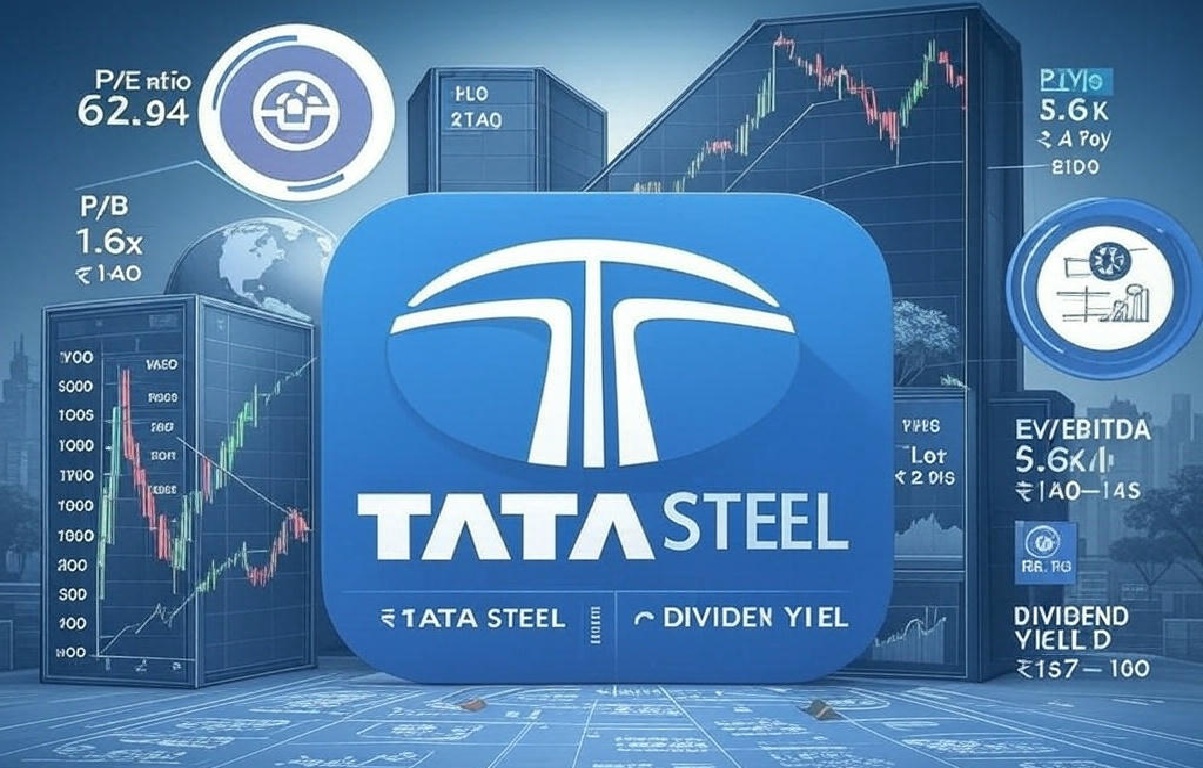
Tata Steel’s trailing twelve-month (TTM) P/E ratio is 62.94, far above the sector median of 16.34. This elevated multiple reflects market expectations of a profitability turnaround, particularly in India. Peers like JSW Steel (~20x P/E) and Jindal Steel & Power trade at lower multiples, highlighting Tata Steel’s premium pricing.
Investors should weigh this high P/E against projected EPS growth, as a failure to deliver could trigger a valuation correction.
Price-to-Book (P/B) Ratio: Reasonable Asset Valuation
The P/B ratio for FY27E is estimated at 1.6x, aligning with peers like JSW Steel (~1.5x). This suggests Tata Steel trades at a fair premium to its book value, supported by its integrated operations and asset base, including mines and production facilities.
EV/EBITDA: An Attractive Multiple
Tata Steel’s FY27E EV/EBITDA of 5.6x is compelling compared to historical averages and peers (JSW Steel ~6x). This lower multiple signals analyst confidence in EBITDA growth from cost reductions and rising Indian demand, making the stock attractive for long-term investors.
Dividend Yield: Income Appeal
Tata Steel’s FY24 dividend of ₹3.60 per share yields ~2.6% at the current price of ₹139.2. This competitive yield appeals to income-focused investors, particularly in a sector known for cyclicality. Consistent dividends underscore the company’s shareholder-friendly approach.
Growth Potential: Riding India’s Steel Boom
Tata Steel’s growth prospects hinge on India’s booming steel demand, strategic expansions, and sustainability leadership. The Indian steel sector is projected to grow 8–9% in 2025, driven by infrastructure, urbanization, and government policies.
Industry Outlook: A Bright Domestic Horizon
India’s steel consumption is set to surge, fueled by infrastructure projects and initiatives like “Make in India.” Tata Steel, with a ~20% domestic market share, is well-positioned to capitalize. Globally, however, US-China tariffs and economic slowdowns pose challenges, particularly for European operations.
The recent 12% provisional safeguard duty on steel imports (April 21, 2025) strengthens domestic pricing power, reducing competition from cheap Chinese imports. This policy tailwind enhances Tata Steel’s revenue potential.
Competitive Edge: Scale and Innovation
Tata Steel’s integrated operations—from mining to finished steel—provide cost efficiencies and supply chain control. Its acquisition of Neelachal Ispat Nigam Ltd. and the Kalinganagar expansion (India’s largest blast furnace) boost production capacity to meet rising demand.
The company’s focus on value-added products, like high-strength steel for automotive and infrastructure, enhances margins. Additionally, its global brand, backed by the Tata Group, and sustainability initiatives, such as hydrogen-based steelmaking, position it as a leader in green steel.
R&D and Innovation: Pioneering the Future
Tata Steel invests heavily in R&D, developing high-strength steel and green technologies. Its pilot projects in hydrogen-based steelmaking aim to reduce carbon emissions, aligning with global ESG trends. These innovations not only enhance competitiveness but also attract institutional investors seeking sustainable investments.
Management Strength: Steering Through Challenges
Led by CEO T.V. Narendran since 2013, Tata Steel’s management has driven digital transformation, capacity growth, and deleveraging. While Indian operations thrive, European losses have drawn criticism. Recent restructuring efforts in Tata Steel Netherlands reflect proactive steps to address profitability, earning cautious optimism from analysts.
Risk Analysis: Navigating Uncertainty
Investing in Tata Steel involves balancing opportunities with risks, from global trade tensions to operational challenges.
Market Risks: Global Volatility
A global economic slowdown and US tariffs (25% on steel imports, February 2025) could depress steel prices, impacting exports and European operations. US-China trade tensions further cloud the global demand outlook, adding volatility to Tata Steel’s stock.
Operational Risks: Cost and Compliance
Volatility in raw material prices, particularly iron ore and coking coal, squeezes margins. Supply chain disruptions, whether from geopolitical events or mining regulations, pose additional risks. Stricter environmental regulations in India and Europe increase compliance costs, especially for decarbonization initiatives.
Financial Risks: Debt and Liquidity
Tata Steel’s high debt (~₹1 lakh crore) and debt-to-equity ratio of ~0.9–1.0 signal moderate risk. While Indian operations generate strong cash flows, sustained European losses could strain finances. Liquidity remains adequate, supported by cash reserves and credit access, but deleveraging progress is critical.
Recent Developments: Catalysts and Challenges
Tata Steel’s recent performance and strategic moves shape its investment narrative.
Q3 FY25 Earnings: A Mixed Bag
Tata Steel’s Q3 FY25 results disappointed, with net profit dropping 36.37% YoY to ₹326.64 crore and revenue declining 3.01% to ₹53,648.30 crore. Weak European performance and lower steel prices drove the miss, leading to a 3.82% stock price drop to ₹125.3 on April 9, 2025. However, the stock recovered to ₹139.2 by April 21, buoyed by positive tariff news.
Tariff Boost: Domestic Advantage
The 12% safeguard duty on steel imports, announced April 21, 2025, lifted Tata Steel’s stock by 1.5%. This policy reduces pressure from cheap imports, enhancing domestic pricing power and supporting revenue growth.
European Restructuring: A Turnaround in Sight
Tata Steel Netherlands’ operational overhaul focuses on cost reduction and value enhancement. While losses persist, these efforts could improve profitability by FY27, bolstering investor confidence.
Sustainability Push: Green Steel Leadership
Tata Steel’s green steel initiatives, including hydrogen-based steelmaking, position it as a sustainability leader. These efforts, alongside inclusivity moves like all-women shifts at its Noamundi mine, enhance its ESG appeal.
Investment Outlook: Weighing Bulls and Bears
Tata Steel presents a nuanced investment case, blending short-term challenges with long-term promise.
Bullish Drivers
- Domestic Demand Surge: India’s 8–9% steel demand growth, fueled by infrastructure, ensures steady revenue.
- Tariff Protection: The 12% import duty strengthens pricing power, boosting margins.
- Restructuring Gains: European cost-cutting and Indian expansions could lift EBITDA by 10–15% by FY27.
- Sustainability Edge: Green steel initiatives attract ESG-focused investors.
- Brokerage Optimism: BUY ratings from ICICI and Axis Securities, with target prices of ₹155–180, suggest 20–30% upside.
Bearish Concerns
- Global Pressures: US tariffs and economic slowdowns threaten steel prices and exports.
- High Debt: Elevated leverage and European losses pose financial risks.
- Profitability Woes: Q3 FY25’s 0.61% net margin signals near-term challenges.
- Valuation Risks: A TTM P/E of 62.94 indicates a premium, leaving little room for error.
Short-Term vs. Long-Term Outlook
- Short-Term (6–12 Months): Volatility may persist due to global trade tensions and earnings pressures. The import duty and domestic demand provide support, with a target price of ₹150–160.
- Long-Term (3–5 Years): Tata Steel’s Indian expansion, deleveraging, and green steel leadership signal strong growth. Successful European restructuring could push the stock to ₹180–200.
Would Warren Buffett Invest in Tata Steel?
Applying Warren Buffett’s investment philosophy—focusing on competitive moats, consistent earnings, low debt, and fair valuations—yields a cautious stance on Tata Steel.
Why Buffett Might Like Tata Steel
- Competitive Moat: Tata Steel’s ~20% domestic market share, integrated operations, and Tata Group brand create a strong moat in India’s growing steel market.
- Growth Potential: India’s infrastructure-driven demand aligns with Buffett’s preference for predictable revenue streams.
- Dividend Appeal: A 2.6% yield reflects a shareholder-friendly approach, though not as high as Buffett’s favored income stocks.
- Management Focus: CEO T.V. Narendran’s emphasis on deleveraging and Indian growth resonates with Buffett’s trust in capable leadership.
Why Buffett Might Pass
- Earnings Volatility: Q3 FY25’s 36.37% profit drop and FY24’s net loss highlight inconsistency, clashing with Buffett’s demand for stable earnings.
- High Debt: A debt-to-equity ratio of ~0.9–1.0 exceeds Buffett’s comfort zone, especially with European cash flow drags.
- Premium Valuation: A TTM P/E of 62.94 suggests the stock isn’t undervalued, violating Buffett’s “wonderful company at a fair price” principle.
- Global Risks: US tariffs and raw material volatility introduce uncertainty, which Buffett avoids.
Verdict: Buffett would likely skip Tata Steel in 2025. While its domestic strength and growth potential are appealing, high debt, volatile earnings, and a steep valuation don’t align with his criteria. He might reconsider if the P/E drops below 20x, debt decreases significantly, or European operations turn profitable.
Technical Analysis: Charting Tata Steel’s Path
Symmetrical Triangle Breakout
On the weekly chart (January 2024–April 2025), Tata Steel formed a symmetrical triangle, signaling consolidation. Since July 2024, the stock oscillated between resistance at ₹184.6 and support at ₹115. In March 2025, it broke above the falling trendline at ₹140 with high volume, indicating a bullish reversal.
At ₹139.2 (April 21, 2025), the stock tests resistance at ₹140–145. The Relative Strength Index (RSI) at 52.06 suggests bullish momentum, while the stock’s position above the 21-week EMA (~₹130) confirms an uptrend.
Price Targets and Risk Management
- Bullish Target: A breakout above ₹145 could drive the stock to ₹157.5–160, a 13–15% gain.
- Stop-Loss: Set a stop-loss at ₹130 to limit downside if the breakout fails.
- Outlook: The breakout, backed by volume and RSI, supports a short-term bullish trend. Failure to clear ₹145 may lead to a retest of ₹125–130.
Sentiment Analysis: Market Mood
Current Sentiment: Neutral
Tata Steel’s sentiment balances positive catalysts and near-term challenges:
- Positive Drivers: The 12% import duty boosts domestic pricing, reflected in a 1.5% stock gain. Brokerages’ BUY ratings (₹155–180 targets) and sustainability initiatives fuel optimism.
- Negative Pressures: Q3 FY25’s earnings miss (36.37% profit drop) and US tariffs (2–3% YTD stock decline) temper enthusiasm. High debt and low margins raise concerns.
Investor Pulse
Sentiment on platforms like X shows mixed views. Some investors allocate ~20% to infrastructure themes, favoring Tata Steel’s domestic exposure, while others remain cautious due to global tariffs and pricing risks. The neutral sentiment reflects a wait-and-see approach, pending clarity on European restructuring and steel prices.
Conclusion: A Long-Term Bet with Short-Term Caution
Tata Steel offers a compelling yet nuanced investment opportunity. Its dominant position in India’s steel market, bolstered by infrastructure demand and tariff protection, drives long-term growth. Sustainability initiatives and capacity expansions further enhance its appeal. However, global trade tensions, high debt, and European losses introduce volatility, demanding investor patience.
For long-term investors with a 3–5-year horizon, Tata Steel’s ₹180–200 potential makes it attractive, especially if European restructuring succeeds. Short-term traders should exercise caution, targeting ₹150–160 while monitoring global risks. Consult a financial advisor to align this investment with your goals, as market dynamics evolve rapidly.