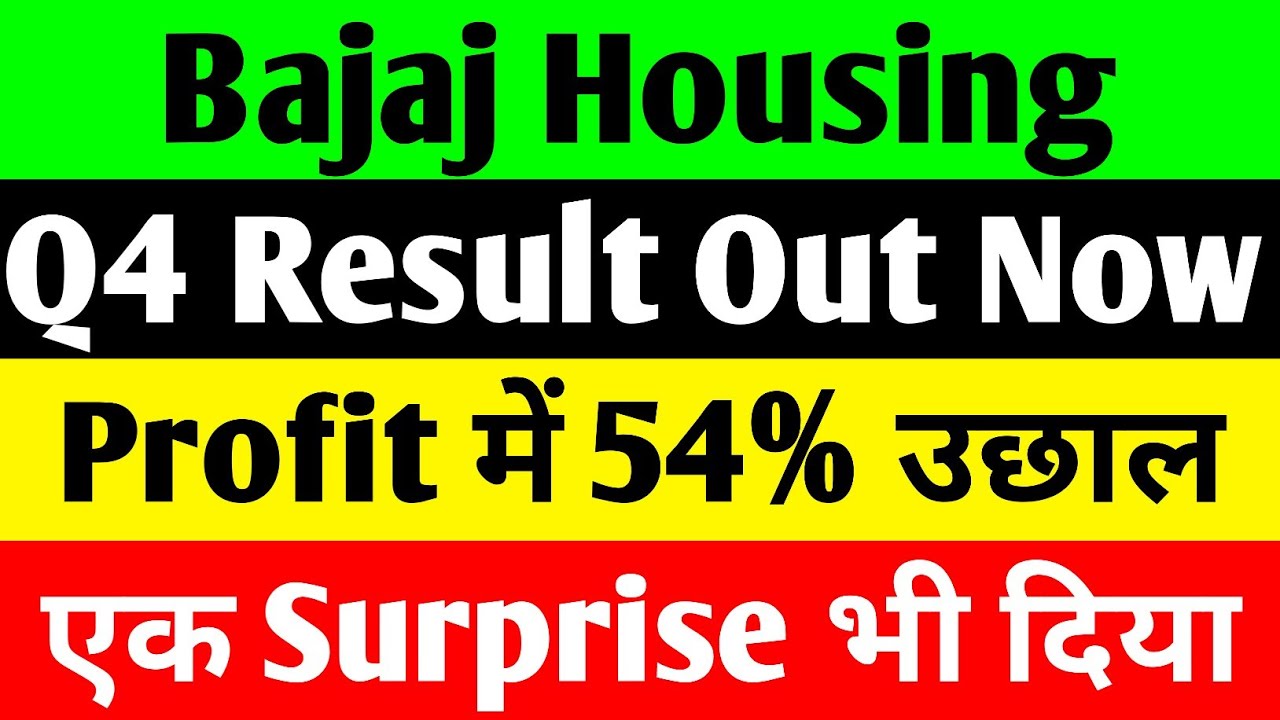
Bajaj Housing Finance Q4 Results 2025: Stellar Profit Surge and Share Price
Bajaj Housing Finance Ltd. has unveiled its Q4 results for the fiscal year 2025, showcasing a remarkable performance that has captured the attention of investors and market analysts alike. With a significant profit surge, robust revenue growth, and a strengthened financial position, the company is poised for a promising future. This article delves into the intricacies of Bajaj Housing Finance’s Q4 2025 results, exploring key financial metrics, market implications, and investment opportunities. By dissecting the numbers and highlighting the company’s strategic advancements, we aim to provide a comprehensive overview that positions this piece as a definitive resource for stakeholders seeking insights into Bajaj Housing Finance’s latest achievements.
Unveiling Bajaj Housing Finance’s Q4 2025 Performance
Bajaj Housing Finance, a leading non-banking financial company (NBFC) in India, has solidified its reputation as a powerhouse in the housing finance sector. The company’s Q4 results for the fiscal year ending March 31, 2025, reflect its ability to navigate market challenges while capitalizing on growth opportunities. With a 54% year-on-year (YoY) surge in net profit and a 25.7% increase in revenue, Bajaj Housing Finance has outperformed expectations, setting a new benchmark for financial excellence.
A Snapshot of Key Financial Highlights
The Q4 2025 results underscore Bajaj Housing Finance’s operational efficiency and strategic foresight. Here’s a breakdown of the standout metrics:
- Net Profit Soars 54%: The company reported a net profit of ₹587 crore in Q4 2025, a significant leap from ₹381 crore in the same quarter of the previous year. This growth surpassed Bloomberg’s estimate of ₹557 crore, signaling robust profitability.
- Revenue Climbs 25.7%: Total revenue reached ₹2,598 crore, up from ₹1,996 crore in Q4 2024, driven by strong loan disbursements and higher fee income.
- Net Interest Income (NII) Jumps 31%: NII rose to ₹823 crore from ₹629 crore, reflecting improved margins and effective asset management.
- Assets Under Management (AUM) Grow 26%: AUM expanded to ₹1,14,680 crore, bolstered by a 25% increase in loan assets to ₹99,500 crore.
- Stable Asset Quality: The gross non-performing assets (GNPA) stood at 0.29%, with net non-performing assets (NNPA) at 1%, and a provisioning coverage ratio of 60%, indicating prudent risk management.
These figures highlight Bajaj Housing Finance’s ability to deliver consistent growth while maintaining financial stability, positioning it as a top contender in the NBFC landscape.
Strategic Drivers Behind the Stellar Q4 Results
Bajaj Housing Finance’s impressive Q4 performance stems from a combination of strategic initiatives, market adaptability, and operational excellence. Let’s explore the key drivers that fueled this growth.
Robust Loan Disbursement Growth
The company reported gross disbursements of ₹14,250 crore in Q4 2025, a 25.08% increase from ₹11,393 crore in Q4 2024. This surge reflects rising demand for housing finance products, particularly in the mid-ticket size segment (around ₹50 lakh), which caters to a significant portion of home loan aspirants. By focusing on this “desirable sweet spot,” Bajaj Housing Finance has captured a substantial market share, addressing approximately 65% of India’s home loan market.
Enhanced Net Interest Margins
The 31% growth in NII underscores Bajaj Housing Finance’s ability to optimize its lending portfolio and manage borrowing costs effectively. Despite a challenging financial sector environment, the company maintained stable net interest margins (NIMs), with Goldman Sachs projecting a marginal contraction to 3.32% in Q4 2025. This resilience highlights Bajaj Housing Finance’s disciplined approach to balancing growth and profitability.
Diversified Revenue Streams
Beyond interest income, Bajaj Housing Finance has bolstered its fee-based income, contributing to the 25.7% revenue growth. The company’s total income from operations reached ₹2,598 crore, with interest income alone rising 24% to ₹2,374 crore. By diversifying its revenue streams, Bajaj Housing Finance has mitigated risks associated with interest rate fluctuations, ensuring sustained financial health.
Prudent Cost Management
While total expenses increased by 21% to ₹1,551 crore, driven by business expansion, Bajaj Housing Finance successfully reduced its operating costs. The operating profit surged 43% to ₹750 crore, reflecting improved efficiency and cost discipline. This strategic cost management has enabled the company to maintain healthy profit margins despite rising operational expenses.
Market Context: Overcoming Challenges with Confidence
The financial sector faced headwinds in Q4 2025, with many companies grappling with market volatility and regulatory pressures. Despite these challenges, Bajaj Housing Finance delivered a stellar performance, demonstrating its resilience and adaptability.
Navigating the Lock-In Period Expiry
One of the significant milestones for Bajaj Housing Finance in Q4 2025 was the expiration of its shareholder lock-in period. This event freed up 529 crore shares, representing 62% of the company’s outstanding equity, for trading. The market had anticipated potential selling pressure from anchor investors post-lock-in, which could have impacted share prices. However, the stock stabilized at around ₹131.92, closing near its intraday high of ₹132, indicating strong investor confidence. The successful navigation of this period has alleviated concerns, paving the way for the stock to rise based on its intrinsic strengths.
Resilience Amid Sectoral Weakness
On the day of the Q4 results announcement, the financial sector experienced downward pressure, with broader market indices like the Sensex gaining 500 points. Despite this, Bajaj Housing Finance’s stock demonstrated resilience, closing with a 0.58% gain. The stock’s ability to withstand sectoral weakness underscores its strong fundamentals and positive market perception.
Year-End Performance: A Testament to Consistency
Bajaj Housing Finance’s full-year performance for FY 2025 further reinforces its growth trajectory. The company reported a consolidated net profit of ₹2,163 crore, a 25% increase from ₹1,731 crore in FY 2024. Key annual highlights include:
- Net Interest Income Growth: NII for FY 2025 rose 20% to ₹3,737 crore, driven by strong loan portfolio expansion.
- Total Income Surge: Total income reached ₹9,576 crore, reflecting robust operational performance.
- AUM and Loan Assets Expansion: AUM grew 26% to ₹1,14,684 crore, while loan assets increased 25% to ₹99,500 crore.
- Capital Adequacy Ratio: The company maintained a healthy capital adequacy ratio of 28.24%, signaling strong financial stability.
These annual figures highlight Bajaj Housing Finance’s ability to sustain growth across quarters, positioning it as a reliable investment option in the NBFC sector.
Quarter-on-Quarter Growth: A Pattern of Progress
A closer look at Bajaj Housing Finance’s quarter-on-quarter (QoQ) performance reveals a consistent upward trajectory, reinforcing the company’s growth narrative.
Revenue Growth Trend
- December 2023: ₹1,946 crore
- March 2024: ₹1,997 crore
- June 2024: ₹2,229 crore
- September 2024: ₹2,410 crore
- December 2024: ₹2,449 crore
- March 2025: ₹2,598 crore
This steady increase in revenue, with no quarter witnessing a decline, reflects Bajaj Housing Finance’s robust business model and growing market demand for its products.
Profit Growth Trend
- December 2023: ₹437 crore
- March 2024: ₹381 crore
- June 2024: ₹483 crore
- September 2024: ₹546 crore
- December 2024: ₹548 crore
- March 2025: ₹587 crore
While March 2024 saw a slight dip in profit, the subsequent quarters demonstrated a strong recovery, with four consecutive quarters of profit growth. This trend underscores the company’s ability to address challenges and capitalize on opportunities.
Investment Potential: Why Bajaj Housing Finance Stands Out
Bajaj Housing Finance’s Q4 2025 results have sparked renewed interest among investors, with the stock showing significant upside potential. Here’s why the company is an attractive investment opportunity:
Undervalued Stock Price
The stock, currently trading at around ₹131.92, is significantly lower than its peak of ₹188 in September 2024. This decline, coupled with the strong Q4 results, suggests that the stock is undervalued, offering substantial room for growth. Analysts from Kotak Institutional Equities project a 61% profit growth to ₹613 crore, indicating further upside potential.
Strong Fundamentals
Bajaj Housing Finance’s robust financial metrics, including high capital adequacy, low NPAs, and consistent revenue growth, make it a fundamentally strong investment. The company’s focus on the mid-ticket home loan segment and diversified revenue streams further enhance its appeal.
Positive Analyst Sentiment
Brokerages like Phillip Capital have initiated a “Buy” rating with a target price of ₹210, implying a 27% upside from current levels. Goldman Sachs and Kotak Institutional Equities also express optimism, citing strong loan growth and stable asset quality. This positive sentiment from analysts bolsters investor confidence.
Long-Term Growth Prospects
With India’s housing finance market poised for growth, driven by urbanization and government initiatives like the Pradhan Mantri Awas Yojana, Bajaj Housing Finance is well-positioned to capitalize on these trends. The company’s strategic focus on affordable housing and digital transformation further enhances its long-term growth prospects.
Risks and Considerations for Investors
While Bajaj Housing Finance presents a compelling investment case, potential investors should be aware of certain risks:
Interest Rate Volatility
As an NBFC, Bajaj Housing Finance is sensitive to interest rate fluctuations, which could impact borrowing costs and NIMs. While the company has demonstrated resilience, prolonged rate hikes could pose challenges.
Regulatory Changes
The NBFC sector is subject to stringent regulations by the Reserve Bank of India (RBI). Any adverse regulatory changes could affect Bajaj Housing Finance’s operations and profitability.
Market Competition
The housing finance market is highly competitive, with players like HDFC, LIC Housing Finance, and PNB Housing Finance vying for market share. Bajaj Housing Finance must continue to innovate to maintain its edge.
Investors are advised to consult with financial advisors and conduct thorough research before making investment decisions. While Bajaj Housing Finance’s Q4 results are promising, a balanced approach to risk assessment is essential.
Bajaj Housing Finance’s Strategic Roadmap
Looking ahead, Bajaj Housing Finance is poised to build on its Q4 2025 success through a series of strategic initiatives:
Expanding Digital Capabilities
The company is investing in digital platforms to enhance customer experience and streamline loan processing. By leveraging technology, Bajaj Housing Finance aims to reduce turnaround times and attract tech-savvy borrowers.
Strengthening Affordable Housing Portfolio
With a focus on the mid-ticket size segment, Bajaj Housing Finance is aligning its offerings with India’s affordable housing initiatives. This strategy positions the company to tap into a high-growth market segment.
Enhancing Risk Management
Bajaj Housing Finance’s low NPA levels and high provisioning coverage ratio reflect its robust risk management framework. The company plans to further strengthen its credit assessment processes to maintain asset quality.
Exploring New Geographies
To sustain its AUM growth, Bajaj Housing Finance is expanding its presence in tier-2 and tier-3 cities, where demand for housing finance is rising. This geographic diversification will bolster its market reach.
Conclusion: A Bright Future for Bajaj Housing Finance
Bajaj Housing Finance’s Q4 2025 results mark a significant milestone in its journey as a leading NBFC in India. With a 54% profit surge, 25.7% revenue growth, and a 26% increase in AUM, the company has demonstrated its ability to deliver exceptional financial performance. The expiration of the lock-in period, stable asset quality, and positive analyst sentiment further enhance its investment appeal. As Bajaj Housing Finance continues to innovate and expand, it is well-positioned to capitalize on India’s burgeoning housing finance market.
For investors seeking a fundamentally strong stock with significant upside potential, Bajaj Housing Finance presents a compelling opportunity. However, prudent risk assessment and consultation with financial advisors are crucial. With its strategic vision and robust financials, Bajaj Housing Finance is set to redefine the housing finance landscape, making it a stock to watch in 2025 and beyond.




![The Indian share market is ready for a busy trading week starting from December 2, 2024. A lot], traders and investors are keen on observing the market movements since they expect crucial information data along with global economic leaders signals. Some of the important pointers or outlooks provided by financial analysts, major indicators of the market and expectations of the market in regard to the opening sessions of the trades is done in this analysis. Several trends in the Indian market are still influenced by the trends in the global market. Here are some of the significant updates: On the previous trading day, the Nifty 50 has been volatile and ended the session at 24100 which also banks a strong performance. Support and resistance ranges highlighted by the analysts are as follows: Support Zones are 24,050 and 23,900 while Resistance Levels are 24,250 and 24,350. The life of the nation’s economy can be understood by the targets set and achieved by NBP and Indian GDP, for instance, the Indian economy achieved a 5.4% quarterly growth rate in the second quarter as compared to the RBI's prediction of 6.5%. Furthermore, the forex reserves decreased alongside, and this has decreased after the USD value dropped by $1.31, indicating a total forex reserve value of $656.58b. Meanwhile – On the basis of the economic demonstration, there has been an increase in mind and coal production in key sections of the economy which has prompted a rise of Indian economic sectors. Wasn’t that great? Seeing how Analyst Predict in the Expert Analysis December 02 2024 The Predictive Trends in Nifty 50 If Index Nifty 50 remains above the 24,050 mark then the analysts anticipate an upward movement and resistance towards 24,350 mark. If Nifty crosses the level then it certainly will lead to an upward market surge. On the contrary, if it breaks below the 23,900 mark then definitely it will lead to either bear movement or a consolidation phase. The Banking Sector and the Bank Nifty Analysis In the banking sector, Bank Nifty has been climbing and finished the previous week at an upward level. Important areas include: In terms of Support: 59,900. In terms of Resistance: 52,500. If these levels are breached then there would be strengthening on the bullish side owing to banking stocks heavy weightage on most of the indices. The Country’s Financial Institutions and BRICS The last BRICS summit held in South Africa hinted at the launch of a single currency to reduce the growing influence of the dollar. But this plan poses Russell a handful of problems especially with U.S. tariffs hovering there as trump stated. Thus, this political move might daunt IT exporting companies and many others that are dependent on international commerce. The Pound Recovery and its Influence on US Economic Market The Dow and Nasdaq were closing to all time high suggesting good news for other markets as well together with slight decline in US bond which is good for Indian markets and others. Sectoral Watchlist – Stockes that deserve Attention Mining Sector Coal India may perform well as its production increased by 7.2 with an increase in dispatch of 4 during the month of November Mining firms are bunch likely to benefit from the improving global market environment. IT Sector The performance of the IT sector is likely to dwindle due to the speculative U.S Tariff enforcement and adjustment of the global market. Small and Mid-Cap Stocks Newbies have been advised to shift their focus on PSU stocks, small-cap and Midcap categories as they tend to perform better when the market is on a bullish trend. Key Macroeconomic Indicators GST Collection India’s gross GST collection crossed the 1 lakh crore mark for the first time ever in November 2024 as it amounted to 1.82 lakh crore marking an increase of 8.5 percent compared to the previous month this is a strong revenue reading suggesting improvement in the economy and voluntary adherence. Crude Oil Prices Over the last two weeks, Brent crude oil prices stood reasonably well which is beneficial to the Indian markets that are deeply dependent on oil imports. Investment Tips for Retail Investors Keep in Track of Global Indicators: US market changes and political drama across the globe always have an impact on Indian markets therefore update yourself regularly about these happenings. Look Out for Strong Sectors: The banking sector, mining and most of the PSU stocks should do well in the short term. Use Technical Analysis: Identify key support levels and resistance levels to develop sound plans on when to buy and sell. Final Thoughts There are good chances that India’s stock market has achievements as the new week of trading begins. As it is the case now with good worldwide influences and the potential development of the sector, investors should remain on alert and be prudent. Also watch the important levels for Nifty and Bank Nifty as the most active stocks in the cash segment and anticipate some swings in the IT stocks. To read more on the news as well as the pictures that impact the three-views daily markets, make sure to public them to various excelling experts and decent sources of the market. Start to invest in the market and aim for success in the weeks to come as it is going to be a busy trading week](https://www.tgnns.com/wp-content/uploads/2024/12/Nifty-Market-Updates-Insights-Predictions-and-Trends-for-December-2024-768x433.jpg)