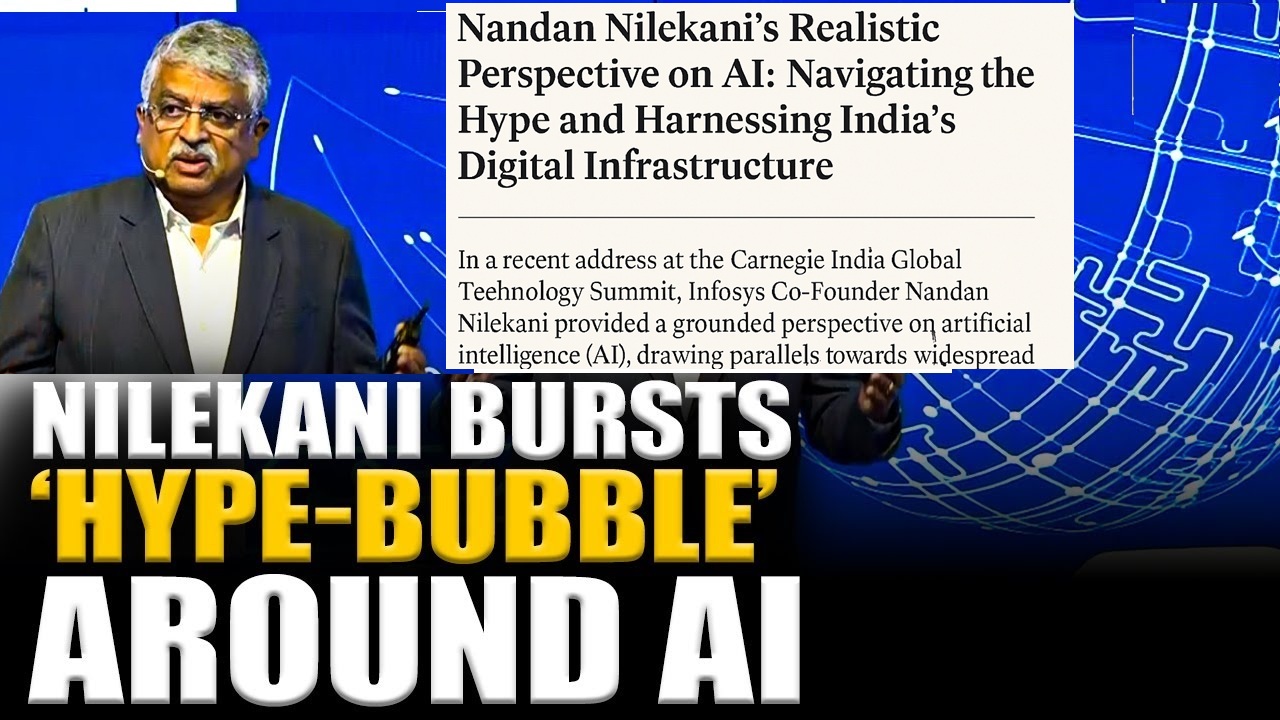
In an era dominated by technological euphoria, Nandan Nilekani, Infosys Co-Founder and architect of India’s digital revolution, offers a sobering yet optimistic perspective on artificial intelligence (AI). Speaking at the Carnegie India Global Tech Summit, Nilekani dissects the hype surrounding AI, outlines implementation challenges, and maps India’s unique path to becoming the global AI use-case capital. This article explores his insights, revealing how India’s digital public infrastructure (DPI) and ethical frameworks could redefine AI adoption.
The AI Hype Cycle: Separating Reality from Fiction
Nilekani begins by addressing the “unprecedented hype” around AI, likening it to past tech frenzies like cloud computing and cryptocurrency. While excitement fuels innovation, he warns that AI implementation at scale faces formidable hurdles. Delays, internal politics, and technical complexities mirror challenges seen in earlier tech revolutions.
Key Takeaway:
- Consumer vs. Enterprise AI: While consumers tolerate occasional chatbot errors, enterprises face higher stakes. A 1-2% error rate in AI-driven decisions can damage brands, demanding rigorous guardrails.
- Public Sector Challenges: Governments struggle with data silos, ethical concerns, and accountability. Nilekani emphasizes that public trust is non-negotiable, requiring bias-free, transparent systems.
Why AI Adoption Is Harder Than We Think
1. The Trust Deficit in Non-Human Intelligence
Historically, technology followed deterministic rules. AI, however, makes probabilistic decisions, demanding a “leap of faith” in machines. Nilekani highlights society’s uneven tolerance for errors:
- Human vs. Machine Error: Millions accept human-caused road fatalities but scrutinize a single autonomous vehicle accident. This double standard complicates AI integration.
2. Enterprise AI: Balancing Innovation and Risk
Enterprises face pressure to deploy AI rapidly, but Nilekani urges caution:
- Workflow Integration: AI must align with existing processes, requiring cultural shifts and employee upskilling.
- Governance Frameworks: Robust oversight is critical to prevent reputational harm from AI missteps.
3. Public Sector AI: Navigating Structural Barriers
Governments grapple with territorial data hoarding and bureaucratic inertia. Nilekani argues that data interoperability—sharing across ministries—is essential for AI success.
India’s Digital Leap: Laying the Foundation for AI at Scale
Nilekani credits India’s digital public infrastructure (DPI)—Aadhaar, UPI, and ONDC—for positioning the country as a future AI leader. Over 500 million smartphone users and 18 billion monthly UPI transactions showcase India’s tech maturity.
Three Pillars of India’s AI Transformation
- Language Democratization: Moving beyond English/Hindi dominance to support 22+ Indian languages via voice/video interfaces.
- Cost-Effective Solutions: AI models must operate at “one rupee per inference” to serve India’s price-sensitive market.
- Dynamic Knowledge Access: Generative AI will shift static information to real-time, contextual insights.
Case Studies: AI Driving Social Impact in India
1. Education Revolution with AI Tutors
In six states, AI-powered labs help students improve literacy and numeracy. Unlike traditional methods, these tools adapt to individual learning paces, addressing India’s education crisis highlighted by the ASER report.
2. Empowering Farmers via Open Agri Networks
State-led platforms deliver hyperlocal weather forecasts, crop advice, and market prices in regional languages. For example, PM-Kisan chatbots resolve farmer queries instantly, boosting agricultural productivity.
3. Bhashini: Breaking Language Barriers
This government-led initiative processes 300 million monthly inferences across 36 languages, powering services like Aadhaar authentication and rural welfare chatbots. By standardizing translation protocols, Bhashini bridges India’s linguistic divide.
India’s Digital Public Infrastructure (DPI) as a Foundation for AI
India’s advancements in digital infrastructure, such as Aadhaar, UPI, and smartphone proliferation, provide a solid foundation for AI implementation. Nilekani emphasized that this existing infrastructure enables rapid AI adoption, particularly in areas like:
- Language Accessibility: Developing AI models that support multiple Indian languages enhances inclusivity.
- Voice and Video Interfaces: Transitioning from text-based to voice and video interfaces makes AI more accessible to a broader population.
- Contextual Information: Leveraging AI to provide dynamic, context-specific information can improve user experiences across various services.
AI for Social Impact
Nilekani highlighted initiatives where AI is being used to address societal challenges:
- Education: AI tools are being deployed to enhance literacy and learning outcomes in schools.
- Agriculture: AI-driven platforms provide farmers with critical information on weather patterns, crop cycles, and market trends.
- Public Services: AI is integrated into systems like Aadhaar for identity verification and into payment platforms for secure transactions.
Cost-Effective AI Solutions
For AI to be sustainable and scalable in India, solutions must be affordable. Nilekani stressed the importance of developing AI models that operate at low costs, ensuring accessibility for a wide range of users and applications.
The Road Ahead: Combining DPI and AI for Inclusive Growth
Nilekani envisions India as the “AI use capital of the world”, leveraging its DPI backbone to democratize access. Key strategies include:
- Iterative Improvement: Continuously refining AI models with real-world data and synthetic inputs.
- Ethical AI: Prioritizing safety, security, and fairness through decentralized governance.
- Public-Private Partnerships: Collaborating with ventures like AI4Bharat to build open-source, low-cost solutions.
Conclusion: AI Is No Magic Bullet—But India Is Uniquely Positioned
While global debates on AI ethics and job displacement rage, India’s pragmatic approach focuses on “narrow use cases” with tangible benefits. By embedding AI into its DPI framework, India can accelerate adoption, proving that technology’s true value lies not in hype but in human-centric outcomes. As Nilekani asserts, the journey will demand patience—but the destination promises transformative progress.
Final Thought:
India’s AI journey mirrors its UPI success—starting small, scaling rapidly, and prioritizing accessibility. With 900 million internet users by 2030, the nation is poised to write a new playbook for equitable AI adoption.