Supreme Court Rejects Pleas on ‘Secular’ and ‘Socialist’ Terms in Constitution
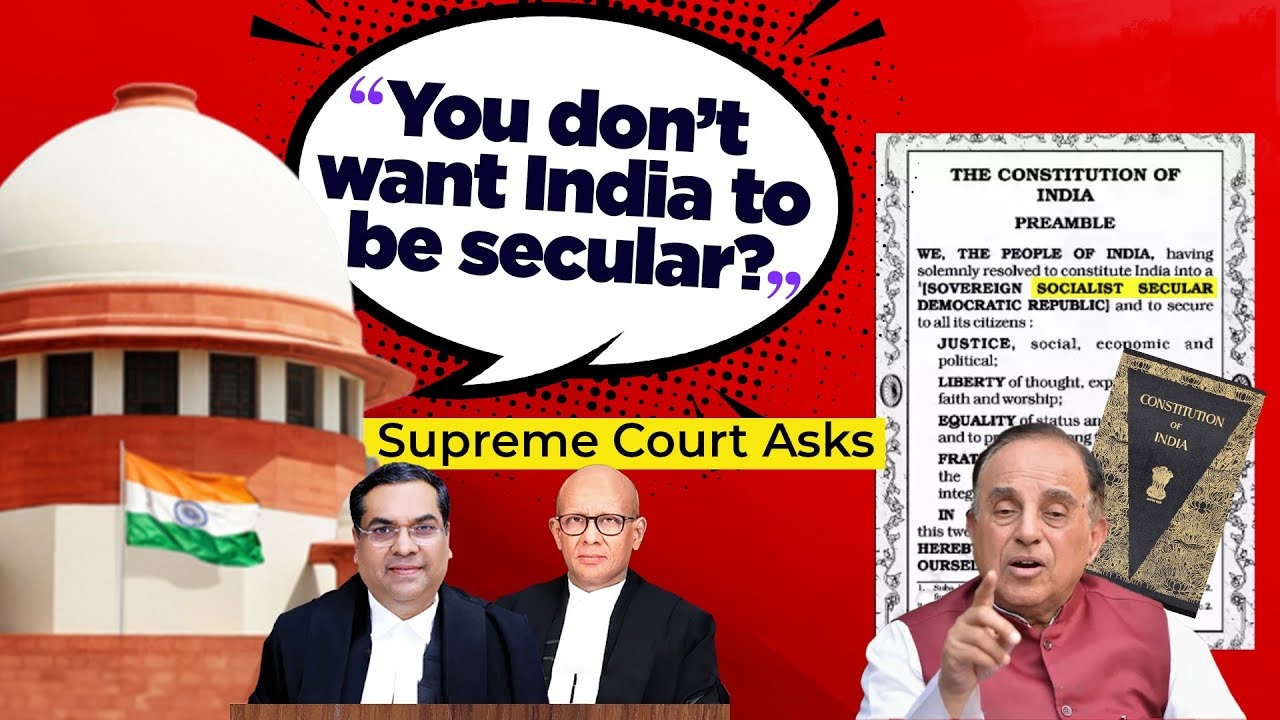
The Supreme Court of India has recently dismissed three petitions challenging the inclusion of the terms ‘Secular” and Socialist‘ as well as the procedures adopted for their inclusion in the Constitution. These petitions have revived controversies and legal battles in which these issues were already settled almost 4 decades after those words were introduced in 1976. Explore the court’s view, the historical relevance as well as the impact of this decision on the Indian polity and society.
History Of How The Preamble Was Amended Sometime After It Was Initially Drafted
When India gained independence in mid-twentieth century, the preamble of Preamble to the Constitution of India (commonly known as the Preamble to the Constitution of India) effectively acted as a cut out without the words ‘sacred’ and ’ socialism’ being endorsed. The incorporation of the amendments took place during the EMERGENCY PERIOD In 1976 which formed part of the 42nd Amendment. They have argued that the amendment was brought in under undemocratic conditions because it did not have broad support.
It is worth noting that Dr. B.R. Ambedkar who was the main architect in drafting the Constitution had earlier clarified during the plenary assemblies that the foundation of the ethos of secularism as well as socialism had already found adoption in the rubrics of the inalienable rights including that of fundamental rights and groups of directives. He raised the point of why there was a need to mention such terms, apart from the existing constitutional provisions on liberty, justice and equality.
The Views of the Supreme Court
SanJiv Khanna C.J. and SanJai Kumar J. featured into the bench, and they ruled that the petitions were devoid of any merit – and they repeated that so twice. The bench pointed out that the material put forth by the appellants was of ‘obviously and manifestly’ unreasonable nature.
The court had to stress out on two golden cases which have always been there in the footsteps of lawyers and law students as crucial in their own way, which are Kesavananda Bharati v. The State of Kerala and SR Bommai v. Union of India in order to assert the supremacy of the basic structure of the Constitution. These judgments demonstrated that the amending authority can alter any part of the constitution including the preamble, provided the basic structure is not altered.
Basis of the Arguments of the Dismissed Petitions
There are a number of participants as petitioners in this regard, the other prominently including Dr. Subramanian Swamy, and it is claimed by them that:
Secular and Socialist were not substantive headed appendages in the original Preamble, but instead were unscrupulously incorporated at the time of the emergency.
Parliament was not empowered to make changes to the preamble because it was not delineated as standalone in the auspices of the constitution.
These words and phrases were brought in, therefore changing the basic structure of the Constitution.
This is in terms of whether it was appropriate to argue that the inclusion of such designations would make it possible to change the constitution. Unfortunately, the court rejected these claims, explaining that the Preamble forms part of the Constitution and is within the scope of Article 368, which does allow changes. There is no need therefore for panic. The judges also pointed out that the inclusion of these terms did not alter the new essence of the Constitution but simply rendered explicit certain implicit principles.
In the light of the above description of secularism it is important to understand socialism within the context of Indian National Congress.
Secularism: As pointed out by the court secularism has been one of the core guiding principles of India since its independence. With this principle, all citizens, regardless of their religion, are treated equally. And the Right to Equality, which is a Right available for all, is one of the embodiments of this principal, which states that in the eyes of the law, all beliefs are equal.
Socialism: Indian socialism’s goal is to establish economic and social justice, as stated in the Directive Principles which is not consistent with the classical definition of socialism which seeks to eliminate private property. The reality of Indian socialism is the coexistence of vibrant private companies with social welfare measures.
The court argued that the incorporation of these terms into the Preamble was consistent with India’s democratic and pluralistic culture.
Why the Petitions Were Withdrawn
Unreasonable Delay: The petitions were brought forth around 44 years after the introduction of the amendment. The court made note of the fact that these terms have been accepted by the general populace and legal decisions taken in the last decades tend to support them.
No Effect on Basic Structure: The Supreme Court has noted that the amendment does not extend the reach of the basic structure of the Constitution. Instead, it is interrelated to many principles already enshrined in the Constitution such as liberty, equality and justice.
Precedent from Landmark Decisions: In respect of the Kesavananda Bharati case, the court further maintained that Parliament is empowered to make changes in the Preamble as long its amendments do not affect the basic structure. The further S.R. Bommai judgment fortified the position by declaring secularism as one of the basic features of the Constitution.
Outlook on the Consequence of the Judgment
The dismissal of these petitions and appeals definitely tells the entire populace of this country as to how revered are the Constitution and its main tenets. It also underlines the role of the judiciary concerning the basic structure theory and the amendments intended to be made in consonance with the democratic fabric of India.
Also, the decision recognizes the relevance of the Constitution, which remains relevant with time, maintaining its basic philosophy. The omission of the request to delete the words ‘Secular’ and ‘Socialist’ leaves the idea of a multi-republican India intact.
Conclusion
There are basic tenets contained within the Constitution which the Supreme Court decision has reaffirmed. It stresses the role of secularism and socialism in providing balance and fairness to the citizens of a heterogeneous nation like India. While discussions advance about the use of these terms, the Court decision is an example of how nationalism was created through these concepts around the country.