The Chief Minister of Telangana is in favor of Minimum Age for Elections to 21 Years
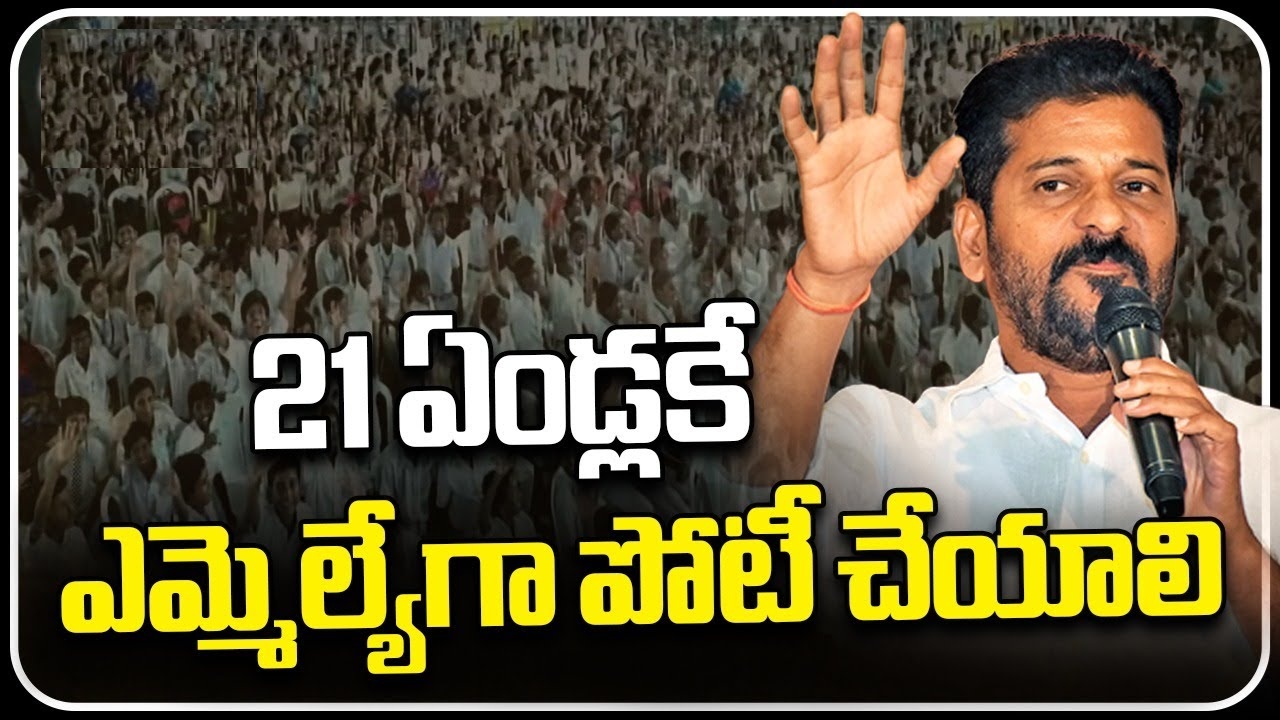
In a recent development, the Chief Minister of Telangana A. Revanth Reddy has urged a notable amendment to the legislation of the state, that is the age limit to contest in Legislative Assembly elections should be 21 not 25 years. Reddy contends that if the youth is encouraged to take part in the legislature, new, energetic ideas will be brought to the table, hence raising the cut-off age could be beneficial as it would allow younger representatives into the state assemblies.
Youth Representation: Changes Looking to Improve Youth Engagement
On the occasion of Children’s Day, during a ‘mock assembly’ held in realization of the day, Reddy pointed out the need for the incorporation of youth in the Assembly. He also pointed out that individuals like the IAS IPS get into such service when they are around 21 years of age and work at a commendable level. In the same breath he pointed out that with such opportunities, youths too, ought to be competent enough to become Members of Legislative Assemblies and address the pressing issues concerning youth such as education, employment, sports, and many more.
The Chief Minister noted that former Prime Minister Rajiv Gandhi reduced the voting age in India from and the age qualification to contest in the Assembly elections still remains at 25 years, which is still a barrier for youth to participate in active politics. “The new limit should create more opportunities for youngsters between the ages of 21 and mid to go into legislature for the reason that they would advocate for matters relative to the youth and drive the country towards development in areas such as technology, education, and the economy” Reddy said. He said these comments in the backdrop of a mock assembly where young people in the audience role played an assembly and moved a symbolic motion that endorsed the lowering of the proposed age.
Historical Precedent: Learning from Former Leaders
S Reddy on the other hand addressed young people during the Children’s day of every year and how important their representation as a segment of the Indian political landscape is to him. He credited Nehru who is also remembered on this day because of the role he played in the educational and agrarian developments of the country. Also, Rajiv Gandhi has been commended for lowering the age limit of voting to eighteen which broadened the scope of young Indians entering politics.
Reddy put forth the rationale for Youth participation in politics due to the fact that an assembly resolution to amend the minimum age for contesting should be sent to the President and the Prime Minister for their attention. Reddy mentioned his conviction that under-thirty MLAs would be able to do the work since there are many challenges to be addressed, and with new energy they can do wonders in the place of legislating.
Advantages of lower the age limit in Assembly elections
There are numerous likely positive effects of Lowering the age requirement for Assembly elections:
Youth Participation beyond political engagement: With the age limit brought down to twenty one, many citizens would be encouraged to appreciate the intricacies which come with governance, atleast more than the currently active youth.
Widened policy making ideas scope: With more young MLAs, policies and programs would likely be in favour of the Indian younger generation’s wish list. Digitalization, mental health and job opportunities are some of the the subjects which young representatives would be in a better position to push forward as they feel more concerned with them.
More attention to Youth issues: Younger MLAs may address better issues that are more relevant to their age such as skill development, education quality and unemployment among the youth.
Involvement of Youth in Legislative Responsibilities – Encouraging Young People Towards Leadership is Promoted: Leadership that has the competency to structure itself around the changing realities of governance in the times to come, can only be built through the inclusion of young people into legislative roles.
The Vision of Reddy to Work Together as Collaborative Legislative Assembly
Talking to members Howell, he also mentioned the need for constructive engagement in the Assembly and challenged the opposition parties to assume their responsibility of asking questions to the government in a constructive manner. As both the government and opposition are involved in the parliament, he stated that it is just proper that these stakeholders have their fair share in the debates that rage over in parliament.
He portrayed the speaker as an important figure who allows the assembly to function by making sure that all perspectives are adequately represented. Noting the recent disturbances in the proceedings of the Assembly, Reddy emphasized the need to govern respectfully and efficiently regardless of disagreements.
Commemoration of the Vivid India’s Leaders in Making of the Country
Reddy conferred with the podium to eulogize those leaders of India who have made positive changes in the education and social sector. He praised Jawaharlal Nehru as one of the Indian leaders who have helped transform the education and agriculture system. He also acknowledged great contributions made by his Congress party leaders such as Sonia Gandhi and former PM Manmohan Singh in making education accessible across the nation.
Additionally, Reddy also accepted the fact that Rajiv Gandhi took a momentous step in decreasing the voting age to eighteen, which has since enabled countless young Indians to exercise their democratic rights and take responsibility for the country’s future.
Conclusion: Stepping Forward To A Young People Driven Democracy
Interaction with Chief Minister A. Revanth Reddy has suggested that there is a possibility of decreasing the age limit of Assembly candidates which is a great move towards a youth inclusive democracy. Supporting such a candidate will make Reddy look into a world where people are still young, and every legislative decision is imposed on the populace, figuring new ideologies on constant social problems while meeting the needs of people from a different century.