
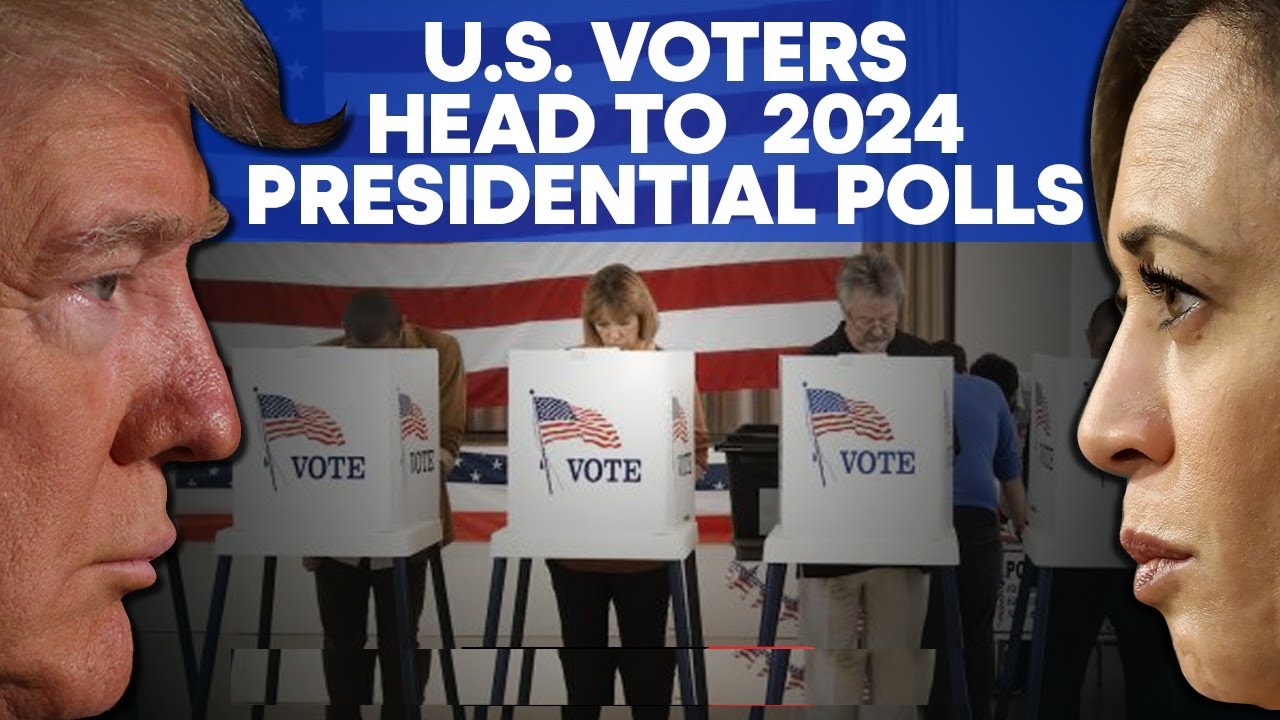
As the 2024 U.S. presidential election unfolds What Time do USA polls open in States, the race between Democratic candidate Kamala Harris and Republican challenger Donald Trump remains exceptionally close. With both candidates vying for the crucial 270 electoral votes needed to secure the presidency, the outcome may rest on just a handful of swing states. Pennsylvania, Georgia, North Carolina, Michigan, Arizona, Wisconsin, and Nevada are pivotal, and it may take time before we know who the next U.S. president will be. Here’s a breakdown of when results are likely to come in and what factors might affect the timeline.
Election Night Expectations
For decades, Americans have often waited late into the night for the final calls in presidential elections, particularly when key states are still counting votes. This year, due to close polls, it’s highly likely that results will not be fully determined on election night. If the race hinges on absentee ballots or tight margins in swing states, a definitive answer may not come until days after.
Why Results May Be Delayed
Several swing states, including Arizona, Nevada, Pennsylvania, and Wisconsin, have voting procedures that could delay final counts. Absentee ballots in these states, which are common due to mail-in voting options, often require additional time for processing. If Harris or Trump secures a substantial lead in other swing states, a result may be projected sooner. However, in a closely contested race, it’s realistic to expect a waiting period before any calls are made.
The Role of News Organizations in Calling the Election
News outlets like the Associated Press (AP), CNN, NBC, and others play a major role in informing the public when a candidate has likely won enough electoral votes to claim victory. However, it’s important to understand that these organizations only project winners based on vote counts and statistical models—they don’t certify the results. Official certification of the election results by election offices happens days or weeks after the election.
The AP and other major networks rely on sophisticated decision desks, which analyze vote totals, polling data, and demographic trends. Their goal is to make projections only when there’s near-certainty about the outcome. David Scott, AP’s head of news strategy, emphasizes that calls are made with “absolute certainty” to avoid premature announcements.
How News Organizations Make Election Calls
Each network uses its own decision model to project winners on election night. This can sometimes lead to networks calling states at different times, based on their unique methodologies. News organizations have become more cautious about making early calls, particularly after the infamous 2000 election, where networks prematurely called Florida for George W. Bush.
Decision Desk HQ, an independent organization specializing in election projections, assists several media networks in ensuring rigorous and accurate call processes. Since state results are often unpredictable, this decision model is critical in maintaining public confidence in reported results.
Reflecting on the 2020 Election Timeline
In 2020, it took several days before Joe Biden was declared the winner, with Pennsylvania and Nevada clinching the victory four days after Election Day. Other critical states, such as Arizona and Georgia, took even longer to be called. The timelines for reporting this year could be similar, though some states may be faster in counting ballots thanks to changes in procedures since 2020.
Potential Factors Affecting the Speed of 2024 Results
The speed of reporting depends on vote margins. If a candidate leads by more than 0.5% in key states, results will likely come sooner. Mail-in ballots, fewer this year compared to 2020, are expected to be processed faster. Additionally, three swing states—Arizona, Georgia, and Michigan—have expanded pre-canvassing of ballots, allowing election officials to prepare ballots for counting before Election Day. North Carolina, Nevada, and Pennsylvania have also shortened the timeframe for accepting mail-in ballots.
However, if vote margins are under 0.5%, a recount may be triggered, delaying final results. In addition, states like Nevada accept mail-in ballots postmarked by Election Day up to three days after, further extending the timeline.
What If Legal Challenges Arise?
Legal disputes could also contribute to delays in determining the final result. Pending lawsuits in states like Pennsylvania and Nevada may require court involvement to decide which ballots should be counted. Provisional ballots, which often require voter verification, may also play a role in determining the final outcome in close races.
Which States Will Be Called First?
On election night, expect several East Coast states with clear frontrunners to be called early. States with overwhelming support for one candidate may report results within hours. States like Wisconsin and Georgia, however, may take longer due to tight margins and high volumes of absentee ballots.
Understanding the ‘Red Mirage’ and ‘Blue Shift’
In recent elections, the concepts of a “red mirage” and “blue shift” have gained attention. These terms describe how in-person votes counted on election night may initially favor Republican candidates (the “red mirage”), while mail-in and absentee ballots, often favoring Democratic candidates, are counted later, causing a “blue shift.” For example, in 2020, Trump led initially in several states, but Biden surged as mail-in ballots were tallied.
Why Isn’t the Election Based on the Popular Vote?
The Electoral College, not the national popular vote, determines the outcome of the U.S. presidential election. Each state’s electoral votes depend on its number of congressional districts, plus two votes for Senate representation. To win, a candidate must secure at least 270 of the 538 electoral votes.
In the 2020 election, Biden won by approximately seven million votes in the popular count but earned 306 electoral votes to Trump’s 232, demonstrating the Electoral College’s role in determining the presidency.
When Will We Know Who Controls Congress?
Alongside the presidential race, all 435 seats in the House of Representatives and one-third of Senate seats are up for election. While many congressional races are projected on election night, close races may remain undecided, making it difficult to immediately determine party control in Congress. Some congressional races may even require recounts, further delaying final results.
Final Thoughts: Preparing for a Potentially Long Wait
The 2024 presidential election is poised to be a close and highly anticipated race. Both campaigns are focused on securing key swing states, and close margins mean we may be waiting days or even weeks for the final results. As always, news organizations will rely on rigorous standards and analysis to provide the most accurate projections, but official certification remains with election officials.
Patience is key as the country waits to learn who will lead for the next four years. The process ensures that each vote is accurately counted, preserving the integrity of one of the world’s most closely watched elections.