Introduction to Telangana’s Food Safety Regulations
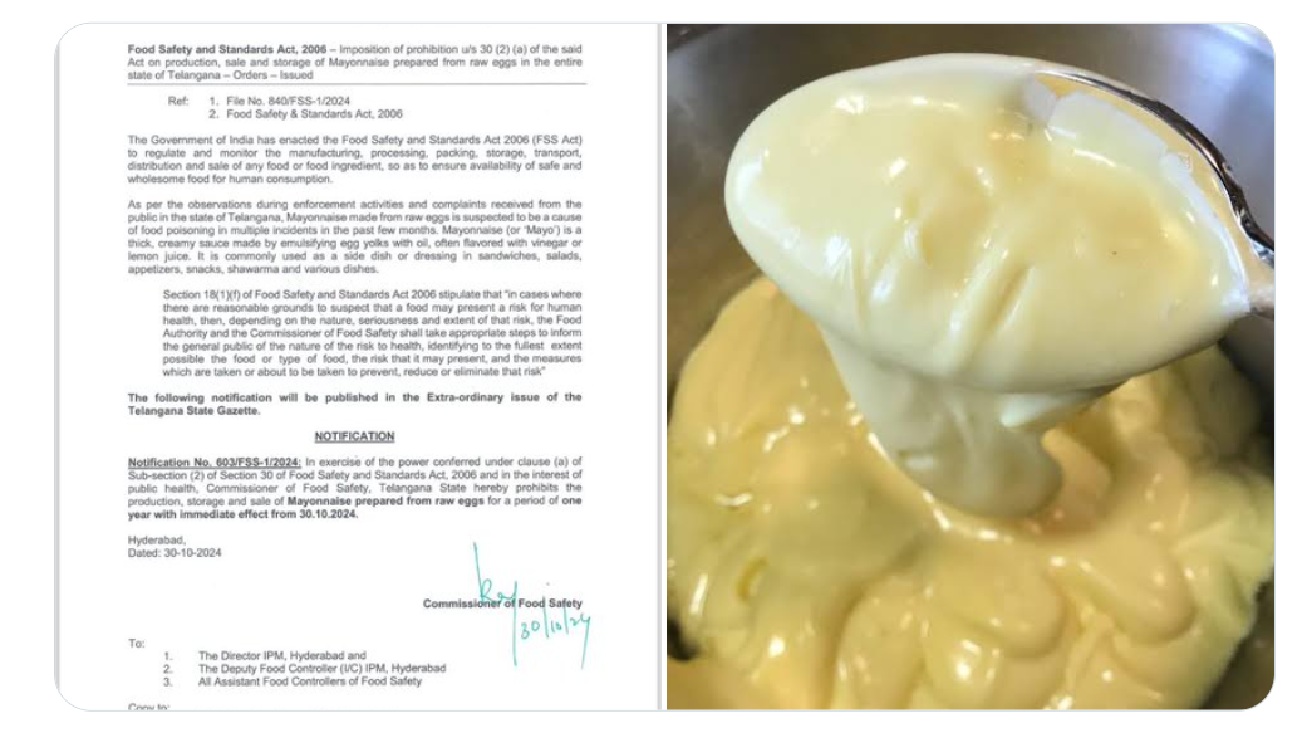
In a significant move to safeguard public health, the Government of Telangana has imposed a ban on the production, sale, and storage of mayonnaise made with raw eggs throughout the state. This decision comes as part of ongoing efforts to adhere to the Food Safety and Standards Act, 2006 (FSS Act), which aims to provide safe, wholesome food to the public. The prohibition will remain in effect for one year, starting from October 30, 2024.
Understanding the Food Safety and Standards Act, 2006
The Food Safety and Standards Act, 2006, was established by the Government of India to regulate various aspects of food production, processing, storage, distribution, and sale. This law is vital in ensuring that food consumed by the public is safe, healthy, and free from contaminants. Under this legislation, food safety authorities have the power to monitor and take action against any food items or practices that may pose a risk to public health.
Why Raw Egg Mayonnaise Was Banned in Telangana
Following several complaints and health concerns, Telangana’s Food Safety Department identified mayonnaise prepared with raw eggs as a possible cause of foodborne illnesses. Instances of food poisoning linked to raw egg-based mayonnaise have raised concerns among the public. Made by emulsifying egg yolks with oil, mayonnaise is popular in sandwiches, salads, shawarma, and a variety of snacks. However, using raw eggs in mayonnaise increases the risk of bacterial contamination, notably from Salmonella, which can lead to severe food poisoning symptoms.
Section 18(1)(f) of the FSS Act: Protecting Public Health
According to Section 18(1)(f) of the Food Safety and Standards Act, 2006, the Food Authority and the Commissioner of Food Safety must take necessary measures if there is a reasonable suspicion that a particular food product may pose a health risk. This section empowers food authorities to inform the public and take preventative steps to either restrict or ban such foods to eliminate or reduce the risk.
In Telangana’s case, after observing the potential health hazards posed by raw egg-based mayonnaise, the authorities have acted promptly to implement a one-year prohibition to protect the public.
Official Notification on the Prohibition of Raw Egg Mayonnaise
As per the notification issued by the Office of the Commissioner of Food Safety in Telangana:
Notification No. 603/FSS-1/2024: In exercise of the powers under clause (a) of Sub-section (2) of Section 30 of the Food Safety and Standards Act, 2006, the Commissioner of Food Safety, Telangana, has prohibited the production, sale, and storage of mayonnaise made from raw eggs throughout Telangana for one year, effective October 30, 2024.
This notification is an important step by the Telangana government to uphold food safety standards and prevent potential health risks associated with consuming raw egg-based mayonnaise.
Impact of the Ban on the Food Industry and Consumers
The ban will directly affect food producers, retailers, and restaurants across Telangana that use or sell mayonnaise made with raw eggs. Businesses will need to explore safer alternatives, such as pasteurized egg products, to maintain compliance and continue serving mayonnaise-based products without health risks. For consumers, this measure provides reassurance that their health and safety are prioritized by the government.
Conclusion: A Positive Move for Food Safety in Telangana
The decision to ban raw egg mayonnaise is a precautionary and proactive measure by the Telangana government to protect public health under the Food Safety and Standards Act, 2006. By prioritizing food safety, Telangana sets an example for other regions to follow in ensuring that food products available in the market are safe for consumption. This ban on raw egg mayonnaise reflects the state’s commitment to upholding high food safety standards and fostering a healthier environment for all.