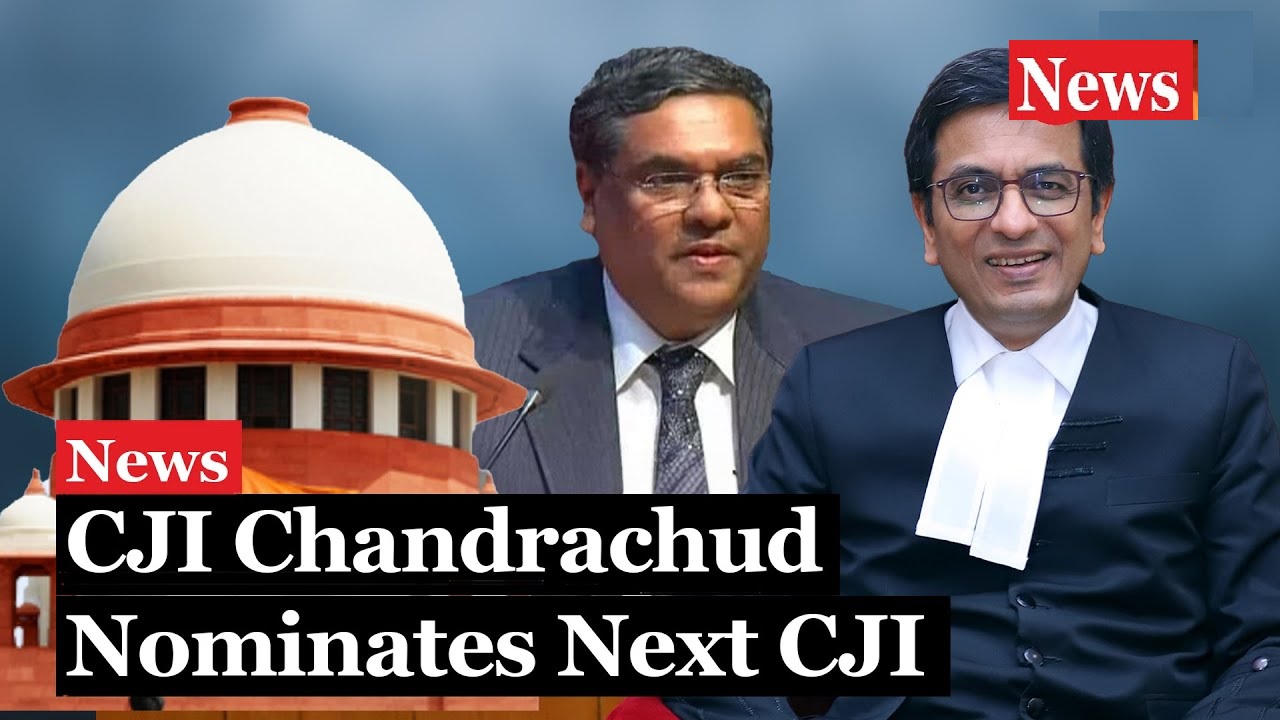
Justice Sanjiv Khanna Appointed as the Next Chief Justice of India
Justice Sanjiv Khanna has been officially appointed as the 51st Chief Justice of India (CJI), marking a significant milestone in the Indian judiciary. His appointment, set to take effect on November 11, 2024, comes after the outgoing CJI, D Y Chandrachud, recommended him as his successor in a letter to the Union Law Ministry. This decision is poised to bring forth a new chapter in India’s judicial leadership, as Justice Khanna prepares to take the reins with a tenure lasting until May 13, 2025.
The Presidential Appointment of Justice Sanjiv Khanna
On October 2024, the President of India formally appointed Justice Sanjiv Khanna as the next Chief Justice of India. This appointment follows the constitutional protocol wherein the President consults with the current Chief Justice before finalizing the decision. In a social media post, Union Law Minister Arjun Ram Meghwal announced, “In exercise of the power conferred by the Constitution of India, Hon’ble President, after consultation with Hon’ble Chief Justice of India, is pleased to appoint Shri Justice Sanjiv Khanna, Judge of the Supreme Court of India, as Chief Justice of India with effect from 11th November, 2024.”
This appointment places Justice Khanna in a prominent position as the 51st Chief Justice of India. He will hold this esteemed post for nearly seven months before his retirement on May 13, 2025.
Justice Khanna’s Notable Contributions to the Judiciary
Justice Sanjiv Khanna has built a reputation for delivering landmark judgments that have shaped India’s legal landscape. His notable contributions include several pivotal cases that have had a lasting impact on the country.
1. RTI Act and the Office of the CJI
One of Justice Khanna’s most celebrated rulings was in 2019, where he authored the lead judgment on behalf of the Constitution Bench that declared the Right to Information (RTI) Act applicable to the office of the Chief Justice of India. This judgment underscored the judiciary’s commitment to transparency and accountability, positioning the office of the CJI within the purview of public scrutiny under the RTI Act.
2. Hate Speech Regulation in Amish Devgan v. Union of India
In the 2020 case of Amish Devgan v. Union of India, Justice Khanna’s ruling emphasized the need for stringent regulation of hate speech in the country. His judgment played a crucial role in highlighting the dangers posed by incendiary remarks in a multicultural and diverse society like India. The ruling reinforced the judiciary’s role in curbing divisive and harmful rhetoric to maintain social harmony.
3. Dissent in the Central Vista Project
In 2021, Justice Khanna made headlines when he dissented from the majority judgment regarding the Central Vista project, a large-scale redevelopment initiative in the heart of New Delhi. He raised concerns about whether the necessary legal procedures had been followed, showcasing his commitment to upholding democratic processes and questioning executive overreach.
4. Irretrievable Breakdown of Marriage as a Ground for Divorce
In a landmark 2022 judgment, Justice Khanna led a Constitution Bench that held that the Supreme Court can dissolve a marriage on the grounds of irretrievable breakdown under Article 142 of the Constitution. This ruling expanded the scope of the court’s powers in matrimonial cases, offering a more compassionate approach to marital disputes and focusing on the well-being of the individuals involved.
5. High-Profile Bail Cases: AAP Leaders and the Delhi Liquor Policy Case
Justice Khanna has also handled politically sensitive cases, including the bail applications of Aam Aadmi Party leaders Arvind Kejriwal, Manish Sisodia, and Sanjay Singh in connection with the Delhi liquor policy scandal. In a notable decision in 2023, Justice Khanna’s bench refused bail to Manish Sisodia but emphasized the need for an expeditious trial. His court also played a key role in the eventual grant of bail to Sanjay Singh after the Enforcement Directorate (ED) faced tough questioning.
In another case, Justice Khanna’s bench granted interim bail to Arvind Kejriwal, allowing him to campaign during elections. This ruling was one of its kind, indicating the court’s recognition of the practical needs of political figures while ensuring that legal processes were not compromised.
Justice Khanna’s Role in EVM-VVPAT and Electoral Reforms
Justice Khanna’s bench also addressed issues related to electoral transparency. In a case concerning the Electronic Voting Machines (EVM) and Voter Verifiable Paper Audit Trail (VVPAT) systems, his bench denied a plea for 100% VVPAT verification but directed the Election Commission of India (ECI) to implement further safeguards. This ruling underscored the court’s balancing act between ensuring electoral integrity and maintaining efficiency in the voting process.
Article 370 and Electoral Bonds Judgments
Justice Khanna was also part of the Constitution Bench that dealt with the controversial Article 370 case, which questioned the abrogation of Jammu and Kashmir’s special status. Additionally, in the Electoral Bonds case, which examined the legality of anonymous political donations, Justice Khanna wrote a separate concurring opinion, expressing concerns about the implications for transparency and accountability in electoral funding.
Justice Sanjiv Khanna’s Path to the Supreme Court
Justice Khanna’s judicial journey began in 1983 when he enrolled as an advocate with the Bar Council of Delhi. His career progressed steadily, and in 2005, he was elevated as an additional judge of the Delhi High Court. A year later, he was appointed a permanent judge. Before his appointment to the Supreme Court in 2019, he held various significant positions, including Chairman of the Delhi Judicial Academy and head of the Delhi International Arbitration Centre.
Throughout his career, Justice Khanna has demonstrated a deep commitment to upholding the principles of justice and fairness. His judgments have often reflected a progressive approach, focusing on human rights, transparency, and the rule of law.
Conclusion: A New Era in the Indian Judiciary
As Justice Sanjiv Khanna prepares to take on the role of the Chief Justice of India, his appointment marks the beginning of a new era for the Indian judiciary. With a tenure lasting until May 2025, Justice Khanna is expected to steer the Supreme Court through several critical cases, potentially leaving a lasting legacy on the nation’s legal landscape. His body of work, marked by groundbreaking judgments and a commitment to the law’s ethical foundations, positions him as a key figure in shaping India’s judicial future.