Thaad Missile System Iran’s Response to U.S. THAAD Deployment in Israel
The recent announcement by the United States to deploy its Terminal High Altitude Area Defense (THAAD) system to Israel has drawn sharp reactions from Iran. Iranian Defense Minister Aziz Nasirzadeh labeled the move as part of the “enemy’s psychological warfare,” downplaying its significance and questioning the strategic implications of the U.S.’s decision. This article will explore the political and military context surrounding the U.S. deployment of THAAD to Israel and examine Iran’s response within the framework of its ongoing tensions with Israel.
The U.S. THAAD System: Enhancing Israel’s Missile Defense
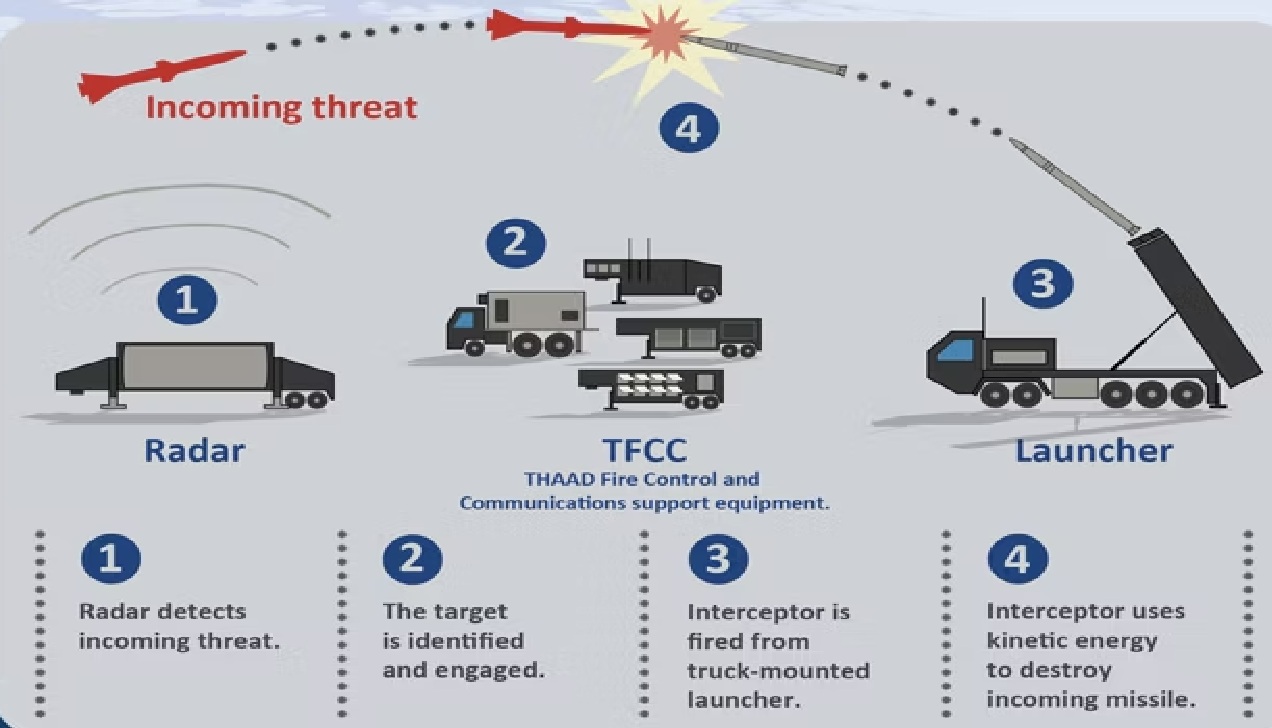
On Sunday, the U.S. revealed its plans to send the THAAD system to Israel, with American troops deployed to operate the defense system. The THAAD system, designed to intercept and destroy ballistic missiles, is not new, as Iranian Defense Minister Nasirzadeh pointed out, but its deployment to Israel comes at a critical time. With tensions escalating between Israel and Iran, particularly following recent missile strikes by Iran, the introduction of THAAD further strengthens Israel’s already robust missile defense network, which includes the Iron Dome, David’s Sling, and the Arrow systems.
The THAAD system, considered complementary to Israel’s existing defenses, is designed to counter short, medium, and intermediate-range ballistic missiles. It can destroy missiles using kinetic energy, striking its targets at ranges of 150 to 200 kilometers. The deployment of this system brings a significant operational capability that could deter further missile strikes from Iran.
Iran’s Reaction: Dismissing THAAD as Psychological Tactics
Nasirzadeh’s remarks during a press briefing reflect Iran’s strategy to downplay the U.S. move as a psychological operation rather than a game-changing development. “There is no particular problem in that regard,” Nasirzadeh stated, indicating that Iran does not view the THAAD deployment as a major threat. By framing the U.S. actions as psychological warfare, Iran attempts to minimize the perception of U.S. military superiority and maintain confidence in its own defensive capabilities.
Iran’s response to the THAAD deployment comes amid heightened tensions between the two countries. On October 1, Iran launched approximately 180 missiles at Israeli targets, further intensifying the conflict. Israel, in return, has made clear that it is considering military options to retaliate for these attacks, keeping all cards close to the chest.
U.S. Military Commitment to Israel
The deployment of the THAAD system with U.S. troops on Israeli soil represents a significant moment in U.S.-Israel relations. While U.S. President Joe Biden has emphasized that no combat troops will be deployed, the fact that American soldiers will operate the THAAD system is a clear signal of U.S. commitment to Israel’s defense. The Biden administration has reiterated its “ironclad” support for Israel, particularly in the face of growing threats from Iran.
This move also aligns with broader U.S. military strategy in the region, as the U.S. has stationed various missile defense systems across the Middle East, including Patriot systems. The addition of THAAD in Israel marks an important step in bolstering the region’s defense infrastructure against Iranian missiles.
Israel’s Military Preparedness and Strategic Calculations
In light of Iran’s missile strikes and ongoing military posturing, Israel is preparing for possible retaliatory action. The deployment of the THAAD system could play a pivotal role in Israel’s defense strategy, especially as the country weighs its options for military action against Iran. U.S. officials have indicated that Israel has likely narrowed down its list of potential targets in Iran, suggesting that any forthcoming military response will be precise and strategic.
Israel’s missile defense systems, including Iron Dome, David’s Sling, and the Arrow systems, provide layered protection, intercepting threats at different altitudes and ranges. The introduction of THAAD adds another layer, offering protection against longer-range missiles that could pose a serious threat to Israeli cities and infrastructure.
The Broader Geopolitical Context: U.S. and Israel vs. Iran
The U.S. and Israel have long maintained close military ties, with the U.S. providing billions in military aid to Israel annually. The deployment of THAAD to Israel is part of a broader strategy to counter Iranian influence in the region. Iran, for its part, has repeatedly stated that it will not hesitate to defend itself, with Nasirzadeh’s remarks reflecting the country’s readiness for a potential escalation.
Iran has also warned that there will be “no red lines” in its defense strategy, meaning it is willing to go to great lengths to protect its interests. Tehran has made it clear that it views U.S. military presence in the region as a provocation, and the deployment of THAAD may further escalate tensions between the two countries.
Conclusion: THAAD’s Role in U.S.-Iran Tensions
The U.S. decision to send its THAAD system to Israel has undoubtedly heightened the stakes in the ongoing conflict between Iran and Israel. While Iranian Defense Minister Nasirzadeh may dismiss the deployment as part of psychological warfare, the military implications are significant. THAAD represents a powerful deterrent against Iranian missile attacks, and its deployment with U.S. troops underscores the U.S. commitment to Israel’s security.
As tensions continue to simmer, the world watches closely, knowing that any miscalculation could lead to a broader conflict. With the THAAD system now part of Israel’s defense architecture, both countries are preparing for the possibility of further military escalations in an already volatile region