KCR and KTR Opposition to Musi Beautification and HYDRAA
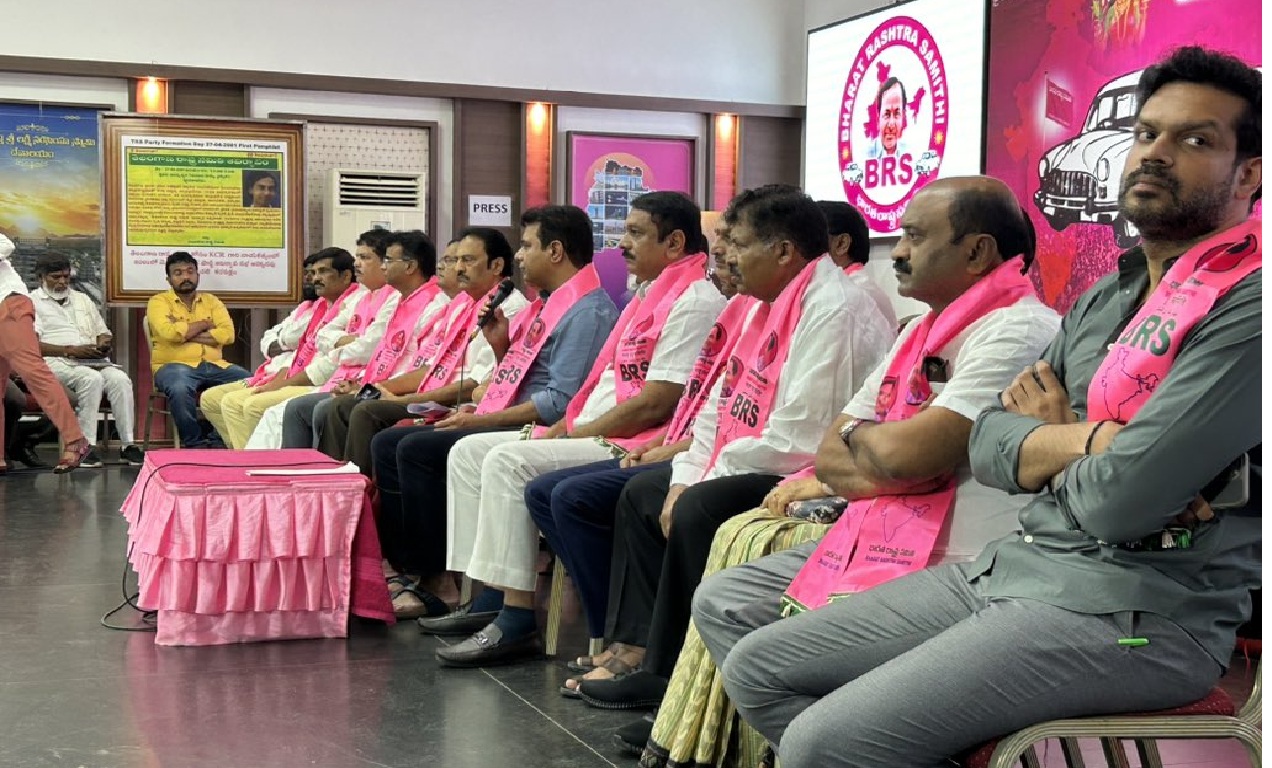
The issue of Musi River rejuvenation has sparked considerable debate in Telangana, especially in Hyderabad. Families, local leaders, and political parties have voiced concerns about the government’s inconsistent stance on the matter. In a recent visit to Telangana Bhavan, 440 families approached local authorities seeking help regarding the Musi River and HYDRAA (Hyderabad Urban Development Reforms and Revitalization Act). Their primary concern revolved around the impact these projects might have on local communities, particularly the poor.
Musi River Rejuvenation: A Paradox of Promises
Telangana’s ruling party, led by the Bharat Rashtra Samithi (BRS), has been vocal about the rejuvenation of the Musi River, but the initiative has not been without controversy. BRS MLA and Telangana Minister K.T. Rama Rao (KTR) compared the government’s handling of the Musi project to the confusion surrounding demonetization. KTR argued that, much like how demonetization came with changing objectives (from black money to digitalization and combating Naxalism), the government has shifted its narrative on Musi river development.
At first, the emphasis was on beautification, which then evolved into discussions about aiding Nalgonda. The government even made grand announcements of investing ₹1.5 lakh crore into the project. However, the real issue lies in the fluctuating directives, with officials later blaming the Centre for not cooperating despite submitting a Detailed Project Report (DPR).
KCR’s Opposition to Musi Beautification: Standing for the Poor
Chief Minister K. Chandrashekar Rao (KCR), leader of the BRS party, initially opposed the Musi beautification proposal, citing concerns about its impact on Hyderabad’s poorer communities. KCR instructed the state’s Municipal Administration and Urban Development Minister to present an alternative plan that would protect the interests of the economically disadvantaged, particularly those residing near the riverbanks.
In his view, any project that displaces or harms low-income residents would only serve to deepen the wealth disparity in the city. KCR’s opposition gained significant attention, leading to calls for more inclusive planning and transparent governance.
HYDRAA: A Tool for Intimidation?
HYDRAA, which was introduced as part of Hyderabad’s urban development, has also come under fire. Critics, including KTR, argue that the initiative is being used to target large builders and developers, creating an environment of fear. KTR claims that the government is using HYDRAA as a tool to intimidate big construction companies while simultaneously threatening the livelihoods of the city’s poorer residents.
This dual approach, critics say, has left many Hyderabad citizens uncertain about the future of urban development in the region. KTR has promised that the BRS will stand as a “shield” for the poor, protecting them from forced evictions and bulldozing operations, which are often justified under the guise of development projects.
BRS’s Commitment: Monitoring and Legal Action
As the debate intensifies, BRS leaders have expressed their dedication to closely monitor developments on the ground. The party has pledged to visit sewage treatment plants (STPs) that have already been constructed and those still in progress to ensure environmental sustainability and progress in the region.
Moreover, the BRS has vowed to regularly visit low-income neighborhoods, or “bastis,” to directly engage with the affected communities. They also intend to challenge any legal overreach by the government in court, ensuring that no unlawful activities take place in the name of urban development.
State Financial Management and Development Loans
Another critical issue raised by KTR pertains to state finances and development loans. He criticized the Congress for its perceived failure in securing funds based on sound financial projections. According to KTR, loans should not be granted based on the “face value” of Congress leaders but rather on the state’s financial standing and its ability to handle debt effectively.
In contrast, he praised the BRS government’s track record in handling state finances responsibly, despite the opposition’s claims to the contrary. He pointed out that while the Revanth-led government has accumulated an ₹80,000 crore debt, they have not introduced new initiatives nor adequately implemented existing schemes to address critical issues in the state.
Criticism of the Congress Government: Revanth Reddy’s Leadership Under Scrutiny
KTR did not hold back when it came to critiquing the leadership of Congress chief Revanth Reddy. According to KTR, Revanth’s speeches sound more like the rhetoric of Bharatiya Janata Party (BJP) leaders, rather than offering tangible solutions to local problems. One of the key points KTR raised was whether Revanth could explain how a Very Low Frequency (VLF) station would benefit the people. He also called on Revanth to support the declaration of the Musi River’s birthplace as an eco-sensitive zone, similar to how Gangotri was protected for the Ganges.
KTR went so far as to accuse Revanth of being afraid of Prime Minister Narendra Modi, insinuating that this fear has led to weak governance in Telangana. The BRS MLA further challenged Revanth to hold a public meeting in the Musi River area, rather than hosting all-party meetings in air-conditioned rooms, far removed from the concerns of ordinary citizens.
Greater Hyderabad Municipal Corporation (GHMC) Reform: A Headline Strategy?
The debate over the Greater Hyderabad Municipal Corporation (GHMC) has also been a flashpoint in Telangana’s political landscape. The government’s decision to potentially split the GHMC into four corporations has been met with skepticism by KTR and other BRS leaders. KTR described the move as “headline management,” implying that it is a mere tactic to generate media attention rather than a genuine attempt at improving governance.
According to KTR, if the ruling government were serious about such a reform, it would have been introduced in the Cabinet for proper discussion and approval. The absence of such a step only reinforces the notion that the move is aimed at grabbing headlines rather than ensuring the welfare of Hyderabad’s citizens.
Conclusion: The Need for Transparent Urban Development
As the controversy over the Musi River rejuvenation and Hyderabad’s broader urban development initiatives continues, one thing is clear: there is an urgent need for transparent governance and careful planning. The inconsistencies in project proposals, the potential displacement of the poor, and the financial management of the state all point to a broader issue of accountability.
The BRS, under the leadership of KCR and KTR, has positioned itself as a defender of the marginalized, vowing to resist any measures that harm low-income families. However, the ongoing political wrangling suggests that much work remains to be done to ensure that Hyderabad’s development benefits all residents, not just a select few.