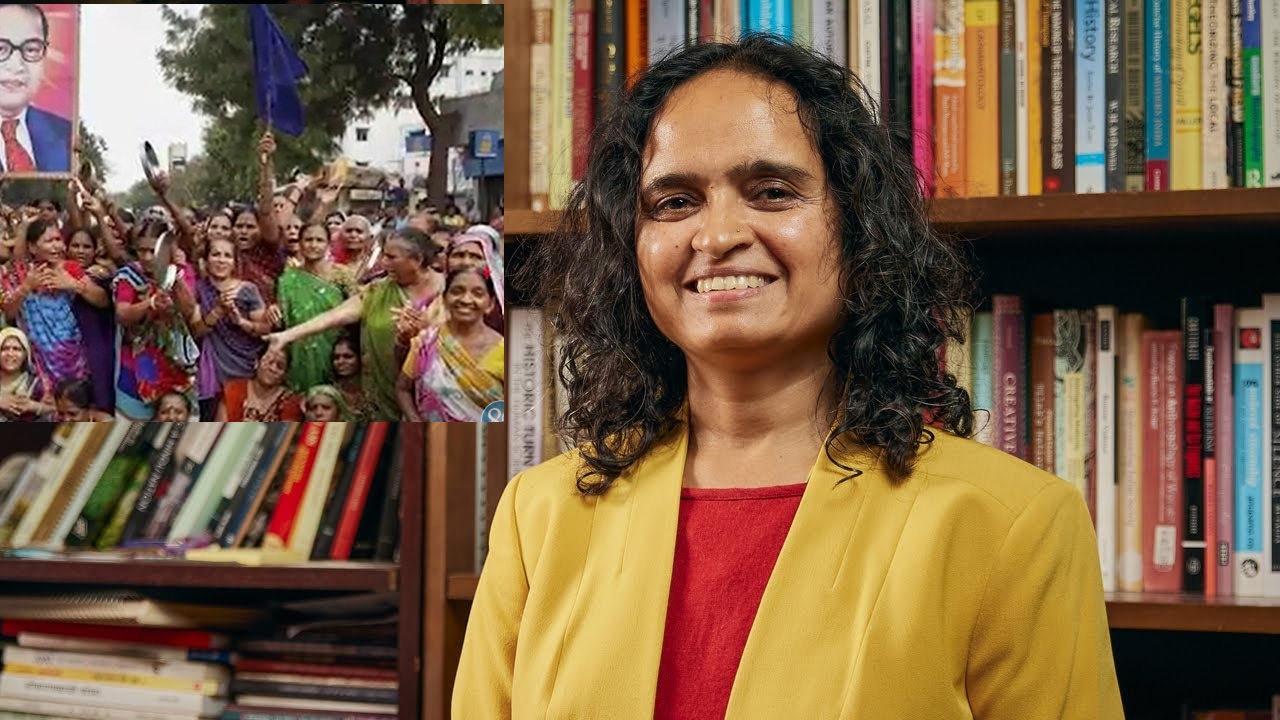
Shailaja Paik, a prominent Indian-American historian, has been recognized for her groundbreaking research on Dalit women with an $800,000 MacArthur Fellowship, commonly referred to as the “genius” grant. Paik, a distinguished research professor at the University of Cincinnati, is known for her pioneering work on caste, gender, and sexuality. Her scholarship provides a deep exploration of how caste-based oppression, particularly for Dalit women, remains deeply entrenched in modern society.
Shailaja Paik’s Groundbreaking Work on Dalit Women
The MacArthur Foundation, known for awarding individuals who exhibit exceptional talent and creativity, announced that Paik’s research focuses on the “multifaceted experiences of Dalit women” and their struggle against the caste system. Through her work, Paik sheds light on the long-standing caste discrimination that continues to subjugate Dalit women, particularly through the lens of gender and sexuality.
Paik’s research provides a crucial understanding of how caste and gender intersect, reinforcing Dalit women’s marginalization in society. Her innovative approach has made significant contributions to the field of history, offering a nuanced view of the ways in which Dalit women navigate systems of power that seek to deny them their dignity and humanity.
The MacArthur ‘Genius’ Grant and Its Significance
The MacArthur Fellowship is a highly prestigious award given annually to individuals across a wide range of fields, including academia, science, arts, and activism. It is intended as an investment in recipients’ potential, allowing them to continue their work without any restrictions. Importantly, the selection process is conducted anonymously, and recipients cannot apply for the grant. This year, Paik was chosen for her exceptional scholarship on caste oppression, with a particular focus on Dalit women’s struggles.
Paik’s award highlights her significant contributions to understanding how caste systems persist in modern society and how they intersect with gender and sexuality. The MacArthur Foundation praised her work for its ability to provide “new insights into the history of caste domination” and its critique of how Dalit women are continuously dehumanized.
Exploring the Lives of Dalit Women Performers in Tamasha Theatre
In one of her most notable projects, Paik delves into the lives of Dalit women performers in Tamasha, a traditional form of bawdy folk theatre that has been a part of Maharashtra’s cultural fabric for centuries. The state has tried to reframe Tamasha as an honorable and quintessentially Marathi art form, but, as Paik notes, the stigma of vulgarity (ashlil) still clings to Dalit women performers.
This work culminated in her second book, The Vulgarity of Caste: Dalits, Sexuality, and Humanity in Modern India. In it, Paik explores the complex ways in which caste, gender, and sexuality are intertwined, and how Dalit women, particularly those in public performance, are viewed as vulgar by mainstream society. Her scholarship unpacks how these women challenge societal norms while still being subject to the deeply ingrained prejudices of caste hierarchy.
Paik’s Personal Journey as a Dalit Scholar
Shailaja Paik’s academic career is deeply rooted in her personal experiences. As a member of the Dalit community herself, she has firsthand knowledge of the struggles and discrimination faced by this marginalized group. Growing up in a slum in Pune, Paik was inspired by her father’s commitment to education, which fueled her own academic ambitions. She earned her master’s degree from Savitribai Phule University in Pune before pursuing a PhD at the University of Warwick in the UK.
Paik’s journey as a scholar has taken her to various prestigious institutions, including Yale University, where she served as a visiting assistant professor of South Asian history. Her personal and professional experiences have shaped her commitment to shedding light on the lived realities of Dalit women, creating an archive of oral histories to document stories that are often overlooked or erased.
Critiquing the Legacy of Dr. B.R. Ambedkar
Paik’s work not only focuses on documenting the experiences of Dalit women but also critically engages with the narratives surrounding caste abolition, particularly the legacy of Dr. B.R. Ambedkar, one of India’s most influential figures in the fight against caste-based oppression. While Paik acknowledges Ambedkar’s monumental role in shaping India’s Constitution and his fight for Dalit rights, her scholarship also examines how caste abolitionism has intersected with the lives of Dalit women, raising questions about gender and sexuality that are often sidelined in broader discussions about caste.
Through this critique, Paik provides a more comprehensive understanding of how caste, gender, and sexuality are interconnected, and how Dalit women’s voices and experiences remain vital to any discussions on social justice and equality.
Conclusion: Paik’s Vision for Human Emancipation
Shailaja Paik’s work is not just about documenting history; it is about challenging entrenched systems of inequality and creating a more inclusive and democratic society. By studying the inequalities faced by Dalit women, Paik’s research contributes to the broader goal of human emancipation, offering new ways of thinking about humanity and justice on a global scale.
With her MacArthur Fellowship, Paik is poised to continue her critical work, providing invaluable insights into how marginalized communities can fight for their dignity and rights. Her scholarship not only highlights the struggles of Dalit women but also serves as a call to action for a more equitable and just world.