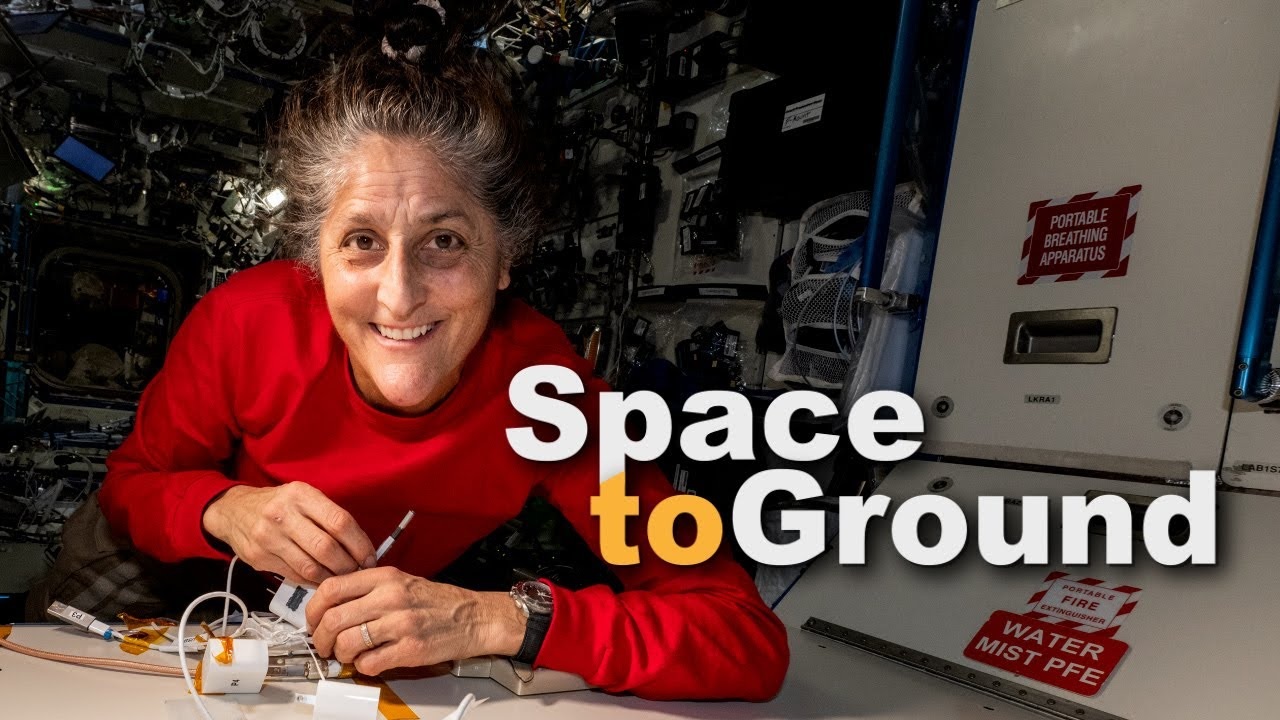
NASA Prepares SpaceX Rescue Mission for Sunita Williams and Barry Wilmore, who are currently aboard the International Space Station (ISS) following complications with their journey on Boeing’s Starliner spacecraft. SpaceX will play a pivotal role in this rescue operation, which is set to begin with the launch of a two-person crew to the ISS.
Astronauts’ Extended Stay on ISS Due to Starliner Issues
Ken Bowersox, NASA’s associate administrator for space operations, addressed the situation in a press conference, confirming the agency’s commitment to ensuring a safe return for the astronauts. “We’re going to find spots for them to fly,” Bowersox stated, referring to the delayed missions of astronauts Williams and Wilmore. He further acknowledged the challenges astronauts face when their missions are delayed, adding, “We really appreciate how hard it is to give up a mission and wait a little bit longer.”
Williams and Wilmore arrived at the ISS aboard Boeing’s Starliner spacecraft on June 6. However, their return to Earth was hindered by technical issues that emerged during the spacecraft’s docking process. These included helium leaks and failures in the Starliner’s thrusters, which are essential for maneuvering the spacecraft in space. NASA and Boeing conducted months of rigorous analysis and testing, ultimately concluding that it was too risky to bring the astronauts back to Earth on the Starliner. As a result, the spacecraft was returned uncrewed on September 6, successfully landing in New Mexico.
SpaceX Crew-9: NASA’s Solution to the Starliner Setback
In response to the complications with Boeing’s Starliner, NASA has turned to SpaceX for a solution. The upcoming SpaceX Crew-9 mission is designed to not only continue important science operations aboard the ISS but also to bring back the stranded astronauts. The mission will be conducted using SpaceX’s reliable Dragon spacecraft, which has become NASA’s go-to solution for crewed missions to the ISS.
The SpaceX Dragon will carry NASA astronaut Nick Hague and Roscosmos cosmonaut Aleksandr Gorbunov to the ISS. Their five-month science mission will focus on critical research and experiments that contribute to humanity’s understanding of space. More importantly, this mission marks the beginning of a carefully coordinated plan to bring Williams and Wilmore home safely.
Launch and Docking Schedule for SpaceX Crew-9
The SpaceX Crew-9 mission is set to launch on Saturday, September 28, at 1:17 p.m. EDT from Space Launch Complex-40 at Cape Canaveral Space Force Station in Florida. This launch will be a historic event, as it is the first human spaceflight mission to launch from that particular pad. NASA officials have meticulously prepared for this mission, ensuring that all systems are go for a successful takeoff.
Following the launch, the SpaceX Dragon spacecraft is expected to dock with the ISS at approximately 5:30 p.m. on Sunday, September 29. The mission’s timeline has been carefully planned to ensure smooth docking and crew handover operations. Once aboard the ISS, Nick Hague and Aleksandr Gorbunov will begin their mission, and preparations for the return of Williams and Wilmore will commence.
SpaceX and NASA’s Collaborative Efforts to Ensure Astronaut Safety
The SpaceX Crew Dragon spacecraft has established itself as a reliable platform for space travel, with a proven track record in ferrying astronauts to and from the ISS. NASA’s partnership with SpaceX has proven crucial, especially in light of the technical setbacks faced by Boeing’s Starliner. In this mission, SpaceX’s state-of-the-art technology will be pivotal in safely retrieving the astronauts who have been in space for an extended period due to unforeseen circumstances.
NASA has a long history of working with private companies like Boeing and SpaceX to achieve its space exploration goals. While the issues with the Starliner are a setback, NASA’s ability to adapt and find alternative solutions is a testament to the agency’s resilience and commitment to astronaut safety. The decision to use the SpaceX Dragon spacecraft underscores the importance of having multiple platforms available for crewed space missions.
A Glimpse into the Future of Space Travel
The complications with Boeing’s Starliner and the reliance on SpaceX to rescue the stranded astronauts illustrate the challenges that come with advancing space technology. However, these events also highlight the importance of collaboration and innovation in the aerospace industry. As NASA continues to push the boundaries of space exploration, the lessons learned from missions like this will shape the future of human spaceflight.
In addition to providing transportation for astronauts, missions like SpaceX Crew-9 play a crucial role in advancing scientific research. The experiments and studies conducted aboard the ISS have far-reaching implications, contributing to advancements in fields such as medicine, physics, and environmental science. This mission, in particular, will focus on long-duration spaceflight and its effects on the human body, providing critical data for future manned missions to the Moon and Mars.
Conclusion: The Importance of Safe Return Missions
NASA’s top priority is the safety of its astronauts, and the SpaceX Crew-9 mission is a clear demonstration of this commitment. Bringing Sunita Williams and Barry Wilmore back to Earth after their extended stay aboard the ISS is a delicate and critical operation, and NASA has turned to SpaceX’s reliable Dragon spacecraft to accomplish this.
As space exploration continues to evolve, unforeseen challenges are inevitable. However, NASA’s ability to adapt, innovate, and collaborate with partners like SpaceX ensures that missions are completed safely and successfully. The upcoming rescue mission will not only return astronauts to Earth but will also provide valuable insights into how future spaceflights can be improved.
The success of this mission will further solidify SpaceX’s position as a leader in space travel, proving that the partnership between NASA and private aerospace companies is essential for the future of space exploration.