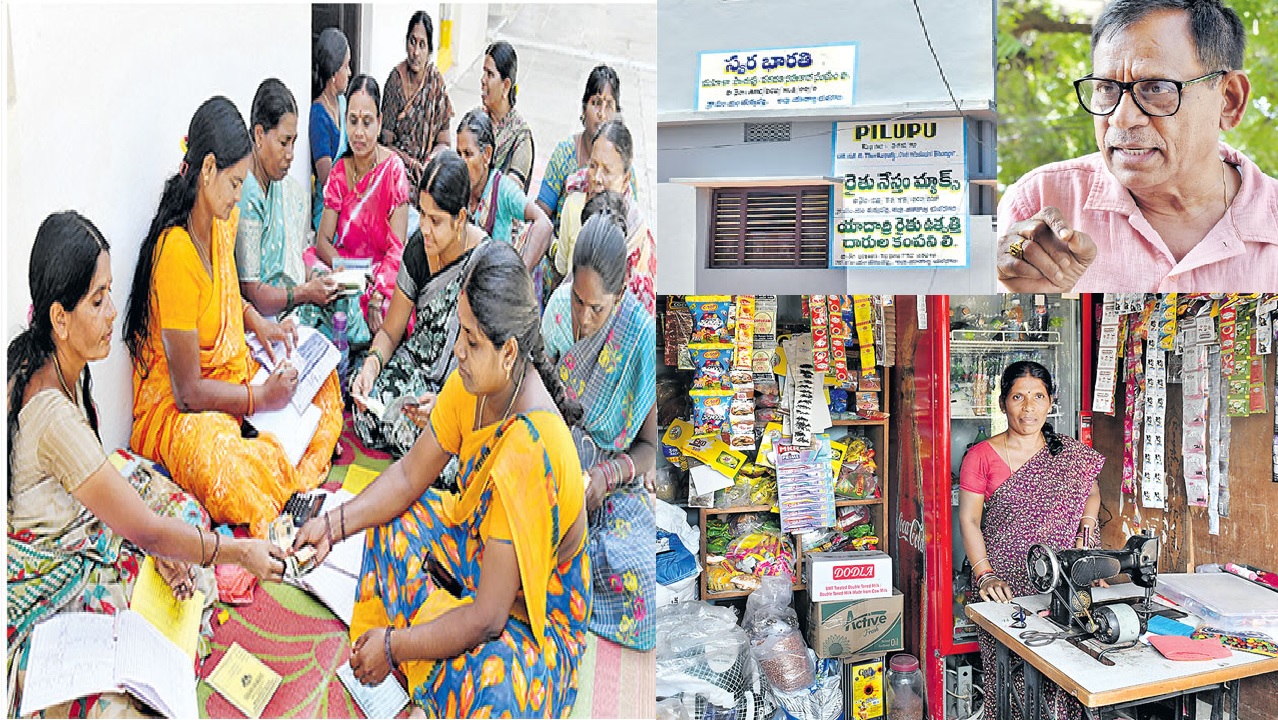
In the remote villages of Telangana, India, a quiet revolution has been brewing among ordinary women—housewives with little formal education—who have transformed their lives through the power of savings and community support. This is the story of how these women, once impoverished and struggling to survive, became financially independent and started businesses that not only support their families but also provide employment to others. Here, we explore the inspiring journey of several women and their savings movement under the “Swarabharati” cooperative.
17 Villages and a Shared Journey to Financial Freedom
Women from rural areas like Erragunta, Ramavath Sumitra, Jinna Srilatha, Edapalli Shobha, and others once faced dire circumstances. Many of them, with minimal education, worked as daily wage laborers, struggling to make ends meet. They had to borrow money for basic needs like agriculture, medical expenses, or even family celebrations. Yet, despite the odds, they came together under the banner of the Swarabharati Women’s Mutual Aid Cooperative to fight poverty.
With over 30 crore rupees in loan transactions, these women turned a humble savings initiative into a flourishing movement. The Swarabharati Cooperative, with its network of 166 groups across 17 villages, now boasts a bank balance of 5 crore rupees. This movement, which started three decades ago, has changed the lives of more than 2,000 women, who are now self-reliant, managing various small businesses, and paving the way for others to follow.
From Despair to Economic Empowerment
In the early 1990s, villages in the present-day Yadadri-Bhuvanagiri district were hit hard by drought and economic hardship. Women were forced to work in harsh conditions, doing menial labor to support their families. The savings movement was sparked during this time when Mugu Janardhan, the founder of the “Pilupu” voluntary organization, started adult education programs in Turkpalli mandal. He was moved by the plight of the women and, in 1990, began promoting the idea of saving a small amount each week. By 1993, the idea had taken root, and savings groups with 250 members from five villages were established.
The Growth of Swarabharati: A Model of Success
As the movement expanded, eight villages with 1,286 women joined the effort, leading to the formal establishment of the Swarabharati Women’s Mutual Aid Cooperative in 1999 under the Max Act of 1995. Starting with just a few members, the cooperative now includes 2,101 women across 166 groups in 17 villages. Managed by a nine-member board of directors and supported by a team of 15 accountants and a manager, the cooperative runs like a well-oiled machine.
One of the hallmarks of the cooperative’s success is its transparency and organization. Every financial transaction is meticulously recorded, and each year, an audit is conducted for all the village groups. The cooperative’s meetings are simple affairs, with each member bringing their own food, emphasizing the importance of collective responsibility. On the 12th of this month, Swarabharati quietly celebrated its 25th anniversary, marking a milestone in its journey of empowering women.
Mutual Support and Small Loans for Big Dreams
Today, members of the Swarabharati cooperative save between 100 and 200 rupees each month. These savings allow them to take out loans—starting from 10,000 rupees and going up to 5 lakh rupees—at minimal interest rates. This financial support has enabled many women to pursue their dreams, whether that means starting a small business, expanding an existing one, or simply providing for their family’s needs.
Achieving Economic Independence Through Small Businesses
Through the cooperative, women have accessed loans totaling more than 30 crore rupees, which they’ve used to establish businesses like grocery stores, xerox shops, water plants, tent houses, and textile shops. Each of these women has built something out of nothing, transforming their lives and contributing to the local economy. Although the cooperative does not benefit from government schemes like other self-help groups, the members are proud of their independence, relying solely on the money they’ve saved and the financial discipline they’ve maintained over the years.
The Swarabharati Cooperative has also constructed its own building in Turkpalli, further cementing its presence as a powerful force for economic change in the region.
Beyond Business: Supporting Sustainable Agriculture and Social Causes
Swarabharati’s influence goes beyond just financial empowerment. The cooperative has played a significant role in promoting sustainable agricultural practices and addressing key social issues like female feticide and women’s rights. During the COVID-19 pandemic, the cooperative provided essential supplies to needy families. They have also partnered with the Deccan Development Society in Zaheerabad to encourage millet cultivation among farmers, helping purchase and process the grains grown by the community.
A Vision for the Future: The Dream of a Swarabharati Bank
Sumalatha Kodari, the president of the Swarabharati Cooperative, is clear in her vision for the future. She believes that the cooperative is a shining example of women’s empowerment, proving that with determination and unity, anything is possible. As the cooperative’s funds continue to grow, they plan to expand their financial operations by establishing their own bank with government approval. Recently, representatives from the German government visited to study Swarabharati’s operations, further highlighting its international impact.
For Sumalatha and the other women of Swarabharati, this cooperative is more than just a financial institution. It’s a family—a network of women who have worked together to overcome adversity, rise above poverty, and build a brighter future for themselves and their children.
Conclusion: A Testament to Women’s Strength and Resilience
Swarabharati’s success story is a beacon of hope for other rural women striving to break free from the cycle of poverty. What started as a small savings group has now grown into a thriving cooperative that supports not just its members, but also the entire community. These women, once constrained by their circumstances, are now role models, inspiring future generations to dream big and work hard for their dreams.
Through their dedication, resilience, and mutual support, the women of Swarabharati have proven that no challenge is too great to overcome. They have transformed not only their own lives but also the fabric of their communities, paving the way for a more prosperous and empowered future for all.