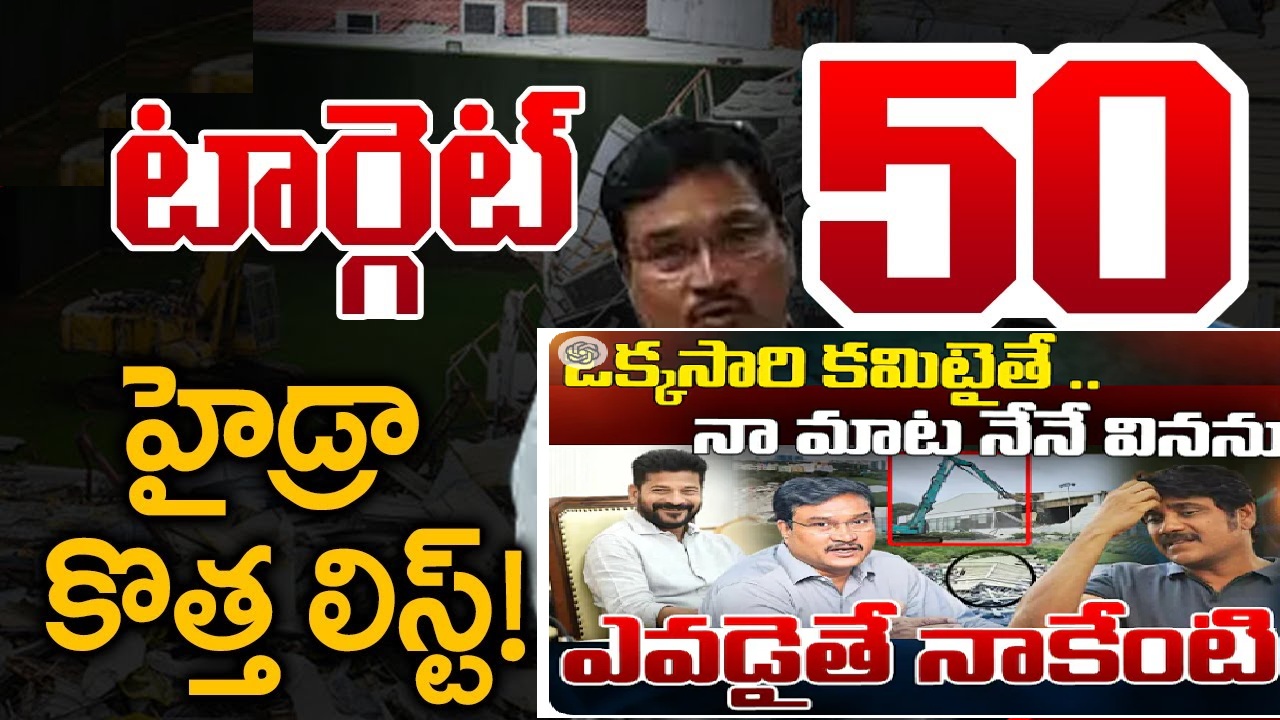
The Telangana High Court, under the guidance of Justice K. Lakshman, recently issued a set of guidelines for the Hyderabad Disaster Response and Assets Monitoring and Protection Agency (HYDRAA) regarding its approach to handling illegal encroachments and unauthorized constructions. These guidelines are crucial for ensuring that actions taken by HYDRAA are lawful and transparent, fostering public trust in state authorities.
1. Legal Considerations Before Demolition: Scrutinizing Encroachers’ Rights
One of the primary directives from the court emphasizes the need to thoroughly examine the legal status of those accused of encroachment or unauthorized construction. HYDRAA is instructed to verify the legitimacy of the titles held by the encroachers and assess any permissions they may have obtained from various authorities such as the Greater Hyderabad Municipal Corporation (GHMC), municipalities, and gram panchayats. This step ensures that the agency’s actions are grounded in solid legal footing and prevents arbitrary demolitions.
2. Uniformity in Action: No Discrimination Based on Property Size
Justice Lakshman’s guidelines also stress the importance of impartiality in HYDRAA’s operations. The agency is directed to apply the same procedures to all properties, regardless of their size, whether they are small plots of 60 to 100 square yards or larger lands exceeding an acre. This directive aims to eliminate any perception of bias or favoritism, ensuring that all citizens are treated equally under the law.
3. Compliance with Established Procedures: Adhering to GO Ms. 99
HYDRAA is required to strictly follow the procedures outlined in Government Order (GO) Ms. 99, issued on July 19, 2024, which established the agency. This GO serves as the foundational legal framework governing HYDRAA’s activities. By adhering to these established guidelines, the agency can ensure that its actions are not only legally sound but also transparent and justifiable.
4. Building Public Trust: Ensuring Confidence in State Actions
A key aspect of the court’s guidelines is the emphasis on building and maintaining public trust. HYDRAA is tasked with following due legal processes meticulously, which in turn helps the public to have confidence in the state’s actions. The court recognizes that transparent and lawful operations are essential for maintaining the credibility of state agencies and avoiding public discontent.
5. Case Background: The Dispute Over Farmhouse Construction
The court’s guidelines were issued in response to a writ petition filed by Pradeep Reddy Badvelu. The petitioner claimed that officials from the irrigation and command area development department, along with revenue authorities and HYDRAA, had interfered with his peaceful possession of a farmhouse in Janmada village, Shankarpally mandal, Rangareddy district. He asserted that his vendor had legally obtained permission from the Janwada gram panchayat sarpanch for constructing the farmhouse and that the property did not fall within the Full Tank Level (FTL) of Osmansagar, a nearby water body.
6. Government’s Stance: Legal Procedures to Be Followed
The Additional Advocate General (AAG) representing the state contended that all actions taken against illegal encroachments would follow the procedures laid down by law, including the relevant Acts and rules. The AAG argued that the sarpanch of the gram panchayat did not have the authority to grant construction permission and that such permissions should have been issued by the panchayat secretary. Furthermore, the AAG assured the court that HYDRAA would carefully consider all relevant records and notifications before taking any action against the petitioner.
7. Court’s Directive: Ensuring Compliance with Legal Norms
After hearing arguments from both sides, the court issued specific guidelines to HYDRAA. The agency is required to ensure that any action taken against the petitioner, or other similar cases, strictly complies with the legal procedures outlined in the relevant government orders and laws. This directive underscores the importance of due process and legal adherence in actions taken by state agencies, particularly in sensitive matters involving property rights and public trust.
8. Broader Implications: The Role of Judiciary in Regulatory Oversight
The issuance of these guidelines by the Telangana High Court highlights the judiciary’s crucial role in overseeing the actions of state agencies. It serves as a reminder that while agencies like HYDRAA are tasked with important functions such as preventing illegal encroachments, their actions must always align with the principles of justice and fairness. The court’s involvement ensures that the rights of individuals are protected and that state power is exercised responsibly.
Conclusion: A Legal Framework for Balanced Governance
The Telangana High Court’s guidelines to HYDRAA set a precedent for how state agencies should handle cases of illegal encroachments and unauthorized constructions. By insisting on thorough legal scrutiny, uniformity in treatment, and strict adherence to established procedures, the court has laid down a clear framework for balanced and just governance. These measures are essential for maintaining public trust and ensuring that state actions are both lawful and equitable.
This ruling not only addresses the specific case at hand but also provides a template for how similar cases should be approached in the future, ensuring that justice is served in a fair and transparent manner.