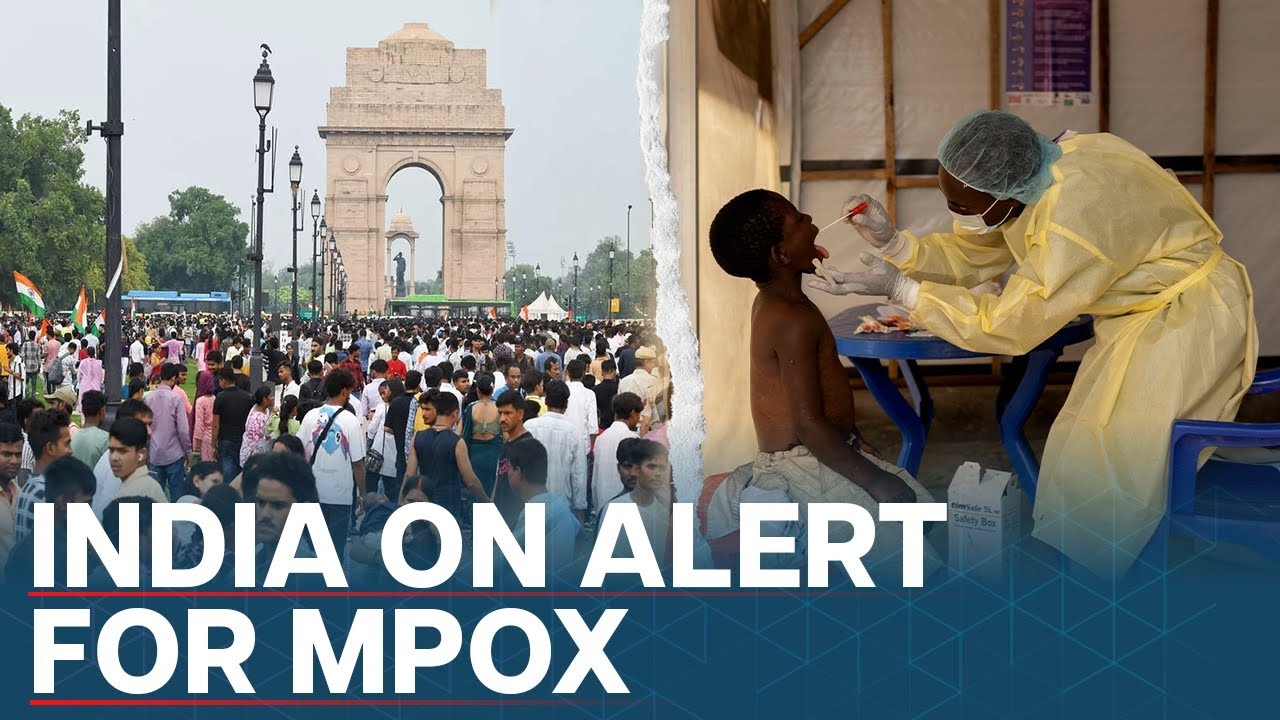
As the world begins to recover from the havoc caused by the COVID-19 pandemic, another virus is making headlines for all the wrong reasons. The MPOX virus, previously known to affect only a small region in Africa, has now emerged as a global threat, with cases reported in over 116 countries, including India. The World Health Organization (WHO) has issued a stark warning: if this virus is not controlled swiftly, it could lead to the next major pandemic. But what exactly is the MPOX virus, and why should we be concerned? Let’s break it down.
What is MPOX Virus?
The MPOX virus, formerly known as Monkeypox, is a viral infection that was first identified in 1958 when scientists in Denmark observed severe viral symptoms in monkeys imported from Singapore for polio vaccine testing. These symptoms included high fever, muscle pain, and skin lesions. Upon testing, it was discovered that the monkeys were infected with a new type of poxvirus, which was later named Monkeypox, as it was first identified in monkeys.
The Global Spread: How MPOX Virus Became a Pandemic Threat
Originally confined to a small region in the Democratic Republic of Congo (DRC), the MPOX virus has undergone several mutations over the years. In 2022, a less severe strain of the virus attempted to spread globally, affecting around 100,000 people. However, a new, more potent strain has recently emerged, and within months, it has spread from the DRC to 12 other African countries, Europe, Saudi Arabia, and even the Philippines. Estimates suggest that this new variant is at least seven times more deadly than COVID-19.
The Potential Impact: Could MPOX be Worse Than COVID-19?
The MPOX virus has two major strains or clades: Clade I and Clade II. While Clade I has been largely contained within the DRC, Clade II has spread to multiple countries. However, Clade I is far more deadly, with a case fatality rate of about 10%, compared to Clade II’s 1%. This means that for every 10 people infected with Clade I, one person is likely to die.
The new strain spreading in 2024 is from Clade I, raising concerns that this variant could cause a global pandemic worse than COVID-19. Unlike Clade II, which presents milder symptoms and allows infected individuals to travel and spread the virus across borders, Clade I causes severe symptoms that are easier to detect but far more deadly.
India’s Vulnerability: Are We Prepared?
India is not immune to the threat posed by the MPOX virus. With its vast population and high rates of international travel, particularly with African nations, India is at significant risk. In fact, in 2022, a single infected individual returning from the UAE to Kerala managed to infect 25 others, resulting in one death. The current strain, being much deadlier, could have far more devastating consequences if it enters India undetected.
Understanding the MPOX Virus: Symptoms and Stages
MPOX virus infection progresses through three stages: the incubation period, the prodromal stage, and the rash stage.
- Incubation Period: This is the period when the virus enters the body and tries to adapt and multiply. It lasts for about 1-2 weeks, and during this time, the infected individual shows no symptoms, making it difficult to detect the infection early.
- Prodromal Stage: During this stage, the infected person begins to experience early symptoms, such as fever, fatigue, weakness, headaches, and swollen lymph nodes. The swollen lymph nodes, or lymphadenopathy, are a key indicator of MPOX infection, distinguishing it from other viral infections.
- Rash Stage: In this final stage, the virus becomes fully active, attacking the epithelial cells, particularly those of the skin. The infected person develops flat, dry lesions on the skin, known as macules, which then evolve into papules, vesicles, and eventually pustules. These stages progress rapidly within 1-2 weeks, after which the person becomes highly contagious.
Prevention and Containment: What Should You Do?
If you suspect that you or someone you know may have contracted the MPOX virus, it’s crucial to take immediate action to prevent its spread. Here are some guidelines recommended by the WHO:
- Personal Hygiene: Maintain high levels of personal hygiene and regularly sanitize objects that are frequently touched by multiple people.
- Avoid Close Contact: If you notice symptoms of MPOX in someone, avoid close contact or intimacy, even if they are a family member. Additionally, avoid contact with stray animals, as they could also be carriers of the virus.
- Isolation: If you are infected, isolate yourself immediately and avoid social contact until all rashes and lesions have dried up and new healthy skin has developed.
- Use Protection: Even after recovery, continue to use protection, such as condoms, for up to 12 weeks to prevent the virus from spreading to your partner.
The Vaccine Dilemma: Global Inequity in Access
There is currently a powerful vaccine available for MPOX, known as MVA-BN. However, during the 2022 outbreak, the United States stockpiled 88% of the world’s vaccine supply, despite having only around 32,000 registered cases. This left African countries, where the virus is most prevalent, with limited access to the vaccine. Only recently has the European Commission’s Health Emergency Preparedness and Response Authority (HERA) and pharmaceutical company Bavarian Nordic pledged to donate approximately 215,000 doses to Africa.
Conclusion: A Call to Global Action
The threat posed by the MPOX virus cannot be ignored. As a global community, it is crucial to prioritize containment and equitable distribution of vaccines, particularly in regions where the virus is most prevalent. Countries like India, known as the “Pharmacy of the World,” could play a vital role in supporting this effort by providing vaccines to poorer nations, just as they did during the COVID-19 pandemic.
By addressing the root of the problem and taking collective action, we can prevent MPOX from becoming the next global pandemic. The time to act is now—before it’s too late.