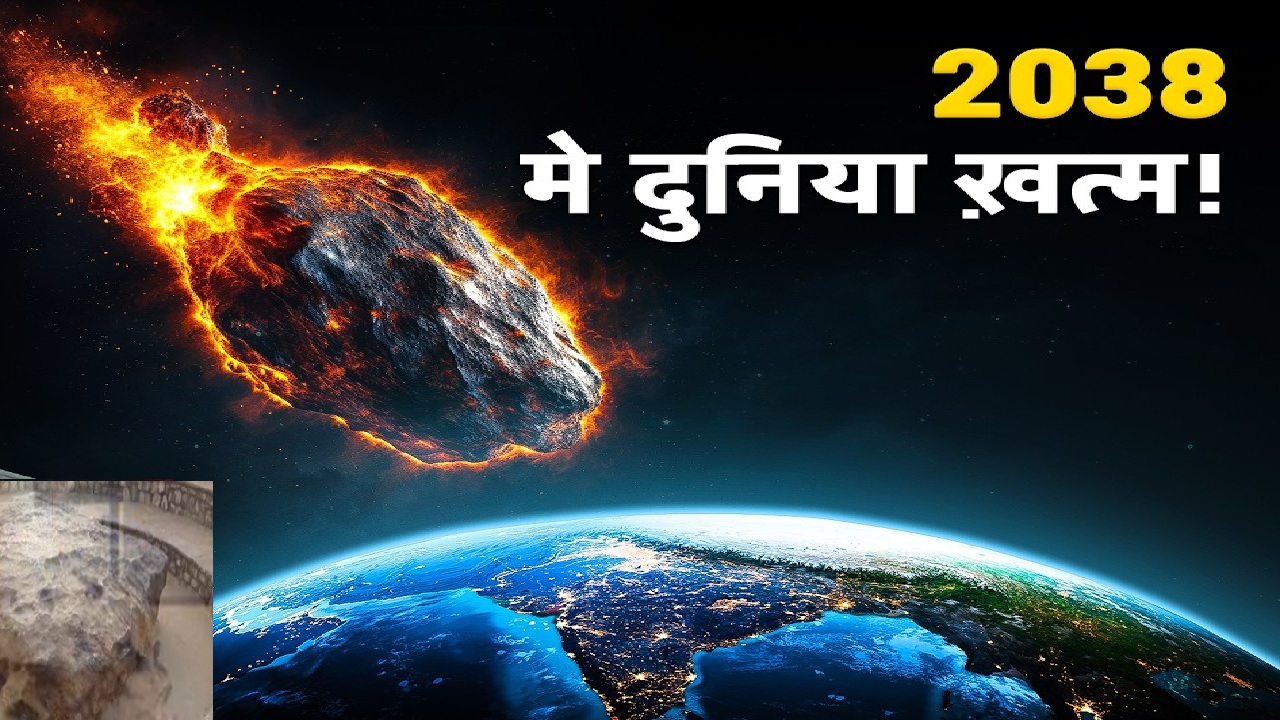
The future of Earth has always been a topic of fascination and concern, particularly when discussing potential asteroid impacts. One such asteroid, Apophis, is set to pass by Earth on April 13, 2029. Measuring over 1,000 feet in diameter, this massive rock could unleash a catastrophic event if it were to collide with our planet, dwarfing the devastation caused by the Hiroshima bomb with a million times more energy.
The Potential Impact of Apophis
Should Apophis strike Earth, the consequences would be catastrophic. Tsunami waves hundreds of meters high could wipe out entire cities, altering the course of human history forever. But Apophis isn’t the only threat. On July 12, 2038, another asteroid presents a significant risk, with NASA estimating a 72% chance of collision. This alarming prediction has prompted both NASA and ISRO to issue warnings and initiate planetary defense exercises.
Understanding Asteroids and Their Threats
Asteroids, also known as planetoids, are essentially large pieces of rock orbiting in space, ranging from 10-20 meters to over 100-200 kilometers in diameter. The smallest discovered asteroid is just 2 meters wide, while the largest, Ceres, measures 940 kilometers across. Most asteroids reside in the asteroid belt between Mars and Jupiter, a region teeming with millions of these celestial bodies. Despite appearing densely packed in diagrams, the average distance between asteroids in this belt is over a million kilometers.
Occasionally, asteroids drift out of the belt and come close to Earth, becoming Near-Earth Objects (NEOs). These NEOs can include asteroids, comets, meteors, meteorites, and meteoroids. While asteroids consist mainly of rock and metal, comets are composed of ice, rock, and dust, earning them the nickname “dirty snowballs.” Comets typically have visible tails and can be seen with the naked eye, unlike most asteroids which require telescopes for observation.
The Real Dangers: Comets vs. Asteroids
Comets pose a more significant threat than asteroids due to their higher speeds and shorter warning times. A comet could suddenly appear and strike Earth with little warning, as depicted in the film “Don’t Look Up,” which illustrated a six-month notice for an impending comet collision.
The Hierarchy of Celestial Threats
A meteoroid is a small fragment of an asteroid or comet. When it enters Earth’s atmosphere, it becomes a meteor, burning up and creating a streak of light known as a shooting star. If a piece of this meteor survives and lands on Earth, it is termed a meteorite. However, the primary concern remains NEOs, the asteroids and comets that approach Earth closely and pose a significant risk of collision.
The Fake News of 2038 Asteroid Strike
The panic surrounding a 2038 asteroid strike is largely unfounded. Much of this information circulates through dubious social media accounts, spreading fear and misinformation. Reputable sources like The Hindu, Indian Express, and even mainstream news outlets are preferable for reliable news.
NASA’s Hypothetical Exercises
In reality, the 72% collision chance mentioned in certain headlines stems from a hypothetical exercise conducted by NASA to evaluate planetary preparedness. This mock scenario explored the steps humanity could take if an asteroid were on a collision course with Earth in 2038, involving experts from various global organizations.
The Apophis Asteroid: A Real Threat?
The Apophis asteroid, discovered in 2004, initially sparked fear due to a predicted 2.7% chance of colliding with Earth in 2029. However, further observations have since reduced this probability to zero. While Apophis will pass within 30,000 kilometers of Earth—closer than some geostationary satellites—it poses no collision risk. This reassurance comes after extensive tracking and analysis, which also ruled out potential dangers in 2036 and 2068.
Earth’s Defense Against Asteroids
Global space agencies maintain a risk list of potentially hazardous asteroids. The European Space Agency’s database includes details on impact dates, collision probabilities, and asteroid sizes. Data science plays a crucial role in accurately predicting these celestial paths.
Advanced Detection and Defense Systems
Several projects spearhead asteroid detection efforts:
- LINEAR (Lincoln Near-Earth Asteroid Research): Launched in 1996, this collaboration between the US Air Force, NASA, and MIT uses advanced telescopes to discover thousands of NEOs annually.
- Catalina Sky Survey (CSS): Established in 1998, CSS employs precise measurements to predict asteroid impacts accurately, like the 2008 prediction of a small asteroid’s impact in North Sudan.
- Pan-STARRS (Panoramic Survey Telescope and Rapid Response System): Located in Hawaii, this project uses the world’s largest digital cameras to capture detailed images of asteroids.
- ATLAS (Asteroid Terrestrial Impact Last Alert System): Also based in Hawaii, ATLAS serves as a final warning system, scanning the sky twice nightly for potential threats.
Mitigating Asteroid Collisions
NASA’s mock test report outlines three primary strategies for deflecting large asteroids:
- Kinetic Methods: Successfully tested in NASA’s Double Asteroid Redirection Test (DART) in 2022, this approach involves sending a spacecraft to collide with the asteroid, altering its orbit.
- Slow Push and Pull Methods: This gradual method uses solar energy to vaporize part of the asteroid, causing a slight thrust and changing its path over time.
- Nuclear Methods: Although controversial and fraught with legal and geopolitical issues, this method involves deploying nuclear explosives to destroy or divert the asteroid.
The Future of Planetary Defense
The upcoming launch of NASA’s Near-Earth Object Surveyor in 2028 promises to enhance our detection capabilities further. This space telescope will help identify and track potentially dangerous asteroids more effectively.
In conclusion, while the threat of asteroid collisions remains a serious concern, humanity is well-equipped with advanced detection systems and defense strategies. Continuous improvements in technology and international cooperation ensure that Earth is better prepared to face these cosmic challenges. So, rest assured, the chances of an asteroid destroying Earth in the near future are extremely slim.