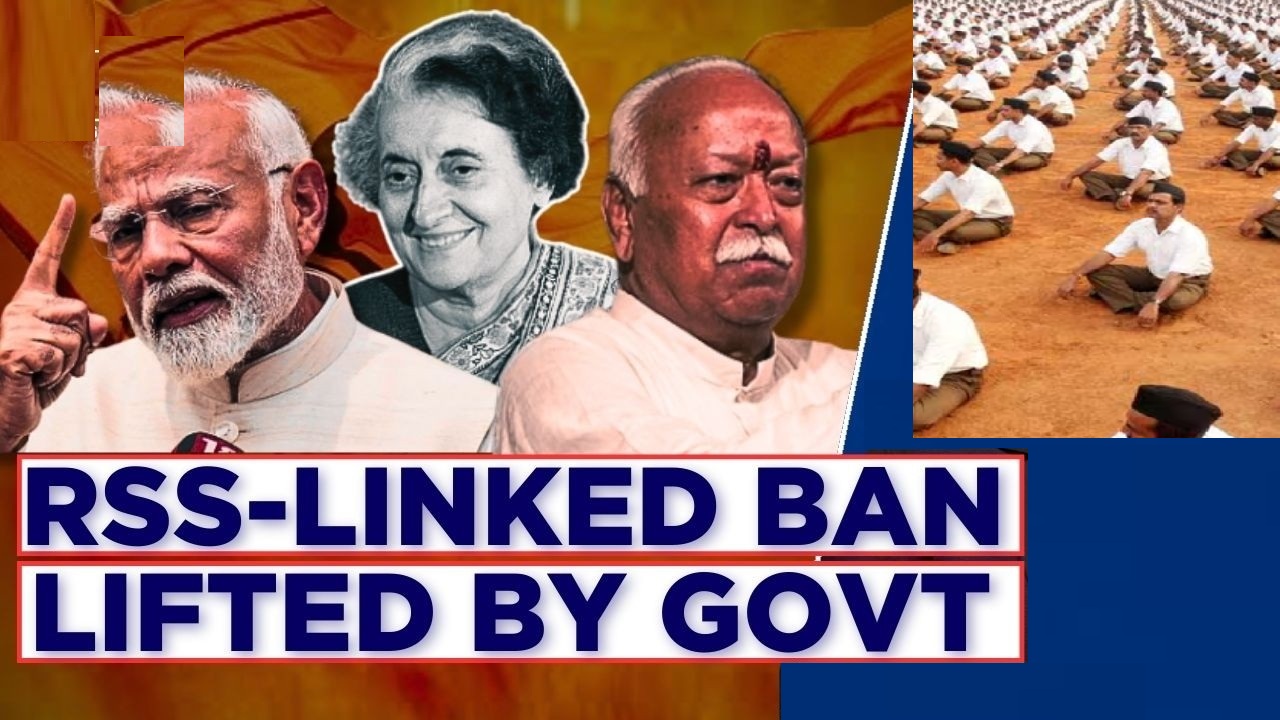
Centre Lifts Ban on Government Employees Joining RSS Activities: A Political Storm Brews
The Indian government’s decision to lift the longstanding ban on government employees participating in Rashtriya Swayamsevak Sangh (RSS) activities has sparked a fierce political debate. This move, authorized by the Ministry of Personnel, has resulted in a war of words between the Bharatiya Janata Party (BJP) and opposition parties. This article delves into the implications of this decision, the historical context of the ban, and the reactions it has evoked across the political spectrum.
Historical Context: Understanding the 1966 Ban
The ban on government employees participating in RSS activities was originally imposed in 1966 by Prime Minister Indira Gandhi’s government. It was a response to a massive anti-cow-slaughter protest on November 7, 1966, that witnessed significant involvement from the RSS and Jana Sangh. The protest, which ended in police firing and casualties, led to the government barring its employees from joining RSS activities, citing concerns over the organization’s influence and its potential impact on governance.
The Political Ramifications of Lifting the Ban
The decision to lift the ban was confirmed by BJP leader Amit Malviya, who described the 1966 order as “unconstitutional.” He argued that it was unjustified from the beginning and applauded the Modi administration for revoking it. Malviya pointed out that the original order was a politically motivated attempt to curb RSS influence, which he believes had no legal or constitutional basis.
Opposition leaders, however, strongly disagreed with the Centre’s move. They argue that allowing government employees to participate in RSS activities threatens India’s secular fabric and the neutrality expected of civil servants. Critics contend that the RSS, known for its Hindu nationalist ideology, could compromise the impartiality of government officials and undermine national unity.
Opposition’s Critique: A Threat to National Unity?
Among the vocal critics was AIMIM chief and Member of Parliament Asaduddin Owaisi. He contended that the RSS’s ideological stance conflicts with India’s constitutional values, national flag, and anthem. Owaisi emphasized that civil servants, who must remain neutral and dedicated to national unity, cannot maintain such objectivity if they are affiliated with an organization like the RSS, which he argues places Hindutva above national interests.
Congress General Secretary Jairam Ramesh also criticized the government’s decision, reminding the public of historical precedents where the RSS faced restrictions due to its contentious activities. Ramesh recalled that the ban was enforced even during former Prime Minister Atal Bihari Vajpayee’s tenure, who himself was associated with the RSS, underscoring the ban’s significance in maintaining the neutrality of government employees.
Support for the Ban Lift: BJP’s Defense
In defense of the decision, BJP leaders argued that the ban on RSS activities among government employees was discriminatory and violated the fundamental rights of association. They maintained that civil servants, like other citizens, should have the freedom to engage with social and cultural organizations, provided these affiliations do not interfere with their official duties.
BJP’s Amit Malviya dismissed concerns about potential biases among government employees, asserting that their professional conduct would remain governed by the rules and regulations of civil service. He claimed that the opposition’s concerns were exaggerated and politically motivated.
The Road Ahead: Implications for Indian Governance
The lifting of the ban on government employees participating in RSS activities raises significant questions about the intersection of politics and governance in India. It highlights the ongoing debate about the role of ideology in shaping public service and the boundaries between personal beliefs and professional responsibilities.
As the political discourse intensifies, it remains to be seen how this decision will impact the functioning of government institutions. Will it lead to greater ideological polarization within the bureaucracy, or will it simply affirm the rights of individuals to engage with cultural organizations? Only time will tell.
Conclusion: A Controversial Decision with Far-reaching Consequences
The lifting of the ban on government employees joining RSS activities is more than just a political maneuver; it is a decision with deep implications for India’s democratic fabric. While BJP leaders view it as a correction of a historical wrong, opposition leaders fear it could erode the secular nature of governance and compromise the neutrality of civil servants.
This controversy underscores the complex relationship between political ideology and public service in India. As debates continue to unfold, the nation’s citizens and leaders must grapple with these critical questions about identity, governance, and the future direction of Indian democracy. The implications of this decision will likely resonate through the corridors of power and beyond, shaping the discourse on the role of ideology in India’s political landscape.