Tata Steel, Tata Motors, and Tata Power Share News, Demerger and Acquisition Buzz
Tata Group companies continue to capture investor attention with their bold moves and resilient strategies. As of November 2025, Tata Steel grapples with market volatility while eyeing global expansions, Tata Motors navigates the aftermath of its high-profile demerger into passenger and commercial vehicle arms, and Tata Power showcases robust growth amid cautious brokerage outlooks.
This comprehensive analysis dives deep into the latest developments, offering insights that could shape your investment decisions. Whether you’re tracking Tata Steel share price fluctuations, evaluating Tata Motors demerger benefits, or assessing Tata Power Q2 results, this article unpacks the opportunities and challenges ahead.
Tata Steel Share Price Today: Navigating Volatility Amid Expansion Plans
Tata Steel’s shares experienced a sharp 1.50% decline last Friday, closing at ₹1,174, reflecting broader market pressures in the steel sector. Despite this dip, positive undercurrents signal a promising trajectory. Investors remain optimistic about the company’s proactive steps to fortify its position in the global steel arena. One standout development revolves around a strategic acquisition by its Dutch subsidiary, aimed at enhancing operational capabilities and energy security.
The steel giant’s commitment to innovation shines through its exploration of high-potential segments like railway components. With India’s railway infrastructure booming, questions swirl around whether Tata Steel will step into manufacturing wheels for the iconic Vande Bharat trains. The Managing Director’s recent statements provide clarity, blending capability affirmations with pragmatic risk assessments. This move aligns with national goals for self-reliance in manufacturing, potentially unlocking new revenue streams.
As Tata Steel share price today hovers amid uncertainty, analysts highlight the company’s diversified portfolio—from automotive steel to construction materials—as a buffer against cyclical downturns. The firm’s emphasis on sustainable practices, including green steel initiatives, further bolsters its appeal in an eco-conscious market. Looking ahead, expect Tata Steel to leverage these strengths for steady recovery and growth.
Vande Bharat Train Wheels: Tata Steel’s Potential Entry and MD’s Strategic Insights
India’s push toward modernizing its rail network has spotlighted the Vande Bharat Express, with production ramping up rapidly. Demand for specialized components, particularly wheel sets, surges as new trains roll out across the country. Tata Steel stands poised to capitalize on this wave, but its Managing Director, T.V. Narendran, recently outlined a measured approach during an industry forum.
Narendran affirmed that Tata Steel possesses the technical prowess to produce railway wheels and related products, even those tied to national security needs. The company’s advanced facilities and expertise in high-grade steel make it a natural fit for such endeavors. However, he cautioned against hasty diversification, pointing to the sector’s heavy reliance on government contracts. “Our primary customer base for wheel sets would be the Union Government,” Narendran explained, emphasizing the risks of policy shifts or delayed orders that could disrupt production scales.
This revelation underscores a broader challenge in India’s manufacturing landscape: the scarcity of domestic production for rail components. Historically, India imports most wheel sets from China and Ukraine, but geopolitical tensions—exacerbated by the Russia-Ukraine conflict—have strained supply chains. Post-2022 disruptions, reliance on Chinese imports has intensified, prompting calls for indigenous alternatives. Vande Bharat trains currently source their wheels abroad, creating a glaring gap that Tata Steel could fill.
Narendran advocated for government incentives under the Production Linked Incentive (PLI) scheme to mitigate entry barriers. “Such benefits would encourage investments and foster domestic manufacturing,” he stated. By extending PLI support to steel firms venturing into rail wheels, the government could spur innovation, reduce import dependency, and align with the Atmanirbhar Bharat vision. For Tata Steel, this could mean not just new business lines but also enhanced brand equity in strategic sectors.
Experts predict that the rail sector’s expansion— with over 400 Vande Bharat coaches slated for production in the coming years—offers ample opportunities. Tata Steel’s involvement could boost its order books by 10-15% in the medium term, per industry estimates. Yet, investors must weigh the regulatory hurdles against the long-term upside. As Tata Steel share news today buzzes with these possibilities, the stock’s resilience in volatile markets hints at underlying strength.
Tata Steel Acquisition News: Dutch Subsidiary’s €144 Million Power Play for Global Dominance
In a move that underscores Tata Steel’s aggressive global footprint, its Dutch arm announced the acquisition of Legwelson, a key player in energy infrastructure, for approximately €144 million. This deal, set to finalize by January 1, 2026, includes a 770 MW power plant, injecting vital energy assets into the group’s portfolio. Valued at around ₹1,450 crore, the transaction positions Tata Steel to secure sustainable power sources, crucial for its energy-intensive operations.
The acquisition targets the Netherlands’ burgeoning renewable energy market, where Legwelson specializes in efficient power generation and distribution. By integrating this asset, Tata Steel aims to slash operational costs and meet stringent EU emissions standards. “This strategic buyout enhances our supply chain resilience and supports our net-zero ambitions,” a company spokesperson noted. In an era of rising energy prices, owning a 770 MW capacity facility translates to annual savings exceeding ₹200 crore, analysts project.
Tata Steel’s international ventures have long been a growth driver, with Europe contributing nearly 30% of its global revenues. This deal follows a series of expansions, including upgrades at its Port Talbot plant in the UK. For Indian investors, it signals the company’s ability to weather domestic steel price slumps—currently down 5% year-on-year—through overseas diversification. Tata Steel share price today reflects cautious optimism, with technical indicators suggesting a rebound above ₹1,200 if acquisition synergies materialize swiftly.
Beyond immediate financials, the move aligns with global trends toward decarbonization. Tata Steel’s pledge to produce 50% green steel by 2030 gains momentum here, as the acquired power plant incorporates solar and wind integrations. Stakeholders view this as a blueprint for future deals, potentially targeting similar assets in Asia and North America. As Tata Steel acquisition news dominates headlines, it reaffirms the group’s knack for turning challenges into competitive edges.
Tata Power Q2 Results 2025: Strong Fundamentals Meet Brokerage Caution on Valuations
Shifting gears to the energy sector, Tata Power’s shares closed at ₹388, marking a 0.51% dip amid sector-wide profit-taking. The company unveiled its Q2 FY26 results, revealing a mixed bag of robust operational gains and tempered expectations from Wall Street heavyweights. Net profit dipped marginally by 1% to ₹99 crore from ₹100 crore last year—a figure that underscores stability rather than decline. Operational income edged down 0.97% to ₹15,545 crore, while EBITDA fell 12% to ₹3,320 crore, squeezing margins to 21.2% from 23.8%.
Despite these blips, Tata Power’s renewable energy segment stole the show, surging 70% to ₹551 crore. This leap reflects the company’s aggressive pivot to solar and wind, with installed capacity now exceeding 14 GW. Distribution networks expanded, bolstering reliability in key regions like Mumbai and Odisha. Transmission and distribution businesses also thrived, contributing steady cash flows amid rising urban electrification demands.
Brokerages like JP Morgan and CLSA, however, issued neutral to hold ratings, citing lofty valuations that cap upside potential. “Tata Power’s growth narrative remains compelling, but current multiples—trading at 25x forward earnings—leave limited room for error,” JP Morgan analysts remarked. CLSA echoed this, praising the healthy balance sheet but flagging margin pressures from international disputes and regulatory tweaks. Operating efficiencies dipped due to higher fuel costs, yet the firm’s debt-to-equity ratio of 1.2 signals fiscal prudence.
Tata Power Q2 results 2025 highlight a company in transition: from traditional thermal power to a green powerhouse. Initiatives like rooftop solar distribution have onboarded 50,000 new customers, tapping into India’s 500 GW renewable target by 2030. Future catalysts include pumped hydro projects and EV charging networks, projected to add ₹5,000 crore in revenues over three years. For investors eyeing Tata Power share price today, the stock’s 15% YTD gains suggest momentum, but a pullback to ₹350 could offer entry points.
Tata Power’s Renewable Energy Surge: Solar Leadership and Distribution Network Expansion
Tata Power’s foray into renewables isn’t just a buzzword—it’s a revenue engine. The 70% jump in this segment stems from commissioning 1.5 GW of solar capacity in Q2 alone, pushing total renewables to 40% of the portfolio. Projects in Gujarat and Rajasthan harness vast solar potential, generating clean power for industrial clients and households alike.
The company’s distribution arm, Tata Power-DDL, serves over 8 million consumers in Delhi, achieving 99.9% reliability—a feat amid summer peaks. Expansion into smart metering and microgrids positions it as a leader in urban energy solutions. Analysts forecast renewables to drive 60% of EBITDA by 2028, fueled by PLI subsidies and falling panel costs.
Challenges persist, including grid integration delays and policy flux. Yet, Tata Power’s international ventures—in Indonesia and Zambia—diversify risks, adding 500 MW to the pipeline. As Tata Power renewable energy news gains traction, the sector’s 20% CAGR outpaces traditional utilities, making it a cornerstone for long-term bulls.
Brokerage Views on Tata Power: Why Neutral Ratings Persist Despite Bright Prospects
Wall Street’s tempered enthusiasm for Tata Power boils down to valuation math. At a price-to-book of 3.5x, the stock trades at a premium to peers like Adani Green (2.8x). “Upside appears constrained unless execution accelerates,” CLSA noted, pointing to forex volatilities from global ops. JP Morgan highlighted earning pressures from legacy thermal plants, which still account for 60% of capacity.
That said, positives abound: a ₹10,000 crore capex pipeline targets 5 GW additions by FY27. Dividend payouts rose 10% to ₹2 per share, rewarding loyalists. For risk-averse investors, the hold rating advises patience; aggressive ones see dips as buying opportunities. Tata Power share news today balances caution with conviction, mirroring the energy transition’s inherent tensions.
Tata Motors Demerger Update: Passenger vs. Commercial Vehicles – Which Stock Shines Post-Split?
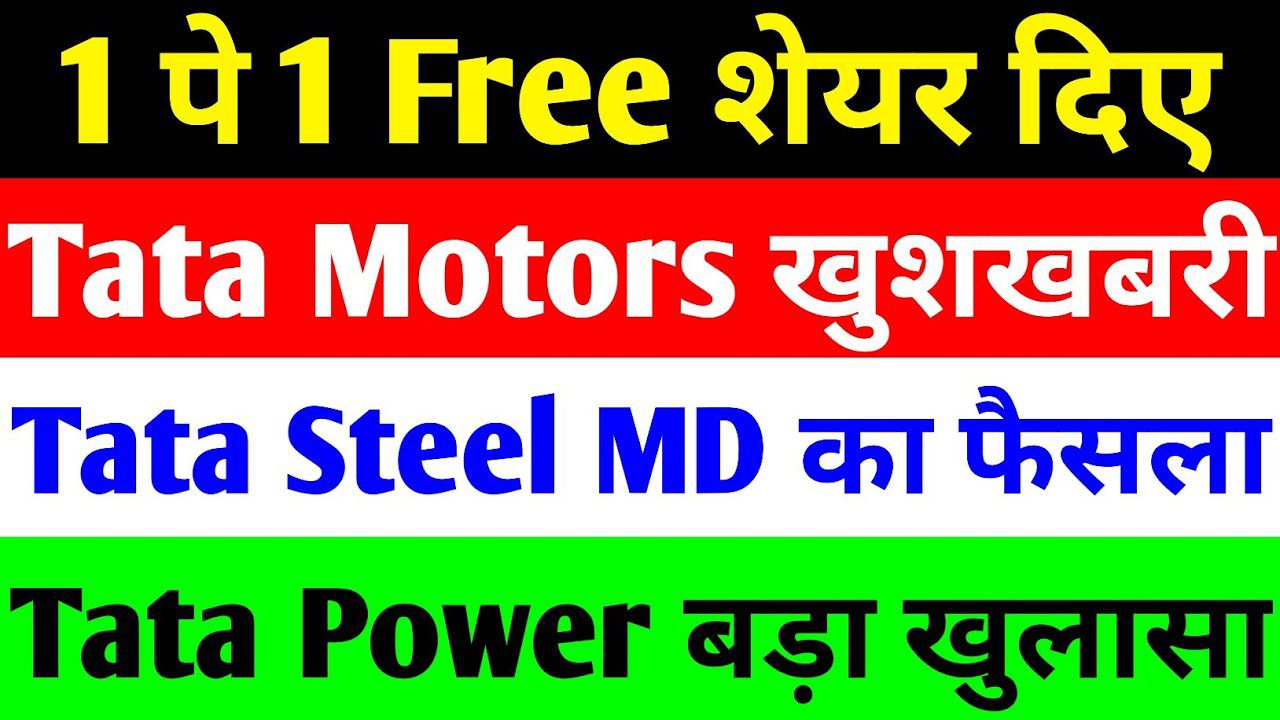
Tata Motors’ landmark demerger, effective earlier this year, has reshaped its identity into two listed entities: Tata Motors Passenger Vehicles (TMPV) and Tata Motors Commercial Vehicles (TMCV). Shareholders received one free share of each per holding, doubling exposure without dilution. TMPV closed at ₹392 (down slightly), while TMCV settled at ₹320, both reflecting post-results consolidation.
Q2 earnings for both arms revealed losses—Tata Motors’ legacy weighs heavy—but operational trends inspire confidence. Harshal Dasani, Business Head at Invest PMS, dissected the numbers: TMPV’s weak quarter stemmed from domestic slowdowns and global headwinds, exacerbated by a cyber attack disrupting Jaguar Land Rover (JLR) production. Demand softened in the US due to tariffs, trimming volumes by 8%.
Conversely, TMCV displayed stability, with revenues ticking up 5% on infrastructure tailwinds. Losses narrowed as cost controls kicked in, and order books swelled for trucks amid highway expansions. India’s commercial vehicle market share for TMCV hit 35%, cementing its leadership. Electric vehicle (EV) forays, like the Ace EV, added 12.8% share in the passenger segment, where TMPV ranks third.
Tata Motors demerger benefits emerge clearly: sharper focus enables tailored strategies. TMCV eyes export growth via ASEAN partnerships, while TMPV doubles down on EVs, targeting 30% penetration by 2030. Dasani predicts higher upsides for TMPV post-recovery, citing JLR’s luxury rebound. Overall, the split enhances agility, positioning both as standalone powerhouses.
Tata Motors Passenger Vehicles Q2 Performance: Cyber Attacks and Global Demand Challenges
TMPV’s Q2 faltered under multiple pressures. Domestic sales dipped 4% as consumer sentiment cooled amid inflation, while JLR volumes fell 9% due to the March cyber incident— a ransomware hit that halted UK plants for weeks. Recovery efforts, including enhanced cybersecurity, cost ₹500 crore but fortified defenses.
Global tariffs on Chinese EVs indirectly aided, yet US inventory gluts persisted. Abhinav Tiwari of Bonanza Securities noted GST cuts on mid-size cars boosted affordability, potentially lifting volumes 10% in H2. Profitability hinges on premium models like the Harrier EV, with launches slated for Diwali 2025.
Despite hurdles, TMPV’s 12.8% market share underscores resilience. R&D investments in ADAS and autonomy promise differentiation. For Tata Motors passenger vehicles share price today, volatility persists, but a 20% upside looms if macros align.
Commercial Vehicles Edge: TMCV’s Market Share Gains and Infrastructure-Driven Growth
TMCV thrives on India’s infra boom—₹11 lakh crore budgeted for roads in FY26. Q2 revenues climbed 7%, with EBITDA margins steady at 12%. The cyber attack’s spillover was minimal, thanks to localized supply chains. Market share dominance at 35% stems from models like the Ultra truck, favored for logistics.
EV adoption accelerates: the T.Star EV captured 15% of light CV sales. Exports to Africa rose 20%, diversifying from domestic 80% reliance. Tiwari highlights GST rebates enhancing competitiveness, forecasting 15% CAGR through 2027.
Challenges include raw material inflation, but hedging mitigates risks. TMCV’s order book, at 1.2 lakh units, signals backlog strength. As Tata Motors commercial vehicles news heats up, the arm emerges as the demerger’s star, with shares eyeing ₹400 by year-end.
Expert Takes on Tata Motors Post-Demerger: GST Benefits and Profitability Horizons
Analysts laud the demerger’s clarity, enabling laser-focused capital allocation. Dasani views TMPV as a high-beta play—risky yet rewarding—while TMCV offers defensive stability. Tiwari emphasizes GST reductions (from 28% to 18% on select CVs) as a profitability catalyst, potentially adding ₹1,000 crore to bottom lines.
Global EV subsidies under FAME-III could supercharge TMPV, aligning with 50% electrification goals. Both entities boast strong governance, with independent boards accelerating decisions. Risks like chip shortages linger, but diversified suppliers buffer impacts.
Tata Motors share price today, post-demerger, trades at attractive valuations: TMPV at 8x EV/EBITDA, TMCV at 6x. Experts recommend accumulating on dips, projecting 25% returns in 12 months. The free share windfall amplifies appeal for long-haulers.
Investment Outlook: Balancing Risks and Rewards in Tata Group Stocks
Tata Steel, Power, and Motors exemplify the group’s diversified might—steel for infrastructure, power for sustainability, autos for mobility. Common threads include green transitions and global plays, resilient against India’s 7% GDP growth.
Risks abound: steel oversupply, energy regulations, auto cyclicality. Yet, PLI schemes and infra spends provide tailwinds. Valuations—Steel at 5x book, Power at 3x, Motors at 7x—scream value.
For portfolios, allocate 20% across these: Steel for growth, Power for income, Motors for alpha. Consult advisors; conduct due diligence. As Tata Group share news evolves, these titans promise enduring value.