Introduction to Trump’s Tariff Strategy
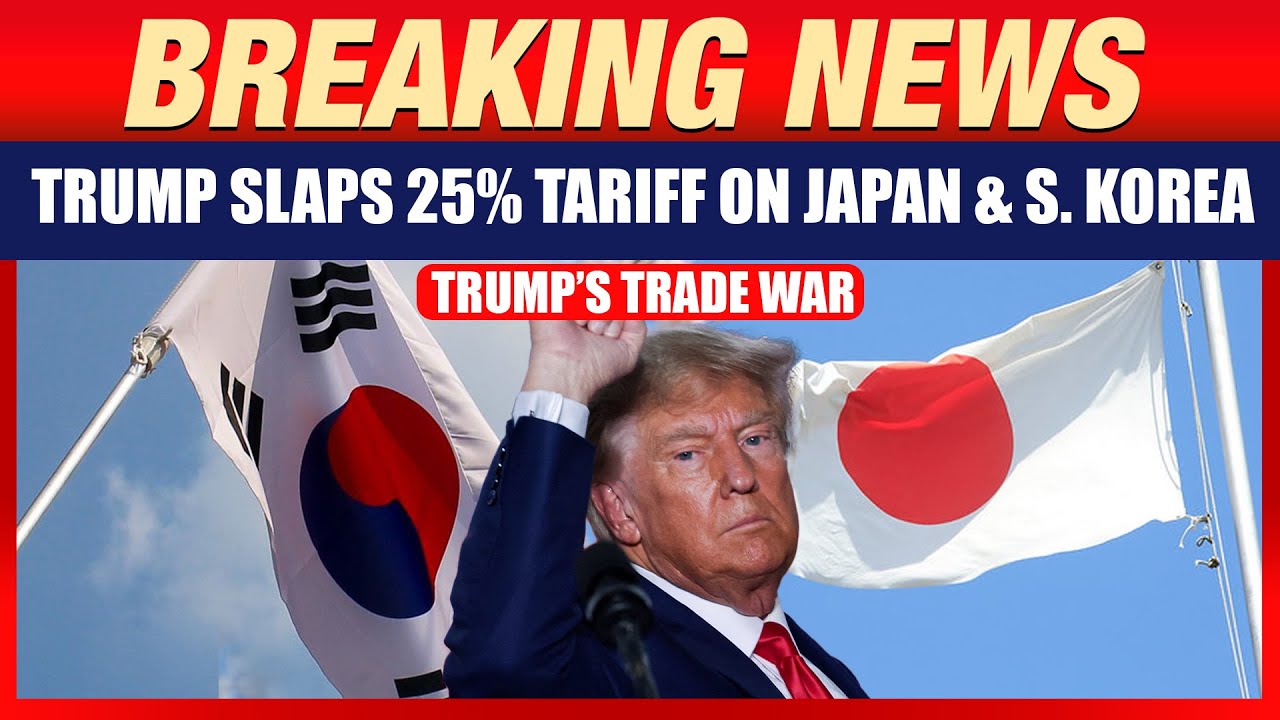
President Donald Trump has long championed tariffs as a cornerstone of his economic policy, emphasizing an “America First” approach to address trade imbalances and protect domestic industries. On July 7, 2025, Trump took decisive action by issuing letters to Japan and South Korea, announcing a 25% tariff on all goods imported from these nations starting August 1, 2025. These letters, shared publicly on Truth Social, Trump’s own social media platform, underscore his frustration with what he describes as non-reciprocal trade relationships. Additionally, Trump has warned of an additional 10% tariff on countries aligning with the BRICS bloc—comprising Brazil, Russia, India, China, South Africa, and newer members like Egypt and Iran—citing their “anti-American” policies. These announcements align with Trump’s broader strategy to renegotiate trade deals and reduce U.S. trade deficits, but they have also sparked significant market volatility and international concern.
The Japan and South Korea Tariff Announcement
Details of the 25% Tariff
Trump’s letters to Japanese Prime Minister Shigeru Ishiba and South Korean President Lee Jae-myung outline a 25% tariff on all products entering the U.S. from these countries, effective August 1, 2025. The letters emphasize that this rate is separate from existing sectoral tariffs, such as those on automobiles and steel, which could push the effective tariff rate higher for specific industries. Trump highlighted persistent trade deficits with Japan and South Korea, accusing both nations of employing tariffs and non-tariff barriers that hinder U.S. exports. He stated, “Our relationship has been, unfortunately, far from reciprocal,” signaling his intent to level the playing field.
To curb potential tariff evasion, Trump explicitly addressed transshipping—the practice of routing goods through an intermediary country to avoid higher duties. Goods transshipped to evade the 25% tariff will face the higher applicable rate, ensuring compliance. However, Trump offered an incentive: no tariffs will apply to products manufactured within the U.S. by Japanese or South Korean companies, with streamlined approval processes promised for such investments. This carrot-and-stick approach aims to encourage foreign companies to relocate production to the U.S., boosting domestic manufacturing.
Japan’s Economic Vulnerability
Japan, a key U.S. ally and major exporter of automobiles and electronics, faces significant economic challenges from the 25% tariff. The Japanese economy, already grappling with a weakening yen and sluggish growth, could suffer further as its exports to the U.S.—a critical market—become costlier. Companies like Toyota and Honda, which rely heavily on U.S. sales, saw their shares drop 4% immediately following the announcement. Trump’s frustration with Japan, which he has called “spoiled” in negotiations, stems from its reluctance to open markets fully to U.S. goods, particularly in agriculture and automotive sectors. The tariff could disrupt Japan’s export-driven economy, prompting urgent negotiations to mitigate the impact before the August 1 deadline.
South Korea’s Trade Dynamics
South Korea, another major U.S. trading partner, is the world’s second-largest exporter of vehicles to the U.S. after Mexico. The 25% tariff threatens its automotive giants, such as Hyundai and Kia, which could face higher costs for U.S. consumers or reduced profit margins. Unlike Japan, South Korea maintained active negotiations with the U.S. over the weekend leading up to the announcement, suggesting a willingness to reach a deal. South Korean President Lee Jae-myung expressed uncertainty about U.S. demands, stating, “It’s still not clear to each side what the other side wants.” The tariff announcement may serve as a pressure tactic to accelerate these talks, but retaliatory measures from South Korea could escalate tensions further.
The BRICS Tariff Threat
BRICS Summit and Trump’s Response
The timing of Trump’s tariff announcements coincides with the BRICS summit in Rio de Janeiro, Brazil, where member nations—including Brazil, Russia, India, China, South Africa, Egypt, Ethiopia, Indonesia, Iran, Saudi Arabia, and the United Arab Emirates—criticized U.S. tariffs as disruptive to global trade. The summit’s joint statement condemned “unilateral tariff and non-tariff measures” as inconsistent with World Trade Organization (WTO) rules, indirectly targeting Trump’s policies. The BRICS bloc, representing over half the world’s population, has been advocating for reduced reliance on the U.S. dollar and reforms to global financial institutions, moves Trump perceives as “anti-American.”
In response, Trump posted on Truth Social, “Any country aligning themselves with the Anti-American policies of BRICS will be charged an ADDITIONAL 10% Tariff. There will be no exceptions to this policy.” This threat targets not only BRICS members but also any nation perceived to support their agenda, potentially affecting smaller economies with trade ties to the bloc. The additional 10% tariff would compound existing duties, significantly increasing costs for affected countries.
Implications for BRICS Nations
The BRICS tariff threat introduces uncertainty for member nations, particularly those with significant U.S. trade exposure. China, already subject to high tariffs from previous trade disputes, faces the prospect of an additional 10% levy, which could further strain its export sector. India, which sent a delegation to Washington the previous week to negotiate a mini-trade deal, has yet to secure an agreement, leaving it vulnerable as the July 9 deadline looms. Smaller BRICS members, such as Ethiopia and Egypt, may face disproportionate impacts due to their limited negotiating power. Trump’s threat aims to deter countries from aligning with BRICS initiatives, such as de-dollarization, but it risks escalating trade wars with multiple nations simultaneously.
Market Reactions and Economic Implications
Immediate Market Impact
The announcement of the 25% tariffs on Japan and South Korea triggered immediate market turbulence. On July 7, 2025, the Dow Jones Industrial Average plummeted 525 points, a 1.2% decline, while the S&P 500 and Nasdaq Composite fell 0.9% and 1%, respectively. Shares of Japanese automakers Toyota and Honda dropped 4%, and the iShares MSCI South Korea ETF slid over 3%. The broader market downturn was exacerbated by concerns over Tesla, which fell nearly 8% after CEO Elon Musk announced plans to launch a new political party, the “America Party,” raising fears of brand dilution.
The market’s reaction reflects investor concerns about the broader implications of Trump’s tariff policies. Higher tariffs could increase costs for U.S. consumers, disrupt global supply chains, and provoke retaliatory measures from affected countries. Treasury Secretary Scott Bessent, speaking on CNBC’s “Squawk Box” on July 7, 2025, acknowledged the market volatility but emphasized that the administration was close to securing trade deals with several countries, hinting at potential relief for some trading partners.
Long-Term Economic Consequences
Trump’s tariffs aim to reduce U.S. trade deficits and incentivize domestic production, but they come with significant risks. Economic studies, such as those by Miller et al., indicate that U.S. consumers and businesses bear the brunt of tariff costs, with Chinese exporters passing on nearly 100% of tariff increases between January and April 2025. Similar dynamics are likely for Japan and South Korea, where exporters may raise prices to offset the 25% tariff, leading to higher costs for U.S. consumers in industries like automotive and electronics.
Retaliatory tariffs from Japan, South Korea, or BRICS nations could further complicate the economic landscape. Trump’s letters explicitly warn that any retaliatory measures will result in additional U.S. tariffs, potentially escalating into a tit-for-tat trade war. The European Union, facing its own tariff negotiations with the U.S., has expressed concerns about global inflation and supply chain disruptions, with President Ursula von der Leyen calling the tariffs a “major blow to the world economy.” Smaller economies, particularly those in the BRICS bloc, may struggle to absorb the combined impact of the 25% base tariffs and the additional 10% BRICS penalty.
Global Trade Negotiations and Deadlines
The July 9 Deadline
The July 9, 2025, deadline marks the end of a 90-day tariff relief period initiated on April 2, 2025, when Trump announced “reciprocal tariffs” under the International Emergency Economic Powers Act (IEEPA). These tariffs, initially set at 10% for most countries, were intended to pressure trading partners into negotiating favorable deals. Trump’s promise of “90 deals in 90 days” has fallen short, with only a handful of agreements secured, including frameworks with the UK and Vietnam. The letters to Japan and South Korea are part of a broader effort to notify up to 15 countries of new tariff rates, with duties potentially reaching as high as 70% for non-compliant nations.
Treasury Secretary Scott Bessent indicated on July 7, 2025, that the administration expects “a busy couple of days” as it finalizes deals and issues letters. However, the lack of clarity in negotiations has frustrated trading partners. South Korea, for instance, has sought an extension of the July 9 deadline, citing ambiguity in U.S. demands. India’s failed attempt to secure a mini-trade deal highlights the challenges of meeting Trump’s aggressive timeline.
Strategies to Mitigate Tariffs
Countries and companies are exploring strategies to mitigate the impact of Trump’s tariffs. One approach is relocating manufacturing to the U.S., as Trump has incentivized with exemptions for domestically produced goods. Japanese and South Korean firms may accelerate investments in U.S. factories to avoid the 25% tariff, though this requires significant capital and time. Another strategy involves using tariff-free zones, a Depression-era tactic that allows businesses to defer tariffs until goods enter the U.S. market. However, these measures may not fully offset the economic disruptions caused by higher tariffs and retaliatory measures.
Political and Geopolitical Context
Trump’s Trade Philosophy
Trump’s tariff policies reflect his belief that tariffs are a versatile tool for achieving economic and geopolitical objectives. In his second term, inaugurated on January 20, 2025, Trump has used tariffs to address trade deficits, protect American workers, and counter perceived threats from BRICS nations. His rhetoric, including calling tariffs “the most beautiful word in the dictionary,” underscores his commitment to reshaping global trade dynamics. However, critics argue that tariffs increase costs for U.S. consumers and risk alienating allies like Japan and South Korea, which are critical to U.S. security interests in Asia.
BRICS and Global Trade Tensions
The BRICS summit in Rio de Janeiro has amplified tensions with the U.S., as member nations push for a multipolar economic order. Their criticism of U.S. tariffs and calls for de-dollarization have provoked Trump’s ire, leading to the 10% tariff threat. This escalation could strain diplomatic relations, particularly with India and South Africa, which maintain strong ties with both the U.S. and BRICS. The absence of Chinese President Xi Jinping and Russian President Vladimir Putin from the summit, coupled with their push for national currency usage, highlights the geopolitical stakes of Trump’s trade policies.
Industry-Specific Impacts
Automotive Sector
The automotive industry, a cornerstone of both Japanese and South Korean exports, faces significant challenges from the 25% tariff. Japan and South Korea are major suppliers of vehicles and auto parts to the U.S., with South Korea ranking second globally after Mexico. Higher tariffs could increase car prices for U.S. consumers, reduce demand for imported vehicles, and pressure manufacturers to absorb costs or relocate production. The U.S. Commerce Department’s ongoing Section 232 investigations into auto imports could lead to additional tariffs, further complicating negotiations.
Technology and Electronics
South Korea’s electronics giants, such as Samsung and LG, and Japan’s Sony and Panasonic, may also face higher costs due to the tariffs. The Nasdaq’s 1% drop on July 7, 2025, reflects investor concerns about tech supply chains, as many U.S. tech firms rely on components from these countries. The potential for retaliatory tariffs could disrupt global electronics supply chains, affecting everything from smartphones to home appliances.
Future Outlook and Recommendations
Navigating the Tariff Landscape
Businesses and investors must prepare for a volatile trade environment as Trump’s tariff policies unfold. Companies with exposure to Japan, South Korea, or BRICS nations should assess supply chain risks and explore alternative sourcing strategies. Investing in U.S.-based manufacturing or leveraging tariff-free zones could mitigate costs, though these require long-term planning. Monitoring ongoing trade negotiations and Commerce Department investigations will be critical for anticipating further tariff hikes.
Policy Recommendations
Policymakers in affected countries should prioritize diplomatic engagement to secure trade deals before the August 1, 2025, tariff implementation. Japan and South Korea, given their strategic importance to the U.S., may have leverage to negotiate exemptions or reduced rates. BRICS nations should clarify their trade and currency policies to avoid triggering the additional 10% tariff, while smaller economies may need to align with larger trading blocs to strengthen their negotiating position.
Investor Strategies
Investors should diversify portfolios to reduce exposure to tariff-sensitive sectors like automotive and technology. Hedging against currency fluctuations, particularly the yen and won, could mitigate losses from market volatility. Keeping abreast of Trump’s tariff letters and trade deal announcements will be essential for making informed investment decisions.
Conclusion
President Trump’s announcement of 25% tariffs on Japan and South Korea, coupled with a 10% tariff threat against BRICS-aligned nations, marks a pivotal moment in global trade. These policies, driven by a desire to correct trade imbalances and protect U.S. interests, have triggered immediate market reactions and raised concerns about inflation, supply chain disruptions, and retaliatory trade measures. As the July 9, 2025, deadline approaches, the world watches closely to see how affected nations respond and whether Trump’s aggressive trade strategy delivers the intended economic benefits or escalates into a broader trade war. Businesses, investors, and policymakers must navigate this complex landscape with strategic foresight to mitigate risks and seize opportunities in a rapidly changing global economy.