


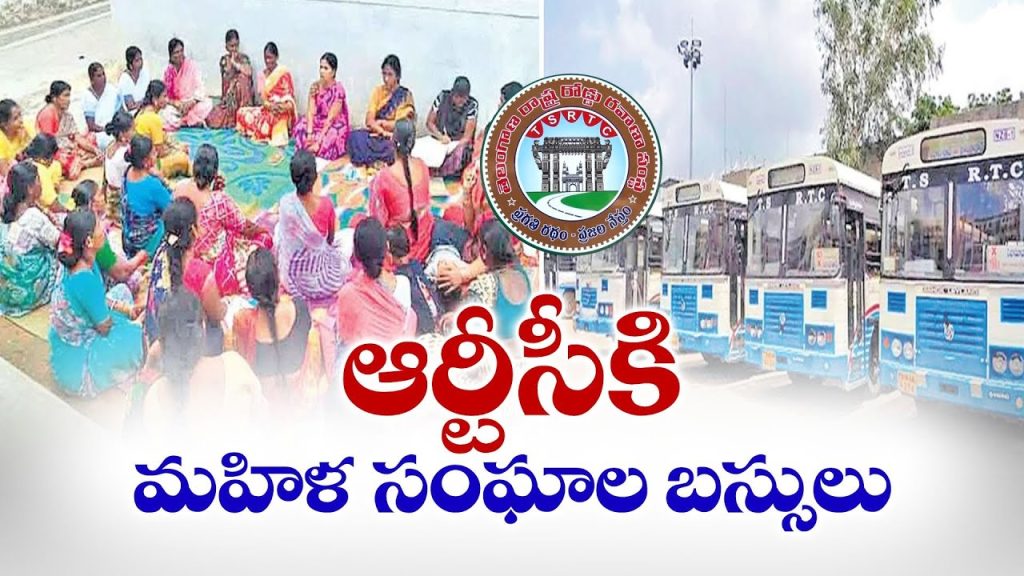
The Government of Telangana has officially approved a significant initiative aimed at enhancing public transportation infrastructure by involving Mandal Mahila Samakhyas (MMS) in the procurement and deployment of buses for the Telangana State Road Transport Corporation (TGSRTC). This progressive decision reflects the government’s commitment to empowering women-led community organizations while simultaneously expanding public transport networks across the state.
In this article, we break down the details of the government order, the funding mechanisms, and the broader implications for rural mobility and women empowerment in Telangana.
Background and Context: Telangana’s Innovative Rural Transport Initiative
The Telangana Government, through its Panchayat Raj & Rural Development (PR&RD) Department, has greenlit a transformative program under which 600 buses will be funded and procured by Mandal Mahila Samakhyas (MMS) and leased to TGSRTC for operations. This initiative aims to strengthen transportation services across rural districts, ensuring improved connectivity while financially benefiting women’s self-help groups.
The decision, formalized under G.O.Rt.No.137 dated 03-03-2025, lays out the phased implementation, financial arrangements, and the operational model for the ambitious program.
Phase-Wise Implementation of 600 Buses Across 17 Telangana Districts
The government order outlines a two-phase procurement and deployment plan:
- Phase 1 will see the procurement of 150 buses.
- Phase 2 will involve the purchase of the remaining 450 buses.
These 600 buses will be deployed across 17 districts, focusing on erstwhile Khammam, Karimnagar, Mahabubnagar, and Warangal districts, which will spearhead the initial rollout.
Role of Mandal Mahila Samakhyas (MMS) in Funding and Ownership
In a unique public-private collaboration model, Mandal Mahila Samakhyas (MMS)—women-led grassroots institutions—will invest in bus procurement using funds facilitated through the Society for Elimination of Rural Poverty (SERP). The buses, although procured by MMS, will be placed at the operational disposal of TGSRTC, with the buses being officially registered in the name of TGSRTC.
This arrangement offers multiple benefits:
- Strengthening rural transport infrastructure.
- Providing sustainable income opportunities for MMS.
- Encouraging community ownership in public transport development.
Monthly Hire Charges Model Ensuring Steady Revenue for MMS
The financial framework designed by the Telangana Government ensures that MMS will earn guaranteed monthly returns on their investments. TGSRTC will pay monthly hire charges calculated at 15% of the EMI cost per bus, amounting to approximately ₹77,220 per month for each vehicle. These payments will be made before the 5th of every month for a period of seven years.
This predictable revenue stream is expected to bolster the financial stability of Mandal Mahila Samakhyas, enabling them to invest in further community development initiatives.
Government’s Observations and Financial Safeguards
During the proposal review process, the Telangana Government made key observations to ensure financial prudence and risk mitigation:
- Cost and EMI Structure:
The buses are expected to cost around ₹36.00 lakhs each, with an EMI of ₹58,857 per month at an interest rate of 9.51%. The proposed hire charge of ₹77,220 will cover this EMI while providing an additional financial cushion for MMS. - Insurance Coverage:
Since the buses will be directly registered under TGSRTC, the corporation will handle insurance requirements, further easing financial responsibilities for MMS. - Streamlined Procurement Process:
As TGSRTC will handle vehicle procurement, no separate procurement committee will be required, ensuring faster and more efficient acquisition.
Terms and Conditions Governing the MMS-TGSRTC Bus Program
The government order sets out clear terms and conditions governing the collaboration between MMS and TGSRTC to ensure operational clarity and financial accountability:
- Initial Funding and Procurement:
SERP will provide initial financial assistance to Mandal Mahila Samakhyas for the purchase of the 600 buses. MMS will own the buses but place them at the disposal of TGSRTC for day-to-day operations. - Two-Phase Deployment:
- In Phase 1, 150 buses will be procured and deployed in Khammam, Karimnagar, Mahabubnagar, and Warangal.
- The remaining 450 buses will follow in the subsequent phase, ensuring a gradual and manageable rollout.
- Operational Hypothecation and Documentation:
TGSRTC will formally hypothecate the buses to the respective Mandal Mahila Samakhyas while also ensuring that MMS ownership is reflected in the Registration Certificate (RC) of each vehicle. This dual registration mechanism ensures that MMS retains ownership rights while allowing TGSRTC to operate the vehicles seamlessly. - Monthly Payment Commitments:
TGSRTC will deposit the agreed monthly hire charges (15% EMI) to MMS before the 5th of each month for the full seven-year period, ensuring uninterrupted cash flow to the women-led groups.
Empowering Women Through Sustainable Transport Investments
The Telangana Government’s decision to involve Mandal Mahila Samakhyas in this large-scale transport initiative aligns with its broader goal of economic empowerment for rural women. By positioning MMS as asset owners in critical public infrastructure, the government is fostering:
- Economic Independence:
Guaranteed monthly revenue will support local women entrepreneurs, fostering financial independence and self-reliance. - Capacity Building:
MMS will gain invaluable financial management experience, enhancing their organizational capabilities. - Community-Led Development:
This model ensures that local transport solutions are shaped by local community representatives, aligning with the specific mobility needs of rural populations.
Boosting Rural Connectivity with Modern Bus Services
The deployment of 600 new buses under this scheme will significantly improve rural mobility, enabling faster, safer, and more reliable public transport services across Telangana’s villages and towns. Enhanced connectivity will facilitate:
- Easier access to healthcare and education.
- Improved market access for rural businesses and farmers.
- Greater social inclusion, particularly for women, students, and the elderly.
Financial and Administrative Oversight by SERP and TGSRTC
The Chief Executive Officer of SERP, Hyderabad, in collaboration with the Vice Chairman & Managing Director (VC&MD) of TGSRTC, will oversee the implementation, financial management, and operational performance of the program. Their responsibilities include:
- Ensuring timely disbursement of funds.
- Monitoring bus deployment and utilization.
- Verifying compliance with MMS financial agreements.
- Addressing operational challenges to ensure uninterrupted services.
Conclusion: A Model for Replicable Rural Transport Solutions
Telangana’s decision to leverage women’s collectives for public transport development serves as a replicable model for other states aiming to empower women while improving rural mobility. By fostering community-driven investments, ensuring financial sustainability, and prioritizing rural transport needs, this program exemplifies inclusive, sustainable development in action.
With 600 buses set to hit the roads, the MMS-TGSRTC partnership stands poised to transform public transportation across Telangana, while providing lasting economic opportunities for rural women.