


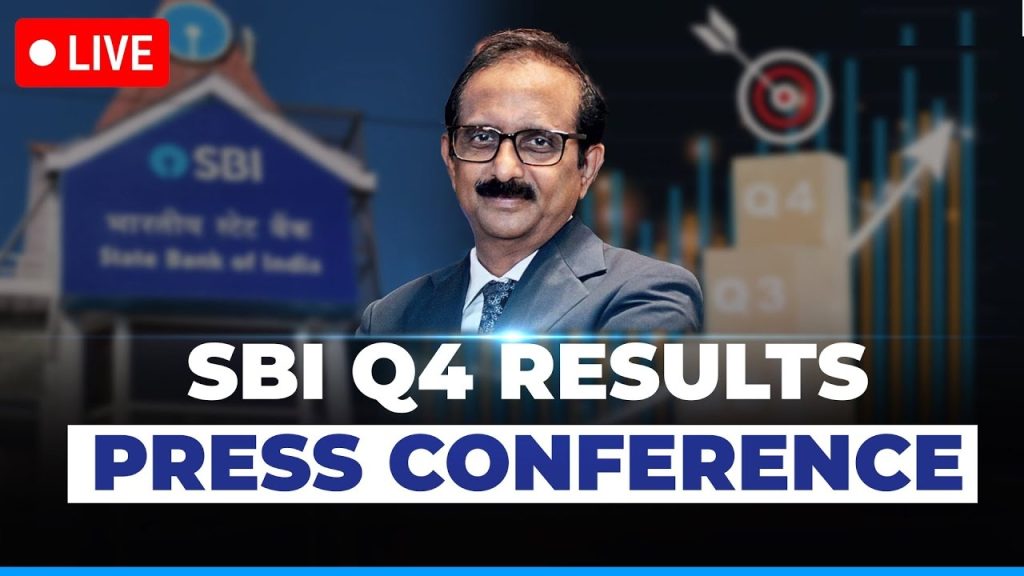
The State Bank of India (SBI) has solidified its position as a cornerstone of India’s financial landscape, delivering robust financial performance in FY25 despite global economic headwinds. With a net profit of ₹70,901 crore, up 16.08% year-on-year, SBI’s Q4 FY25 results underscore its ability to maintain profitability, asset quality, and sustainable growth. This article dives deep into SBI’s financial achievements, strategic initiatives, and outlook for FY26, providing insights for stakeholders, investors, and customers.
Understanding SBI’s Financial Performance in FY25
SBI’s FY25 financial results highlight its resilience and strategic prowess in navigating a complex economic environment. The bank’s ability to achieve consistent profitability stems from its institutionalized framework, robust processes, and commitment to stakeholder value creation.
Key Financial Highlights for FY25
SBI reported a net profit of ₹70,901 crore, reflecting a 16.08% year-on-year increase. Whole bank credit growth stood at 12.03%, with domestic credit growth at 11.56%. Deposit growth reached 9.48%, and the credit-deposit (CD) ratio was 69.71%, indicating ample headroom for future expansion. The bank’s asset quality remained stellar, with a slippage ratio of 0.55%, a credit cost of 0.38%, and a provisioning coverage ratio (PCR) of 74.42%.
Asset Quality: A Pillar of Strength
SBI’s asset quality continues to set industry benchmarks. The gross non-performing asset (GNPA) ratio dropped to a 14-year low of 2.4% in December 2024, while the net NPA ratio improved by 10 basis points to 0.47%. These metrics reflect the bank’s robust underwriting processes, effective collection mechanisms, and disciplined risk management. The capital adequacy ratio (CAR) of 14.25% and Common Equity Tier 1 (CET1) ratio of 10.81% further bolster SBI’s financial stability.
Deposit Growth and Customer Reach
SBI’s deposit base crossed ₹53 trillion, serving over 52 crore customers—one out of every three Indians. Term deposits grew by 11.48% year-on-year, outpacing savings deposits, while current account deposits surged by 27%. The CASA (Current Account and Savings Account) ratio stood at 39.97%, reflecting SBI’s strong retail banking foundation. This expansive customer base underscores SBI’s unparalleled reach and influence in India’s financial ecosystem.
Navigating the Global and Domestic Economic Landscape
The global economy in FY25 faced significant challenges, including trade tensions, tariff uncertainties, and financial market volatility. These factors have dampened global growth projections, with the International Monetary Fund (IMF) estimating a decline to 2.8% in 2025 and 3% in 2026, well below the historical average of 3.7% (2000–2019). The World Trade Organization (WTO) projects a marginal increase in world merchandise trade volumes by 1.7% in 2025.
Impact on India’s Economy
India’s economic growth is partially insulated from global headwinds due to its consumption-driven economy and robust domestic demand. The forecast of a normal southwest monsoon in 2025 is expected to boost farm incomes and stabilize food prices, supporting rural consumption. However, the Reserve Bank of India (RBI) revised its real GDP growth projection for FY26 downward by 20 basis points to 6.3% in April 2025, reflecting trade-related uncertainties. Meanwhile, India’s CPI headline inflation has moderated significantly, with forecasts suggesting it will remain below 4% in FY26.
SBI’s Strategic Response
SBI’s ability to thrive in this environment stems from its proactive strategies and adaptability. The bank has capitalized on domestic growth opportunities, particularly in retail and agricultural lending, while maintaining a cautious approach to corporate lending amid global uncertainties. RBI’s interventions, including open market operations and dollar-rupee swaps, have stabilized market liquidity, enabling SBI to maintain financial resilience.
Segment-Wise Performance: Driving Growth Across Verticals
SBI’s credit growth in FY25 was well-diversified, with strong contributions from retail, agriculture, and corporate segments. Domestic credit grew by 11.56% year-on-year, driven by:
- SME Lending: 16.86% growth
- Agricultural Loans: 14.29% growth
- Corporate Loans: 9% growth
- Retail Personal Loans: 11.4% growth
Foreign office advances grew by 14.84%, reflecting SBI’s expanding global footprint. The domestic credit-deposit ratio of 69.71% indicates sufficient capacity to support future economic growth.
Retail Banking: A Growth Engine
SBI’s retail banking segment continues to be a key driver of growth. The bank’s focus on retail personal loans, which grew by 11.4%, reflects its ability to cater to evolving customer needs. With a slippage ratio of 0.48% in retail personal loans, SBI demonstrates prudent risk management in this high-growth segment.
Corporate Lending: Balancing Caution and Opportunity
Corporate loan growth moderated to 9%, partly due to prepayments and deleveraging by corporates. While tariff uncertainties have prompted some corporates to adopt a wait-and-watch approach, SBI’s pipeline remains robust, with ₹3.4 lakh crore in sanctioned and undisbursed corporate loans. The bank’s cautious yet opportunistic approach ensures it capitalizes on viable investment opportunities without compromising asset quality.
Agricultural Lending: Supporting Rural India
Agricultural loans grew by 14.29%, bolstered by favorable monsoon forecasts and government support for the farm sector. SBI’s focus on rural banking strengthens its role in inclusive growth, supporting farmers and rural communities while maintaining portfolio quality.
Digital Banking: Powering the Future
SBI’s digital banking initiatives have gained significant traction, with over 8.77clim crore customers registered on its YONO platform. In FY25, 64% of regular savings bank accounts were opened through YONO, highlighting the platform’s role in driving financial inclusion and operational efficiency. The bank’s digital agenda aligns with India’s vision of a digital economy, enhancing customer experience and reducing operational costs.
YONO: A Game-Changer
YONO has emerged as a cornerstone of SBI’s digital strategy, offering a seamless banking experience across savings, investments, and loans. The platform’s success underscores SBI’s ability to leverage technology to meet customer expectations while maintaining its leadership in retail banking.
Subsidiaries: Creating Stakeholder Value
SBI’s subsidiaries, including SBI Life Insurance, SBI Mutual Fund, and SBI Cards, continue to perform strongly, contributing to the bank’s consolidated profitability. These entities enhance SBI’s diversified revenue streams and reinforce its leadership across financial services.
Profitability Metrics: Sustaining High Returns
SBI’s return on assets (ROA) and return on equity (ROE) remained robust at over 1% and 19%, respectively, in FY25. Despite margin pressures due to RBI’s 25-basis-point rate cut in Q4 FY25, the bank’s ability to maintain high profitability reflects its operational efficiency and cost management.
Margin Pressures: A Temporary Challenge
The RBI’s rate cut and expectations of further cuts (potentially 50 basis points by FY26) are likely to exert pressure on net interest margins (NIM). The repricing of loan portfolios occurs faster than deposits, creating a lag effect that impacts margins. However, SBI’s diversified loan book and strong deposit base position it to mitigate these challenges effectively.
Cost Management: Balancing Efficiency and Compliance
SBI’s substantial cost base reflects its commitment to compliance, customer service, and operational excellence. The bank continues to optimize costs through digitalization and process improvements, ensuring long-term sustainability.
Capital Raising and Growth Outlook
SBI’s board has approved raising equity capital of up to ₹25,000 crore, valid for 12 months. This enabling resolution provides flexibility to fund future growth, contingent on business needs and market conditions. With a capital adequacy ratio well above regulatory requirements, SBI is well-positioned to support India’s economic expansion.
Credit Growth Guidance for FY26
SBI has revised its credit growth guidance for FY26 to 12–13%, down from 14–16% in FY25, reflecting moderation in system-level credit growth (10–11%). The bank’s guidance aligns with nominal GDP growth of around 10%, with SBI historically outperforming GDP by 2–3%. This cautious optimism accounts for global uncertainties while leveraging domestic demand.
Deposit Growth Strategy
SBI aims to strengthen its leadership in current and savings account deposits by enhancing customer service and expanding its branch network. The bank’s focus on CASA deposits will help maintain a low-cost funding base, supporting profitability in a competitive environment.
Challenges and Opportunities in FY26
While SBI’s FY25 performance is commendable, the bank remains vigilant about emerging challenges. Global trade tensions, tariff uncertainties, and potential rate cuts pose risks to margins and credit growth. However, opportunities in digital banking, rural lending, and financial inclusion provide avenues for growth.
Addressing Tariff Uncertainties
SBI has observed moderation in corporate loan growth but does not directly attribute it to tariff uncertainties. Prepayments and equity raising by corporates have contributed to this trend. The bank’s robust pipeline and diversified loan book position it to capitalize on investment opportunities as global clarity emerges.
Leveraging Domestic Demand
India’s consumption-driven economy and favorable monsoon forecasts provide a strong foundation for growth. SBI’s focus on retail and agricultural lending aligns with these trends, ensuring sustained credit demand and portfolio quality.
SBI’s Role in India’s Economic Development
As India’s largest bank, SBI plays a pivotal role in driving economic progress. Its extensive branch network, digital platforms, and inclusive banking initiatives touch every Indian family, fostering financial inclusion and supporting national development goals. By delivering superior returns and maintaining stakeholder trust, SBI continues to be a beacon of stability in India’s financial sector.
Commitment to Stakeholders
SBI’s success is built on the trust of its customers, shareholders, employees, and the broader ecosystem. The bank’s commitment to fairness, transparency, and sustainable value creation ensures it remains a preferred choice for millions of Indians.
Driving Sustainable Growth
SBI’s focus on digital innovation, asset quality, and diversified growth strategies positions it to achieve an ROE of over 15% through economic cycles. By balancing profitability with social impact, SBI contributes to India’s vision of a $5 trillion economy.
Conclusion: SBI’s Path Forward
SBI’s Q4 FY25 results reflect its ability to thrive in a challenging global environment while delivering consistent value to stakeholders. With a net profit of ₹70,901 crore, industry-leading asset quality, and a robust digital banking platform, SBI is well-equipped to navigate future uncertainties. As the bank looks to FY26, its focus on credit growth, cost optimization, and customer-centric innovation will drive sustainable profitability. For investors, customers, and policymakers, SBI remains a trusted partner in India’s growth journey.
By leveraging its strengths and addressing emerging challenges, SBI is poised to maintain its leadership in India’s banking sector, delivering superior returns and shaping the future of finance.