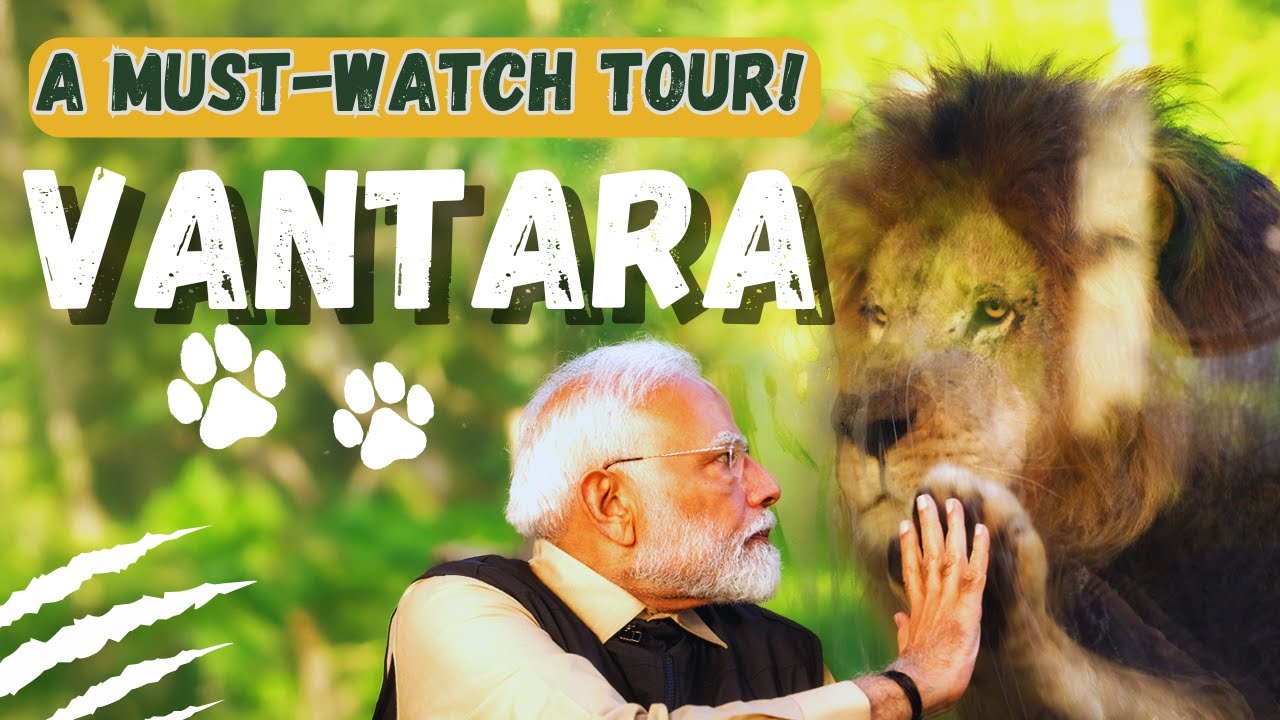
India’s Ambani family has long been synonymous with innovation and nation-building. From revolutionizing telecommunications to spearheading advancements in petrochemicals and digital services, their legacy continues to shape the country’s progress. Recently, Prime Minister Narendra Modi’s visit to Vantara, a groundbreaking wildlife rehabilitation initiative led by Anant Ambani, has thrust this ambitious project into the spotlight. This article delves into Vantara’s mission, its solutions to India’s wildlife crises, and the profound lessons it offers for global conservation efforts.
Understanding Vantara: A Sanctuary for Rescued Wildlife
Nestled in Jamnagar, Gujarat, Vantara (meaning “star of the forest”) spans over 3,000 acres and serves as a beacon of hope for abused and neglected animals. Since its inception, the facility has rescued over 150,000 animals across 2,000 species, including endangered elephants, tigers, cheetahs, and crocodiles. But Vantara is more than a sanctuary—it’s a holistic ecosystem addressing urgent gaps in India’s wildlife conservation framework.
The Plight of India’s Wildlife: Why Vantara Matters
India’s biodiversity is under siege. Despite hosting 60% of Asia’s elephant population and iconic species like the Bengal tiger, the country faces three critical challenges:
- Fragmented Conservation Efforts:
Government initiatives receive only 5% of the national budget, while NGOs operate with limited resources. The Wildlife Crime Control Bureau reports over 500 elephants poached in the last decade, highlighting systemic failures. - Inadequate Rehabilitation Infrastructure:
Studies reveal that 60% of rehabilitated animals suffer chronic health issues due to subpar facilities. Saving animals without ensuring their long-term well-being undermines conservation goals. - Lagging Innovation in Wildlife Medicine:
India lacks species-specific medical protocols, leaving veterinarians ill-equipped to treat complex trauma or diseases in rescued animals.
Vantara’s Three-Pillar Approach to Wildlife Conservation
Anant Ambani’s vision for Vantara tackles these challenges through a blend of compassion, cutting-edge science, and scalable solutions.
1. Rapid Rescue Operations
Vantara collaborates with global agencies to liberate animals from circuses, illegal logging camps, and exploitative parades. For instance, its team recently rescued 240 elephants from dire conditions, offering them a second chance at life.
2. Trauma-Informed Rehabilitation
Each animal undergoes a customized care plan. Elephants, often psychologically scarred by captivity, receive therapies like:
- Hydrotherapy Pools: Heated water jets soothe muscle injuries.
- Ayurvedic Massages: Traditional techniques reduce stress and improve circulation.
- Hyperbaric Oxygen Therapy: Accelerates healing of wounds and infections.
The facility’s 65,000 sq. ft. Elephant Hospital—the world’s largest—showcases innovations like non-invasive restraint devices and acupuncture tailored for pachyderms.
3. Pioneering Research in Wildlife Medicine
Vantara bridges India’s research gap by developing species-specific vaccines and treatment protocols. For example, its team is trialing an elephant herpesvirus vaccine, a breakthrough that could save thousands of calves globally.
Inside Vantara’s State-of-the-Art Facilities
The Elephant Wellness Center: A Model for Ethical Care
Beyond medical treatments, Vantara prioritizes mental health. Enclosures mimic natural habitats, with mud baths, shaded groves, and social herds to rebuild trust among traumatized elephants.
High-Tech Diagnostics and Surgery Units
Advanced imaging tools, including MRI and CT scanners, enable precise diagnoses. Surgeons have successfully removed bullets and poachers’ traps from big cats, setting new standards in veterinary care.
Conservation Breeding Programs
Vantara partners with the International Union for Conservation of Nature (IUCN) to breed endangered species like the Indian rhinoceros, ensuring genetic diversity and eventual reintroduction into protected forests.
Anant Ambani’s Personal Journey: Passion Meets Purpose
Despite battling health issues, Anant Ambani’s dedication to animals stems from childhood. His team often shares anecdotes of him hand-feeding injured birds or advocating against cruel tourist attractions. “Serving animals is ultimate peace,” one caretaker noted—a philosophy permeating Vantara’s culture.
This commitment earned the project a Rashtriya Pashudhan Puraskar from PM Modi, recognizing its alignment with India’s sustainable development goals.
Global Lessons from Vantara’s Ethical Model
Ending Exploitative Tourism
Vantara’s success contrasts sharply with venues like Thailand’s “elephant camps,” where animals endure abuse for entertainment. By prioritizing welfare over profit, Anant Ambani sets a blueprint for ethical ecotourism that educates visitors without compromising animal dignity.
Collaborative Conservation
Vantara’s partnerships with universities, NGOs, and tech firms demonstrate how cross-sector collaboration can amplify impact. For instance, AI-driven tracking systems monitor released animals, providing real-time data to forest departments.
Community Engagement
Local tribes near Jamnagar participate in conservation through employment and education programs, reducing human-wildlife conflicts and fostering stewardship.
The Road Ahead: Scaling Vantara’s Vision
Plans are underway to replicate Vantara’s model in other states, with a focus on marine life rescue centers and anti-poaching task forces. Anant Ambani’s goal? To make India a global leader in wildlife conservation by 2030.
Final Thoughts: Why Vantara Inspires Change
Vantara transcends traditional conservation by merging empathy with innovation. It challenges us to rethink humanity’s role in protecting Earth’s biodiversity—not as dominators, but as custodians. As Anant Ambani’s team often says, “Every rescued animal is a testament to what compassion can achieve.”
What’s your take on Vantara’s mission? Share your thoughts below—and stay tuned for potential updates as we explore this sanctuary firsthand!
By weaving cutting-edge science, ethical principles, and community-driven action, Vantara redefines wildlife conservation. Its story isn’t just about saving animals—it’s a call to reimagine our relationship with nature itself.