Site icon Telangana NavaNirmana Sena

Mumbai Red Alert: Latest Updates on Heavy Rainfall Crisis 19th August 2025

Mumbai Red Alert: Latest Updates on Heavy Rainfall Crisis August 2025 The financial capital of India has been experiencing unprecedented rainfall for three consecutive days, culminating in the India Meteorological Department (IMD) issuing a red alert - the highest level of weather warning. Mumbai recorded 177mm of rainfall in just 8 hours on Monday, August 18, 2025, causing widespread disruptions across the city and prompting authorities to declare emergency measures. With water levels rising to dangerous heights and multiple areas experiencing severe waterlogging, the city's infrastructure has been stretched to its limits as officials work around the clock to manage the crisis. Mumbai local train at Dadar station during heavy rain, illustrating delays and disruptions caused by monsoon flooding Current Weather Situation and Red Alert Status IMD Weather Warnings and Forecasts The India Meteorological Department has placed Mumbai under a red alert for August 18-19, 2025, forecasting extremely heavy rainfall across the city and suburban areas. The warning encompasses Mumbai city, Mumbai suburban districts, Thane, Raigad, and Palghar, indicating the regional nature of this weather system. According to meteorological data, the city is expected to receive more than 400mm of rainfall over the next few days, with peak activity predicted between August 19-20. The weather pattern is attributed to a low-pressure area formed over the Bay of Bengal, coupled with cyclonic circulations. This system has brought intense thunderstorms with lightning, heavy to very heavy rainfall, and gusty winds of 40-50 kmph across the region. The IMD has extended weather warnings until August 23, indicating that relief may not come immediately. Rainfall Distribution Across Mumbai Mumbai Rainfall Distribution by Area on August 18, 2025 - Red Alert Day Rainfall distribution across Mumbai has been highly variable, with some areas experiencing significantly more precipitation than others. Dahisar recorded the highest rainfall at 188mm, followed by Kandivli at 150mm and Vikhroli at 135.5mm during the monitoring period. In contrast, areas like Colaba and Mahalaxmi recorded relatively lower amounts at 45.2mm and 45mm respectively. The eastern suburbs have been particularly affected, with Chembur recording 124mm and Santacruz 123.9mm of rainfall. This uneven distribution has created localized flooding hotspots, particularly affecting low-lying areas and areas with poor drainage infrastructure. Impact on Transportation and Infrastructure Local Train Services and Delays Mumbai's lifeline - the local train network - has experienced significant disruptions due to the heavy rainfall. Central Railway's Harbour Line has been most affected, with services running 8-10 minutes late due to waterlogging at Mankhurd, Govandi, Kurla, and Tilak Nagar stations. Track points between Kurla and Tilak Nagar have been clamped as a safety measure, causing additional delays. Mumbai local railway tracks flooded due to heavy rainfall alongside a local train, depicting current travel delays and disruptions The Western Railway services have maintained better operations, with minimal delays compared to the Central line. However, suburban trains across the network are running 15-20 minutes behind schedule during peak hours. Despite the challenges, railway authorities have confirmed that no services have been completely suspended, allowing the city to maintain some level of connectivity. Flight Operations and Airport Advisories Chhatrapati Shivaji Maharaj International Airport (CSMIA) has issued passenger advisories warning of potential flight delays and disruptions. On Monday, the airport recorded nine go-arounds and one flight diversion due to low runway visibility. IndiGo flight 6E6468 from Ahmedabad was diverted to Surat due to weather conditions preventing landing in Mumbai. An IndiGo airplane taxiing at Mumbai airport, illustrating potential flight disruptions due to heavy rainfall and red alert Major airlines including IndiGo and Akasa Air have issued travel advisories, urging passengers to check flight status and allow extra travel time to reach the airport. The advisories specifically mention waterlogging on key airport routes, which could lead to significant delays for travelers. Road Traffic and Waterlogging Mumbai's road network has been severely impacted by the heavy rainfall, with waterlogging reported in 14 key locations across the city. The Andheri Subway, a crucial east-west connector, has been completely shut due to flooding. Traffic has been diverted through alternative routes including Thackeray Bridge and Gokhale Bridge. Severe flooding in Mumbai due to heavy monsoon rains leading to waterlogged streets and disruption of daily life during IMD red alert Several major routes have experienced significant congestion, including the Western Express Highway near Vile Parle and areas around Lokhandwala Complex. The BEST bus services have implemented route diversions in multiple areas including Shell Colony Chembur, Gandhi Market Sion, and Sangam Nagar Wadala. Emergency Response and Safety Measures School and College Closures The Brihanmumbai Municipal Corporation (BMC) has declared holidays for all schools and colleges in Mumbai city and suburbs for both August 18 and 19, 2025. This precautionary measure affects all government, private, and municipal educational institutions operating in afternoon sessions. The decision prioritizes student and staff safety amid continuous downpour and forecast of severe weather conditions. Educational authorities have been advised to monitor the situation closely and await further instructions before resuming normal operations. BMC Emergency Operations The BMC has activated its comprehensive emergency response system, deploying engineers, pump operators, health staff, and emergency response teams across the city. Special attention is being given to critical infrastructure including the storm-water drainage system, sewerage management, and pumping stations. The civic body has established a 24-hour disaster control helpline (1916) for citizens to report emergencies and receive official updates. Commissioner Bhushan Gagrani has instructed all civic departments to remain prepared and coordinate relief efforts. Government Response and Coordination Chief Minister Devendra Fadnavis has been actively monitoring the situation through the State Disaster Management Cell, holding regular review meetings with divisional commissioners. The state government has delegated emergency powers to local bodies to declare holidays and implement safety measures as needed. Maharashtra Relief and Rehabilitation Minister Makarand Jadhav-Patil has directed district collectors to conduct immediate damage assessments and submit reports on a priority basis. The government has assured immediate assistance to affected citizens and has pre-authorized district collectors to release emergency funds. Water Supply and Reservoir Status Current Reservoir Levels The heavy rainfall has significantly improved Mumbai's water supply situation, with the seven lakes supplying water to the city now at 91.18% capacity. This represents a substantial improvement in water security for the city, with combined water stock reaching 1,319,640 million litres. Individual reservoir levels show excellent recovery: Tulsi Lake is at 100% capacity, Tansa at 98.81%, Middle Vaitarna at 97.34%, and Vehar at 95.16%. Even the typically lower-capacity reservoirs like Upper Vaitarna (87.13%) and Modak Sagar (86.61%) are showing healthy levels. Water Distribution System The improved reservoir levels ensure adequate water supply for Mumbai's population throughout the remaining monsoon season and beyond. The Bhatsa system, comprising Bhatsa, Vehar, and Tulsi lakes, supplies water to eastern Mumbai, while the Vaitarna and Tansa systems serve the western parts of the city. The BMC's water treatment plants are operating normally despite the heavy rainfall, ensuring continued supply of treated water to all areas of the city. This represents a significant improvement from earlier concerns about water shortages during pre-monsoon periods. Economic and Agricultural Impact Crop Damage Assessment The heavy rainfall has caused significant agricultural damage across Maharashtra, with nearly 200,000 hectares of standing crops affected statewide. Areas particularly impacted include Yavatmal, Beed, and Nanded districts, where recent sowing has been completely destroyed. The state government has initiated immediate panchanama (damage assessment) procedures to evaluate crop losses and determine compensation amounts. District collectors have been authorized to expedite relief measures and provide immediate assistance to affected farmers. Economic Disruption in Mumbai The rainfall has caused significant economic disruption in Mumbai, with offices being advised to allow employees to leave by 4 PM to avoid evening high tides. Many businesses have implemented work-from-home policies to reduce commuter pressure on the strained transportation network. The financial markets and business districts have experienced reduced activity due to transportation difficulties and safety concerns. However, essential services including banking, healthcare, and emergency services continue to operate with enhanced safety protocols. Looking Ahead: Weather Forecast and Preparedness Extended Weather Outlook The IMD has warned that heavy rainfall activity will continue across Maharashtra until August 21, with several districts remaining under red and orange alerts. Tuesday, August 19, is expected to be particularly challenging, with rainfall potentially reaching 224.89mm and wind speeds up to 46.4 kmph. Weather forecasters predict that half of Maharashtra's districts will remain under red or orange alerts through August 21, indicating the widespread nature of this weather system. The situation is expected to gradually improve from August 22 onwards, though intermittent showers may continue. Safety Recommendations and Preparedness Authorities have issued comprehensive safety guidelines for citizens, emphasizing the importance of avoiding unnecessary travel during red alert periods. The BMC has specifically advised residents to stay indoors unless absolutely necessary and to contact emergency services if assistance is needed. High tide warnings have been issued, with tides of 3-4 meters expected in the evening hours. Coastal areas including Marine Drive, Juhu, and Worli Sea Face have been flagged for special caution. Fishermen have been strictly advised not to venture into the Arabian Sea due to rough conditions. Historical Context and Records Rainfall Records and Comparisons The current rainfall spell represents significant meteorological activity for August in Mumbai. Historical data shows that the highest single-day August rainfall was 346.2mm on August 23, 1997, at Santacruz, followed by 331.4mm on August 30, 2017. The recent 24-hour rainfall of 245mm recorded at Santacruz represents the highest single-day August rainfall since 2020. Monthly rainfall records indicate that August 1958 holds the record with 1,254mm at Santacruz, while August 2020 recorded 1,247.7mm, just 6.3mm short of the all-time record. The current month's rainfall has already contributed significantly to the seasonal total, which has crossed 1,000mm at both major observatories. Infrastructure Resilience The current situation has tested Mumbai's infrastructure resilience improvements made since the catastrophic floods of July 2005 and August 2017. While waterlogging and transportation delays persist, the absence of complete system breakdown indicates improved emergency preparedness and drainage capacity. The coordination between various agencies including the IMD, BMC, railway authorities, and state government has been notably more effective than in previous major weather events. This improved institutional response has helped minimize casualties and maintain essential services during the crisis. The ongoing heavy rainfall in Mumbai serves as a reminder of the city's vulnerability to extreme weather events while also highlighting the improvements in forecasting, early warning systems, and emergency response capabilities. As the city continues to experience challenging weather conditions, the coordinated efforts of government agencies, civic authorities, and citizens will be crucial in minimizing impacts and ensuring public safety through this monsoon crisis.

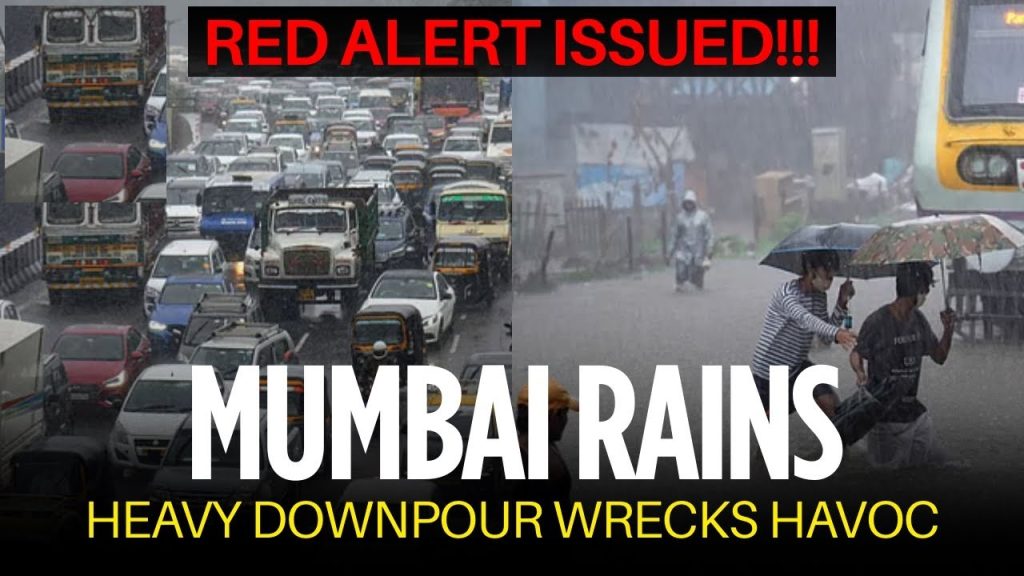
The financial capital of India has been experiencing unprecedented rainfall for three consecutive days, culminating in the India Meteorological Department (IMD) issuing a red alert – the highest level of weather warning. Mumbai recorded 177mm of rainfall in just 8 hours on Monday, August 18, 2025, causing widespread disruptions across the city and prompting authorities to declare emergency measures. With water levels rising to dangerous heights and multiple areas experiencing severe waterlogging, the city’s infrastructure has been stretched to its limits as officials work around the clock to manage the crisis.

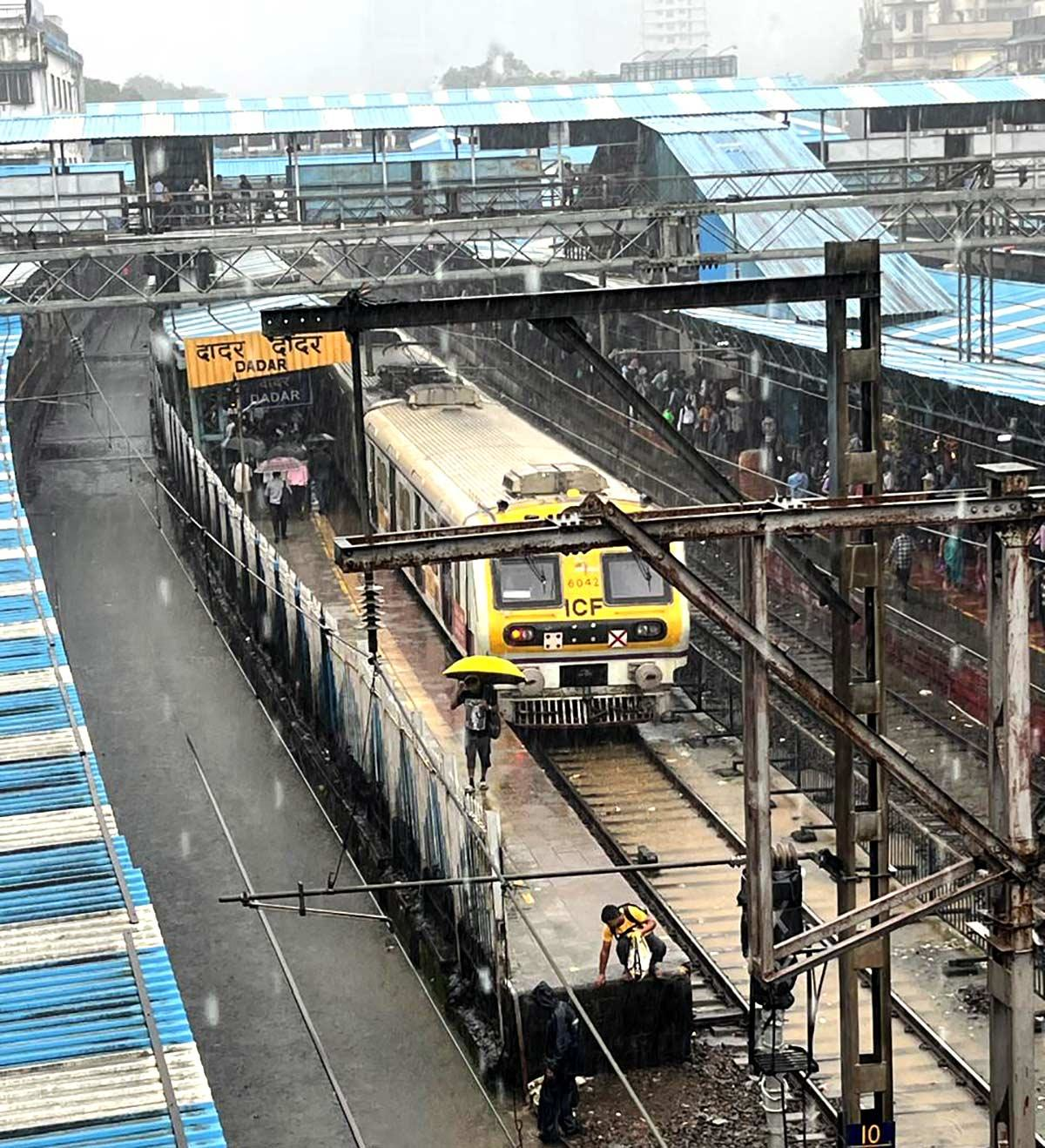
Mumbai local train at Dadar station during heavy rain, illustrating delays and disruptions caused by monsoon flooding 

Current Weather Situation and Red Alert Status

IMD Weather Warnings and Forecasts

The India Meteorological Department has placed Mumbai under a red alert for August 18-19, 2025, forecasting extremely heavy rainfall across the city and suburban areas. The warning encompasses Mumbai city, Mumbai suburban districts, Thane, Raigad, and Palghar, indicating the regional nature of this weather system. According to meteorological data, the city is expected to receive more than 400mm of rainfall over the next few days, with peak activity predicted between August 19-20.

The weather pattern is attributed to a low-pressure area formed over the Bay of Bengal, coupled with cyclonic circulations. This system has brought intense thunderstorms with lightning, heavy to very heavy rainfall, and gusty winds of 40-50 kmph across the region. The IMD has extended weather warnings until August 23, indicating that relief may not come immediately.

Rainfall Distribution Across Mumbai

Mumbai Rainfall Distribution by Area on August 18, 2025 – Red Alert Day

Rainfall distribution across Mumbai has been highly variable, with some areas experiencing significantly more precipitation than others. Dahisar recorded the highest rainfall at 188mm, followed by Kandivli at 150mm and Vikhroli at 135.5mm during the monitoring period. In contrast, areas like Colaba and Mahalaxmi recorded relatively lower amounts at 45.2mm and 45mm respectively.

The eastern suburbs have been particularly affected, with Chembur recording 124mm and Santacruz 123.9mm of rainfall. This uneven distribution has created localized flooding hotspots, particularly affecting low-lying areas and areas with poor drainage infrastructure

Impact on Transportation and Infrastructure

Local Train Services and Delays

Mumbai’s lifeline – the local train network – has experienced significant disruptions due to the heavy rainfall. Central Railway’s Harbour Line has been most affected, with services running 8-10 minutes late due to waterlogging at Mankhurd, Govandi, Kurla, and Tilak Nagar stations. Track points between Kurla and Tilak Nagar have been clamped as a safety measure, causing additional delays.

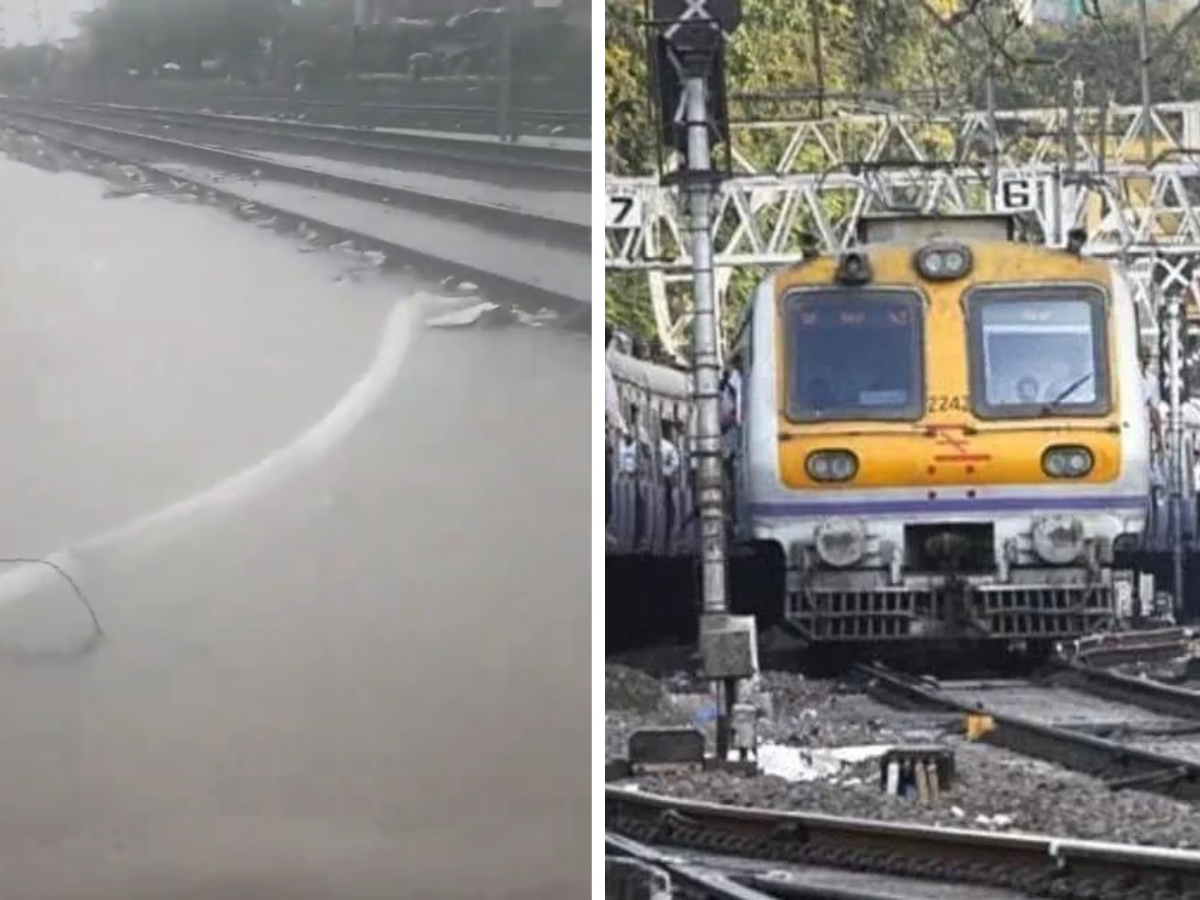
Mumbai local railway tracks flooded due to heavy rainfall alongside a local train, depicting current travel delays and disruptions 

The Western Railway services have maintained better operations, with minimal delays compared to the Central line. However, suburban trains across the network are running 15-20 minutes behind schedule during peak hours. Despite the challenges, railway authorities have confirmed that no services have been completely suspended, allowing the city to maintain some level of connectivity.

Flight Operations and Airport Advisories

Chhatrapati Shivaji Maharaj International Airport (CSMIA) has issued passenger advisories warning of potential flight delays and disruptions. On Monday, the airport recorded nine go-arounds and one flight diversion due to low runway visibility. IndiGo flight 6E6468 from Ahmedabad was diverted to Surat due to weather conditions preventing landing in Mumbai.
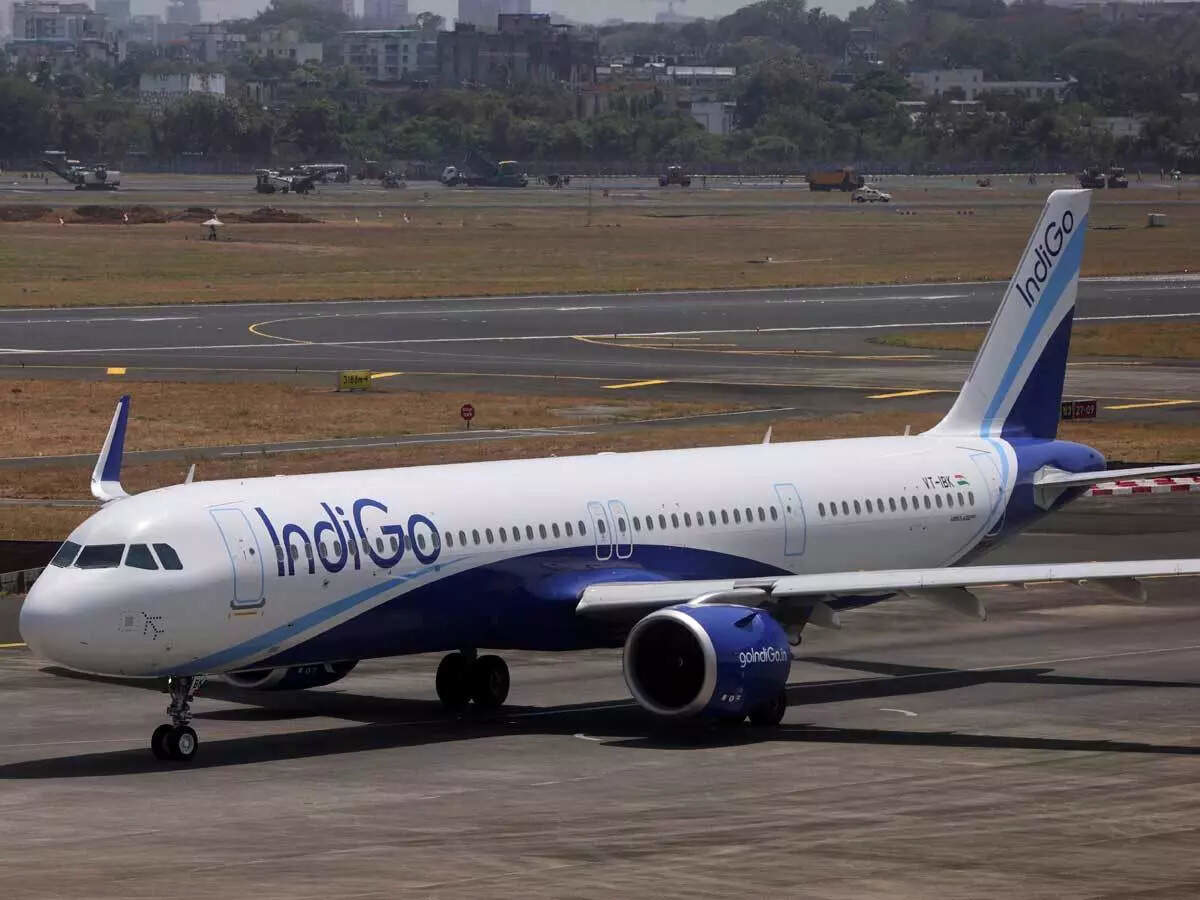
An IndiGo airplane taxiing at Mumbai airport, illustrating potential flight disruptions due to heavy rainfall and red alert 

Major airlines including IndiGo and Akasa Air have issued travel advisories, urging passengers to check flight status and allow extra travel time to reach the airport. The advisories specifically mention waterlogging on key airport routes, which could lead to significant delays for travelers.

Road Traffic and Waterlogging

Mumbai’s road network has been severely impacted by the heavy rainfall, with waterlogging reported in 14 key locations across the city. The Andheri Subway, a crucial east-west connector, has been completely shut due to flooding. Traffic has been diverted through alternative routes including Thackeray Bridge and Gokhale Bridge.
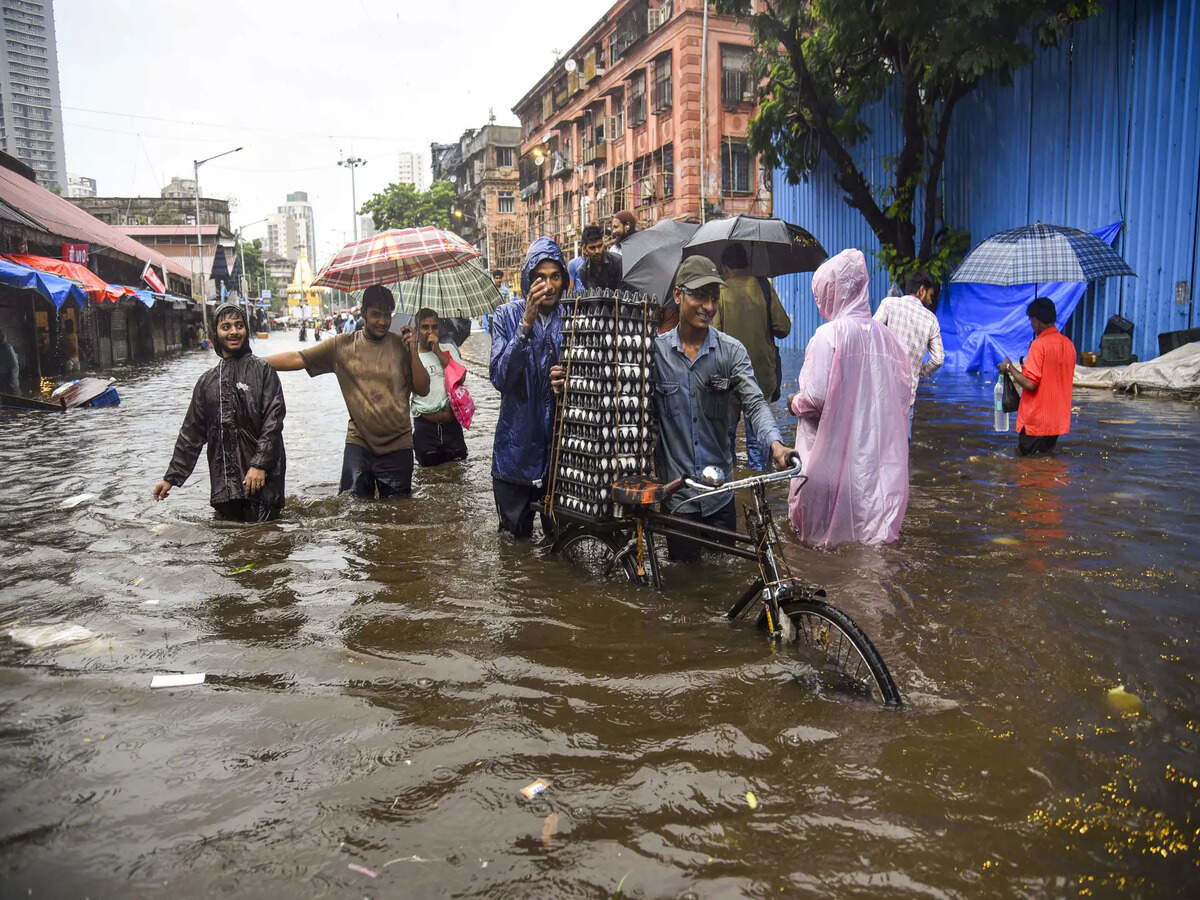
Severe flooding in Mumbai due to heavy monsoon rains leading to waterlogged streets and disruption of daily life during IMD red alert 

Several major routes have experienced significant congestion, including the Western Express Highway near Vile Parle and areas around Lokhandwala Complex. The BEST bus services have implemented route diversions in multiple areas including Shell Colony Chembur, Gandhi Market Sion, and Sangam Nagar Wadala.

Emergency Response and Safety Measures

School and College Closures

The Brihanmumbai Municipal Corporation (BMC) has declared holidays for all schools and colleges in Mumbai city and suburbs for both August 18 and 19, 2025. This precautionary measure affects all government, private, and municipal educational institutions operating in afternoon sessions.

The decision prioritizes student and staff safety amid continuous downpour and forecast of severe weather conditions. Educational authorities have been advised to monitor the situation closely and await further instructions before resuming normal operations.

BMC Emergency Operations

The BMC has activated its comprehensive emergency response system, deploying engineers, pump operators, health staff, and emergency response teams across the city. Special attention is being given to critical infrastructure including the storm-water drainage system, sewerage management, and pumping stations.

The civic body has established a 24-hour disaster control helpline (1916) for citizens to report emergencies and receive official updates. Commissioner Bhushan Gagrani has instructed all civic departments to remain prepared and coordinate relief efforts.

Government Response and Coordination

Chief Minister Devendra Fadnavis has been actively monitoring the situation through the State Disaster Management Cell, holding regular review meetings with divisional commissioners. The state government has delegated emergency powers to local bodies to declare holidays and implement safety measures as needed.

Maharashtra Relief and Rehabilitation Minister Makarand Jadhav-Patil has directed district collectors to conduct immediate damage assessments and submit reports on a priority basis. The government has assured immediate assistance to affected citizens and has pre-authorized district collectors to release emergency funds.

Water Supply and Reservoir Status

Current Reservoir Levels

The heavy rainfall has significantly improved Mumbai’s water supply situation, with the seven lakes supplying water to the city now at 91.18% capacity. This represents a substantial improvement in water security for the city, with combined water stock reaching 1,319,640 million litres.

Individual reservoir levels show excellent recovery: Tulsi Lake is at 100% capacity, Tansa at 98.81%, Middle Vaitarna at 97.34%, and Vehar at 95.16%. Even the typically lower-capacity reservoirs like Upper Vaitarna (87.13%) and Modak Sagar (86.61%) are showing healthy levels.

Water Distribution System

The improved reservoir levels ensure adequate water supply for Mumbai’s population throughout the remaining monsoon season and beyond. The Bhatsa system, comprising Bhatsa, Vehar, and Tulsi lakes, supplies water to eastern Mumbai, while the Vaitarna and Tansa systems serve the western parts of the city.

The BMC’s water treatment plants are operating normally despite the heavy rainfall, ensuring continued supply of treated water to all areas of the city. This represents a significant improvement from earlier concerns about water shortages during pre-monsoon periods.

Economic and Agricultural Impact

Crop Damage Assessment

The heavy rainfall has caused significant agricultural damage across Maharashtra, with nearly 200,000 hectares of standing crops affected statewide. Areas particularly impacted include Yavatmal, Beed, and Nanded districts, where recent sowing has been completely destroyed.

The state government has initiated immediate panchanama (damage assessment) procedures to evaluate crop losses and determine compensation amounts. District collectors have been authorized to expedite relief measures and provide immediate assistance to affected farmers.

Economic Disruption in Mumbai

The rainfall has caused significant economic disruption in Mumbai, with offices being advised to allow employees to leave by 4 PM to avoid evening high tides. Many businesses have implemented work-from-home policies to reduce commuter pressure on the strained transportation network.

The financial markets and business districts have experienced reduced activity due to transportation difficulties and safety concerns. However, essential services including banking, healthcare, and emergency services continue to operate with enhanced safety protocols.

Looking Ahead: Weather Forecast and Preparedness

Extended Weather Outlook

The IMD has warned that heavy rainfall activity will continue across Maharashtra until August 21, with several districts remaining under red and orange alerts. Tuesday, August 19, is expected to be particularly challenging, with rainfall potentially reaching 224.89mm and wind speeds up to 46.4 kmph.

Weather forecasters predict that half of Maharashtra’s districts will remain under red or orange alerts through August 21, indicating the widespread nature of this weather system. The situation is expected to gradually improve from August 22 onwards, though intermittent showers may continue.

Safety Recommendations and Preparedness

Authorities have issued comprehensive safety guidelines for citizens, emphasizing the importance of avoiding unnecessary travel during red alert periods. The BMC has specifically advised residents to stay indoors unless absolutely necessary and to contact emergency services if assistance is needed.

High tide warnings have been issued, with tides of 3-4 meters expected in the evening hours. Coastal areas including Marine Drive, Juhu, and Worli Sea Face have been flagged for special caution. Fishermen have been strictly advised not to venture into the Arabian Sea due to rough conditions.

Historical Context and Records

Rainfall Records and Comparisons

The current rainfall spell represents significant meteorological activity for August in Mumbai. Historical data shows that the highest single-day August rainfall was 346.2mm on August 23, 1997, at Santacruz, followed by 331.4mm on August 30, 2017. The recent 24-hour rainfall of 245mm recorded at Santacruz represents the highest single-day August rainfall since 2020.news18

Monthly rainfall records indicate that August 1958 holds the record with 1,254mm at Santacruz, while August 2020 recorded 1,247.7mm, just 6.3mm short of the all-time record. The current month’s rainfall has already contributed significantly to the seasonal total, which has crossed 1,000mm at both major observatories.

Infrastructure Resilience

The current situation has tested Mumbai’s infrastructure resilience improvements made since the catastrophic floods of July 2005 and August 2017. While waterlogging and transportation delays persist, the absence of complete system breakdown indicates improved emergency preparedness and drainage capacity.

The coordination between various agencies including the IMD, BMC, railway authorities, and state government has been notably more effective than in previous major weather events. This improved institutional response has helped minimize casualties and maintain essential services during the crisis.

The ongoing heavy rainfall in Mumbai serves as a reminder of the city’s vulnerability to extreme weather events while also highlighting the improvements in forecasting, early warning systems, and emergency response capabilities. As the city continues to experience challenging weather conditions, the coordinated efforts of government agencies, civic authorities, and citizens will be crucial in minimizing impacts and ensuring public safety through this monsoon crisis.

Exit mobile version