


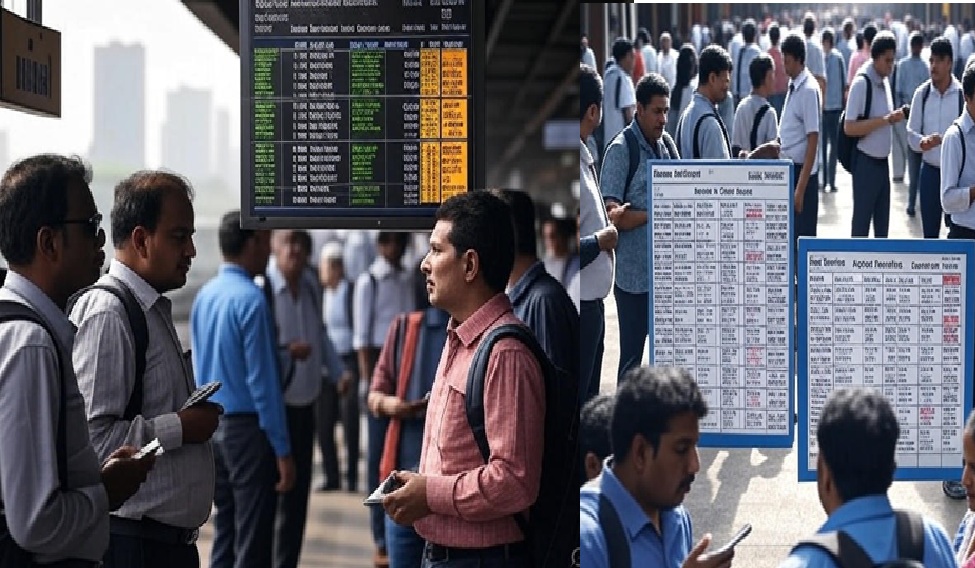
Mumbai’s bustling local train network forms the lifeline of the city, transporting millions of commuters daily across its vast metropolitan area. On August 10, 2025, which falls on a Sunday, authorities have scheduled extensive maintenance works, leading to significant revisions in train schedules. These changes stem from mega blocks on the Central Railway, jumbo blocks on the Western Railway, and special traffic blocks on the Harbour, Transharbour, and Uran lines. Commuters must plan their journeys carefully to avoid disruptions, as several local trains face cancellations, route diversions, or short terminations. This article provides a comprehensive guide to the revised schedules, helping you navigate the changes seamlessly while highlighting the importance of these maintenance activities for long-term safety and efficiency.
In a city like Mumbai, where time equals money, any alteration in the local train timetable can ripple through daily routines. The Central Railway has announced a special midnight block for critical girder work between Kalyan, Ambernath, and Badlapur. Meanwhile, the Western Railway plans a jumbo block between Mahim and Santacruz for essential track maintenance. Harbour and Transharbour lines will also see temporary halts in services to facilitate repairs. These blocks, though inconvenient in the short term, ensure the tracks remain safe and operational for the high-volume traffic they handle year-round.
Whether you rely on the Central line for your commute to work or the Western line for weekend outings, understanding these updates is crucial. We dive deep into each affected section, offering detailed breakdowns, alternative options, and tips to minimize hassle. By staying informed, you can turn potential chaos into a smooth travel experience.
Understanding Mumbai’s Mega Blocks: Why They Matter for Local Train Commuters
Mega blocks represent planned shutdowns of railway sections to allow for vital maintenance, upgrades, and repairs. In Mumbai, where the suburban rail system carries over 7.5 million passengers daily, these blocks occur regularly, often on weekends to reduce impact on peak-hour crowds. On August 10, 2025, the focus shifts to multiple lines, addressing wear and tear from constant use.
Railway officials emphasize that such interventions prevent accidents and extend the infrastructure’s lifespan. For instance, girder work on the Central line involves reinforcing bridges and structures that support heavy loads. Track maintenance on the Western line ensures smooth rides and reduces derailment risks. Without these proactive measures, minor issues could escalate into major crises, disrupting the city’s economic heartbeat.
Commuters often view mega blocks as nuisances, but they play a pivotal role in Mumbai’s transport ecosystem. The city’s local trains, operated by Indian Railways, cover more than 400 kilometers of tracks, with services running from early morning until late at night. Disruptions like those on August 10 highlight the delicate balance between maintenance needs and public convenience. Authorities typically announce these blocks in advance via press releases, station announcements, and digital platforms, urging passengers to check schedules before heading out.
In the context of Mumbai’s geography, these blocks affect diverse areas—from the dense urban core of South Mumbai to suburban hubs like Kalyan and Panvel. Geo-targeted planning ensures that works target high-traffic zones without paralyzing the entire network. For example, the Central line’s block between Thakurli and Kalyan impacts slow lines, forcing trains onto alternative paths. This strategic approach minimizes widespread fallout while maximizing repair efficiency.
To appreciate the scale, consider that Mumbai’s local trains handle more passengers than many countries’ entire rail systems. The mega block on August 10, 2025, underscores the ongoing efforts to modernize this aging infrastructure. Initiatives like these align with broader goals, such as integrating advanced signaling systems and electrification, which promise faster, greener commutes in the future.
Central Railway Mega Block Details: Impacts on Key Suburban Routes
The Central Railway, one of Mumbai’s primary suburban networks, will execute a mega block on August 10, 2025, primarily affecting routes between Kalyan, Ambernath, and Badlapur. This involves closing sections of the up and down slow lines between Thakurli and Kalyan, the down fast line from Dombivli to Kalyan, and the south-east lines from Ambernath to Badlapur between 1:15 AM and 4:15 AM.
Engineers will focus on girder replacements and structural reinforcements, essential for handling the line’s heavy freight and passenger loads. As a result, several local trains will not operate as usual, with some services terminating early or starting later. Passengers traveling late at night on August 9 or early morning on August 10 should note these changes to avoid stranding at stations.
For late-night services on August 9, the last train from Chhatrapati Shivaji Maharaj Terminus (CSMT) to Karjat departs at 9:58 PM, earlier than its regular 11:30 PM slot. Similarly, the final service from Karjat to CSMT leaves at 9:27 PM, ahead of the usual 11:05 PM. For Kasara routes, the last CSMT-bound train departs Kasara at 9:24 PM, and the final Kasara-bound from CSMT runs at 10:19 PM.
Over 20 late-night trains between Kalyan and Karjat/Kasara stand canceled, pushing commuters to seek alternatives like buses or rideshares. This adjustment aims to clear tracks for overnight work, ensuring safety during the block.
Come Sunday morning on August 10, services resume gradually. The first train from Ambernath to Karjat starts at 4:46 AM, while the initial CSMT-bound from Karjat departs at 4:10 AM. CSMT to Kasara sees its first service at 4:40 AM, with the reverse from Kasara to CSMT at 4:52 AM. The earliest CSMT to Karjat train rolls out at 6:46 AM.
These shifts reflect the railway’s commitment to passenger safety amid maintenance. Commuters in areas like Dombivli, Kalyan, and Ambernath should plan extra time or explore Mumbai Metropolitan Region Development Authority (MMRDA) bus services as backups. Geo-specific impacts include potential crowding at Thane station, a major interchange point.
Beyond locals, long-distance trains face rerouting. Services passing through Diva and Kalyan, such as the Chennai Egmore Express, Amritsar Express, Sainagar Shirdi Express, Hatia Express, Mahanagari Express, Kushinagar Express, Azamgarh Express, Tapovan Express, Indrayani Express, and Tulsi Express, will follow diverted paths. Trains via Karjat-Panvel-Diva, including Konark Express, Visakhapatnam Express, Hussainsagar Express, Hospet Express, and another Chennai Egmore Express, will halt at Panvel and Thane instead of Kalyan for passenger convenience.
These diversions prevent bottlenecks and maintain flow on unaffected sections. Railway staff will deploy additional personnel at key stations to guide travelers and manage crowds.
Western Railway Jumbo Block: Track Maintenance Between Mahim and Santacruz
Shifting focus to the Western Railway, a jumbo block will disrupt services between Mahim and Santacruz on August 10, 2025. The up fast line closes from midnight until 4:00 AM, while the down fast line shuts from 12:30 AM to 4:30 AM. During this period, select trains will switch to slow lines, potentially causing delays.
This block targets track repairs, including ballast replacement and signaling upgrades, crucial for the line’s reliability. Western Railway, serving Mumbai’s western suburbs from Churchgate to Virar and beyond, handles immense daily traffic, making such maintenance indispensable.
Commuters on fast services should anticipate slower journeys as trains detour to slow tracks. Stations like Bandra, Andheri, and Borivali may see increased footfall from rerouted passengers. To mitigate this, authorities recommend using Mumbai’s metro lines, such as Line 1 (Versova-Andheri-Ghatkopar), which parallels parts of the Western line.
Geo-targeted effects include disruptions in bustling areas like Santacruz, home to Mumbai’s international airport. Travelers heading to or from the airport via local trains should factor in extra time or opt for airport shuttles. The block’s timing, aligned with low-traffic hours, minimizes overall impact but still requires vigilance from night-shift workers and early risers.
Western Railway has assured that all possible measures, including real-time updates via apps like ‘Where is my Train’ and station displays, will keep passengers informed. This proactive communication helps commuters adapt quickly.
Harbour and Transharbour Line Disruptions: Early Morning Cancellations and Short Terminations
The Harbour line, connecting CSMT to Panvel and beyond, along with the Transharbour line linking Thane to Vashi/Panvel, will experience special traffic blocks on August 10, 2025. Approximately 27 early-morning trains face cancellation or short origination/termination, with services between Vashi and Panvel halted from 12:40 AM to 10:45 AM on the Harbour line.
Trains will operate normally between CSMT and Mankhurd, but those bound for Panvel or Belapur will start or end at Nerul or Vashi. This setup allows partial services while crews perform track and overhead equipment maintenance.
On the Transharbour line, operations between Thane and Turbhe cease from 12:30 AM to 5:30 AM, affecting cross-harbor commuters. Passengers in Navi Mumbai areas like Vashi, Nerul, and Panvel should consider alternatives such as BEST buses or the upcoming Navi Mumbai Metro.
These blocks address geo-specific challenges, like the marshy terrains around Panvel, which demand regular upkeep to prevent flooding-related issues. By scheduling works overnight and early morning, railways limit daytime disruptions, but affected travelers must adjust plans accordingly.
Short-terminated trains, for instance, might end at Thane, Dombivli, or Ambernath instead of CSMT, requiring transfers. Railway officials suggest downloading the official Indian Railways app for live tracking and alerts.
Long-Distance Train Diversions: How Express Services Adapt to Mumbai’s Mega Blocks
Beyond suburban locals, August 10’s blocks influence long-distance express trains, which share tracks with Mumbai’s commuter services. Diversions ensure these trains avoid blocked sections, maintaining national connectivity.
On the Central line, trains like the Chennai Egmore Express divert around Diva-Kalyan bottlenecks. Similar reroutes apply to Amritsar, Sainagar Shirdi, Hatia, Mahanagari, Kushinagar, Azamgarh, Tapovan, Indrayani, and Tulsi Expresses. For routes via Karjat-Panvel-Diva, services such as Konark, Visakhapatnam, Hussainsagar, Hospet, and Chennai Egmore stop at Panvel and Thane, accommodating Kalyan-bound passengers.
These changes prevent delays cascading across India’s rail network. Passengers on these trains receive notifications via SMS or the NTES (National Train Enquiry System) portal. Geo-factors, like Mumbai’s coastal location, influence diversion paths, often routing through less congested suburban areas.
Travelers should confirm reservations and arrival times, as platforms may change at major junctions like CSMT or Dadar.
Revised Timings for Late-Night and Early-Morning Trains: A Detailed Breakdown
To help commuters, here’s a closer look at the adjusted schedules:
Late-Night Adjustments (August 9, 2025):
- CSMT to Karjat: Last train at 9:58 PM (previously 11:30 PM).
- Karjat to CSMT: Last at 9:27 PM (previously 11:05 PM).
- CSMT to Kasara: Last at 10:19 PM.
- Kasara to CSMT: Last at 9:24 PM.
- Over 20 trains between Kalyan and Karjat/Kasara canceled.
Early-Morning Resumptions (August 10, 2025):
- Ambernath to Karjat: First at 4:46 AM.
- Karjat to CSMT: First at 4:10 AM.
- CSMT to Kasara: First at 4:40 AM.
- Kasara to CSMT: First at 4:52 AM.
- CSMT to Karjat: First at 6:46 AM.
These timings allow for safe completion of works before peak hours.
Tips for Mumbai Commuters During Train Schedule Changes
Navigating mega blocks requires preparation. Check the official Western or Central Railway websites, use apps like UTS for tickets, and consider carpooling. For geo-specific advice, residents in Thane can use local rickshaws, while Panvel folks might prefer state transport buses.
Stay hydrated, carry essentials, and arrive early at stations. If traveling with family, opt for less crowded alternatives.
The Broader Impact of Maintenance on Mumbai’s Transport Future
These blocks contribute to Mumbai’s rail modernization, including projects like the Mumbai Urban Transport Project (MUTP). Future enhancements promise air-conditioned coaches and better connectivity.
In conclusion, while August 10, 2025, brings temporary inconveniences, informed planning ensures smooth travels. Mumbai’s resilient spirit shines through such challenges, keeping the city moving forward.