


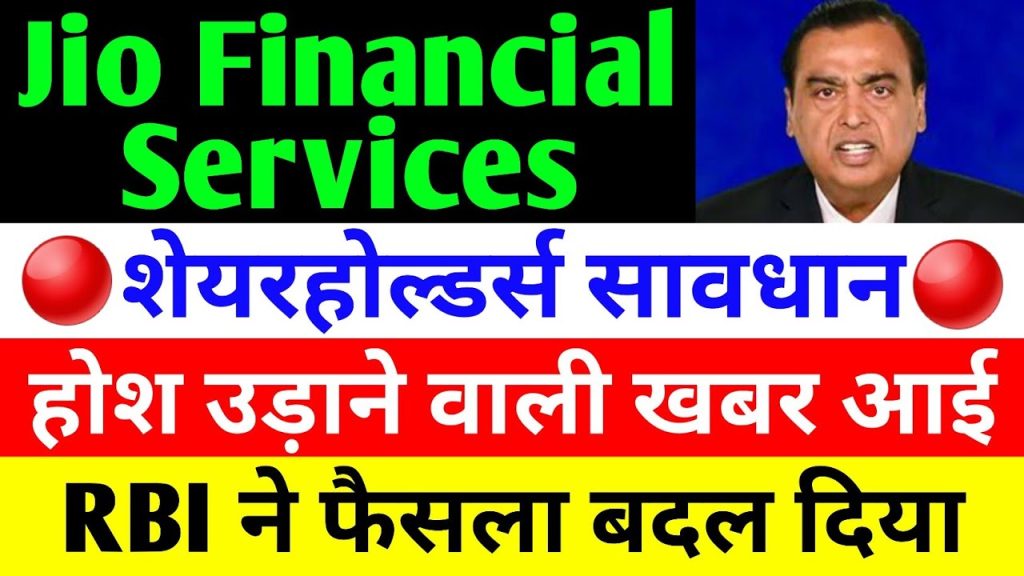
The Indian financial markets are buzzing with activity as Jio Financial Services (JFSL), a subsidiary of Reliance Industries, faces significant turbulence. A massive block deal triggered a sharp decline in its stock price, raising concerns among shareholders. Meanwhile, the Reserve Bank of India (RBI) has introduced transformative regulations for the banking sector, promising long-term benefits for NBFCs (Non-Banking Financial Companies). In this comprehensive analysis, we explore the latest developments, market trends, and expert insights to help investors navigate this volatile landscape.
Jio Financial Services Stock Crash: What Triggered the Sudden Drop?
Block Deal Fallout and Market Sentiment
On February 26, 2025, Jio Financial Services witnessed a 2.01% decline in its stock price, closing at ₹221. This drop followed a block deal involving 10.8 lakh shares, signaling heavy selling pressure. Block deals—large-volume trades executed off the public exchange—often indicate institutional investors or major stakeholders liquidating positions.
Why did this happen?
- Bearish Market Sentiment: The broader market has been under stress, with the Nifty 50 index struggling despite JFSL’s inclusion.
- Liquidity Crunch: Sustained selling by Foreign Institutional Investors (FIIs) over six months has kept the stock in a downtrend.
- Valuation Concerns: Despite JFSL’s integration into the Nifty 50, weak corporate earnings and high valuations have spooked investors.
Technical Analysis: Is the Worst Over?
JFSL’s stock has plummeted 31.01% since its peak, reflecting persistent bearish momentum. Analysts suggest the stock may remain under pressure until positive catalysts emerge, such as strong quarterly results or strategic partnerships.
RBI’s Bold Regulatory Shift: A Lifeline for NBFCs and Banks
Risk Weight Reduction: Breaking Down the RBI’s Decision
On February 25, 2025, the RBI announced a reduction in risk weights for bank loans to NBFCs, slashing it from 125% to 100%. This move aims to:
- Boost Liquidity: Free up capital for banks to lend more.
- Ease Funding for NBFCs: Simplify access to credit for non-banking financial institutions.
- Stimulate Loan Growth: Revive sluggish credit expansion in sectors like microfinance.
Sanjay Malhotra, the new RBI Governor, emphasized this policy as part of a broader strategy to strengthen India’s financial ecosystem.
Winners and Losers: Which Institutions Benefit Most?
- Top Gainers:
- Bandhan Bank and IndusInd Bank: High exposure to microfinance.
- SBI, Canara Bank, and Bank of Baroda: Significant NBFC loan portfolios.
- NBFCs: Jio Financial Services, Bajaj Finance, and others stand to gain from cheaper funding.
Global brokerages like Macquarie and CLSA predict this policy could lift banks’ CET-1 ratios by 10–15 basis points, enhancing capital adequacy. Morgan Stanley adds that ROE (Return on Equity) improvements are likely, particularly for public-sector banks.
Market Outlook: Corrections, Opportunities, and Strategic Moves
Short-Term Volatility vs. Long-Term Potential
Sudeep Bandopadhyay, a renowned market expert, warns of 6–8 months of volatility due to:
- Global Risk Aversion: U.S. Treasury yields above 4% are diverting foreign capital.
- Domestic Headwinds: Subpar corporate earnings and stretched valuations in mid- and small-cap segments.
However, he remains bullish on large-cap stocks like State Bank of India (SBI), citing attractive valuations and potential rate cuts in 2025.
Sector Spotlight: Banking and Financial Services
- Interest Rate Cuts: Expected RBI rate reductions could reignite credit demand.
- Digital Transformation: Jio Financial’s fintech initiatives position it as a long-term disruptor.
- Microfinance Growth: Bandhan Bank and Ujjivan Small Finance Bank are primed for rebound.
Investor Strategy: Navigating the Storm
5 Actionable Tips for Shareholders
- Diversify into Large Caps: Shift focus from mid-/small-caps to stable blue-chips like SBI and HDFC Bank.
- Monitor SIP Inflows: Systematic Investment Plans (SIPs) continue to support markets—leverage rupee-cost averaging.
- Watch RBI Policy: Anticipate rate cuts in late 2025 for cyclical sectors like autos and real estate.
- Avoid Panic Selling: Corrections offer entry points for high-quality stocks.
- Evaluate JFSL’s Fundamentals: Assess Reliance’s strategic plans for Jio Financial before exiting.
FAQ: Your Questions Answered
Q: Will Jio Financial Services recover?
A: Long-term prospects remain strong due to Reliance’s backing, but short-term pain is likely.
Q: Which sectors will outperform in 2025?
A: Banking, renewables, and AI-driven tech stocks are top contenders.
Q: How does the RBI’s risk weight decision help NBFCs?
A: Lower borrowing costs and improved liquidity will drive loan growth.
Conclusion: Patience and Precision Pay Off
The Jio Financial Services stock slump and RBI’s regulatory overhaul underscore the importance of staying informed in turbulent markets. While short-term volatility is inevitable, India’s structural growth story—powered by digital adoption and financial inclusion—remains intact. Investors who balance caution with strategic bets on sectors like banking and fintech could reap substantial rewards by 2026.
Stay tuned to our channel for real-time updates, and don’t forget to subscribe!