Site icon Telangana NavaNirmana Sena

India USA Trade Deal: Impacts on Markets, Companies, and Global Trade Dynamics

India-USA Trade Deal: Impacts on Markets, Companies, and Global Trade Dynamics The global economic landscape is buzzing with anticipation as talks of a potential India-USA trade deal gain momentum. This development, coupled with significant market movements and corporate updates, is shaping the financial and industrial sectors in India and beyond. From the American market's positive performance to key developments in Indian companies like Tata Power, Motilal Oswal, and HDB Financial, the economic narrative is rich with opportunities and challenges. This article dives deep into the implications of the India-USA trade deal, explores its potential effects on various sectors, and provides insights into recent market trends and corporate activities. Understanding the India-USA Trade Deal The Context of Global Trade Agreements Trade agreements are pivotal in shaping economic relationships between nations. The United States, under its current administration, is actively pursuing trade deals to bolster its economic interests. Recent discussions with countries like Vietnam, where a trade agreement imposes a 20% tariff on Vietnamese goods entering the USA while American products enter Vietnam tariff-free, highlight the aggressive stance of U.S. trade policies. This precedent sets the stage for understanding the potential India-USA trade deal, which could redefine bilateral trade dynamics. Anticipation Surrounding the India-USA Trade Deal Sources indicate that an announcement regarding a mini trade deal between India and the USA could be imminent, possibly within 48 hours. While no official confirmation has surfaced, the prospect of this deal has sparked significant interest. India is reportedly pushing for concessions, particularly in protecting its agriculture sector, which remains a critical point of negotiation. The Indian government aims to safeguard its farmers from foreign competition, a priority that could shape the terms of the agreement. Potential Terms and Conditions The specifics of the trade deal remain under wraps, but the terms will likely influence market reactions. A successful deal could enhance market confidence, but the concessions India might offer—particularly in agriculture—will be crucial. For instance, allowing U.S. agricultural products easier access to the Indian market could challenge local farmers, given the high tariffs currently imposed on foreign goods to protect domestic interests. The balance between opening markets and protecting local industries will determine the deal's success and its impact on India's economy. Market Reactions and Economic Indicators American Market Performance The American stock market has shown robust performance, with the Dow Jones Industrial Average climbing by 350 points and the NASDAQ surging over 1%. This positive momentum is driven by two key factors: Strong Job Data: Recent U.S. job-related data exceeded expectations, with only 33,000 jobless claims reported against an anticipated 400,000. This lower-than-expected figure signals a robust labor market, boosting investor confidence and driving market gains. Trade Deal Optimism: The anticipation of favorable trade agreements, including those with Vietnam and potentially India, has further fueled market optimism. Investors view these deals as opportunities for American businesses to expand into new markets with reduced trade barriers. Indian Market Dynamics In India, the stock market is navigating a mix of optimism and uncertainty. The possibility of an India-USA trade deal has investors on edge, as the outcome could significantly impact sectors like agriculture, manufacturing, and technology. Additionally, foreign institutional investors (FIIs) have been net sellers, offloading stocks worth approximately ₹1,770 crore, while domestic institutional investors (DIIs) continue to buy, reflecting differing sentiments about market stability. Corporate Updates: Key Players in Focus Tata Power Faces Arbitration Setback Tata Power, a leading player in India's energy sector, recently faced a setback in an arbitration case, resulting in a $490 million penalty. This adverse ruling led to a 2% decline in the company's stock price, reflecting investor disappointment. However, the impact of such penalties varies based on a company's financial strength. For a conglomerate like Tata Power, the amount, while significant, is unlikely to derail its long-term prospects. Investors should monitor how the company manages this financial obligation and its future strategic moves. Motilal Oswal's Remarkable Growth Motilal Oswal Financial Services has emerged as a standout performer, with its enterprise value crossing ₹1.5 lakh crore, marking a 34% jump. This growth underscores the company's strong business model and its ability to capitalize on market opportunities. As financial services firms like Jio Financial Services (JFS) face increasing competition, Motilal Oswal's performance highlights its resilience and strategic positioning in the sector. HDB Financial's Post-Listing Surge HDB Financial Services, a non-banking financial company, has seen a 5% surge in its stock price post-listing. This positive performance reflects investor confidence in its growth potential and its ability to navigate the competitive financial landscape. The company's focus on retail lending and its strategic expansion plans position it as a key player to watch. MTNL's Debt Challenges Mahanagar Telephone Nigam Limited (MTNL), a state-owned telecommunications company, is grappling with significant debt. With limited options, the government is exploring asset sales to alleviate financial pressure. Unlike BSNL, which is not listed, MTNL's struggles are more visible to investors. The proposed sale of assets without auctions to state and central buyers indicates a strategic move to stabilize the company's finances, but its long-term viability remains uncertain. Defense Sector Gains Momentum India's defense sector is poised for growth following the Defense Acquisition Council's (DAC) approval of 10 capital acquisition proposals worth ₹1 lakh crore. This clearance aligns with the government's "Atmanirbhar Bharat" (Self-Reliant India) initiative, emphasizing domestic defense production. Companies in this sector are likely to benefit from increased orders and business opportunities, making them attractive investment prospects in the near term. Sector-Specific Impacts of the Trade Deal Agriculture: A Sensitive Sector The agriculture sector is a focal point in the India-USA trade negotiations. India has historically protected its farmers through high tariffs on foreign agricultural products. Any trade deal that lowers these barriers could disrupt local markets, as American agricultural goods may become more competitive. The government is reportedly drawing a "red line" to protect farmers, but the extent of concessions will determine the sector's future trajectory. Technology and Manufacturing A trade deal could open new opportunities for Indian technology and manufacturing firms by facilitating access to the U.S. market. Reduced tariffs and streamlined regulations could boost exports, particularly in sectors like IT services, pharmaceuticals, and automotive components. However, Indian companies must prepare for increased competition from American firms entering the Indian market. Financial Services The financial services sector, exemplified by companies like Motilal Oswal and HDB Financial, could benefit from enhanced economic ties. A stable trade environment could attract more foreign investment, driving growth in banking, insurance, and wealth management services. However, regulatory alignment and market access terms will play a critical role in shaping outcomes. Global Economic Trends and Their Influence Cryptocurrency and Commodities The global economic landscape is also influencing Indian markets. Bitcoin has surged to around $100,000, reflecting renewed investor interest in cryptocurrencies. Gold prices have crossed ₹1 lakh in several Indian cities, signaling strong demand for safe-haven assets. Meanwhile, the Indian rupee continues to trade in the 85-86 range against the U.S. dollar, and the dollar index remains below 100, indicating a relatively weak dollar. Del Monte Foods' Bankruptcy Filing In a surprising development, Del Monte Foods, a 139-year-old American food processing company, has filed for bankruptcy due to overwhelming liabilities. This filing underscores the challenges faced by even established firms in a competitive global market. The potential closure of such a historic company highlights the importance of financial resilience and adaptability. Strategic Considerations for Investors Assessing Trade Deal Outcomes Investors must approach the India-USA trade deal with caution. While a successful agreement could drive market gains, the terms and conditions will be critical. For instance, Vietnam's recent trade deal with the USA, while reducing tariffs on its goods from 48% to 20%, allows American products to enter Vietnam tariff-free, potentially flooding its market. Indian investors should evaluate how similar terms could impact local industries. Monitoring Corporate Performance Companies like Tata Power, Motilal Oswal, and HDB Financial offer diverse investment opportunities. While Tata Power navigates its arbitration setback, Motilal Oswal and HDB Financial demonstrate strong growth potential. The defense sector, buoyed by government support, is another area to watch. Investors should conduct thorough due diligence, considering both macroeconomic trends and company-specific developments. Navigating Market Volatility The ongoing selling by FIIs and buying by DIIs reflect differing views on market stability. The uncertainty surrounding the July 9 deadline, coupled with potential U.S. tariff policies under the new administration, could introduce volatility. Investors should adopt a balanced approach, diversifying portfolios and staying informed about global and domestic developments. Conclusion: A Pivotal Moment for India-USA Relations The potential India-USA trade deal represents a pivotal moment for both nations. For India, it offers opportunities to expand market access while posing challenges to protected sectors like agriculture. The performance of companies like Motilal Oswal, HDB Financial, and those in the defense sector highlights the dynamic nature of India's economy. As global trade dynamics evolve, staying informed and agile will be key for businesses and investors alike. With an announcement potentially just days away, the world is watching how this deal will shape the future of India-USA economic relations.

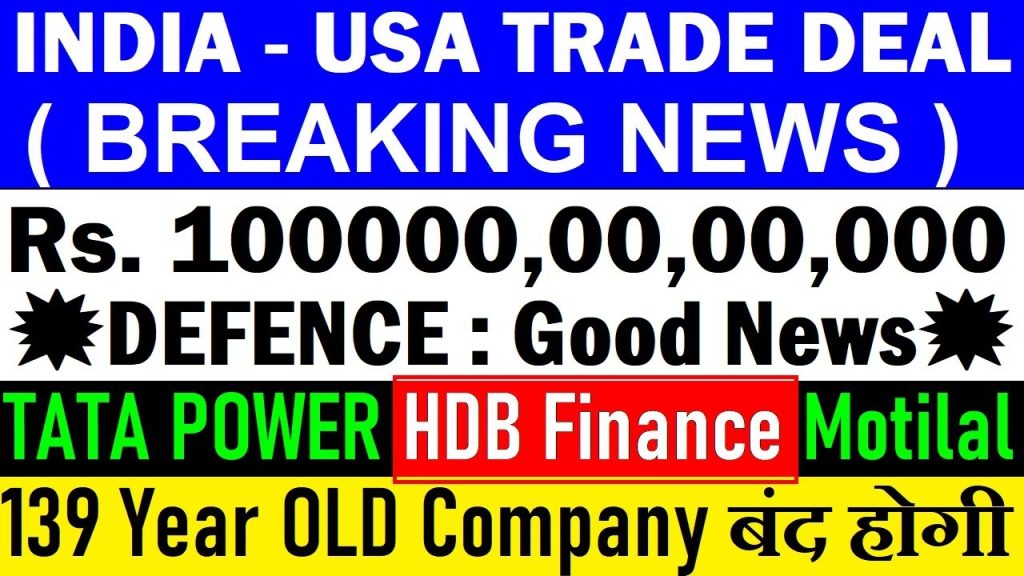
The global economic landscape is buzzing with anticipation as talks of a potential India-USA trade deal gain momentum. This development, coupled with significant market movements and corporate updates, is shaping the financial and industrial sectors in India and beyond. From the American market’s positive performance to key developments in Indian companies like Tata Power, Motilal Oswal, and HDB Financial, the economic narrative is rich with opportunities and challenges. This article dives deep into the implications of the India-USA trade deal, explores its potential effects on various sectors, and provides insights into recent market trends and corporate activities.

Understanding the India-USA Trade Deal

The Context of Global Trade Agreements

Trade agreements are pivotal in shaping economic relationships between nations. The United States, under its current administration, is actively pursuing trade deals to bolster its economic interests. Recent discussions with countries like Vietnam, where a trade agreement imposes a 20% tariff on Vietnamese goods entering the USA while American products enter Vietnam tariff-free, highlight the aggressive stance of U.S. trade policies. This precedent sets the stage for understanding the potential India-USA trade deal, which could redefine bilateral trade dynamics.

Anticipation Surrounding the India-USA Trade Deal

Sources indicate that an announcement regarding a mini trade deal between India and the USA could be imminent, possibly within 48 hours. While no official confirmation has surfaced, the prospect of this deal has sparked significant interest. India is reportedly pushing for concessions, particularly in protecting its agriculture sector, which remains a critical point of negotiation. The Indian government aims to safeguard its farmers from foreign competition, a priority that could shape the terms of the agreement.

Potential Terms and Conditions

The specifics of the trade deal remain under wraps, but the terms will likely influence market reactions. A successful deal could enhance market confidence, but the concessions India might offer—particularly in agriculture—will be crucial. For instance, allowing U.S. agricultural products easier access to the Indian market could challenge local farmers, given the high tariffs currently imposed on foreign goods to protect domestic interests. The balance between opening markets and protecting local industries will determine the deal’s success and its impact on India’s economy.

Market Reactions and Economic Indicators

American Market Performance

The American stock market has shown robust performance, with the Dow Jones Industrial Average climbing by 350 points and the NASDAQ surging over 1%. This positive momentum is driven by two key factors:

  1. Strong Job Data: Recent U.S. job-related data exceeded expectations, with only 33,000 jobless claims reported against an anticipated 400,000. This lower-than-expected figure signals a robust labor market, boosting investor confidence and driving market gains.
  2. Trade Deal Optimism: The anticipation of favorable trade agreements, including those with Vietnam and potentially India, has further fueled market optimism. Investors view these deals as opportunities for American businesses to expand into new markets with reduced trade barriers.

Indian Market Dynamics

In India, the stock market is navigating a mix of optimism and uncertainty. The possibility of an India-USA trade deal has investors on edge, as the outcome could significantly impact sectors like agriculture, manufacturing, and technology. Additionally, foreign institutional investors (FIIs) have been net sellers, offloading stocks worth approximately ₹1,770 crore, while domestic institutional investors (DIIs) continue to buy, reflecting differing sentiments about market stability.

Corporate Updates: Key Players in Focus

Tata Power Faces Arbitration Setback

Tata Power, a leading player in India’s energy sector, recently faced a setback in an arbitration case, resulting in a $490 million penalty. This adverse ruling led to a 2% decline in the company’s stock price, reflecting investor disappointment. However, the impact of such penalties varies based on a company’s financial strength. For a conglomerate like Tata Power, the amount, while significant, is unlikely to derail its long-term prospects. Investors should monitor how the company manages this financial obligation and its future strategic moves.

Motilal Oswal’s Remarkable Growth

Motilal Oswal Financial Services has emerged as a standout performer, with its enterprise value crossing ₹1.5 lakh crore, marking a 34% jump. This growth underscores the company’s strong business model and its ability to capitalize on market opportunities. As financial services firms like Jio Financial Services (JFS) face increasing competition, Motilal Oswal’s performance highlights its resilience and strategic positioning in the sector.

HDB Financial’s Post-Listing Surge

HDB Financial Services, a non-banking financial company, has seen a 5% surge in its stock price post-listing. This positive performance reflects investor confidence in its growth potential and its ability to navigate the competitive financial landscape. The company’s focus on retail lending and its strategic expansion plans position it as a key player to watch.

MTNL’s Debt Challenges

Mahanagar Telephone Nigam Limited (MTNL), a state-owned telecommunications company, is grappling with significant debt. With limited options, the government is exploring asset sales to alleviate financial pressure. Unlike BSNL, which is not listed, MTNL’s struggles are more visible to investors. The proposed sale of assets without auctions to state and central buyers indicates a strategic move to stabilize the company’s finances, but its long-term viability remains uncertain.

Defense Sector Gains Momentum

India’s defense sector is poised for growth following the Defense Acquisition Council’s (DAC) approval of 10 capital acquisition proposals worth ₹1 lakh crore. This clearance aligns with the government’s “Atmanirbhar Bharat” (Self-Reliant India) initiative, emphasizing domestic defense production. Companies in this sector are likely to benefit from increased orders and business opportunities, making them attractive investment prospects in the near term.

Sector-Specific Impacts of the Trade Deal

Agriculture: A Sensitive Sector

The agriculture sector is a focal point in the India-USA trade negotiations. India has historically protected its farmers through high tariffs on foreign agricultural products. Any trade deal that lowers these barriers could disrupt local markets, as American agricultural goods may become more competitive. The government is reportedly drawing a “red line” to protect farmers, but the extent of concessions will determine the sector’s future trajectory.

Technology and Manufacturing

A trade deal could open new opportunities for Indian technology and manufacturing firms by facilitating access to the U.S. market. Reduced tariffs and streamlined regulations could boost exports, particularly in sectors like IT services, pharmaceuticals, and automotive components. However, Indian companies must prepare for increased competition from American firms entering the Indian market.

Financial Services

The financial services sector, exemplified by companies like Motilal Oswal and HDB Financial, could benefit from enhanced economic ties. A stable trade environment could attract more foreign investment, driving growth in banking, insurance, and wealth management services. However, regulatory alignment and market access terms will play a critical role in shaping outcomes.

Global Economic Trends and Their Influence

Cryptocurrency and Commodities

The global economic landscape is also influencing Indian markets. Bitcoin has surged to around $100,000, reflecting renewed investor interest in cryptocurrencies. Gold prices have crossed ₹1 lakh in several Indian cities, signaling strong demand for safe-haven assets. Meanwhile, the Indian rupee continues to trade in the 85-86 range against the U.S. dollar, and the dollar index remains below 100, indicating a relatively weak dollar.

Del Monte Foods’ Bankruptcy Filing

In a surprising development, Del Monte Foods, a 139-year-old American food processing company, has filed for bankruptcy due to overwhelming liabilities. This filing underscores the challenges faced by even established firms in a competitive global market. The potential closure of such a historic company highlights the importance of financial resilience and adaptability.

Strategic Considerations for Investors

Assessing Trade Deal Outcomes

Investors must approach the India-USA trade deal with caution. While a successful agreement could drive market gains, the terms and conditions will be critical. For instance, Vietnam’s recent trade deal with the USA, while reducing tariffs on its goods from 48% to 20%, allows American products to enter Vietnam tariff-free, potentially flooding its market. Indian investors should evaluate how similar terms could impact local industries.

Monitoring Corporate Performance

Companies like Tata Power, Motilal Oswal, and HDB Financial offer diverse investment opportunities. While Tata Power navigates its arbitration setback, Motilal Oswal and HDB Financial demonstrate strong growth potential. The defense sector, buoyed by government support, is another area to watch. Investors should conduct thorough due diligence, considering both macroeconomic trends and company-specific developments.

Navigating Market Volatility

The ongoing selling by FIIs and buying by DIIs reflect differing views on market stability. The uncertainty surrounding the July 9 deadline, coupled with potential U.S. tariff policies under the new administration, could introduce volatility. Investors should adopt a balanced approach, diversifying portfolios and staying informed about global and domestic developments.

Conclusion: A Pivotal Moment for India-USA Relations

The potential India-USA trade deal represents a pivotal moment for both nations. For India, it offers opportunities to expand market access while posing challenges to protected sectors like agriculture. The performance of companies like Motilal Oswal, HDB Financial, and those in the defense sector highlights the dynamic nature of India’s economy. As global trade dynamics evolve, staying informed and agile will be key for businesses and investors alike. With an announcement potentially just days away, the world is watching how this deal will shape the future of India-USA economic relations.

Exit mobile version