


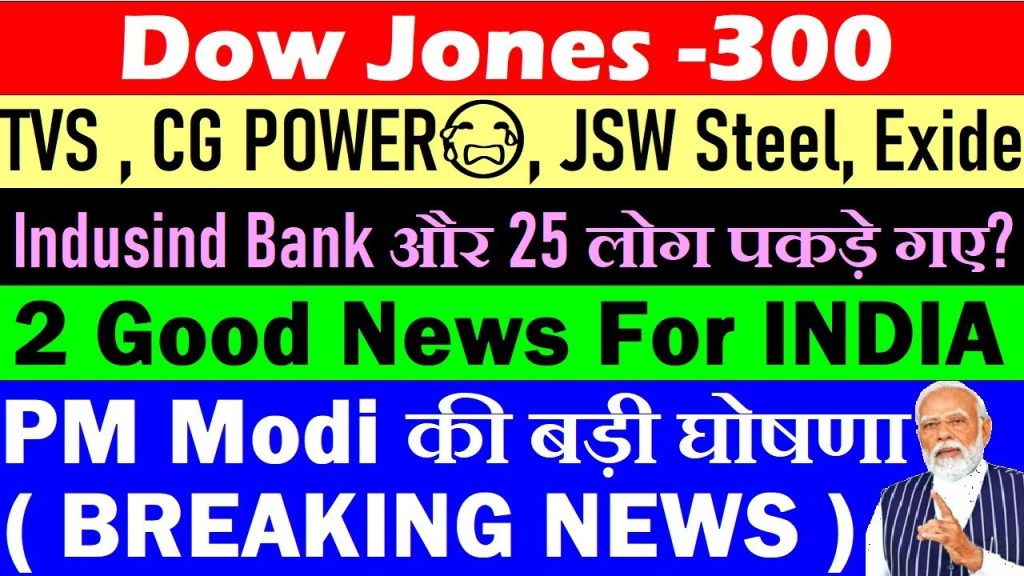
The Indian stock market is a dynamic landscape influenced by global trends, corporate performances, and macroeconomic policies. Stay ahead with the latest insights into market movements, company earnings, and significant policy announcements shaping India’s financial ecosystem. This article dives into recent market trends, standout company performances, and pivotal economic developments, including Prime Minister Modi’s landmark trade agreement with the UK. From CG Power’s margin challenges to TVS Group’s revenue growth, we unpack the factors driving stock movements and explore India’s rise as a global economic powerhouse.
Understanding the Indian Stock Market: A Pulse Check
India’s stock market is a barometer of economic sentiment, reflecting both domestic corporate health and global market influences. Recently, global cues, particularly from the American market, have added volatility. The U.S. market saw a 300-point dip, roughly under 1%, signaling cautious trading. While this dip didn’t fully translate to Indian indices, it set a cautious tone. The Nifty 50 and BSE Sensex have shown resilience, but specific stocks like CG Power and JSW Steel faced unique challenges, while others like TVS Group shone.
Why Global Markets Matter
Global markets, especially the U.S., often set the tone for emerging markets like India. A 1% dip in the NASDAQ or Dow can ripple into Indian trading sessions, affecting investor sentiment. However, India’s market has shown maturity, with selective stock movements driven by earnings reports and corporate developments rather than blanket sell-offs. This resilience underscores India’s growing economic clout, bolstered by strategic policy moves like the recent India-UK Free Trade Agreement.
CG Power: Profit Growth but Margin Woes
CG Power, a prominent player in the electrical equipment sector, reported a robust 16.43% jump in profitability, yet its stock slid by up to 8%. Why? The answer lies in margin contraction. Margins shrank by approximately 40 basis points, triggering a negative market reaction. Investors didn’t just focus on top-line growth or bottom-line profits; they penalized the company for missing margin expectations.
Decoding Company Earnings
Reading earnings isn’t just about profits. For CG Power, the margin miss overshadowed strong revenue growth. This highlights a critical lesson for investors: analyze multiple metrics—revenue, margins, debt, and operational efficiency. Different companies require tailored analysis:
- Large-cap companies like Reliance Industries are judged on stability and dividend consistency.
- Mid-cap companies like CG Power are scrutinized for growth and margin trends.
- Startups are evaluated on revenue potential and market share gains.
For CG Power, the market’s reaction reflects a demand for balanced growth. Investors seeking clarity on earnings analysis can benefit from detailed resources, such as webinars or financial modeling courses, to decode complex reports.
TVS Group: A Bright Spot in the Market
The TVS Group, particularly Sundaram Clayton, emerged as a standout performer. The company posted a 6% revenue increase and strong profitability, driving positive market sentiment. Sundaram Clayton’s success stems from its diversified portfolio, spanning automotive components and financial services, which cushions it against sector-specific headwinds.
What’s Driving TVS’s Success?
TVS’s focus on operational efficiency and market expansion paid off. The company capitalized on rising two-wheeler demand and leveraged its supply chain strengths. This performance underscores the importance of adaptability in a volatile market. For investors, TVS represents a blend of stability and growth, making it a stock to watch in the mid-cap space.
JSW Steel: Legal Challenges and Strategic Moves
JSW Steel faced turbulence after the Supreme Court declared its acquisition of Bhushan Power & Steel Ltd. illegal. The court cited violations of the Insolvency and Bankruptcy Code (IBC), specifically around the deal’s timeframe and the mix of equity and debt. JSW Steel responded by filing a review petition, exercising its legal rights to challenge the ruling.
Navigating Corporate Acquisitions
The JSW Steel case highlights the complexities of corporate acquisitions in India. The IBC aims to streamline insolvency processes, but legal hiccups can derail deals. For JSW, the petition is a strategic move to salvage the acquisition, but the Supreme Court’s final ruling will be pivotal. Investors should monitor legal developments, as they could impact JSW’s balance sheet and market perception.
IndusInd Bank: Auditor Scrutiny and Market Reactions
IndusInd Bank grabbed headlines after its auditor, Grant Thornton, flagged issues in derivative accounting practices. Reports suggest up to 25 bank staff, including top management, may be involved. This development has raised governance concerns, potentially affecting investor confidence.
Governance and Market Trust
Corporate governance is a cornerstone of market trust. For IndusInd Bank, the auditor’s findings could trigger regulatory scrutiny and stock volatility. The bank’s response—transparent communication and corrective measures—will be critical. Investors should watch for updates on internal audits and regulatory actions, as these could shape the stock’s trajectory.
Shapoorji Pallonji Group: A Massive Fundraise on the Horizon
The Shapoorji Pallonji (SP) Group is poised to raise $3.25 billion through an offshore fundraise, potentially this week. This move, one of the largest in recent times, aims to bolster the group’s financial firepower for infrastructure and real estate projects.
Why Fundraises Matter
Large-scale fundraises signal ambition but also scrutiny. For SP Group, the infusion will fuel growth but requires disciplined capital allocation. Investors should assess how the funds are deployed—whether toward high-return projects or debt reduction—as this will influence the group’s long-term valuation.
Colgate: Pricing Controversies in Maharashtra
Colgate faced distributor pushback in Maharashtra over predatory pricing allegations. Distributors halted purchases, citing unsustainable pricing models. This isn’t the first time Colgate has faced such issues, pointing to systemic challenges in its distribution strategy.
Balancing Pricing and Partnerships
Predatory pricing can boost market share but risks alienating partners. For Colgate, resolving distributor concerns is crucial to maintaining supply chain stability. The company may need to revise pricing models or offer incentives to rebuild trust. Investors should monitor resolution timelines, as prolonged disputes could dent revenues.
Exide Industries: Betting on Electric Vehicles
Exide Industries is in advanced talks with two- and three-wheeler manufacturers for battery production partnerships. As electric vehicles (EVs) gain traction, Exide’s expertise in battery manufacturing positions it as a key player.
The EV Opportunity
India’s EV market is booming, driven by government incentives and consumer demand. Exide’s potential tie-ups could secure long-term contracts with major players, boosting revenues. However, deal finalization hinges on favorable negotiations. Investors should track partnership announcements, as a major deal could propel Exide’s stock.
Government Policies: Banking Sector Updates
The Indian government has deferred stake sales in five public sector banks—Bank of Maharashtra, IOB, UCO Bank, Central Bank of India, and Punjab & Sind Bank—until FY27. This postponement delays strategic divestment plans, impacting bank valuations.
Implications for Public Sector Banks
Delayed stake sales could limit capital infusion for these banks, affecting growth plans. However, it also signals a cautious approach to privatization, balancing fiscal goals with public sentiment. Investors should evaluate these banks’ operational metrics, such as loan growth and asset quality, to gauge resilience.
Berkshire Hathaway: A Leadership Transition
Globally, Berkshire Hathaway’s stock dipped after Warren Buffett announced his step-down as CEO. The leadership transition, after decades of Buffett’s stewardship, sparked market jitters.
Succession and Market Sentiment
Leadership changes at iconic firms like Berkshire Hathaway test investor confidence. While Buffett’s exit was anticipated, the timing and successor’s track record matter. Investors should assess the new CEO’s strategy to ensure continuity in Berkshire’s value-driven approach.
India’s Economic Ascent: IMF’s Bold Prediction
The International Monetary Fund (IMF) projects India to become the world’s fourth-largest economy by 2025. This optimistic outlook, part of the IMF’s April report, reflects India’s robust GDP growth, driven by manufacturing, services, and digital innovation.
What Drives India’s Growth?
India’s economic rise hinges on:
- Policy reforms: Initiatives like Make in India and Digital India boost industrial and tech sectors.
- Demographic dividend: A young, skilled workforce fuels productivity.
- Global integration: Trade agreements, like the one with the UK, enhance market access.
The IMF’s forecast underscores India’s potential, but challenges like infrastructure gaps and inflation need addressing. Investors can capitalize on sectors like IT, renewables, and consumer goods, which align with India’s growth trajectory.
India-UK Free Trade Agreement: A Game-Changer
Prime Minister Narendra Modi announced the successful conclusion of a mutually beneficial Free Trade Agreement (FTA) with the UK. Finalized after market hours, this deal promises to deepen economic ties, boosting exports and investment flows.
Why the FTA Matters
The India-UK FTA opens doors for:
- Export growth: Indian textiles, pharmaceuticals, and IT services gain easier UK market access.
- Investment inflows: UK firms may ramp up investments in India’s tech and infrastructure sectors.
- Job creation: Enhanced trade could spur employment in export-driven industries.
For investors, the FTA signals opportunities in export-oriented stocks like Tata Consultancy Services, Dr. Reddy’s Laboratories, and Raymond Ltd. Monitoring implementation timelines will be key to gauging the deal’s impact.
Upcoming Earnings: Stocks to Watch
Several companies are set to release earnings, offering investors a chance to assess performance. Key names include:
- APL Apollo: A leader in steel tubes, known for consistent growth.
- Blue Star: A cooling solutions provider, benefiting from rising demand.
- Coal India: A mining giant, critical to India’s energy security.
- Dabur: A consumer goods stalwart, navigating inflationary pressures.
- HUDCO: A government-backed housing finance player, tied to infra growth.
- MRF: A tire maker, riding the auto sector’s recovery.
- PNB: A public sector bank, focusing on asset quality improvement.
- Sonata Software: An IT services firm, expanding globally.
How to Analyze Earnings
Investors should focus on:
- Revenue growth: Indicates demand strength.
- Profit margins: Reflects cost management.
- Guidance: Signals management’s outlook.
- Sector trends: Contextualizes performance.
Studying these metrics helps identify outperformers in a crowded earnings season.
SEO Strategies to Amplify This Content
To ensure this article ranks highly, implement these SEO tactics:
- Keyword optimization: Use primary keywords like “Indian stock market updates,” “company earnings,” and “India-UK FTA” naturally throughout the article. Include secondary keywords like “CG Power stock,” “TVS Group performance,” and “IMF India forecast.”
- Internal linking: Link to related articles on your site, such as guides on reading earnings or sector analyses.
- External linking: Cite authoritative sources like the IMF, BSE, or NSE for credibility.
- Meta description: Craft a compelling 160-character summary, e.g., “Explore Indian stock market trends, company earnings, and the India-UK FTA. Get insights on CG Power, TVS, and more.”
- Mobile optimization: Ensure the article loads quickly and is readable on mobile devices.
- Engaging visuals: Include charts of stock performances or infographics on India’s economic growth.
Conclusion: Navigating India’s Financial Future
India’s stock market is a vibrant arena, shaped by corporate earnings, global trends, and transformative policies. From CG Power’s margin challenges to TVS Group’s revenue surge, individual company performances reveal broader market dynamics. The India-UK FTA and IMF’s bullish forecast cement India’s status as an economic powerhouse. For investors, staying informed on earnings, governance, and policy shifts is crucial to capitalizing on opportunities. Dive into the data, analyze the trends, and position yourself for success in India’s thriving financial landscape.