


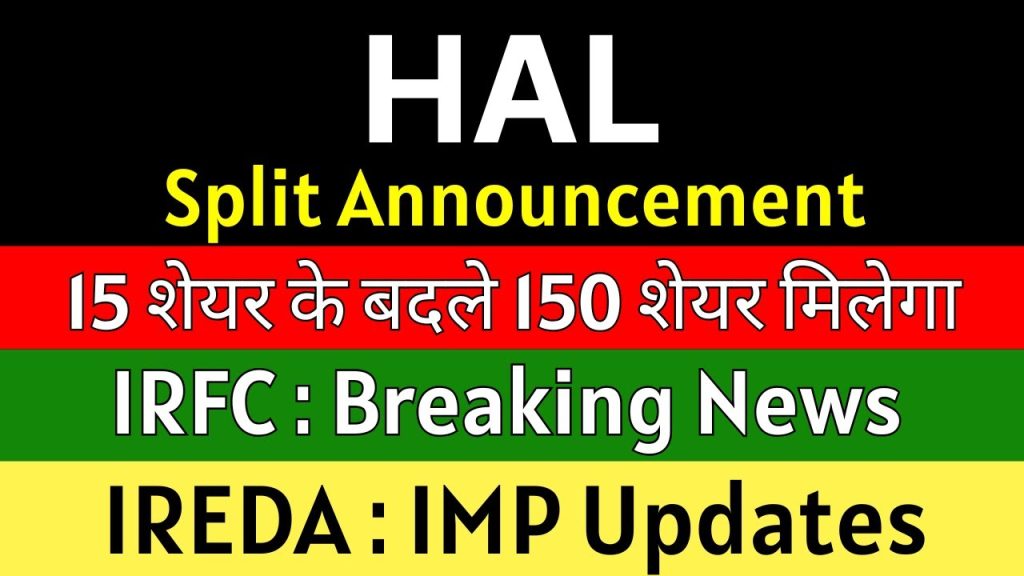
The Indian stock market is a dynamic landscape, influenced by global events, corporate announcements, and sector-specific developments. Recent updates surrounding Hindustan Aeronautics Limited (HAL), Indian Railway Finance Corporation (IRFC), and Indian Renewable Energy Development Agency (IREDA) have captured investor attention. Additionally, a notable stock split announcement from Zydus Wellness has added to the market buzz. This comprehensive article delves into these developments, analyzing their implications for investors and the broader market. By exploring the factors driving these companies’ performances, we aim to provide actionable insights to help you navigate the volatile financial terrain.
Understanding the Indian Stock Market’s Recent Volatility
The Indian stock market, represented by indices like the Nifty, has experienced significant fluctuations recently. On June 14, 2025, the Nifty opened with a sharp decline of over 1%, though it later moderated to a 0.89% drop, equating to approximately 220 points. This volatility follows a similar downturn the previous day, raising questions about the underlying causes.
Geopolitical Tensions Fuel Market Uncertainty
A primary driver of this market turbulence is the escalating conflict between Israel and Iran. Reports confirm that Israel conducted a military strike on Iran, targeting key defense officials and infrastructure. This development has heightened geopolitical tensions, disrupting global market sentiment. The conflict’s ripple effects are particularly evident in the crude oil market, which surged by 10% in the last trading session. As a major oil-producing nation, Iran’s involvement in the conflict raises concerns about potential supply chain disruptions.
India, which imports 85% of its crude oil needs, is particularly vulnerable to these price spikes. Rising oil prices can fuel inflation, impacting consumer spending and corporate profitability. This macroeconomic pressure has contributed to the bearish sentiment in the Indian equity markets.
Shifting Investor Preferences Amid Uncertainty
During periods of geopolitical unrest, investors often shift toward safer assets like bonds and gold. On June 14, 2025, gold prices rose by approximately 2%, reflecting its status as a safe-haven investment. Similarly, U.S. bond yields have seen an uptick, signaling a flight to quality. The Indian rupee also weakened, breaching the 86-mark against the U.S. dollar, further underscoring market uncertainty.
These shifts in investor behavior have compounded the pressure on Indian equities. While some sectors, such as defense, have bucked the trend, broader market indices have struggled to maintain momentum.
HAL Share Price: A Bright Spot in the Defense Sector
Amid the market’s downturn, Hindustan Aeronautics Limited (HAL) has emerged as a standout performer. The company, a cornerstone of India’s defense sector, has benefited from both global and domestic developments.
Defense Sector Shines Amid Global Conflicts
The Nifty India Defence Index surged by 1.29% on June 14, 2025, defying the broader market’s decline. This rally was driven by heightened global defense spending, spurred by the Israel-Iran conflict. As tensions escalate, countries worldwide are prioritizing military preparedness, creating opportunities for defense contractors like HAL.
HAL’s robust valuation reflects its critical role in India’s defense ecosystem and its growing international presence. The company not only supports India’s armed forces but also secures contracts from global players. For instance, HAL’s expertise in manufacturing and maintenance positions it to benefit from increased defense budgets in countries like Israel and Iran.
HAL’s Operational Milestones Boost Investor Confidence
HAL’s recent operational achievements have further bolstered its stock performance. The company received clearance to manufacture the Prachand Light Combat Helicopter, following rigorous safety protocol upgrades. This approval comes after a similar clearance for the Dhruv Advanced Light Helicopter, marking significant progress in HAL’s production capabilities.
These developments are particularly noteworthy given past challenges. A helicopter crash in Porbandar on January 5, 2025, had raised safety concerns, delaying operational clearances. HAL’s proactive response, including enhanced safety investigations and upgrades, has restored confidence among investors and regulators.
The clearance for Prachand and Dhruv helicopters strengthens HAL’s order book, ensuring steady revenue streams. For investors, these milestones signal HAL’s ability to execute high-value contracts, making it an attractive long-term investment.
IRFC Share News: Expanding Beyond Railways
Indian Railway Finance Corporation (IRFC) has also made headlines with a significant corporate announcement. The company, traditionally focused on financing railway projects, is diversifying its portfolio into new sectors.
IRFC’s Landmark Loan Agreement with NTPC
On June 14, 2025, IRFC signed a ₹5,000 crore loan agreement with NTPC, India’s leading power generation company. This deal marks a strategic shift for IRFC, which has historically lent primarily to railway sector entities. NTPC, seeking to fund its capacity expansion plans, opted for debt financing through IRFC, highlighting the latter’s growing influence in the financial market.
This agreement is a testament to IRFC’s ability to secure large-scale contracts outside its core domain. By financing NTPC’s energy projects, IRFC is tapping into the high-growth renewable and power sectors, diversifying its loan book and reducing sector-specific risks.
Strategic Diversification Enhances IRFC’s Growth Prospects
IRFC’s move into non-railway sectors aligns with its earlier Memorandum of Understanding (MoU) with the Ministry of Railways and other stakeholders. The company has signaled its intent to finance renewable energy and infrastructure projects, broadening its revenue base. This diversification is critical, as it mitigates the risks associated with over-reliance on the railway sector.
For investors, IRFC’s expansion into energy financing is a positive development. The company’s ability to secure high-value contracts with reputable partners like NTPC enhances its financial stability and growth potential. Additionally, IRFC’s consistent MoUs with the Ministry of Railways ensure a steady pipeline of railway-related projects, complementing its new ventures.
IREDA Share Updates: Navigating Challenges in Renewable Energy
The Indian Renewable Energy Development Agency (IREDA) has faced headwinds recently, with its stock performance reflecting sector-specific challenges. Despite its critical role in financing India’s renewable energy ambitions, IREDA’s shares have underperformed on June 14, 2025.
IREDA’s Loan Default Woes with Gensol Engineering
A key factor weighing on IREDA’s stock is its exposure to Gensol Engineering, a company facing significant financial distress. Last month, IREDA filed an insolvency petition against Gensol Engineering with the National Company Law Tribunal (NCLT) for a ₹510 crore loan default. The NCLT has accepted the petition, formalizing the default and raising concerns about IREDA’s asset quality.
While ₹510 crore is a substantial amount, it represents a relatively small portion of IREDA’s diversified loan book, valued at ₹64,561 crore as of the first half of FY25. This context mitigates the impact of the default, suggesting that IREDA’s overall financial health remains intact.
Managing Non-Performing Assets in the Finance Sector
Loan defaults are an inherent risk in the financial services industry, and IREDA is no exception. However, the company’s Non-Performing Assets (NPAs) have not risen significantly, indicating effective risk management. For investors, the Gensol default is a setback but not a dealbreaker. IREDA’s focus on renewable energy, a sector with strong government backing, positions it for long-term growth.
To navigate these challenges, IREDA must continue to strengthen its credit assessment processes and diversify its lending portfolio. By balancing high-growth opportunities with prudent risk management, IREDA can rebuild investor confidence and stabilize its stock performance.
Zydus Wellness Stock Split: A Move to Enhance Liquidity
In addition to the developments surrounding HAL, IRFC, and IREDA, Zydus Wellness has announced a 1:5 stock split, generating significant interest among investors.
What the 1:5 Stock Split Means for Investors
A stock split involves dividing existing shares into multiple new shares, reducing the per-share price without altering the company’s overall market capitalization. In Zydus Wellness’s case, each share will be split into five, with investors receiving five new shares for every one held. This move aims to enhance liquidity, making the stock more accessible to retail investors.
Stock splits often signal management’s confidence in future growth, as they anticipate sustained demand for the lower-priced shares. For existing shareholders, the split increases the number of shares held, potentially improving trading flexibility.
Implications for Zydus Wellness’s Market Positioning
Zydus Wellness, a leading player in the consumer wellness and nutrition sector, benefits from strong brand recognition and a growing product portfolio. The stock split is likely to attract new investors, boosting trading volumes and market visibility. For long-term investors, this development reinforces Zydus Wellness’s commitment to shareholder value creation.
Key Takeaways for Investors
The recent updates surrounding HAL, IRFC, IREDA, and Zydus Wellness highlight the diverse factors shaping India’s stock market. Here are the key takeaways for investors:
- HAL’s Defense Dominance: HAL’s strong performance amid global conflicts underscores the resilience of India’s defense sector. Investors should monitor HAL’s order book and international contracts for further upside potential.
- IRFC’s Strategic Expansion: IRFC’s diversification into energy financing enhances its growth prospects. The ₹5,000 crore NTPC deal signals robust demand for its lending services, making it a compelling investment option.
- IREDA’s Risk Management: While the Gensol default is a concern, IREDA’s diversified loan book and government support mitigate risks. Investors should assess IREDA’s NPA trends before making investment decisions.
- Zydus Wellness’s Liquidity Boost: The 1:5 stock split positions Zydus Wellness for increased retail participation. Investors should evaluate the company’s growth strategy to capitalize on this opportunity.
- Navigating Market Volatility: Geopolitical tensions and rising crude oil prices pose challenges for the broader market. Investors should adopt a diversified portfolio approach, balancing high-growth sectors like defense and renewables with safe-haven assets like gold.
How to Stay Informed and Make Smart Investment Decisions
To navigate the complexities of the stock market, investors must stay informed and conduct thorough research. Here are actionable tips to enhance your investment strategy:
- Join Reputable Financial Communities: Platforms like Telegram channels run by SEBI-registered research analysts offer valuable insights and real-time updates. For instance, a SEBI-registered analyst with over eight years of experience provides free stock calls and chart updates, which can guide your investment decisions.
- Monitor Global and Domestic News: Geopolitical events, such as the Israel-Iran conflict, significantly impact markets. Stay updated through reliable news sources to anticipate market movements.
- Conduct Independent Research: While corporate announcements provide valuable insights, always verify information through company filings and trusted financial platforms. Tools like stock screeners and analyst reports can aid your analysis.
- Diversify Your Portfolio: Spread your investments across sectors like defense, finance, and consumer goods to mitigate risks. For example, combining exposure to HAL, IRFC, and Zydus Wellness can balance growth and stability.
- Consult Financial Advisors: For personalized guidance, consider consulting SEBI-registered financial advisors who can tailor strategies to your risk profile and financial goals.
Conclusion: Seizing Opportunities in a Volatile Market
The Indian stock market is navigating a period of heightened volatility, driven by geopolitical tensions and macroeconomic pressures. However, companies like HAL, IRFC, IREDA, and Zydus Wellness are creating opportunities for savvy investors. HAL’s dominance in the defense sector, IRFC’s strategic diversification, IREDA’s resilience in renewables, and Zydus Wellness’s shareholder-friendly stock split highlight the potential for growth amid uncertainty.
By staying informed, conducting thorough research, and adopting a diversified investment approach, you can position yourself to capitalize on these developments. Whether you’re a seasoned investor or a newcomer, the key is to remain proactive and adaptable in this ever-evolving market landscape.
Disclaimer: The information provided in this article is for educational purposes only and should not be construed as financial advice. Always conduct your own research and consult with a qualified financial advisor before making investment decisions.