


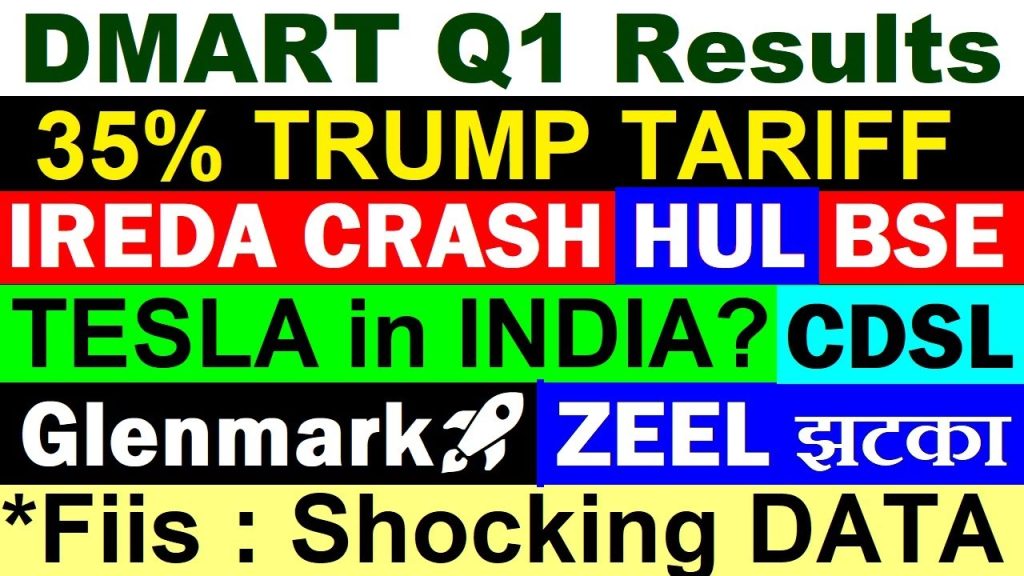
The Indian stock market is a dynamic ecosystem, buzzing with corporate developments, financial results, and global influences. From DMart’s Q1 performance to HUL’s historic leadership change, Tesla’s anticipated India debut, and tariff tensions, the market offers a wealth of insights for investors. This comprehensive analysis dives into recent updates, unpacking their implications for companies like DMart, HUL, Zee Entertainment, Glenmark Pharma, BSE, CDSL, IREDA, and more. Stay ahead with this in-depth look at key market movers and their impact on your investment strategy.
DMart Q1 Results: Strong Revenue Growth, But Profits Stay Flat
DMart, a leading retail chain under Avenue Supermarts, released its Q1 results, sparking discussions among investors. The company reported a robust revenue increase, but rising operating costs tempered profit growth, leading to a flat performance. Let’s break down the numbers and their implications.
Revenue Surge Outshines Expectations
DMart’s Q1 revenue reached ₹16,379 crore, a significant jump from ₹14,896 crore in the previous quarter and ₹14,110 crore a year ago. This growth reflects DMart’s ability to capture market share in India’s competitive retail sector. The company’s expansion strategy, including the addition of nine new stores, fueled this upward trajectory. However, revenue alone doesn’t tell the full story.
Rising Costs Offset Gains
Despite the revenue boom, DMart’s expenses climbed to ₹15,321 crore, up from ₹14,176 crore last quarter and ₹13,000 crore a year prior. This surge in operating costs significantly impacted profitability. The company’s profit before tax stood at ₹1,057 crore, nearly flat compared to ₹1,054 crore a year ago, though it improved from ₹720 crore in the previous quarter. After-tax profit was ₹773 crore, aligning closely with ₹774 crore from the prior year but up from ₹551 crore last quarter.
Missing Analyst Expectations
Analysts had high hopes for DMart, but the company fell short of estimates. Revenue expectations were set at ₹16,500 crore, while EBITDA estimates stood at ₹1,354 crore; DMart delivered ₹16,379 crore and an EBITDA below ₹1,300 crore. Margins, expected at 8.2%, came in at 7.9%, and net profit missed the ₹883 crore forecast, landing at ₹772.8 crore. These misses highlight the challenges of balancing growth with cost management.
Why Profits Remained Flat
The flat profit performance stems from higher operating costs, which offset the strong revenue growth. DMart’s focus on expansion and operational scaling has driven expenses, limiting profit margins. Investors should monitor whether the company can optimize costs in future quarters while maintaining its growth momentum.
HUL’s Leadership Milestone: Priya Nair as First Female CEO
Hindustan Unilever Limited (HUL) made headlines with a historic leadership transition, appointing Priya Nair as its first female CEO and Managing Director, replacing Rohit Jawa. This move signals a progressive shift in corporate governance and has resonated positively with the market.
A Game-Changing Appointment
Priya Nair’s appointment marks a significant milestone for HUL, a titan in India’s FMCG sector. The market responded enthusiastically, with HUL’s stock surging 4.5-5% in a single day—unusual for a stock known for modest 1-2% movements. This rally reflects investor confidence in Nair’s leadership and the company’s future direction.
Why This Matters for Investors
A diverse leadership team often brings fresh perspectives, fostering innovation and resilience. HUL’s progressive move could enhance its brand image, appealing to socially conscious investors. As Nair steers the company, watch for strategic shifts in product offerings, sustainability initiatives, and market expansion.
Zee Entertainment’s Setback: Promoter Stake Plan Fails
Zee Entertainment, once a Nifty 50 constituent, faced a setback when its promoters failed to secure approval to increase their stake. This development led to a sharp decline in the company’s stock price, underscoring ongoing challenges.
The Failed Resolution
Zee’s promoters sought to raise their stake but required 75% shareholder approval for the special resolution. They secured only 60% support, falling short of the threshold. This failure halted their plans, triggering a negative market reaction and a stock price drop.
Zee’s Turbulent Journey
Zee’s exclusion from the Nifty 50 and its entanglement in controversies have dented investor confidence. The recent setback further highlights governance challenges. Investors should assess whether Zee can stabilize its leadership and regain market trust to restore its growth trajectory.
Glenmark Pharma’s Surge: Cancer Drug License Boosts Outlook
Glenmark Pharma emerged as a standout performer, with its stock hitting the upper circuit and gaining nearly 15%. The catalyst? A significant license for a cancer drug, signaling strong growth potential.
A Breakthrough in Oncology
The approval of a cancer drug license is a game-changer for Glenmark. This milestone positions the company to tap into the lucrative oncology market, driving revenue growth. The market’s enthusiastic response reflects optimism about Glenmark’s ability to capitalize on this opportunity.
What’s Next for Glenmark?
With this license, Glenmark is poised to expand its pharmaceutical portfolio. Investors should monitor the company’s execution in commercializing the drug and its impact on financial performance. This development could solidify Glenmark’s position in the competitive pharma sector.
Tesla’s India Entry: A Game-Changer for the Auto Sector?
Tesla’s anticipated entry into India has generated buzz, with reports suggesting deliveries could begin as early as August. This move could reshape India’s auto market, given Tesla’s global brand and India’s position as a top-tier automotive market.
Timing and Expectations
With July nearing its end, Tesla’s first deliveries could commence within weeks, potentially in August or by September-October. The company’s focus on India stems from declining global sales, making the country’s vast market an attractive growth driver.
Will Tesla Transform India’s Auto Landscape?
India ranks among the top three global auto markets, offering Tesla a significant opportunity. However, challenges like infrastructure, pricing, and competition from domestic players like Tata Motors loom large. If Tesla navigates these hurdles, it could redefine electric vehicle adoption in India, benefiting related sectors like battery manufacturing and charging infrastructure.
BSE and CDSL: Regulatory Clouds Cast Shadows
The Bombay Stock Exchange (BSE) and Central Depository Services Limited (CDSL) faced declines amid regulatory concerns, highlighting the impact of investigations on market sentiment.
BSE’s Ongoing Challenges
BSE’s stock continued its downward trend, falling an additional 4% after reports of a potential investigation into Sensex options trading. Regulatory scrutiny could impose restrictions, hampering BSE’s business operations and investor confidence.
CDSL’s Collateral Damage
As BSE holds a 15% stake in CDSL, negative developments at BSE inevitably affect CDSL. The depository’s stock also declined, reflecting the interconnected risks. Investors should watch for updates on the investigation and its potential impact on both entities.
IREDA’s Struggles: Weak Q1 Results and Provisioning Woes
The Indian Renewable Energy Development Agency (IREDA) reported disappointing Q1 results, leading to a sharp stock price drop. Weak performance and increased provisioning for non-performing assets (NPAs) weighed heavily on investor sentiment.
Breaking Down IREDA’s Numbers
IREDA’s profit declined, and higher NPAs exacerbated concerns. The company’s financial health faced scrutiny after regulatory actions highlighted accounting issues. These challenges were widely anticipated, but the extent of the decline still rattled investors.
Outlook for IREDA
IREDA’s struggles underscore the risks in the renewable energy financing sector. Investors should evaluate whether the company can address its NPA issues and improve operational efficiency to restore market confidence.
FII and DII Activity: A Tale of Contrasting Strategies
Foreign Institutional Investors (FIIs) and Domestic Institutional Investors (DIIs) displayed divergent approaches, influencing market dynamics.
FIIs Sell Aggressively
FIIs offloaded over ₹5,000 crore in Indian equities, signaling caution amid global uncertainties. This heavy selling pressure contributed to market volatility, particularly in stocks like BSE and CDSL.
DIIs Step In
DIIs countered with ₹3,500 crore in purchases, providing some stability. However, their buying couldn’t fully offset FII outflows, highlighting the market’s sensitivity to foreign capital flows.
Trump’s Tariff Threat: Global Implications for India
U.S. President Donald Trump’s announcement of a 35% tariff on Canadian goods, with warnings of further increases if retaliated, sent ripples through global markets. While India isn’t directly targeted, the move raises concerns about trade tensions.
Impact on Indian Markets
Tariffs could disrupt global supply chains, affecting Indian exporters and industries reliant on international trade. Investors should monitor how India navigates potential trade policy shifts and their impact on sectors like IT, pharma, and auto.
Strategic Insights for Investors
The recent developments offer valuable lessons for investors navigating India’s stock market:
- DMart: Focus on cost management and store expansion for sustained growth.
- HUL: Monitor Priya Nair’s strategic initiatives to gauge long-term potential.
- Zee Entertainment: Assess governance improvements before considering investment.
- Glenmark Pharma: Capitalize on the oncology license for growth opportunities.
- Tesla: Evaluate its India entry for exposure to EV-related stocks.
- BSE and CDSL: Stay cautious amid regulatory uncertainties.
- IREDA: Weigh risks against renewable energy sector potential.
- FII/DII Activity: Track institutional flows for market direction cues.
- Global Tariffs: Diversify portfolios to mitigate trade-related risks.
Conclusion: Stay Informed, Stay Ahead
The Indian stock market is a complex tapestry of corporate achievements, challenges, and global influences. From DMart’s flat profits to HUL’s leadership shift, Tesla’s India plans, and tariff tensions, each development shapes investment opportunities. By staying informed and analyzing these trends, investors can make data-driven decisions to optimize their portfolios. Subscribe to our channel for more market insights, and join our weekend stock market classes for deeper learning. The market waits for no one—stay ahead with knowledge and strategy.