Site icon Telangana NavaNirmana Sena

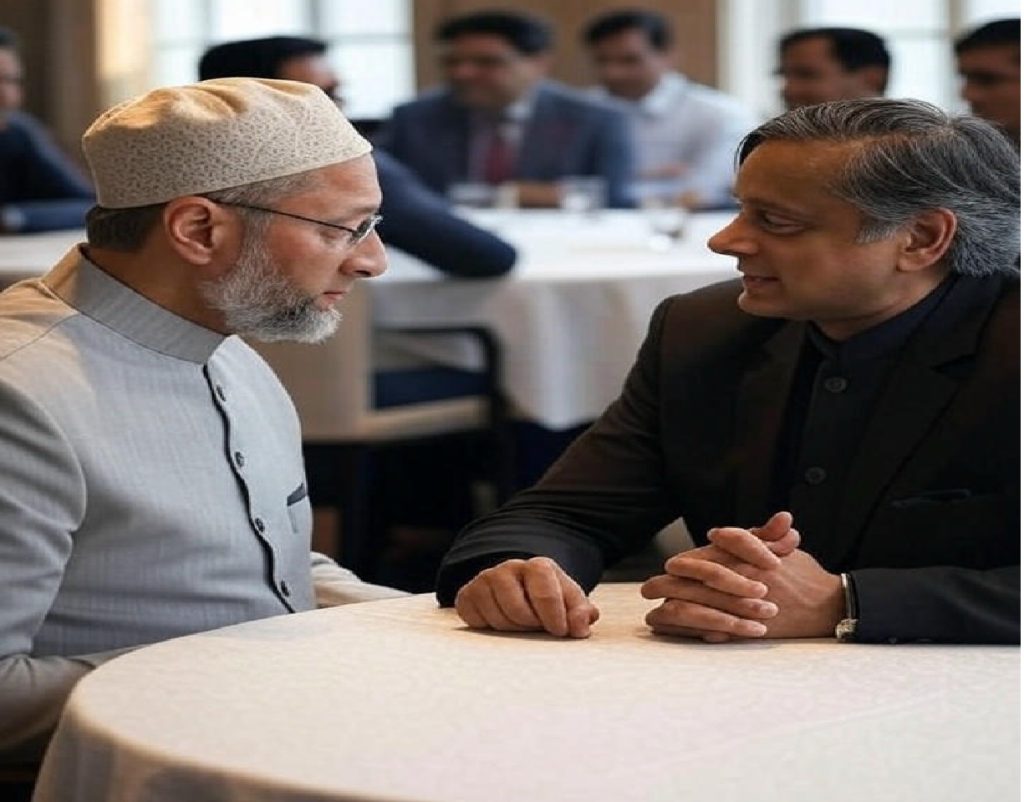
Asaduddin Owaisi and Shashi Tharoor in All Party Delegation Why Is Congress Upset

India stands at a pivotal moment in its fight against cross-border terrorism, with the government launching a robust diplomatic campaign to highlight Pakistan’s role in sponsoring terror activities. The all-party delegations, announced by Parliamentary Affairs Minister Kiren Rijiju, represent a unified national front, bringing together MPs from diverse political backgrounds to advocate India’s zero-tolerance policy on terrorism. Yet, the inclusion of Congress leader Shashi Tharoor as a delegation leader has ignited a political firestorm, with the Congress party publicly distancing itself from the decision. This article explores the intricacies of this diplomatic initiative, the controversy surrounding Tharoor’s role, and the broader implications for India’s global narrative. The Genesis of the All-Party Delegation Operation Sindoor: A Catalyst for Diplomatic Action On April 22, 2025, the Pahalgam terror attack claimed 26 lives, mostly tourists, shaking India’s resolve to combat terrorism. In response, the Indian government launched Operation Sindoor on May 7, executing precision strikes against terror infrastructure in Pakistan and Pakistan-occupied Kashmir (PoK). The operation, which reportedly eliminated over 100 terrorists, sent a unequivocal message: India will not tolerate cross-border terrorism. Following the military success, the government shifted focus to the diplomatic arena, aiming to isolate Pakistan internationally and garner global support for India’s counterterrorism efforts. The all-party delegations, comprising 5–6 MPs each, are tasked with visiting key nations such as the United States, United Kingdom, Japan, South Africa, and the UAE. Their mission is to present evidence of Pakistan’s terror sponsorship and reinforce India’s commitment to a terrorism-free world. A Unified National Voice The delegations reflect a rare display of political unity, with MPs from the ruling National Democratic Alliance (NDA) and opposition INDIA bloc working together. Leaders like Ravi Shankar Prasad (BJP), Sanjay Kumar Jha (JD(U)), Kanimozhi Karunanidhi (DMK), Supriya Sule (NCP-SP), Shrikant Shinde (Shiv Sena), and Baijayant Panda (BJP) join Tharoor in heading these groups. The inclusion of opposition figures like Tharoor and Owaisi underscores the government’s intent to project a bipartisan consensus on national security. Shashi Tharoor’s Role: Honor or Controversy? Tharoor’s Appointment as Delegation Leader Shashi Tharoor, the eloquent Congress MP from Thiruvananthapuram and a former UN diplomat, emerged as a surprise choice to lead one of the seven delegations. His diplomatic experience and global recognition make him a formidable voice to articulate India’s stance, particularly in the United States, where he is expected to engage with the Trump administration. Tharoor expressed gratitude for the opportunity, stating, “I am honored by the invitation of the Government of India to lead an all-party delegation to five key capitals. When national interest is involved, I will not be found wanting.” Tharoor’s inclusion aligns with recommendations from analysts who praised his ability to counter Pakistan’s narrative with “Oxford-honed eloquence.” His prior support for Operation Sindoor, where he lauded the government’s “well-calculated and effectively executed” response, further cemented his suitability for this role. Congress’s Unexpected Discontent Despite Tharoor’s credentials, his appointment has stirred unrest within the Congress party. On May 17, 2025, Congress leader Jairam Ramesh revealed that the party had not recommended Tharoor for the delegation. Instead, it proposed four other MPs: Anand Sharma, Gaurav Gogoi, Syed Naseer Hussain, and Raja Brar (Amrinder Singh Raja Warring). Ramesh noted that Parliamentary Affairs Minister Kiren Rijiju had consulted Congress president Mallikarjun Kharge and Leader of Opposition Rahul Gandhi on May 16, requesting four names, none of which included Tharoor. The Congress’s public clarification suggests internal friction, with some leaders viewing Tharoor’s selection as a government maneuver to sideline the party’s preferred candidates. This move has fueled a BJP-Congress war of words, with BJP leaders like Amit Malviya questioning whether Congress’s exclusion of Tharoor stems from “insecurity, jealousy, or intolerance” of his prominence. Why Is Congress Upset? The “Lakshman Rekha” Controversy Tharoor’s vocal support for Operation Sindoor has been a point of contention within Congress. On May 8, 2025, he praised the operation as a “fitting response” to the Pahalgam attack, emphasizing its precision and strategic messaging to Pakistan. These remarks, while aligning with national sentiment, diverged from the Congress party’s official stance, which has criticized the Modi government for lacking transparency in the ceasefire agreement and questioned the U.S.’s role in brokering it. During a Congress Working Committee meeting on May 14, some leaders indirectly criticized Tharoor, arguing that he had crossed a “Lakshman Rekha” by expressing personal views over the party’s position. Congress leader Praveen Chakravarty even labeled the Modi government’s foreign policy a “failure,” contrasting sharply with Tharoor’s endorsements. The party’s leadership emphasized the need for a unified voice, highlighting internal discord over Tharoor’s independent stance. Political Optics and Internal Dynamics Tharoor’s selection as a delegation leader, despite not being on Congress’s list, has been interpreted as a strategic move by the BJP-led government to exploit perceived divisions within the opposition. BJP leaders have seized the opportunity to portray Congress as insecure, with spokesperson Pradeep Bhandari accusing the party of opposing its own colleague. This narrative paints Tharoor as a national interest-driven leader, contrasting with Congress’s alleged prioritization of party politics. Historically, Tharoor’s relationship with the Congress high command has been fraught. His 2014 removal as party spokesperson, his role in the G-23 group demanding organizational reforms in 2020, and his 2022 presidential candidacy against Mallikarjun Kharge have marked him as a maverick within the party. His inclusion in the delegation, bypassing Congress’s recommendations, amplifies these tensions, raising questions about his alignment with the party’s leadership. Asaduddin Owaisi: A Strategic Inclusion Owaisi’s Commitment to the National Cause AIMIM chief Asaduddin Owaisi, another prominent figure in the delegations, has welcomed the government’s decision with enthusiasm. Known for his fiery rhetoric and legal acumen, Owaisi is part of a delegation led by BJP’s Baijayant Panda, tasked with visiting countries like the UK, France, Germany, and Italy. He emphasized the non-partisan nature of the mission, stating, “This is not about party affiliation. We are representing the Government of India and our country.” Owaisi’s inclusion is seen as a masterstroke, given his ability to connect with global audiences on the human cost of terrorism. He highlighted the devastating impact of the Pahalgam attack and subsequent cross-border shelling, which killed 21 civilians, including four children in Poonch. “We will tell the world how our daughters are widowed, our children orphaned, and how Pakistan seeks to destabilize India,” he said, underscoring India’s victimhood and resilience. Complementing Tharoor’s Diplomacy The pairing of Tharoor and Owaisi in the diplomatic outreach has been lauded as a strategic blend of eloquence and passion. While Tharoor’s diplomatic finesse targets Western capitals, Owaisi’s direct approach resonates in regions sensitive to India’s security concerns. Analysts argue that their combined presence signals India’s political unity, from “saffron to green,” in the fight against terrorism. Owaisi’s prior support for Operation Sindoor, where he advised PM Modi to confront Pakistan while protecting Kashmiris, aligns with the government’s narrative. His participation reinforces the delegation’s credibility, particularly in Islamic nations, where he can counter Pakistan’s narrative effectively. The Diplomatic Mission: Objectives and Impact A Five-Pronged Agenda The delegations are guided by a comprehensive agenda to reshape global perceptions of India’s counterterrorism efforts: Detailing Pakistan’s Provocations: Highlighting the Pahalgam attack as a catalyst for India’s response. Justifying Operation Sindoor: Presenting the operation as a proportionate and targeted strike against terror infrastructure. Signaling Future Resolve: Communicating India’s readiness to act decisively against future threats. Emphasizing Precision: Clarifying that the strikes avoided civilian casualties, countering Pakistan’s disinformation. Exposing Pakistan’s Role: Building international consensus on Pakistan’s sponsorship of terrorism and its global repercussions. Targeting Key Global Capitals The delegations will visit major capitals, including Washington, London, Tokyo, Abu Dhabi, and Pretoria, over a 10-day period starting May 23, 2025. Each group, accompanied by distinguished diplomats, will engage with heads of state, senior officials, and international forums like the UN Security Council. The Ministry of External Affairs will provide detailed briefings to ensure a cohesive narrative. This outreach marks a historic first, with MPs from multiple parties acting as diplomatic emissaries to counter Pakistan’s narrative on Kashmir and terrorism. The inclusion of opposition leaders ensures that India’s message transcends political divides, reinforcing national unity. Countering Pakistan’s Narrative Pakistan’s attempts to internationalize the Kashmir issue, coupled with U.S. President Donald Trump’s claims of brokering a ceasefire, have prompted India to assert its bilateral stance. The delegations aim to debunk Pakistan’s “post-ceasefire mirage” and expose its role in harboring terrorists. By presenting evidence of the Pahalgam attack and Operation Sindoor’s outcomes, India seeks to diplomatically isolate Pakistan ahead of major international forums. The Broader Implications Strengthening India’s Global Standing The all-party delegations represent a strategic pivot in India’s foreign policy, blending military decisiveness with diplomatic finesse. By showcasing a united political front, India aims to bolster its credibility as a global power and the world’s fifth-largest economy. The mission underscores the broader impact of instability in India, which could reverberate across global markets and security frameworks. External Affairs Minister S. Jaishankar’s recent engagements, including discussions with Taliban acting foreign minister Amir Khan Muttaqi, reflect India’s proactive approach. Jaishankar’s criticism of the IMF’s funding to Pakistan further amplifies India’s efforts to hold Pakistan accountable on international platforms. Domestic Political Ramifications Domestically, the controversy surrounding Tharoor’s inclusion highlights the delicate balance between national interest and party politics. While Tharoor’s diplomatic role elevates his stature, it risks deepening his rift with the Congress leadership. The BJP’s vocal support for Tharoor, coupled with its criticism of Congress, could exacerbate tensions within the opposition, potentially reshaping political alignments. Owaisi’s participation, meanwhile, reinforces his image as a national leader transcending regional and communal boundaries. His focus on the human toll of terrorism aligns with India’s broader narrative, enhancing his influence in national security discourse. Challenges and Opportunities Navigating Internal Congress Dynamics For Congress, the Tharoor controversy presents both a challenge and an opportunity. While the party risks appearing divided, it can leverage the delegation’s success to project unity on national security. Reconciling Tharoor’s independent streak with the party’s collective stance will be crucial to maintaining its credibility as a cohesive opposition force. Ensuring a Cohesive Global Message The delegations face the challenge of delivering a consistent message across diverse global audiences. Variations in regional priorities—such as security concerns in the Middle East versus economic ties in Southeast Asia—require tailored approaches. The Ministry of External Affairs’ briefings will be pivotal in aligning the delegations’ narratives. Capitalizing on Diplomatic Momentum The success of this outreach could set a precedent for future diplomatic initiatives, positioning India as a leader in global counterterrorism efforts. By engaging with both Western and Islamic nations, India can build a broad coalition against terrorism, enhancing its strategic partnerships and influence. Conclusion India’s all-party delegations, led by figures like Shashi Tharoor and Asaduddin Owaisi, mark a bold step in the nation’s fight against cross-border terrorism. While Tharoor’s inclusion has sparked controversy within Congress, it underscores the government’s intent to harness diverse voices for a unified national cause. As these delegations prepare to engage with global leaders, they carry the weight of India’s resolve to combat terrorism and expose Pakistan’s role on the world stage. This diplomatic offensive, rooted in the aftermath of Operation Sindoor, has the potential to reshape global perceptions and strengthen India’s position as a formidable force against terrorism.

India stands at a pivotal moment in its fight against cross-border terrorism, with the government launching a robust diplomatic campaign to highlight Pakistan’s role in sponsoring terror activities. The all-party delegations, announced by Parliamentary Affairs Minister Kiren Rijiju, represent a unified national front, bringing together MPs from diverse political backgrounds to advocate India’s zero-tolerance policy on terrorism. Yet, the inclusion of Congress leader Shashi Tharoor as a delegation leader has ignited a political firestorm, with the Congress party publicly distancing itself from the decision. This article explores the intricacies of this diplomatic initiative, the controversy surrounding Tharoor’s role, and the broader implications for India’s global narrative.

The Genesis of the All-Party Delegation

Operation Sindoor: A Catalyst for Diplomatic Action

On April 22, 2025, the Pahalgam terror attack claimed 26 lives, mostly tourists, shaking India’s resolve to combat terrorism. In response, the Indian government launched Operation Sindoor on May 7, executing precision strikes against terror infrastructure in Pakistan and Pakistan-occupied Kashmir (PoK). The operation, which reportedly eliminated over 100 terrorists, sent a unequivocal message: India will not tolerate cross-border terrorism.

Following the military success, the government shifted focus to the diplomatic arena, aiming to isolate Pakistan internationally and garner global support for India’s counterterrorism efforts. The all-party delegations, comprising 5–6 MPs each, are tasked with visiting key nations such as the United States, United Kingdom, Japan, South Africa, and the UAE. Their mission is to present evidence of Pakistan’s terror sponsorship and reinforce India’s commitment to a terrorism-free world.

A Unified National Voice

The delegations reflect a rare display of political unity, with MPs from the ruling National Democratic Alliance (NDA) and opposition INDIA bloc working together. Leaders like Ravi Shankar Prasad (BJP), Sanjay Kumar Jha (JD(U)), Kanimozhi Karunanidhi (DMK), Supriya Sule (NCP-SP), Shrikant Shinde (Shiv Sena), and Baijayant Panda (BJP) join Tharoor in heading these groups. The inclusion of opposition figures like Tharoor and Owaisi underscores the government’s intent to project a bipartisan consensus on national security.

Shashi Tharoor’s Role: Honor or Controversy?

Tharoor’s Appointment as Delegation Leader

Shashi Tharoor, the eloquent Congress MP from Thiruvananthapuram and a former UN diplomat, emerged as a surprise choice to lead one of the seven delegations. His diplomatic experience and global recognition make him a formidable voice to articulate India’s stance, particularly in the United States, where he is expected to engage with the Trump administration. Tharoor expressed gratitude for the opportunity, stating, “I am honored by the invitation of the Government of India to lead an all-party delegation to five key capitals. When national interest is involved, I will not be found wanting.”

Tharoor’s inclusion aligns with recommendations from analysts who praised his ability to counter Pakistan’s narrative with “Oxford-honed eloquence.” His prior support for Operation Sindoor, where he lauded the government’s “well-calculated and effectively executed” response, further cemented his suitability for this role.

Congress’s Unexpected Discontent

Despite Tharoor’s credentials, his appointment has stirred unrest within the Congress party. On May 17, 2025, Congress leader Jairam Ramesh revealed that the party had not recommended Tharoor for the delegation. Instead, it proposed four other MPs: Anand Sharma, Gaurav Gogoi, Syed Naseer Hussain, and Raja Brar (Amrinder Singh Raja Warring). Ramesh noted that Parliamentary Affairs Minister Kiren Rijiju had consulted Congress president Mallikarjun Kharge and Leader of Opposition Rahul Gandhi on May 16, requesting four names, none of which included Tharoor.

The Congress’s public clarification suggests internal friction, with some leaders viewing Tharoor’s selection as a government maneuver to sideline the party’s preferred candidates. This move has fueled a BJP-Congress war of words, with BJP leaders like Amit Malviya questioning whether Congress’s exclusion of Tharoor stems from “insecurity, jealousy, or intolerance” of his prominence.

Why Is Congress Upset?

The “Lakshman Rekha” Controversy

Tharoor’s vocal support for Operation Sindoor has been a point of contention within Congress. On May 8, 2025, he praised the operation as a “fitting response” to the Pahalgam attack, emphasizing its precision and strategic messaging to Pakistan. These remarks, while aligning with national sentiment, diverged from the Congress party’s official stance, which has criticized the Modi government for lacking transparency in the ceasefire agreement and questioned the U.S.’s role in brokering it.

During a Congress Working Committee meeting on May 14, some leaders indirectly criticized Tharoor, arguing that he had crossed a “Lakshman Rekha” by expressing personal views over the party’s position. Congress leader Praveen Chakravarty even labeled the Modi government’s foreign policy a “failure,” contrasting sharply with Tharoor’s endorsements. The party’s leadership emphasized the need for a unified voice, highlighting internal discord over Tharoor’s independent stance.

Political Optics and Internal Dynamics

Tharoor’s selection as a delegation leader, despite not being on Congress’s list, has been interpreted as a strategic move by the BJP-led government to exploit perceived divisions within the opposition. BJP leaders have seized the opportunity to portray Congress as insecure, with spokesperson Pradeep Bhandari accusing the party of opposing its own colleague. This narrative paints Tharoor as a national interest-driven leader, contrasting with Congress’s alleged prioritization of party politics.

Historically, Tharoor’s relationship with the Congress high command has been fraught. His 2014 removal as party spokesperson, his role in the G-23 group demanding organizational reforms in 2020, and his 2022 presidential candidacy against Mallikarjun Kharge have marked him as a maverick within the party. His inclusion in the delegation, bypassing Congress’s recommendations, amplifies these tensions, raising questions about his alignment with the party’s leadership.

Asaduddin Owaisi: A Strategic Inclusion

Owaisi’s Commitment to the National Cause

AIMIM chief Asaduddin Owaisi, another prominent figure in the delegations, has welcomed the government’s decision with enthusiasm. Known for his fiery rhetoric and legal acumen, Owaisi is part of a delegation led by BJP’s Baijayant Panda, tasked with visiting countries like the UK, France, Germany, and Italy. He emphasized the non-partisan nature of the mission, stating, “This is not about party affiliation. We are representing the Government of India and our country.”

Owaisi’s inclusion is seen as a masterstroke, given his ability to connect with global audiences on the human cost of terrorism. He highlighted the devastating impact of the Pahalgam attack and subsequent cross-border shelling, which killed 21 civilians, including four children in Poonch. “We will tell the world how our daughters are widowed, our children orphaned, and how Pakistan seeks to destabilize India,” he said, underscoring India’s victimhood and resilience.

Complementing Tharoor’s Diplomacy

The pairing of Tharoor and Owaisi in the diplomatic outreach has been lauded as a strategic blend of eloquence and passion. While Tharoor’s diplomatic finesse targets Western capitals, Owaisi’s direct approach resonates in regions sensitive to India’s security concerns. Analysts argue that their combined presence signals India’s political unity, from “saffron to green,” in the fight against terrorism.

Owaisi’s prior support for Operation Sindoor, where he advised PM Modi to confront Pakistan while protecting Kashmiris, aligns with the government’s narrative. His participation reinforces the delegation’s credibility, particularly in Islamic nations, where he can counter Pakistan’s narrative effectively.

The Diplomatic Mission: Objectives and Impact

A Five-Pronged Agenda

The delegations are guided by a comprehensive agenda to reshape global perceptions of India’s counterterrorism efforts:

  1. Detailing Pakistan’s Provocations: Highlighting the Pahalgam attack as a catalyst for India’s response.
  2. Justifying Operation Sindoor: Presenting the operation as a proportionate and targeted strike against terror infrastructure.
  3. Signaling Future Resolve: Communicating India’s readiness to act decisively against future threats.
  4. Emphasizing Precision: Clarifying that the strikes avoided civilian casualties, countering Pakistan’s disinformation.
  5. Exposing Pakistan’s Role: Building international consensus on Pakistan’s sponsorship of terrorism and its global repercussions.

Targeting Key Global Capitals

The delegations will visit major capitals, including Washington, London, Tokyo, Abu Dhabi, and Pretoria, over a 10-day period starting May 23, 2025. Each group, accompanied by distinguished diplomats, will engage with heads of state, senior officials, and international forums like the UN Security Council. The Ministry of External Affairs will provide detailed briefings to ensure a cohesive narrative.

This outreach marks a historic first, with MPs from multiple parties acting as diplomatic emissaries to counter Pakistan’s narrative on Kashmir and terrorism. The inclusion of opposition leaders ensures that India’s message transcends political divides, reinforcing national unity.

Countering Pakistan’s Narrative

Pakistan’s attempts to internationalize the Kashmir issue, coupled with U.S. President Donald Trump’s claims of brokering a ceasefire, have prompted India to assert its bilateral stance. The delegations aim to debunk Pakistan’s “post-ceasefire mirage” and expose its role in harboring terrorists. By presenting evidence of the Pahalgam attack and Operation Sindoor’s outcomes, India seeks to diplomatically isolate Pakistan ahead of major international forums.

The Broader Implications

Strengthening India’s Global Standing

The all-party delegations represent a strategic pivot in India’s foreign policy, blending military decisiveness with diplomatic finesse. By showcasing a united political front, India aims to bolster its credibility as a global power and the world’s fifth-largest economy. The mission underscores the broader impact of instability in India, which could reverberate across global markets and security frameworks.

External Affairs Minister S. Jaishankar’s recent engagements, including discussions with Taliban acting foreign minister Amir Khan Muttaqi, reflect India’s proactive approach. Jaishankar’s criticism of the IMF’s funding to Pakistan further amplifies India’s efforts to hold Pakistan accountable on international platforms.

Domestic Political Ramifications

Domestically, the controversy surrounding Tharoor’s inclusion highlights the delicate balance between national interest and party politics. While Tharoor’s diplomatic role elevates his stature, it risks deepening his rift with the Congress leadership. The BJP’s vocal support for Tharoor, coupled with its criticism of Congress, could exacerbate tensions within the opposition, potentially reshaping political alignments.

Owaisi’s participation, meanwhile, reinforces his image as a national leader transcending regional and communal boundaries. His focus on the human toll of terrorism aligns with India’s broader narrative, enhancing his influence in national security discourse.

Challenges and Opportunities

Navigating Internal Congress Dynamics

For Congress, the Tharoor controversy presents both a challenge and an opportunity. While the party risks appearing divided, it can leverage the delegation’s success to project unity on national security. Reconciling Tharoor’s independent streak with the party’s collective stance will be crucial to maintaining its credibility as a cohesive opposition force.

Ensuring a Cohesive Global Message

The delegations face the challenge of delivering a consistent message across diverse global audiences. Variations in regional priorities—such as security concerns in the Middle East versus economic ties in Southeast Asia—require tailored approaches. The Ministry of External Affairs’ briefings will be pivotal in aligning the delegations’ narratives.

Capitalizing on Diplomatic Momentum

The success of this outreach could set a precedent for future diplomatic initiatives, positioning India as a leader in global counterterrorism efforts. By engaging with both Western and Islamic nations, India can build a broad coalition against terrorism, enhancing its strategic partnerships and influence.

Conclusion

India’s all-party delegations, led by figures like Shashi Tharoor and Asaduddin Owaisi, mark a bold step in the nation’s fight against cross-border terrorism. While Tharoor’s inclusion has sparked controversy within Congress, it underscores the government’s intent to harness diverse voices for a unified national cause. As these delegations prepare to engage with global leaders, they carry the weight of India’s resolve to combat terrorism and expose Pakistan’s role on the world stage. This diplomatic offensive, rooted in the aftermath of Operation Sindoor, has the potential to reshape global perceptions and strengthen India’s position as a formidable force against terrorism.

Exit mobile version