


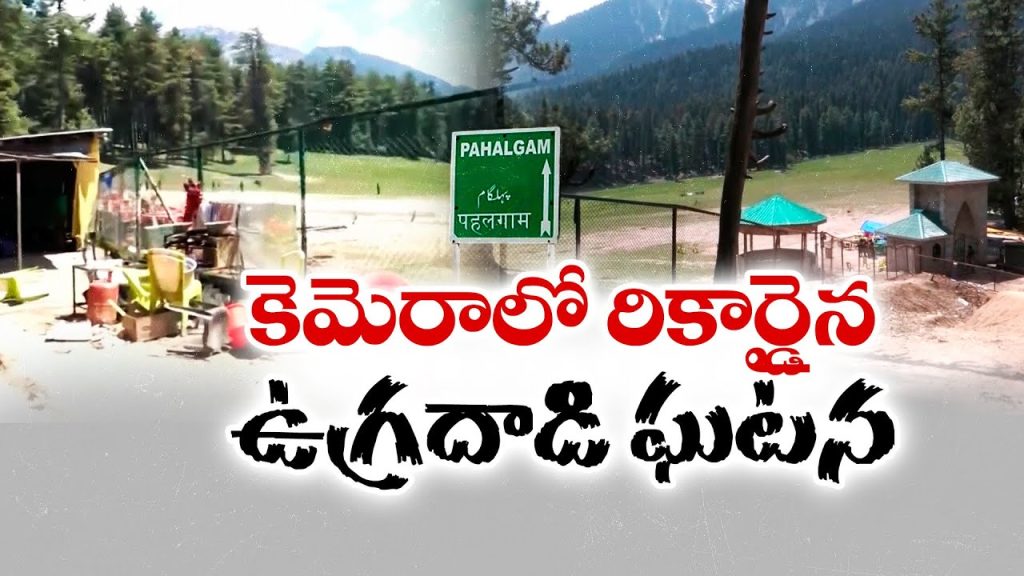
The serene valleys of Pahalgam, a jewel in Jammu and Kashmir’s tourism crown, were shattered by a devastating terror attack in Baisaran Valley. This tragic incident, which claimed numerous lives, has thrust the region into the spotlight, with the National Investigation Agency (NIA) leading a relentless probe to uncover the perpetrators and their local collaborators. At the heart of this investigation lies a pivotal piece of evidence: video footage captured by a local videographer, offering critical insights into the attack. This article delves into the NIA’s findings, the role of key suspects, and the broader implications of this heinous act, providing a comprehensive look at the ongoing efforts to bring justice to the victims.
The Pahalgam Terror Attack: A Shocking Assault on Innocence
The Baisaran Valley, often referred to as “Mini Switzerland” for its breathtaking landscapes, became the scene of unimaginable horror when terrorists unleashed a calculated attack on unsuspecting tourists. The assault, marked by indiscriminate gunfire, targeted civilians, with chilling reports suggesting that the attackers singled out individuals based on their religious identity. This deliberate act of violence not only claimed lives but also sent shockwaves through the nation, raising urgent questions about security in one of India’s most cherished tourist destinations.
The NIA, India’s premier counter-terrorism agency, swiftly took charge of the investigation, mobilizing resources to piece together the events leading up to the attack. Their efforts have zeroed in on a trove of visual evidence, including photographs and videos recorded by tourists and a local videographer, which have emerged as linchpins in the probe.
A Videographer’s Courage: Capturing the Attack on Camera
In a stroke of investigative fortune, a local videographer, typically tasked with filming tourist reels, inadvertently became a key witness to the Pahalgam terror attack. According to NIA sources, this individual, gripped by fear as gunfire erupted, climbed a tree for safety and began recording the unfolding chaos. The resulting footage, now in the hands of investigators, offers a raw, unfiltered view of the attack, capturing the movements of the terrorists and potentially their local accomplices.
This video has become a cornerstone of the NIA’s investigation, providing a visual timeline of the assault. The agency is meticulously analyzing the footage to identify the perpetrators, their tactics, and any individuals who may have aided them. The videographer’s bravery, though born out of necessity, has handed authorities a powerful tool to unravel the conspiracy behind the attack.
Why the Video Evidence Matters
The significance of the videographer’s footage cannot be overstated. In terror investigations, visual evidence is often scarce, as attackers take pains to avoid detection. This video, however, offers a rare glimpse into the attack’s execution, potentially revealing:
- Facial Recognition Opportunities: Advanced forensic tools can analyze the footage to identify the terrorists, even if they attempted to conceal their identities.
- Tactical Insights: The video may shed light on the attackers’ movements, weaponry, and coordination, helping authorities understand their training and planning.
- Local Collaboration: The footage could expose individuals who provided logistical support, such as safe houses, transportation, or reconnaissance, to the terrorists.
The NIA is leveraging cutting-edge technology to enhance the video’s clarity and extract every possible detail, ensuring that no clue goes unnoticed.
The NIA’s Investigation: A Multi-Pronged Approach
The NIA’s probe into the Pahalgam terror attack is a masterclass in counter-terrorism investigation, combining traditional detective work with modern forensic techniques. The agency is leaving no stone unturned, focusing on several key areas to build an airtight case against the perpetrators.
Collecting and Analyzing Physical Evidence
At the attack site, NIA teams have recovered critical physical evidence, including spent AK-47 and M4 rifle cartridges. The use of M4 rifles, a weapon favored by Pakistan-based terror groups, has raised suspicions of foreign involvement, particularly from across the border. The agency is conducting ballistic analysis to trace the weapons’ origins and determine whether they were smuggled into India or acquired locally.
Additionally, the NIA has seized two mobile phones allegedly stolen by the terrorists from a tourist and a local during the attack. While both devices are currently switched off, the agency is employing advanced tracking techniques to pinpoint their last known locations and uncover any communications that may lead to the attackers or their handlers.
Interrogating Witnesses and Suspects
The local videographer, now a key witness, has been extensively questioned by the NIA. His firsthand account, coupled with the video evidence, is helping investigators reconstruct the attack’s sequence and identify potential accomplices. The agency is also reaching out to tourists who were present at the scene, urging them to share any photos or videos that could provide further clues.
Simultaneously, the NIA is pursuing leads on suspected local collaborators, individuals who may have facilitated the attack by providing shelter, intelligence, or logistical support. The agency’s interrogations are focused on uncovering the network that enabled the terrorists to operate with such precision in a high-security area.
Tracking Digital Footprints
In today’s digital age, terrorists often leave behind a trail of electronic evidence, from encrypted communications to social media activity. The NIA is collaborating with cyber forensic experts to track the stolen mobile phones and analyze any digital signatures left by the attackers. This includes examining call records, messaging apps, and geolocation data to map the terrorists’ movements before and after the attack.
The Attack’s Execution: A Chilling Strategy
The NIA’s preliminary findings paint a disturbing picture of the attack’s execution. According to investigators, four terrorists, operating in two groups, carried out the assault with ruthless efficiency. The first group initiated the attack near a snack shop, opening fire on tourists and creating panic. As victims fled, the second group targeted those attempting to escape, ensuring maximum casualties.
Shockingly, the attackers reportedly asked victims about their religion before shooting, specifically targeting Hindus in a bid to inflame communal tensions. This deliberate strategy underscores the attack’s ideological underpinnings, aligning with the tactics of groups like Lashkar-e-Taiba (LeT) and Hizbul Mujahideen, both of which have a history of sectarian violence in the region.
A Targeted Assault or Random Chaos?
Initially, the NIA believed the attack was indiscriminate, with terrorists firing randomly to create terror. However, closer analysis of the videographer’s footage and witness statements revealed a more sinister truth: the attackers methodically identified and targeted Hindu tourists, shooting them at close range. This revelation has profound implications for the investigation, pointing to a well-planned operation designed to sow division and fear.
Adil Thokar: The Local Link to Global Terror
Among the four terrorists suspected of carrying out the attack, one name stands out: Adil Thokar, a local from Jammu and Kashmir who has emerged as a central figure in the NIA’s probe. Thokar’s journey from a resident of the Kashmir Valley to a hardened terrorist is a chilling reminder of the region’s ongoing struggle with radicalization.
Thokar’s Radicalization and Training
According to NIA sources, Thokar joined Hizbul Mujahideen in 2018, marking the beginning of his descent into militancy. Seeking advanced training, he traveled to Pakistan, where he reportedly severed ties with Hizbul Mujahideen and aligned himself with Lashkar-e-Taiba, a Pakistan-based terror group notorious for its deadly attacks, including the 2008 Mumbai assault.
In Pakistan, Thokar underwent rigorous training in weapons handling, explosives, and guerrilla tactics, honing the skills he would later deploy in the Pahalgam attack. By 2024, he had returned to the Kashmir Valley, operating as a guide for Pakistan-based terrorists infiltrating the region. His intimate knowledge of the local terrain and networks made him an invaluable asset to LeT, enabling the group to execute high-profile attacks with devastating precision.
Allegations of Local Support
The NIA suspects that Thokar played a pivotal role in orchestrating the Pahalgam attack, acting as both a planner and an on-ground operative. His ability to blend into the local population allowed him to gather intelligence, secure safe houses, and coordinate the attackers’ movements. Investigators are also probing allegations that Thokar received support from a network of local sympathizers, who may have provided resources or helped the terrorists evade detection.
The Role of Pakistan-Based Terror Groups
The use of M4 rifles and the involvement of Adil Thokar have fueled speculation that the Pahalgam attack was orchestrated by Pakistan-based terror groups, with Lashkar-e-Taiba as the prime suspect. LeT, founded by Hafiz Saeed, has a long history of targeting India, particularly in Jammu and Kashmir, with the goal of destabilizing the region and merging it with Pakistan.
The NIA is exploring links between the attackers and LeT’s leadership, including potential handlers operating from Pakistan-occupied Kashmir (PoK). The agency is also investigating whether the attack was part of a broader campaign by LeT and its proxy, The Resistance Front (TRF), to escalate violence in Kashmir, especially in the wake of the 2019 abrogation of Article 370.
The Resistance Front: A New Face of Terror
The Resistance Front, which claimed responsibility for the Pahalgam attack, is widely regarded as a front for LeT, designed to give a “localized” face to militancy in Kashmir. Formed in 2019, TRF has been linked to a string of attacks on civilians and security forces, often targeting non-locals and minorities to create fear and disrupt the region’s fragile peace.
The NIA’s investigation is focused on dismantling TRF’s network, which relies on a mix of foreign terrorists and local recruits like Thokar. By targeting TRF’s funding, recruitment, and logistical channels, the agency aims to choke the group’s ability to carry out further attacks.
The Broader Implications: Security and Tourism in Kashmir
The Pahalgam terror attack has far-reaching implications for Jammu and Kashmir, a region that has been striving to rebuild its image as a safe and welcoming destination for tourists. The attack’s brutality and its targeting of civilians have raised concerns about the adequacy of security measures in popular tourist areas.
Impact on Tourism
Pahalgam, with its lush meadows and snow-capped peaks, attracts millions of visitors each year, contributing significantly to the local economy. The attack threatens to deter tourists, dealing a blow to livelihoods dependent on the hospitality industry. Authorities are now under pressure to restore confidence by enhancing security, deploying additional forces, and implementing stricter surveillance in tourist hotspots.
Strengthening Counter-Terrorism Measures
The attack has also underscored the need for a robust counter-terrorism framework in Kashmir. The NIA’s investigation is just one piece of a larger puzzle, which includes improving intelligence-sharing, tightening border security, and countering online radicalization. The agency is working closely with the Jammu and Kashmir Police and the Indian Army to neutralize terror networks and prevent future attacks.
The Path to Justice: Challenges and Determination
The NIA faces formidable challenges in its quest to bring the Pahalgam attackers to justice. The terrorists’ use of stolen mobile phones, which remain switched off, complicates tracking efforts. The rugged terrain of Baisaran Valley, coupled with the potential for local complicity, adds further complexity to the investigation. Moreover, the involvement of Pakistan-based groups raises diplomatic and operational hurdles, as cross-border cooperation remains fraught.
Despite these obstacles, the NIA remains steadfast in its mission. The agency’s meticulous approach, bolstered by the videographer’s footage and forensic evidence, is yielding promising leads. By identifying and neutralizing the attackers and their supporters, the NIA aims to deliver justice to the victims and send a clear message to terror groups: India will not bow to violence.
Conclusion: A Call for Unity and Resilience
The Pahalgam terror attack is a stark reminder of the persistent threat posed by terrorism in Jammu and Kashmir. Yet, it is also a testament to the resilience of the region’s people and the determination of agencies like the NIA to uphold justice. The videographer’s footage, a symbol of courage amid chaos, has given investigators a fighting chance to unravel the attack’s mysteries and hold the perpetrators accountable.
As the NIA continues its probe, the nation stands united in its resolve to combat terrorism and protect the sanctity of places like Pahalgam. By strengthening security, fostering community vigilance, and dismantling terror networks, India can ensure that its valleys remain symbols of beauty and peace, not tragedy. The road to justice may be long, but with unwavering commitment, the truth will prevail, and the victims of Pahalgam will find the closure they deserve.