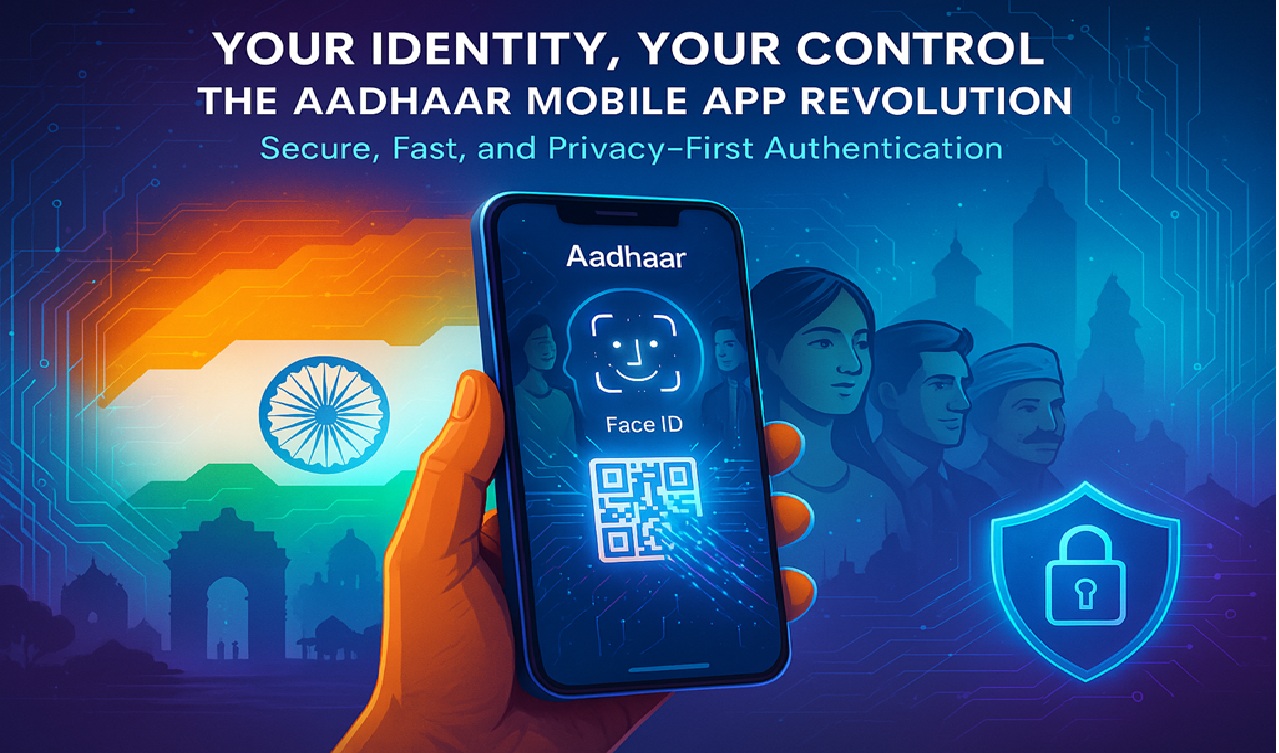
In a nation where identity is a cherished asset, the Aadhaar card has evolved from a mere identification tool to a symbol of security and belonging. Now, this treasured identity is transforming into a powerful digital instrument—the Aadhaar Mobile App. Designed to empower every Indian, from bustling cities to serene villages, this app places your digital identity at your fingertips while prioritizing privacy and control. Let’s explore how this groundbreaking tool is revolutionizing identity verification, enhancing security, and shaping India’s digital future.
Revolutionizing Identity Verification: The Aadhaar Mobile App
The Aadhaar Mobile App is not just another digital tool—it’s a paradigm shift in how Indians manage their identities. By digitizing the Aadhaar card, the app eliminates the need for physical copies, reduces fraud, and streamlines authentication processes. Users can now share identity credentials securely, with complete control over what information is disclosed. Whether accessing government services, banking, or private sector platforms, the app ensures seamless verification while safeguarding privacy.
Key Features:
- QR Code Scanning: Instantly authenticate requests without sharing physical documents.
- Face ID Authentication: A cutting-edge, non-intrusive method to verify identity.
- Real-Time Request Alerts: Stay informed about who accesses your data and why.
Seamless Authentication with Face ID Technology
One of the app’s standout features is its award-winning Face ID authentication. Traditional methods, such as submitting photocopies or manually entering details, are prone to forgery and inefficiency. The Face ID feature leverages advanced AI algorithms to match live facial scans with Aadhaar records, ensuring:
- Zero Physical Interaction: Authenticate yourself remotely, eliminating queues.
- Fraud Prevention: Combat photo manipulation and fake Aadhaar cards.
- Universal Accessibility: Works even in low-network areas, thanks to India’s 4G/5G infrastructure.
This innovation aligns with the government’s Digital India vision, making secure identity verification accessible to all.
QR Code Integration: Simplifying Digital Transactions
The app’s QR Code scanning feature is a game-changer for everyday interactions. Whether checking into a hotel, attending an event, or accessing public services, users can scan a requester’s QR code to:
- Review Data Requests: Understand what information is being sought.
- Grant Conditional Access: Share only necessary details.
- Avoid Physical Copies: Reduce the risk of document misuse.
For instance, a farmer in a remote village can now verify their identity for subsidy claims without traveling to government offices—empowering rural India with digital inclusion.
Privacy at the Forefront: DPDP Act Compliance
Privacy is the cornerstone of the Aadhaar Mobile App. Designed in compliance with the Digital Personal Data Protection (DPDP) Act 2023, the app adheres to stringent data security standards. Key privacy safeguards include:
- Consent-Based Sharing: Users approve every data request.
- Encrypted Storage: Aadhaar details remain secure on UIDAI servers.
- Supreme Court Guidelines: Incorporates directives from the Puttaswamy Judgment on privacy rights.
This framework ensures that while the app simplifies authentication, it never compromises user confidentiality.
AI and Aadhaar: A Synergy for Enhanced Security
The integration of Artificial Intelligence (AI) with Aadhaar’s Digital Public Infrastructure (DPI) is unlocking unprecedented possibilities. AI enhances the app’s functionality by:
- Predictive Analytics: Identifying potential fraud patterns.
- Faster Authentication: Reducing processing time to milliseconds.
- Personalized Services: Tailoring user experiences based on behavioral insights.
During the Aadhaar Sangam conference, stakeholders explored integrating AI with popular payment and ticketing apps, envisioning a future where a single tap handles everything from metro rides to hospital registrations.
Legal Framework Harmonization: Aadhaar and DPDP Act
The Aadhaar Act, initially enacted without a comprehensive privacy law, has now evolved alongside the DPDP Act. This harmonization aims to:
- Modernize Legislation: Align Aadhaar’s protocols with global data protection standards.
- User-Centric Design: Prioritize citizen rights in every legal update.
- Eliminate Redundancies: Enable one-time consent for multiple services, reducing repetitive authentication.
This legal synergy ensures that even marginalized communities benefit from secure, hassle-free access to welfare schemes.
Future Prospects: Expanding Aadhaar’s Digital Ecosystem
The Aadhaar Mobile App is poised to become the backbone of India’s digital economy. Upcoming innovations include:
- Integration with Payment Apps: Link Aadhaar with UPI for seamless transactions.
- Smart City Initiatives: Use Aadhaar for IoT-based public services.
- Healthcare Access: Streamline patient identification in telemedicine.
By focusing on inclusive growth, the app aims to uplift millions, ensuring no Indian is left behind in the digital revolution.
Conclusion: Your Identity, Your Control, Your Future
The Aadhaar Mobile App embodies India’s journey toward a secure, equitable, and tech-driven future. With features like Face ID, QR codes, and AI integration, it redefines how citizens interact with services while preserving their privacy. As the app evolves, user feedback and stakeholder collaboration will remain pivotal in refining its framework.
Join the Revolution: Download the Aadhaar Mobile App today and experience the power of a digital identity that’s truly yours—secure, accessible, and future-ready.