How to Obtain a Voter ID Card through the Internet in India
In a democratic society, voting is something that goes hand in hand with active participation, and every Indian has a Voter ID card which is proof of their ability to appraise the responsibilities of a citizen. If you are 18 years or older, it is therefore important to Decided and booked a Voter ID card, this can conveniently be done through the internet. In this post, we shall explain every single detail related to applying for a Voter ID card online, the criteria that one has to meet in order to apply for it, the documents needed, and any other related information.
What is a Voter ID Card?
Most people know Voter ID cards as Electoral Photo Identity Card (EPIC). In the Indian democracy, only the registered voters possess a Voter ID card which is issued by the Election Commission of India (ECI). It would be wise to note the Epic number, it is a 10 digit code, which is a rare factor to make it through a rigorous process of registration as a voter and hence it would only be wise to not share it with others. With this code, any voter is able to identify himself/herself in order to take part in the municipal, state, and national elections. This code will help to ascertain that the designated person has the right to vote and further take steps to ensure that the person votes.
Step-by-Step Guide on How to Apply to Change all the Essentials Once You Get a New Voter ID Online
- Official Voter Registration Website
Check out the national voter registration site and the NVSP at www.nvsp.in or the website ECI. For voter registration, election plans, and numerous forms, this site has it all.
- Applying the Required Application Form
You can find a form for each service, such as name change, addition of new voters, and options for overseas citizens on the NVSP site. In case a new voter wishes to register they should be using Form 6.
- Create New Account (If Not Registered)
To sign up for an account, you need to click on the ‘Sign Up’ by entering your email address and a mobile number which will serve as your account credentials.
In case you have an account, enter your registered mobile/email along with your password, after that, type in the captcha to trigger getting an OTP.
- Fill in Form 6
While logging in ensure to complete F6 by providing accurate information regarding yourself to the panel, including your address and other family members who might be primary voters.
- Attach the Required Documents
The final step requires you to attach all the legal documents and permits with the application, some of the listed IDs are birth certificate, passport, drivers license, high school certificate and many more. Drivers license, water bill , or a passport can also work as proof.
- Application Submission
Make sure to double-check the information provided in the application and then click the ‘Submit’ button. A Please note, upon successful submission you will receive an email regarding the approval, and it will also contain a link to your personal page, which will help track the status of the ‘Voter ID card’ application.
Application Eligibility for Voter ID Issuance
The main requirements for individuals wishing to apply for the Voter ID card in India are listed below:
Only Indian Nationals: The Indian voters registration turnout excludes all non-Indian based on citizenship.
Permanent Residence: It is a must that the applicants possess a permanent residential address within the Indian jurisdiction.
Minimum Age: The age limit is capped at eighteen years and above.
Documentation Necessary For Getting A Voter ID Card
When lodging an application for a Voter ID card, bear in mind the following documents:
One recent photograph of the face with Specifications not less than 3.5 cm x 4.5 cm.
Identification: A birth certificate, a driving license, a passport or any high school related documents can suffice as identification.
Address Verification: Address can be proved through a ration card, utility bill, passport, or a driving license.
Updating of the Old Voter ID Card to New Voter ID Card
If you want to interpose your old voter’s ID with a new or update it, you can download a digital copy or e-EPIC by following these simple steps.
Log into the National Voters’ Service Portal.
Choose and click ‘e-PIC Download’.
Please provide your EPIC number or Form Reference Number and your place of residence.
Then, you can validate it by entering the OTP sent to your mobile device.
Make a hard copy of the digital Voter ID.
Confirming Your Voter ID Card Information Voter ID card verification prevents misinformation:
Go to NVSP Portal.
Click on the ‘Search in Electoral Roll’ after entering your information.
Make sure to cross-check the details as per the guidelines issued.
Different Sections of Form 6 for Voter ID Application Form 6 comes in several parts, aimed at gathering data:
Personal Information: Name (first language and English), sex, date of birth and relations within the family are covered.
Home Address: Address of the applicant that includes house number, street, locality, district and PIN code.
Family Member’s Details: If someone in one’s family has already enrolled in the respective constituency, provide their information as well.
Declaration: Affidavit stating that the person is a citizen of India and that he has not sought registration of Voter ID in other constituency.
Online For A Voter ID Application Benefits Applying online eliminates the need for visiting the electoral office, thus it saves time and makes the entire process more efficient.
Application Tracking: Not only do you get a Voter ID by applying online, but you also get to keep track of your application’s status.
Expedited Handling: With Voter IDs being processed online, ID cards can be issued in under 30 days.
What is the online procedure for applying for a Voter ID Card?
Q1: What steps do I take to find out the status of my application for the Voter ID?
A: In order to follow the status of your application, log into the Voter Portal and open Application Track and follow the steps as instructed.
Q2: What steps do I take to determine whether my name has been included in the electoral register?
A: Enroll with the Electoral search page, log in and follow the prompt, which allows you to enter your details together with your Voter ID and check whether your name appears.
Q3: What should I do if I misplace my Voter ID card?
A: To apply for a duplicate of the Voter ID, open the portal and register then from the menu click on Replacement of Voter ID and confirm that your details are accurate and finish filling in the required details.
Q4: Is there a fee for applying for a Voter ID online, and if not, why?
A: For the sake of clarity and the general public, it is free of charge to apply for a Voter ID card via online means.
Q5: How much time is expected for receiving the Voter ID card to be issued?
A: Receiving the Voter ID may be anywhere from a few weeks or a few months entirely based on the processes involved in verification political parties.
Q6: Is it possible to modify details in a current Voter ID card via the internet?
A: Yes, you may make modifications to your Voter ID by filling in the relevant correction form on the internet.
The Voter Helpline App – Practical Application for Maharashtra Assembly Elections 2024.
With the intention of making the voting experience seamless for the people of Maharashtra the Election Commission has come up with the Voter Helpline App. Through this application, voters are able to:
Verify whether their name appears in the voter registry.
Find out where polling stations are located.
Enroll and rectify mistakes or update details related to their Voter ID.
Get their voting slip and communication regarding other matters related to elections.
How the App can be downloaded.
The application is for free and can be downloaded from the Google Play store and Apple App store. After downloading the application, users can fill out simple details and log in to the application to start using its features. Voters may also contact the toll-free number 1950 for additional help.
Final thoughts.
To apply for a Voter ID card now needs just to register online and from then all is automatic. You have to follow these steps to apply or if necessary update your Voter ID details so that you can vote in the next election. Use the Online Facility of the NVSP portal or the Voter Helpline App to be a part of the democracy.
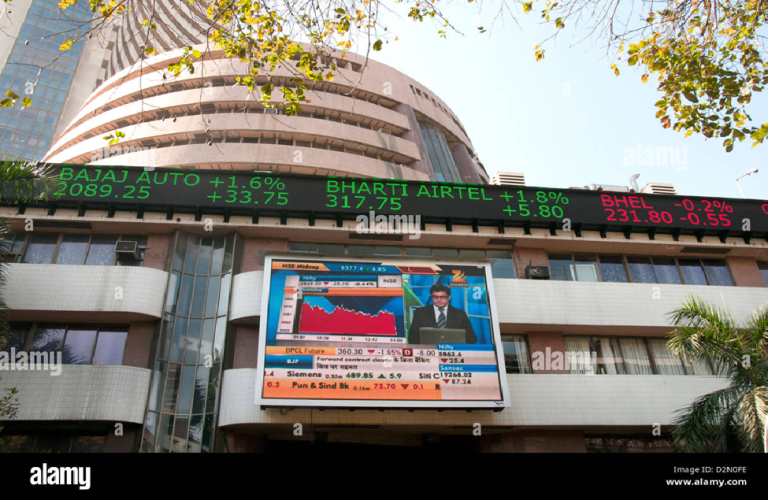

![Trump's 50% Tariff Bomb Rocks Indian Markets: BSE, CDSL Share Analysis and Strategic Outlook The Indian financial markets face unprecedented volatility as US President Donald Trump's escalated tariff regime reaches a punitive 50% on Indian goods, triggering widespread concerns about economic growth, export competitiveness, and market stability. This comprehensive analysis examines the multifaceted impact on India's stock exchanges, with particular focus on BSE Limited and Central Depository Services Limited (CDSL), while also evaluating the competitive dynamics following NSDL's recent market debut. Market Carnage: The Immediate Impact of Trump's Tariff Escalation Indian benchmark indices experienced significant pressure on August 7, 2025, as investors grappled with the implications of Trump's tariff announcement. The BSE Sensex fell 387 points (0.48%) to 80,156, while the Nifty 50 declined 119 points (0.49%) to 24,454. This market reaction reflects deep-seated concerns about the potential economic ramifications of what analysts are calling an effective "trade embargo" on Indian exports.[1][2][3] Sector-wise vulnerability to Trump's 50% tariffs showing textiles and gems & jewelry as the most exposed industries The tariff escalation represents a dramatic shift in US-India trade relations, with the cumulative 50% duty rate now exceeding levies on Chinese goods by 20 percentage points. This punitive measure, ostensibly targeting India's continued purchases of Russian crude oil, threatens to fundamentally alter the competitive landscape for Indian exporters across multiple sectors.[4][5] Morgan Stanley's analysis reveals the stark reality facing the Indian economy. Under the most severe scenario, where all goods face the full 50% tariff, India could experience a direct GDP impact of 0.6% and an indirect impact of 0.6%, culminating in a total economic drag of 1.2%. Even under a more moderate scenario targeting only non-exempt goods, the cumulative impact could reach 0.8% of GDP growth.[6][7] Sector-Specific Vulnerabilities and Market Disruptions The tariff impact varies dramatically across sectors, with export-dependent industries bearing the brunt of the policy shift. Textiles emerge as the most vulnerable sector, with approximately 63% of total exports destined for US markets potentially facing the full tariff burden. The gems and jewelry industry, accounting for 33% of exports to the US, faces similar challenges, while leather goods, chemicals, and auto components also confront significant headwinds.[8][3][9] Foreign Institutional Investor (FII) selling has intensified the market pressure, with net outflows reaching ₹4,999 crore on August 6 alone. Month-to-date FII selling has accelerated to ₹10,954 crore, reflecting international investors' concerns about tariff-related earnings impacts. This capital flight compounds domestic market stress and creates additional pressure on export-oriented companies.[10][11][12] BSE Limited: Navigating Turbulence with Strategic Leadership Changes Despite the broader market turmoil, BSE Limited demonstrates operational resilience, though its share price reflects the prevailing uncertainty. Trading at ₹2,387 with a modest 0.13% decline, BSE's relative stability amid the market downturn underscores its position as a critical market infrastructure provider largely insulated from direct export exposure.[13][14] The Bombay Stock Exchange building in Mumbai displaying real-time stock ticker and financial news visuals. Strategic Appointment Strengthens Cybersecurity Leadership BSE announced a significant leadership addition with the appointment of Shri Fal Ghancha as Joint Chief Information Security Officer, effective October 1, 2025. This strategic hire reflects BSE's commitment to strengthening its technological infrastructure and cybersecurity capabilities during a period of heightened market volatility.[15] Ghancha brings extensive expertise in technology and cybersecurity leadership, with a robust track record across asset management, insurance, and industrial sectors. His qualifications include certification as a Certified Chief Information Security Officer (CCISO), Certified Ethical Hacker, and expertise in regulatory compliance frameworks including SEBI and ISO 27001 standards. This appointment positions BSE to better manage technological risks and enhance its operational resilience.[15] Financial comparison between BSE Limited and NSDL showing BSE's superior scale and profitability metrics Financial Performance and Market Position BSE's financial metrics demonstrate the exchange's robust performance despite challenging market conditions. With a market capitalization of ₹97,410 crore and revenue of ₹3,212 crore in FY25, BSE significantly outperforms newer market entrants in terms of scale and profitability. The company's Return on Equity (ROE) of 36% reflects efficient capital utilization, though investors should note the elevated P/E ratio of 73.13, indicating premium valuations.[13][14] The company's dividend policy remains conservative, with a yield of 0.25%, reflecting management's focus on reinvestment for growth rather than immediate shareholder returns. This strategy appears prudent given the current market uncertainties and the need for continued technological investments.[13] CDSL vs NSDL: The Battle for Depository Dominance Intensifies The recent listing of National Securities Depository Limited (NSDL) on August 6, 2025, has introduced a new competitive dynamic in India's concentrated depository services market. NSDL's debut at ₹880 per share, representing a 10% premium over its ₹800 issue price, signals investor confidence in the depository services sector despite broader market headwinds.[16][17][18] Market Share Dynamics and Competitive Positioning CDSL maintains a commanding position in retail investor accounts, managing 15.3 crore demat accounts compared to NSDL's 3.95 crore. This four-fold advantage reflects CDSL's successful penetration of the retail trading boom, particularly through partnerships with fintech brokers and discount trading platforms.[19][20][21] However, NSDL demonstrates strength in institutional custody services, managing ₹464 lakh crore in assets under custody compared to CDSL's ₹71 lakh crore. This institutional focus provides NSDL with higher-value, stickier revenue streams, though with lower overall profitability margins compared to CDSL's retail-focused model.[21][19] Financial Performance Comparison CDSL consistently outperforms NSDL in dividend payouts, demonstrating stronger shareholder returns over the past five years CDSL's financial superiority becomes apparent when examining profitability metrics. With a net profit margin of 48.6% compared to NSDL's 22.35%, CDSL demonstrates superior operational efficiency. This margin advantage reflects the scalability of CDSL's retail-focused business model, where high-volume, low-value transactions generate substantial cumulative profits.[19][20] Revenue growth patterns also favor CDSL, with a three-year compound annual growth rate of 39.5% compared to NSDL's 17.9%. This growth differential reflects the explosive expansion in retail trading activity post-COVID, which disproportionately benefited CDSL's business model.[19] Dividend Track Record Analysis CDSL's dividend history showcases consistent shareholder value creation, with progressive increases from ₹9 per share (90%) in 2021 to ₹22 per share (220%) in 2024. This trajectory reflects not only strong cash generation but also management confidence in sustained business growth.[22][19] Conversely, NSDL's dividend history appears more modest, with payments of ₹1 per share in both 2023 and 2024, rising to ₹2 per share in 2025. While NSDL's dividend policy may evolve post-listing, the current disparity highlights CDSL's superior cash generation capabilities and more aggressive shareholder return policies.[18] Economic Implications and Growth Forecasts Morgan Stanley's Revised Growth Projections Despite the tariff headwinds, Morgan Stanley maintains a cautiously optimistic outlook for India's medium-term growth trajectory. The investment bank has modestly upgraded India's growth forecast to 6.2% for FY26 and 6.5% for FY27, reflecting confidence in domestic demand resilience and policy support measures.[23][6][24] The upgrade, primarily attributed to easing US-China trade tensions and improved external demand prospects, suggests that India's growth story extends beyond bilateral trade relationships. Morgan Stanley emphasizes that domestic demand will remain the primary growth engine, supported by government policy initiatives including monetary easing and capital expenditure-focused fiscal policy.[6][24] Crude Oil Price Dynamics and Energy Security The tariff dispute has broader implications for India's energy security, given Trump's explicit targeting of Russian oil imports. Crude oil prices have shown volatility, with Brent crude trading around $67-68 per barrel. India's dependence on oil imports (approximately 85% of consumption) makes the country particularly vulnerable to supply disruptions or price volatility resulting from geopolitical tensions.[25][26][27] The potential for supply chain rerouting and increased energy costs could create inflationary pressures, complicating the Reserve Bank of India's monetary policy decisions. Any significant disruption to Russian oil supplies could impact India's current account balance and currency stability. Sector-Wise Impact Assessment and Investment Implications Most Vulnerable Sectors Export-dependent industries face the most immediate challenges from the tariff escalation. Textiles, gems and jewelry, leather goods, and marine products – sectors with significant US market exposure – are likely to experience margin compression and potential market share losses. Companies in these sectors may need to rapidly diversify their export markets or recalibrate their cost structures to maintain competitiveness.[3][9] Chemical companies face particular challenges, with organic chemicals exports attracting an additional 54% duty under the new tariff structure. This burden extends beyond direct exporters to companies in the broader chemical value chain, potentially affecting input costs across multiple industries.[9] Resilient Domestic-Focused Sectors Conversely, domestically-focused sectors appear relatively insulated from direct tariff impacts. Banking and financial services, including BSE and CDSL, derive revenues primarily from domestic market activities. Similarly, sectors such as cement, consumer goods, healthcare, real estate, and telecommunications should maintain their growth trajectories, supported by India's robust domestic consumption patterns.[28] Information technology services and pharmaceuticals currently enjoy exemptions from the additional tariffs, providing some relief for these critical export sectors. However, investors should monitor potential policy changes that could extend tariff coverage to these industries.[4][5] Strategic Recommendations and Risk Management Portfolio Diversification Strategies Given the heightened uncertainty surrounding trade policy, investors should consider rebalancing portfolios toward domestic consumption themes. Financial services companies, including exchanges like BSE and depository services like CDSL, offer exposure to India's growing capital market participation without direct export vulnerability. The infrastructure and market structure companies benefit from India's long-term financialization trends, regardless of short-term trade disruptions. CDSL's dominant position in retail demat services positions it to benefit from continued retail investor growth, while BSE's exchange infrastructure remains essential to market functioning. Long-Term Growth Catalysts Despite near-term challenges, India's structural growth drivers remain intact. The continued expansion of retail investor participation, digital financial services adoption, and corporate governance improvements should support sustained growth in market infrastructure companies. The recent NSDL listing creates additional investment options in the depository space, though investors should carefully evaluate the competitive dynamics and growth trajectories of both CDSL and NSDL. CDSL's superior profitability metrics and dividend track record may appeal to income-focused investors, while NSDL's institutional client base offers potential stability and growth in high-value custody services. Conclusion: Navigating Uncertainty with Strategic Focus Trump's 50% tariff escalation represents a significant challenge for India's export-dependent economy, with potential GDP impacts ranging from 0.8% to 1.2% depending on the final policy implementation. The immediate market reaction reflects investor concerns about earnings impacts and competitive positioning across multiple sectors.[6][7] However, companies with strong domestic market positions, including BSE Limited and CDSL, demonstrate resilience amid the broader market turbulence. BSE's strategic leadership appointments and CDSL's superior financial performance metrics suggest these market infrastructure companies remain well-positioned for long-term growth, regardless of](https://www.tgnns.com/wp-content/uploads/2025/08/Trumps-50-Tariff-Effect-BSE-CDSL-Share-Analysis-and-Strategic-Outlook-768x500.png)