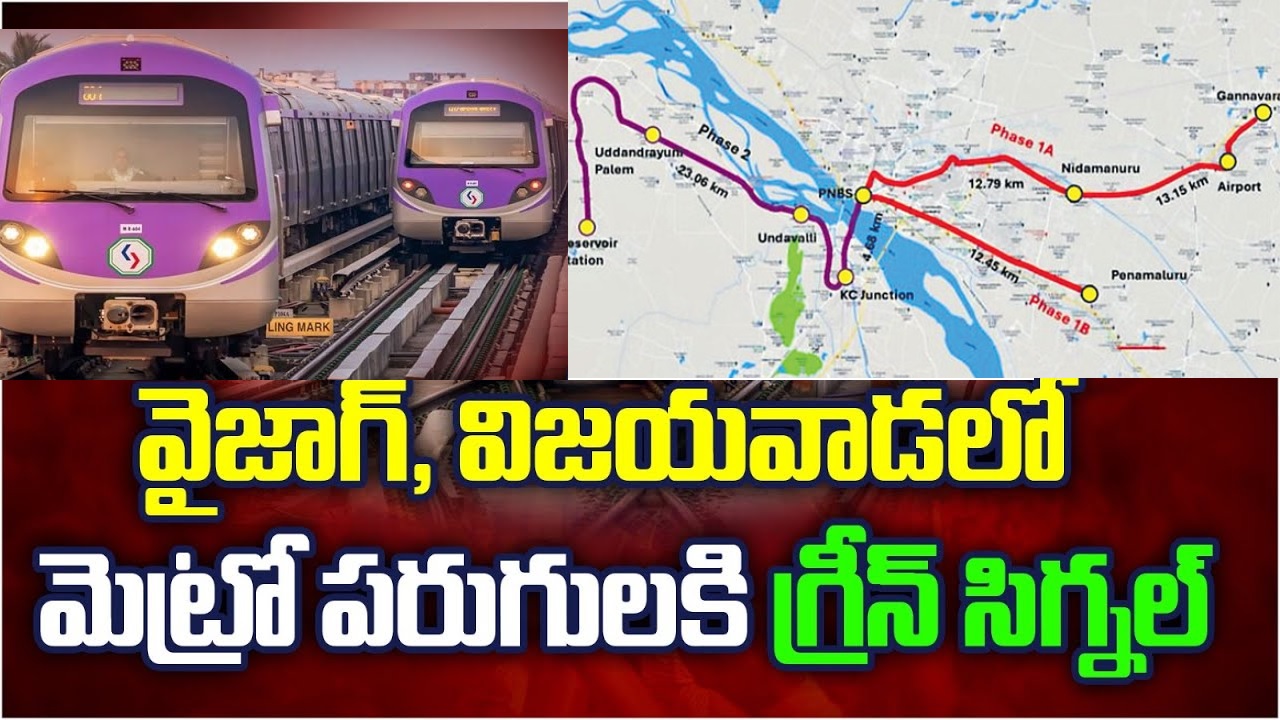
The Andhra Pradesh state government has put forth a proposal to the central government for a Metro Rail project in Vijayawada and Visakhapatnam, estimating a total cost of ₹42,362 crore based on 2024 rates. This ambitious plan, detailed in the updated project reports, envisions connecting key regions through multiple corridors to boost urban transport, reduce congestion, and provide a faster commute.
Vijayawada Metro Project Overview – Phase 1
- Title: “Vijayawada Metro – Phase 1”
- Corridor 1: “From Pandit Nehru Bus Stand to Gannavaram”
- Corridor 2: “From Pandit Nehru Bus Stand to Penamaluru”
- Distance: “38.40 km across two corridors”
- Background: Map or simplified metro line graphic
Vijayawada Metro Project – Cost and Land Details
- Total Cost (2024 Estimate): “₹11,009 crore”
- Land Required: “91 acres”
- Land Acquisition Cost: “₹1,152 crore”
- Background: Image or icon representing financial or land details
Vijayawada Metro – Phase 2
- Title: “Vijayawada Metro – Phase 2”
- Corridor: “From Pandit Nehru Bus Stand to Amaravati”
- Distance: “27.80 km”
- Cost: “₹14,121 crore”
- Land Required: “61 acres”
- Land Acquisition Cost: “₹742 crore”
- Background: Visual of city or transit systems
Metro Rail Project Plans for Vijayawada and Visakhapatnam
The proposed Metro Rail project is divided into several phases for both cities. In Vijayawada, the plan includes three corridors, with an estimated cost of ₹25,130 crore to be implemented in two phases. Visakhapatnam’s Metro Rail project, on the other hand, includes four corridors, also in two phases, projected to cost around ₹17,232 crore.
These comprehensive projects have been designed to address the urban transportation needs of Andhra Pradesh’s major cities and align with central government policies for sustainable urban infrastructure.
Funding Proposal: Central Government Support
The Andhra Pradesh state government has proposed that the central government provide 100% of the project funding. This funding model, based on the successful “Kolkata Model,” would allow the central government to fully finance the Metro Rail projects in both cities, relieving the state from the significant financial burden involved.
For the necessary land acquisition—estimated at around 258 acres and expected to cost ₹2,799 crore—the Andhra Pradesh government has pledged to cover the expenses. This balanced approach aims to make the Metro Rail project feasible without overburdening the state’s resources.
History of the Metro Rail Project Proposal
The concept of Metro Rail projects in Vijayawada and Visakhapatnam dates back to the Andhra Pradesh Reorganization Act of 2014, which envisioned a dedicated mass transit system for these cities. During the previous Telugu Desam Party (TDP) government from 2014 to 2019, efforts were made to advance these projects, including submitting detailed project reports (DPRs) for central approval. However, the reports required revisions due to updates in central policies, as recommended by the Ministry of Housing and Urban Affairs.
Despite the initial momentum, progress stalled when the YSR Congress Party (YSRCP) government took office. In Vijayawada, land acquisition proposals were suspended, putting the project on hold. Recently, however, there has been renewed interest in reviving the Metro Rail project, particularly in Visakhapatnam.
The Kolkata Model as a Funding Framework
In a recent meeting with the Union Minister for Housing and Urban Affairs, Andhra Pradesh’s Municipal Administration Minister cited the East-West Kolkata Metro Rail project, which received 100% funding from the central government in 2017. The Andhra Pradesh government has formally requested similar financial support for its Metro Rail projects in Vijayawada and Visakhapatnam.
Implementing the Kolkata Model in Andhra Pradesh would ensure complete central funding, reducing the financial strain on the state government and expediting project completion. The state government argues that this funding model is vital due to its current fiscal limitations and the long-term benefits these metro projects would provide to Andhra Pradesh’s urban transport infrastructure.
Benefits of the Proposed Metro Rail Projects
The proposed Metro Rail systems are expected to bring transformative benefits to both Vijayawada and Visakhapatnam:
- Enhanced Urban Mobility: The Metro Rail system will reduce traffic congestion by offering a reliable and efficient alternative to road transportation.
- Environmental Impact: With cleaner and more energy-efficient transportation options, the project aligns with sustainable urban development goals, potentially lowering carbon emissions.
- Economic Growth: Improved connectivity is anticipated to stimulate local economies by making commuting faster and more convenient, attracting businesses and enhancing property values around metro corridors.
- Improved Quality of Life: By reducing commute times, the Metro Rail projects aim to provide residents with a higher quality of life, more time for personal activities, and less stress from daily travel.
Next Steps and Government Collaboration
The Andhra Pradesh government’s proposal to the central government marks a significant step toward realizing these Metro Rail projects. If approved, the central government’s funding will be essential for timely project execution. The state government’s commitment to covering land acquisition costs is a notable contribution, reflecting its intent to see these projects come to fruition.
In conclusion, the Andhra Pradesh Metro Rail proposal for Vijayawada and Visakhapatnam represents a visionary approach to urban transportation. With the support of the central government and a proven funding model, these projects could transform urban travel, stimulate economic growth, and improve the quality of life for residents in both cities. The central government’s decision on this funding proposal will be pivotal in determining the future of Andhra Pradesh’s urban transit infrastructure.