Telangana Employees JAC Fight for Rights and Pending Dues
The struggle of Telangana employees has intensified, with their issues remaining unresolved despite promises made during election campaigns. These employees, who believed that their lives would improve after the formation of Telangana, are now expressing their disappointment with the Congress-led state government, which has been in power for over 10 months without addressing their grievances.
Telangana Employees JAC Unite for Justice
Employee and teacher unions under the Joint Action Committee (JAC) have declared protests against the government’s inaction. During a meeting at the Telangana Non-Gazetted Officers (TNGO) office, JAC leaders, including Chairman Maram Jagadishwar and General Secretary Eluri Srinivasa Rao, expressed their dissatisfaction. They emphasized that pending issues like the release of five Dearness Allowances (DAs) have not been resolved, marking a historical delay. Additionally, the government has failed to release their General Provident Fund (GPF) savings.
Jagadishwar pointed out that even after submitting multiple petitions to the Chief Secretary, there has been no response or discussions. Employees hoped that two DAs would be released by the Dasara festival, but now they are pinning their hopes on Diwali. Many employees feel that the respect they once enjoyed has diminished since the formation of Telangana, and they are demanding that their concerns be addressed in the upcoming cabinet meeting on October 26. They remain hopeful that Chief Minister Revanth Reddy will take positive steps toward resolving their issues.
Lack of Progress on Key Demands
JAC General Secretary Eluri Srinivasa Rao criticized the Congress government for ignoring six key demands that were highlighted in their manifesto. Despite repeated pleas, none of the 44 non-financial issues have been addressed. Rao argued that if the Chief Secretary took just one day to discuss these concerns with the unions, many of them could be resolved immediately. There is hope that a favorable announcement will be made during the upcoming cabinet meeting.
Several union leaders, including Chava Ravi, Sadanand Goud, Vanga Ravinder Reddy, Madhusudhan Reddy, and others, participated in the meeting. They emphasized the urgency of addressing the pending issues, particularly as they affect not only active employees but also pensioners and other workers.
Key Demands of the Telangana Employees
The JAC has unanimously passed six major resolutions outlining their demands, which are crucial for the welfare of the employees, teachers, and pensioners. The government is urged to take immediate action on the following points:
- Release of Pending DAs: The employees demand the release of five pending Dearness Allowances, effective from July 1, 2022. They also call for arrears to be paid in cash.
- Clearance of Pending Bills: All pending bills must be approved, and the e-Kuber system should be abolished. The traditional system of clearing bills through the Treasury Department should be restored to ensure timely payments to employees.
- 51% Fitment Based on Price Hike: Employees are seeking a 51% fitment (salary adjustment) to cope with the rising prices. The second Pay Revision Commission (PRC) report should be implemented immediately.
- Health Insurance Scheme: A comprehensive health insurance scheme (EHS) should be introduced with equal contributions from both the government and employees/pensioners.
- Reinstatement of the Old Pension Scheme: The New Pension Scheme (CPS) should be abolished, and the old pension scheme should be reinstated to provide financial security for employees in their retirement.
- Review of G.O. 317: The government must review the controversial Government Order 317, which has impacted many employees. All grievances related to it should be addressed promptly.
Protest Timeline and Action Plan
The JAC has announced an extensive action plan to intensify their protests if the government fails to act. Here’s a breakdown of their planned activities:
- November 2: Submission of letters outlining the action plan to district collectors across all districts.
- November 4-5: Submission of petitions to local representatives in various districts.
- November 6: State Executive Meeting of the JAC.
- November 7 to December 27: Conferences in 10 unified districts to discuss the next steps.
- January 3-4: Employees will wear black badges while on duty and stage protests during lunch breaks.
- January 21: Silent demonstrations will be held across all districts.
- January 23: Bike rallies will be organized statewide.
- January 30: Human chains will be formed outside government offices throughout the state.
Conclusion: A Call for Government Action
The Telangana employees’ struggle is a clear indication of their frustration with the lack of progress on their issues. The JAC’s action plan underscores the seriousness of the situation and the growing unrest among employees, teachers, pensioners, and labor unions. The employees’ hopes now rest on the government’s response in the upcoming cabinet meeting. If their demands continue to be ignored, the protests will likely escalate, putting more pressure on the administration to take immediate action.
This movement highlights the critical need for the government to engage with employee unions, resolve their financial and administrative issues, and restore the respect and dignity that the employees rightfully deserve.




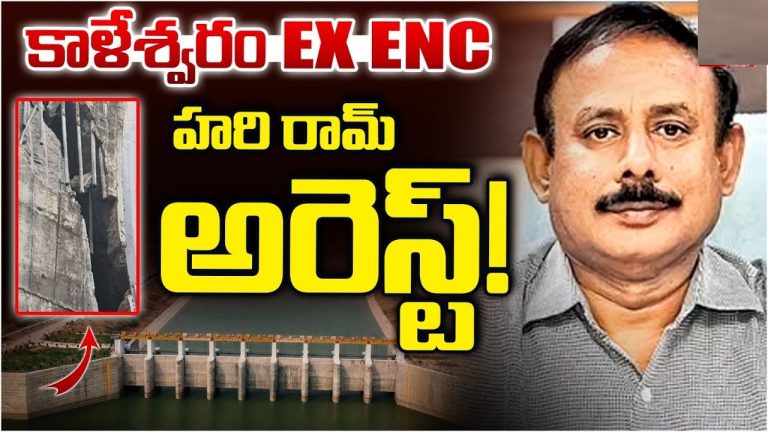
![In a stunning development that has sent shockwaves through Telangana’s political and bureaucratic circles, B. Hari Ram, the former Engineer-in-Chief (ENC) of the Kaleshwaram Lift Irrigation Project, was arrested by the Anti-Corruption Bureau (ACB) following extensive raids across 14 locations linked to him and his family. The high-profile arrest, coupled with the seizure of a staggering array of luxury properties, vehicles, and assets, has exposed a web of alleged corruption tied to one of India’s most ambitious irrigation projects. This article delves into the details of the raids, the seized assets, and the broader implications of this case, offering a comprehensive look at a scandal that could redefine accountability in public infrastructure projects. The Arrest of B. Hari Ram: A Blow to Corruption The ACB’s crackdown on B. Hari Ram marks a significant step in addressing allegations of financial misconduct surrounding the Kaleshwaram project. On [insert date], authorities arrested Hari Ram after conducting simultaneous raids at his residence and 13 other properties associated with him and his relatives. The operation, described as one of the most extensive in recent times, uncovered assets worth hundreds of crores, raising serious questions about the source of his wealth. Hari Ram’s arrest is not just a standalone event but part of a broader investigation into the Kaleshwaram project, which has faced scrutiny for cost overruns, design flaws, and mismanagement. The ACB’s actions signal a renewed commitment to rooting out corruption in high-stakes public projects, with Hari Ram’s case serving as a cautionary tale for officials entrusted with public funds. ACB Raids: Uncovering a Treasure Trove of Illicit Wealth The ACB’s meticulously planned raids targeted properties across Hyderabad, Telangana, and Andhra Pradesh, revealing a portfolio of assets that far exceeds what a public servant’s legitimate income could justify. The operation spanned upscale neighborhoods and commercial hubs, painting a picture of opulence funded by alleged illicit means. Luxury Villas and High-End Flats Among the most striking discoveries were luxury villas in Hyderabad’s elite areas of Shaikpet and Kondapur. These properties, valued at crores, reflect a lifestyle of extravagance that stands in stark contrast to Hari Ram’s official earnings. Additionally, the ACB seized multiple flats in sought-after localities such as Srinagar Colony, Madhapur, and Narsingi, further highlighting the scale of his alleged wealth accumulation. Commercial and Agricultural Assets The raids extended beyond residential properties to include a commercial plot in Amaravathi, the planned capital of Andhra Pradesh. This strategically located asset underscores Hari Ram’s investments in high-value real estate markets. Agricultural holdings were also significant, with 28 acres of farmland in Markook, 20 guntas in Patancheru, and a six-acre mango orchard with a farmhouse in Bommalramaram. These assets, spread across Telangana, point to a diversified portfolio designed to maximize wealth preservation. Open Plots and Ongoing Construction The ACB identified open plots in Qutubullapur, Miryalaguda, and Kothagudem, where a building under construction was also seized. These undeveloped parcels suggest long-term investment strategies, potentially aimed at capitalizing on Telangana’s booming real estate market. The sheer volume of land holdings raises questions about how a public servant could amass such extensive assets without attracting scrutiny earlier. Luxury Vehicles and Gold Ornaments In addition to real estate, the ACB confiscated luxury vehicles, including a high-end BMW, and substantial quantities of gold ornaments. These items, often symbols of wealth and status, further amplify suspicions of financial impropriety. Bank deposits and property documents seized during the raids provide critical evidence that could unravel the financial trail behind Hari Ram’s empire. The Kaleshwaram Project: A Scandal-Plagued Megaproject To understand the significance of Hari Ram’s arrest, one must examine the Kaleshwaram Lift Irrigation Project, a flagship initiative of the Telangana government. Touted as the world’s largest multi-stage lift irrigation project, it aimed to transform agriculture in the state by harnessing water from the Godavari River. However, the project has been mired in controversy, with allegations of inflated costs, substandard construction, and environmental violations. The recent National Dam Safety Authority (NDSA) report added fuel to the fire, exposing critical flaws in the project’s design, construction, and maintenance. The report’s release, just weeks before Hari Ram’s arrest, intensified public and official scrutiny of those involved in the project’s execution. As the former ENC, Hari Ram played a pivotal role in overseeing technical aspects, making his arrest a focal point in the ongoing investigation into the project’s mismanagement. The Scale of Illicit Assets: A Market Value Shock One of the most alarming revelations from the ACB raids is the disparity between the official and market values of Hari Ram’s assets. While official estimates peg the seized properties at hundreds of crores, the ACB noted that their real market value could be ten times higher. This discrepancy underscores the challenges in valuing assets in India’s dynamic real estate market, where undocumented transactions and underreporting are common. The sheer scale of the seized assets—ranging from urban villas to rural farmland—suggests a sophisticated approach to wealth accumulation. The ACB’s findings indicate that Hari Ram and his family may have leveraged their influence to acquire properties at below-market rates or through benami transactions, a common tactic in corruption cases. Legal Proceedings and Ongoing Investigations Following his arrest, Hari Ram was taken into custody and remanded to judicial custody. The ACB has launched a full-scale investigation to trace the origins of his wealth and identify any accomplices. Authorities are scrutinizing bank records, property documents, and financial transactions to build a watertight case. The investigation is far from over, with the ACB planning additional raids on properties linked to Hari Ram’s relatives and associates. These follow-up operations aim to uncover any hidden assets or shell companies used to conceal illicit wealth. The case’s complexity, coupled with its high-profile nature, ensures that it will remain in the public eye for months to come. Implications for Governance and Accountability Hari Ram’s arrest is more than a legal victory; it is a wake-up call for India’s governance framework. The Kaleshwaram project, with its massive budget and national significance, was meant to be a symbol of progress. Instead, it has become synonymous with inefficiency and corruption, eroding public trust in government institutions. This case highlights the need for robust oversight mechanisms in public infrastructure projects. Regular audits, transparent bidding processes, and stringent asset declarations for public servants could prevent similar scandals in the future. Moreover, the ACB’s proactive approach sets a precedent for holding high-ranking officials accountable, regardless of their influence or connections. Public Reaction and Political Ramifications The arrest has sparked intense debate across Telangana and beyond. Social media platforms, particularly X, are abuzz with reactions, ranging from outrage at the scale of alleged corruption to calls for systemic reforms. Posts on X highlight public frustration with the misuse of taxpayer money, with many demanding stricter penalties for those involved in the Kaleshwaram scandal. Politically, the case could have far-reaching consequences. The opposition has seized the opportunity to criticize the ruling party, accusing it of turning a blind eye to corruption within the project. As elections approach, the Kaleshwaram controversy is likely to become a key campaign issue, with parties vying to position themselves as champions of transparency and accountability. Lessons from the Hari Ram Case The arrest of B. Hari Ram offers several lessons for policymakers, law enforcement, and the public. First, it underscores the importance of vigilance in monitoring public projects. Second, it highlights the role of agencies like the ACB in upholding integrity and deterring corruption. Finally, it serves as a reminder that no one is above the law, no matter their position or influence. As the investigation unfolds, the Hari Ram case could catalyze broader reforms in how India manages its infrastructure projects. By addressing systemic loopholes and fostering a culture of accountability, the government can restore public confidence and ensure that projects like Kaleshwaram deliver on their promises. Conclusion: A Step Toward Justice The arrest of B. Hari Ram and the seizure of his vast assets mark a pivotal moment in the fight against corruption in India. The ACB’s raids have not only exposed the extent of alleged financial misconduct but also reignited discussions about governance, transparency, and accountability. As the investigation deepens, the public awaits answers about how such a scandal could unfold under the noses of those tasked with safeguarding public funds. For now, Hari Ram’s arrest serves as a powerful reminder that corruption, no matter how deeply entrenched, will eventually face the light of justice. By continuing to pursue this case with rigor and impartiality, authorities can set a new standard for integrity in public service, ensuring that India’s ambitious development goals are not derailed by greed or mismanagement.](https://www.tgnns.com/wp-content/uploads/2025/04/Former-Kaleshwaram-ENC-Hari-Ram-Arrested-After-Massive-ACB-Raids-768x432.jpg)