


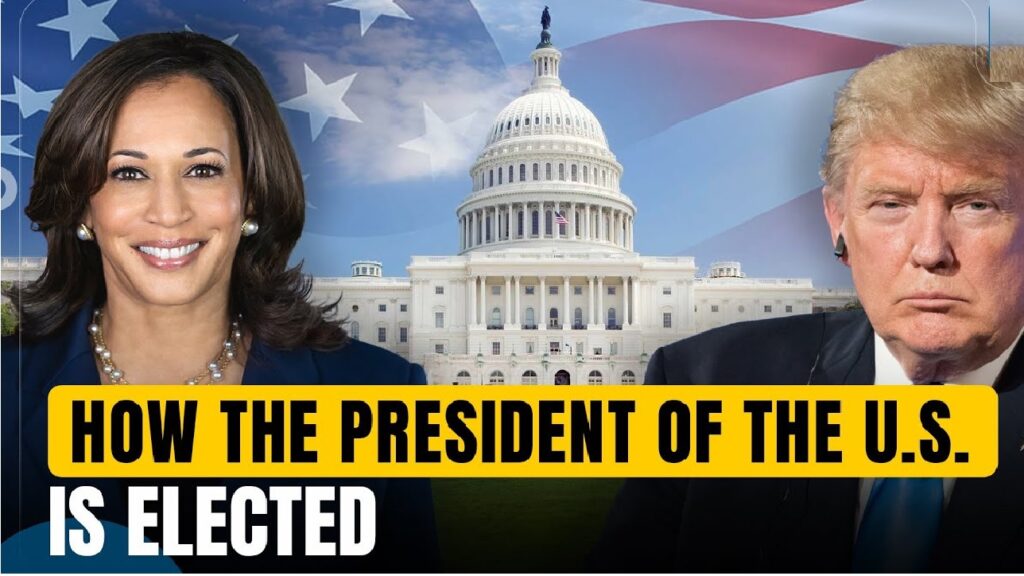
The United States presidential election process is a unique and intricate system designed to ensure a fair and representative vote for the country’s highest office. While Americans vote in presidential elections, they don’t directly choose the president. Instead, they elect representatives known as “electors” who formally cast votes on their behalf. This article explains the steps in the U.S. presidential election process, covering the formation of the Electoral College, the voting process, and the final election of the president.
The Importance of the U.S. Election Process
Why Every Vote Counts
Every vote in a U.S. presidential election matters, even if it may not always feel that way. Citizens play a direct role in deciding who will shape the nation’s future policies, economy, and place on the world stage. In 2024, voter turnout and participation will again underscore the power of each citizen’s voice in shaping their government.
Overview of the 2024 U.S. Presidential Election
Key Dates and Significance
The 2024 election timeline includes multiple important dates. Voting in primaries begins in early spring, while the general election is scheduled for Tuesday, November 5, 2024. Following the election, key dates in December and January will involve the Electoral College and the final certification of results.
Primary Election Stage
What Are Primary Elections?
Primary elections allow voters to choose the candidates from each political party who will run in the general election. Each state conducts its primary elections differently, with some using a caucus system, where party members meet and debate before voting on their preferred candidate.
Role of Primaries and Caucuses
Primaries and caucuses help narrow the field of candidates, with each state awarding delegates to successful candidates based on their votes. These delegates later confirm the party’s nomination at the national convention.
Political Party Conventions
The Purpose of Party Conventions
Conventions are gatherings where each political party formally nominates its presidential candidate. These conventions are packed with speeches, presentations, and platform announcements to energize the party’s base and present a unified message to voters.
Nominee Selection and Platform Finalization
At the convention, delegates pledge their support to a candidate. The party’s platform—an outline of policy priorities and values—is finalized, helping voters understand what each party stands for.
General Election Campaigning
Campaign Strategies
In the general election campaign, candidates work tirelessly to win over undecided voters and strengthen support among their base. Campaign strategies include rallies, advertising, town halls, and targeted outreach through digital media.
Role of Media and Debates
Media plays a crucial role, with debates offering voters a chance to see candidates face each other on important issues. Debates often impact public perception, shaping the momentum of each candidate’s campaign.
Voting in the General Election
Election Day and Early Voting
Election Day is scheduled for November 5, 2024, though many states allow early voting weeks in advance. This provides flexibility, particularly for those who may be unavailable on Election Day.
Mail-in Voting and Absentee Ballots
Mail-in and absentee voting allow those who cannot reach polling stations to cast their vote. Many states expanded these options during the COVID-19 pandemic, making voting accessible to more citizens.
Ballot Security and Integrity
Measures to Ensure Fair Elections
The U.S. employs multiple methods to protect election integrity. Measures include voter ID requirements, poll monitoring, and signature verification for mail-in ballots to minimize the chance of fraud.
Technology and Security Measures
Advanced technologies, including secure databases and encrypted voting machines, protect voter information and prevent unauthorized access. Election security is a priority, and ongoing audits are conducted to maintain transparency.
The Electoral College Explained
Purpose and History of the Electoral College
The Electoral College was established by the Founding Fathers to balance the influence of populous and less-populous states. It has 538 electors, and a candidate needs a majority of 270 electoral votes to win the presidency.
How Electoral Votes Are Allocated
Electoral votes are distributed based on the number of senators and representatives a state has. Larger states with more population have more electoral votes, while smaller states have fewer, but no state has fewer than three.
How States Determine Electors
Role of State Legislatures
State legislatures control how electors are chosen, typically through a popular vote. Each state’s party with the winning candidate then appoints electors to the Electoral College.
Winner-Take-All vs. Proportional Distribution
Most states follow a winner-take-all model, where the candidate with the majority vote in that state takes all the electoral votes. However, Maine and Nebraska use a proportional system, dividing electoral votes based on district results.
Meeting of the Electoral College
How Electors Vote and Certification Process
Electors meet in December to cast their votes, with results sent to Congress for final certification. The Electoral College vote determines the official outcome, though it has occasionally contradicted the popular vote.
Certification of Election Results
Role of Congress in Certifying Results
On January 6, Congress meets to officially certify the Electoral College results. This process is usually ceremonial but can face objections if discrepancies or issues are raised by members of Congress.
Importance of the January 6 Certification Date
January 6 is critical because it marks the last step before the formal transition of power. Certification finalizes the election outcome, clearing the way for Inauguration Day.
Inauguration Day
Significance of the Presidential Inauguration
On January 20, the newly elected president is inaugurated in a ceremonial event that signifies the peaceful transfer of power, a hallmark of American democracy. This day marks the official beginning of the new president’s term.
Transition of Power
The period between the election and inauguration is used for transition planning, allowing the incoming administration to prepare and ensure a smooth transfer of responsibilities.
Possible Challenges in the 2024 Election
Legal and Political Challenges
Challenges such as recounts, lawsuits, and claims of election fraud have previously arisen and could happen again in 2024. Both parties are likely to prepare for any potential issues to uphold election integrity.
Potential Disputes and Recounts
If results are close, recounts may be triggered in certain states, and disputes over election results could delay the certification process.
Conclusion
The 2024 U.S. presidential election is more than a single day’s event; it’s a series of organized steps designed to uphold democracy. From primary elections to the final certification of results, each phase ensures that the choice of the people is accurately represented. As Americans prepare to participate, understanding this process reinforces the importance of each vote and the dedication to a fair and democratic election.
What Is the Electoral College?
The Electoral College is a body of 538 electors who represent the states and Washington, D.C. The number of electors per state depends on its population, with a minimum of three electors per state. Electors are chosen based on the outcomes of individual state elections. Generally, political parties nominate these electors during state conventions, or in some cases, at national party conventions. This structure aims to balance the interests of both high-population and low-population states in the election process.
The Voting Process: From Ballots to Ballot Counting
On election day, voters head to designated polling places to cast their votes. At each polling station, voters receive a ballot listing the candidates for president and vice president, along with candidates for other offices and ballot measures. Voters fill in ovals next to their chosen candidates, similar to a multiple-choice test. In states like New York, voters do not need to present an ID but must sign electronically to confirm their identity.
Once the ballot is complete, the voter places it in a scanning machine that reads and records their selections. These machines are equipped with optical scanners that transmit the data to a central election management system. After polls close, unofficial results are uploaded to a secure tablet system, allowing election authorities to report early results almost immediately. This combination of paper ballots and electronic scanning helps ensure both accuracy and efficiency.
Counting and Reporting Votes
The vote-counting process in the U.S. is decentralized, meaning each state independently manages its own elections and reporting. When polls close, local election boards begin tallying votes, with initial results posted shortly after. In addition to in-person ballots, early voting and absentee ballots are also counted. Early and absentee votes are processed up until the Friday before election day and are typically included in the initial vote reports on election night. Results are updated continuously, with many states refreshing counts every five minutes until all ballots are accounted for.
News agencies like the Associated Press rely on vote totals and projections to “call” states, providing preliminary outcomes. However, close races may take days to finalize, as states must conduct a comprehensive review of the votes. The certification deadline for state results is December 11, ensuring ample time to validate results before electors meet.
The Role of Electors and the Winner-Takes-All System
On December 17, electors in each state convene to cast official votes for president and vice president. In most states, the candidate with the most votes receives all of that state’s electoral votes—a system known as “winner-takes-all.” However, Maine and Nebraska use a distinct approach, allocating electoral votes based on individual congressional district outcomes. This method allows for a split in electoral votes, as seen in the 2020 election when Nebraska’s 2nd district awarded its vote to a candidate different from the rest of the state.
This system means that a candidate can win the presidency without receiving the national popular vote, provided they secure a majority of electoral votes. To win, a candidate needs at least 270 out of 538 electoral votes.
Faithless Electors and State Protections
While electors are generally expected to vote in line with their state’s popular vote, there are instances of “faithless electors” who vote contrary to the state’s choice. To address this, many states have enacted laws penalizing or replacing faithless electors to uphold the voters’ will. These measures aim to prevent electors from straying from their commitment to represent the voters’ choice.
Certification and the Final Count by Congress
After electors submit their votes, these ballots are sent to the president of the Senate by December 25. The final step occurs on January 6, when Congress meets to formally count the electoral votes and declare the winner. This event solidifies the next president-elect, providing a clear outcome based on the accumulated electoral votes.
In conclusion, the U.S. presidential election process, involving both a popular vote and an Electoral College, is a distinctive system that balances representation across states of varying population sizes. From polling day to the final count by Congress, each step is designed to ensure transparency and uphold the democratic voice of American citizens.
FAQs
- What role does the Electoral College play in U.S. elections? The Electoral College allocates votes based on states’ population sizes, determining the final outcome of presidential elections.
- Can the popular vote winner lose the presidential election? Yes, due to the Electoral College system, a candidate can win the popular vote but lose the election if they do not secure 270 electoral votes.
- How does absentee voting work? Absentee voting allows citizens who cannot vote in person to submit their ballots by mail or other authorized methods.