


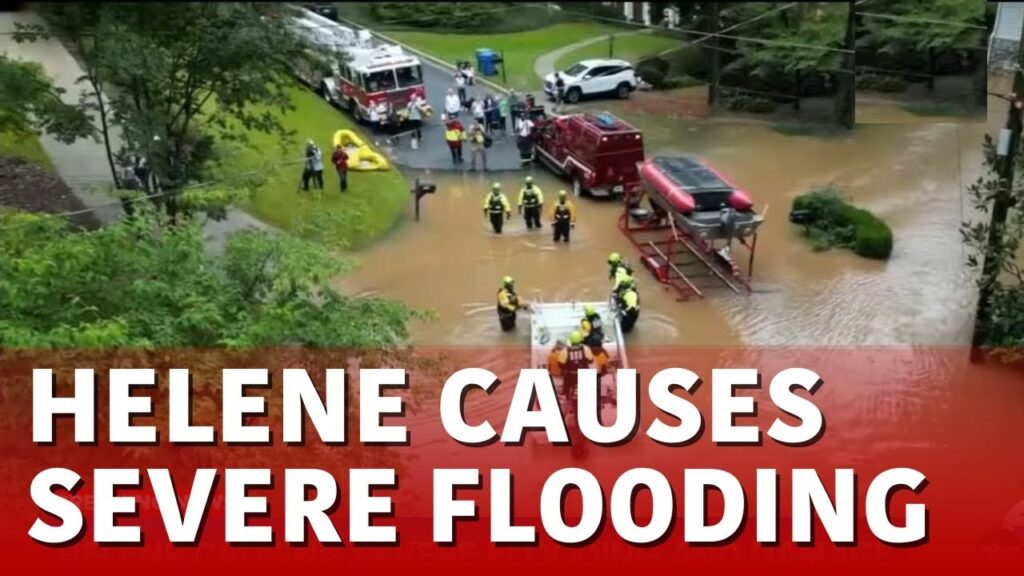
Hurricane Helene, one of the most devastating storms in recent U.S. history, has left a trail of destruction in its wake. With over 52 confirmed deaths and millions impacted, the catastrophic hurricane has ravaged the southeastern states. In its aftermath, communities struggle to rebuild, while rescue and recovery efforts continue. This article delves into the severe impact of Hurricane Helene, the destruction it caused, and the ongoing recovery efforts across the affected regions.
Overview of Hurricane Helene’s Impact
Hurricane Helene, categorized as a Category 4 storm, made landfall with winds reaching up to 225 km/h (140 mph). The southeastern states, particularly Florida, Georgia, North Carolina, South Carolina, and Virginia, bore the brunt of the storm’s ferocity. Officials have reported that over 52 people have tragically lost their lives, with millions of residents affected by widespread power outages and property damage. The economic toll of the storm is expected to reach billions of dollars as entire communities face the daunting task of rebuilding.

Power Outages and Flooding Threats
One of the most immediate and widespread impacts of Hurricane Helene was the crippling damage to the power grid. Nearly 30 million people were left without electricity as the storm knocked down power lines, uprooted trees, and damaged infrastructure across multiple states. Restoration efforts are underway, but in some of the hardest-hit areas, it may take weeks or even months to fully restore power.
The threat of severe flooding remains a major concern in many areas, with heavy rainfall continuing even after the hurricane’s landfall. Numerous rivers have swelled to dangerous levels, putting several regions under flood warnings. In flood-prone areas, emergency evacuations were ordered to protect residents from rising waters.
Devastation in Florida and Surrounding States
Florida was among the states hit hardest by Hurricane Helene. As the storm made landfall, it unleashed winds of up to 225 km/h, causing widespread destruction. Homes and businesses were completely leveled, and streets were littered with debris. In Keaton Beach, a coastal community, entire neighborhoods were reduced to rubble, and storm surges pushed debris miles inland, illustrating the sheer power of the hurricane.
Residents who evacuated before the storm have returned to find their homes destroyed, with many left wondering how to rebuild their lives. In a particularly heart-wrenching account, a resident described how his house was completely swept away, leaving him with nothing but the clothes on his back.
“Man, I just lost my house. I have nothing else to go back to… My house was right there, on those pillars,” the resident tearfully shared.
Severe Storm Surges and Landslides
Hurricane Helene’s storm surges were among the most dangerous aspects of the storm. The surge brought in by the hurricane’s winds caused water levels to rise up to 15 feet in some areas, inundating coastal towns and pushing debris inland. The National Hurricane Center had warned of the potential for catastrophic storm surges, and their predictions were tragically accurate. The storm surge not only destroyed homes but also displaced entire communities, forcing thousands into temporary shelters.
In addition to the storm surges, landslides caused by heavy rainfall presented another danger. North Carolina, in particular, saw severe landslides that blocked roads and damaged homes. Residents of the Black Mountains region narrowly escaped when boulders and debris came crashing down on their vehicle, further highlighting the unpredictable nature of the storm.
Emergency Response and Ongoing Rescue Efforts
In the aftermath of Hurricane Helene, rescue efforts have been intensified across the southeastern United States. Emergency services, along with national agencies, have been working around the clock to provide aid to those in need. Search and rescue teams have been deployed to locate missing persons, assist trapped residents, and distribute essential supplies such as food, water, and medical aid.
The federal government, led by President Joe Biden, has declared a state of emergency in the most affected areas, unlocking federal funds to aid in recovery efforts. “We are doing everything in our power to ensure that no stone is left unturned when it comes to providing support and relief to the impacted communities,” President Biden assured the nation.
Rebuilding and Looking to the Future
While the immediate focus remains on rescue and recovery, the long-term challenges of rebuilding entire towns and infrastructure loom large. Experts predict that the total economic damage from Hurricane Helene will run into billions of dollars. Reconstructing homes, restoring businesses, and rebuilding roads and power grids will be a herculean task that may take years to complete.
Many communities will need to rebuild from scratch, with homes, schools, and businesses completely wiped out. In the meantime, displaced residents will rely on government support, insurance payouts, and donations from charitable organizations to begin the slow process of recovery.
The Importance of Preparedness
Hurricane Helene serves as a stark reminder of the importance of preparedness in the face of natural disasters. While many lives were saved due to early evacuation orders, the devastation left behind highlights the need for stronger infrastructure, improved early warning systems, and greater investment in disaster preparedness measures.
The storm’s impact on the environment is also a cause for concern. Coastal erosion, deforestation due to the destruction of trees, and the potential for long-term water contamination are among the environmental challenges that must be addressed in the wake of the hurricane.
Conclusion
Hurricane Helene has left an indelible mark on the southeastern United States, with millions affected by its destructive path. From the tragic loss of lives to the widespread damage to homes, businesses, and infrastructure, the storm’s effects will be felt for years to come. As rescue efforts continue and communities begin the long process of rebuilding, the resilience and strength of the people affected will undoubtedly play a crucial role in overcoming this disaster.
The road to recovery is long, but with the support of local, state, and federal agencies, as well as the compassion of neighbors and volunteers, the affected regions will rise again, stronger than before.