


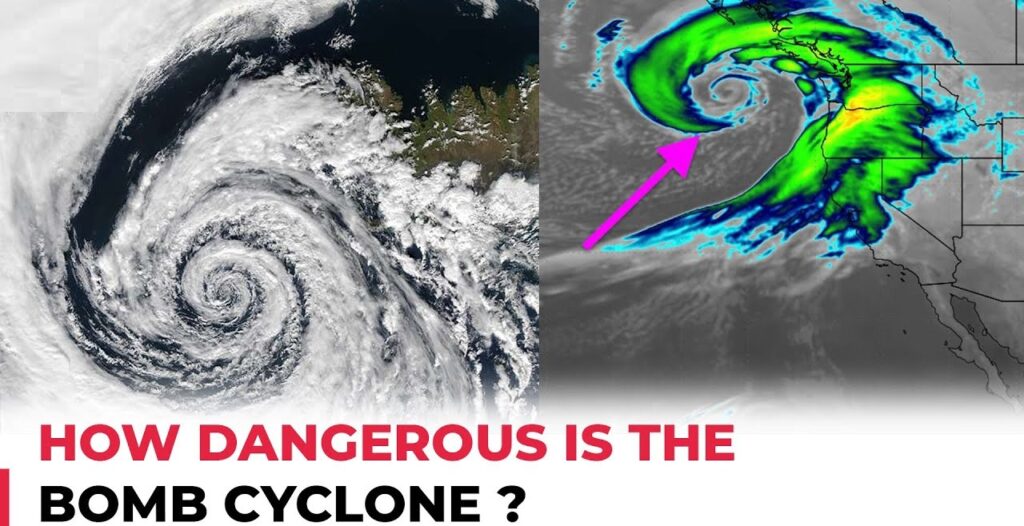
As a fierce storm system designated as a “bomb cyclone” is fast approaching, the Western region of the United States braces for what seems to be an avalanche of destruction. The cyclonic event has been known to cause torrential rainfall, fierce winds and in some instances snow reinforcements in certain areas. The states that seem to be on the receiving end include California, Oregon and Washington among others. Let’s dive in deeper in order to understand further.
The term cyclone is used in reference to an evolving storm system. It’s believed to have originated from the word bombogenesis – which defines a universal event wherein barometric pressure halts. The occurrence of the event leads to complete chaos with extreme weather conditions getting created. In addition to this the event in question is also accompanied by hurling winds and extreme rain as well.
The term was first commonly referenced in the 1980s and was used to identify the sudden explosive changes in weather patterns and occurrence of storms. It is relevant to mention here that as this cyclone hits the west coast of the United States, its classification as a bomb cyclone shows the extend of destruction it might cause.
Heavy Rainfall and Causes Flash floods
Low lying areas are under severe threat of flash floods while Northern California gets ready to witness heavy rainfall that’s expected to be as high as 8 inches in certain areas such as the Sacramento Valley, North Coast and the Bay area of San Francisco. These dry areas on the other hand are also in for trouble as an atmospheric river hits land.
High Wind Threats
The Northern region of California should brace itself for winds that could potentially rise over 75 miles per hour, this catastrophic change in weather is sure to cause destruction with widespread blackouts and downed trees. It is a wise decision for citizens to stay indoors and brace themselves for potential disturbances.
Severe Weather in Oregon and Washington
Oregon and More Heavy rains aheadOregon has reason to believe it will encounter from 4 – 10 inches of rain through Friday. Keeping a record of extremely windy conditions, the national weather service has also pointed out regions with northern and northeastern heads.
- Blizzard conditions occurring in Washington
At geographical summits, a record of 60 miles per hour has been anticipated which will make it rather dangerous for an individual to travel across regions sitting at mountain peaks. America wide, Washington state is among the top mountainous areas while for travelers Cascade Mount is a renowned place.
Travel should be avoided: Defeated roads and torrential winds can create difficult travel conditions. Unless necessary stay away from the road.
Weather forecast For Southern California
Areas of Southern California may be in a spot or two concerning this storm. Other parts are likely to see Santa Ana winds but the worst parts are mostly the right side of the western region. Midweek rains may hit the southwestern regions and continue until the end of the week.
Conclusion: understating of the cyclone
A cyclone with characteristics of bomb has grown rapidly becoming one of the standout storms we have witnessed this season. It is said that Dry monsoons and atmospheric rivers together paint a picture that immediately Central Texas turns into flooded cities with no power or communication lines with where it was once full of urban life.
This Strong Wind will make people on the western countries remain on guard as The bomb cyclone approaches the Hawaii and other said areas. Preparing for extreme weather change and taking note of instructions coming from the local authorities is something that has to be done. Nature is powerful and so does this event provide a reminder of what can happen during extreme weather shifts.