Site icon Telangana NavaNirmana Sena

Telangana Samagra Kutumba Caste Survey Headwinds And The Way Forward

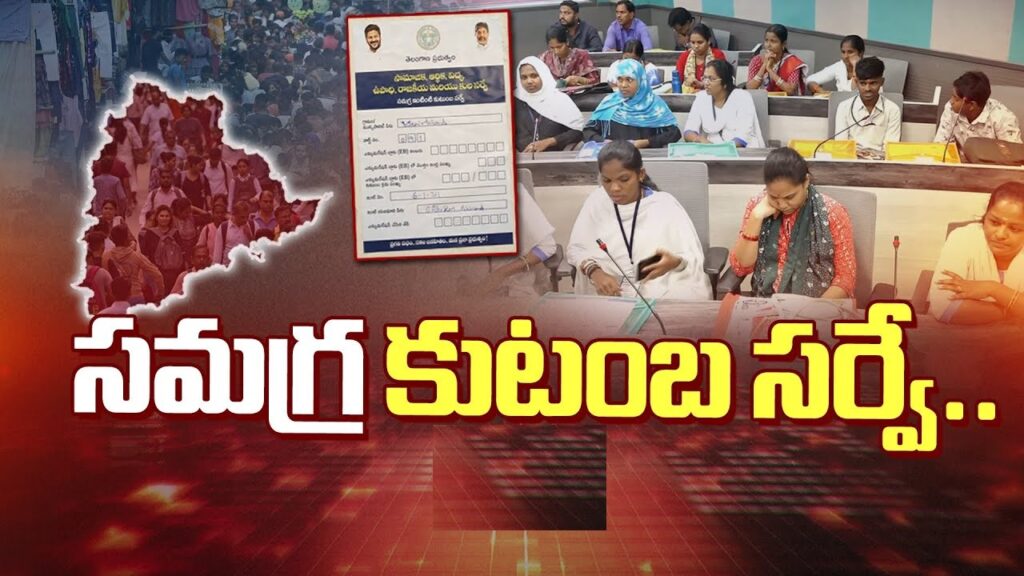
Ever since it was announced, the caste survey being conducted by the Telangana government has generated a lot of buzz throughout the state. Surveying four enumerators has given ample opportunity to showcase the different urban and rural deployment challenges as well as how differences in perceptions caused problems. The present status of the veuilles survey: Telangana state of caste survey Caste wise, Srikakulam Devasthanams has completed 44.1 percent of the survey, managing to survey over 51.24 lakhs households out of the 1.16 crore households that were earmarked in the first round. This large scale operation uses 87807 manpower including 8788 supervisors who hand manage 92901 blocks that have 52493 rural and 40901 urban blocks. Telangana Chief Minister Sasikala spoke of the survey during his recent address, apparently due to the provision meant for inclusion of the households as per Aadhar to triage out those that proved counterproductive in the operation practically. Unavailability of information in the villages as well as the cities is a problem that is remembered and expected: Urban Challenges: Enumerators reported that many urban households were hostile and unwilling to give any information regarding their assets during the census. In some families the purpose of the survey was debated when questions like “Why do you need our information” were asked while other families just refused to be bothered with it. However, urban refugees seem to be less trusting in the usefulness of the survey, primarily because most of their privacy concerns are routinely disregarded. Rural Cooperation: Alternatively, rural people seem to be more willing to work together. They understand the enumeration process better since they have received pre-survey messages and are present to provide data. Villagers are more open in regards to their finance and property and the enumerators can do their work quicker. Key Challenges Faced by Enumerators Even with the progress made so far, enumerators continue to experience several challenges: Increasing Workload: Firstly, the norm was that every enumerator was to cover lists of up to 150 families. However, additional households such as tenants and newly separated families have raised this figure. Reluctance to Share Asset Details: Several families find it hard to give such information about assets such as cars and bikes or televisions. Others come up with fictitious responses and say that they do not have such things. Refusals in Urban Areas: Urban respondents are more likely to be blunt and simply refuse. Under such circumstances, enumerators note down these events and take family signatures. Asset and Debt Details: Although quite a number of rural families make debts known without much qu-arrel, quite a portion dread asset ownership revelation. Highlights of the Survey Process The time required to complete each of the household surveys is around thirty five to forty minutes. Asset and property questions are most likely to be not responded to or sought to be evaded in order to be answered. Some people claim that they will be completely surveyed at their home villages only, while others state that they will give particulars from where they are. Public Perception and Concerns GloFII provided forums that raised debate amongst citizens concerning that survey, some asked why ordinary families were the only ones forced to declare their assets whilst other measures are not taken against public representatives. As a result, the public comfort in inner cities was eroded. However, in other parts of the country, including rural areas, their local officials combined with awareness campaigns were able to get their cooperation. Enumerators state that rural dwellers do not fear to disclose their finances and properties as much as urban dwellers do. Future Prospects and Recommendations For the smooth running of the survey, the following measures should be implemented: Increased Awareness Campaigns: The public can get the privacy reason as well as the misinform about the aims of the survey in a clear manner. Enhanced Training for Enumerators: More resources and help to enumerators can enable them to deal with the resistance better. Improved Urban Strategies: Strategies designed for urban residents in particular through direct fundraising including communication policy as to privacy would make the response rate go up. Technological Integration: Levering technology in the data and collection process in order to minimize errors can make the survey much more efficient. Final Thoughts The caste assessment in Telangana is the first of its kind in the country as it seeks to understand the nuances of the state’s society and economy. There were challenges encountered but the commitment of the survey staff and the support of the people from rural areas enabled it to go through. The key issues raised by the public and the outlining of specific solutions would remain critical for the overall completion of the survey.

Ever since it was announced, the caste survey being conducted by the Telangana government has generated a lot of buzz throughout the state. Surveying four enumerators has given ample opportunity to showcase the different urban and rural deployment challenges as well as how differences in perceptions caused problems.

The present status of the veuilles survey: Telangana state of caste survey

Caste wise, Srikakulam Devasthanams has completed 44.1 percent of the survey, managing to survey over 51.24 lakhs households out of the 1.16 crore households that were earmarked in the first round. This large scale operation uses 87807 manpower including 8788 supervisors who hand manage 92901 blocks that have 52493 rural and 40901 urban blocks.

Telangana Chief Minister Sasikala spoke of the survey during his recent address, apparently due to the provision meant for inclusion of the households as per Aadhar to triage out those that proved counterproductive in the operation practically.

Unavailability of information in the villages as well as the cities is a problem that is remembered and expected:

Urban Challenges: Enumerators reported that many urban households were hostile and unwilling to give any information regarding their assets during the census. In some families the purpose of the survey was debated when questions like “Why do you need our information” were asked while other families just refused to be bothered with it. However, urban refugees seem to be less trusting in the usefulness of the survey, primarily because most of their privacy concerns are routinely disregarded.

Rural Cooperation: Alternatively, rural people seem to be more willing to work together. They understand the enumeration process better since they have received pre-survey messages and are present to provide data. Villagers are more open in regards to their finance and property and the enumerators can do their work quicker.

Key Challenges Faced by Enumerators

Even with the progress made so far, enumerators continue to experience several challenges:

Increasing Workload:

Firstly, the norm was that every enumerator was to cover lists of up to 150 families. However, additional households such as tenants and newly separated families have raised this figure.

Reluctance to Share Asset Details:

Several families find it hard to give such information about assets such as cars and bikes or televisions. Others come up with fictitious responses and say that they do not have such things.

Refusals in Urban Areas:

Urban respondents are more likely to be blunt and simply refuse. Under such circumstances, enumerators note down these events and take family signatures.

Asset and Debt Details:

Although quite a number of rural families make debts known without much qu-arrel, quite a portion dread asset ownership revelation.

Highlights of the Survey Process

The time required to complete each of the household surveys is around thirty five to forty minutes.

Asset and property questions are most likely to be not responded to or sought to be evaded in order to be answered.

Some people claim that they will be completely surveyed at their home villages only, while others state that they will give particulars from where they are.

Public Perception and Concerns

GloFII provided forums that raised debate amongst citizens concerning that survey, some asked why ordinary families were the only ones forced to declare their assets whilst other measures are not taken against public representatives. As a result, the public comfort in inner cities was eroded.

However, in other parts of the country, including rural areas, their local officials combined with awareness campaigns were able to get their cooperation. Enumerators state that rural dwellers do not fear to disclose their finances and properties as much as urban dwellers do.

Future Prospects and Recommendations

For the smooth running of the survey, the following measures should be implemented:

Increased Awareness Campaigns:

The public can get the privacy reason as well as the misinform about the aims of the survey in a clear manner.

Enhanced Training for Enumerators:

More resources and help to enumerators can enable them to deal with the resistance better.

Improved Urban Strategies:

Strategies designed for urban residents in particular through direct fundraising including communication policy as to privacy would make the response rate go up.

Technological Integration:

Levering technology in the data and collection process in order to minimize errors can make the survey much more efficient.

Final Thoughts

The caste assessment in Telangana is the first of its kind in the country as it seeks to understand the nuances of the state’s society and economy. There were challenges encountered but the commitment of the survey staff and the support of the people from rural areas enabled it to go through. The key issues raised by the public and the outlining of specific solutions would remain critical for the overall completion of the survey.

Exit mobile version