Site icon Telangana NavaNirmana Sena

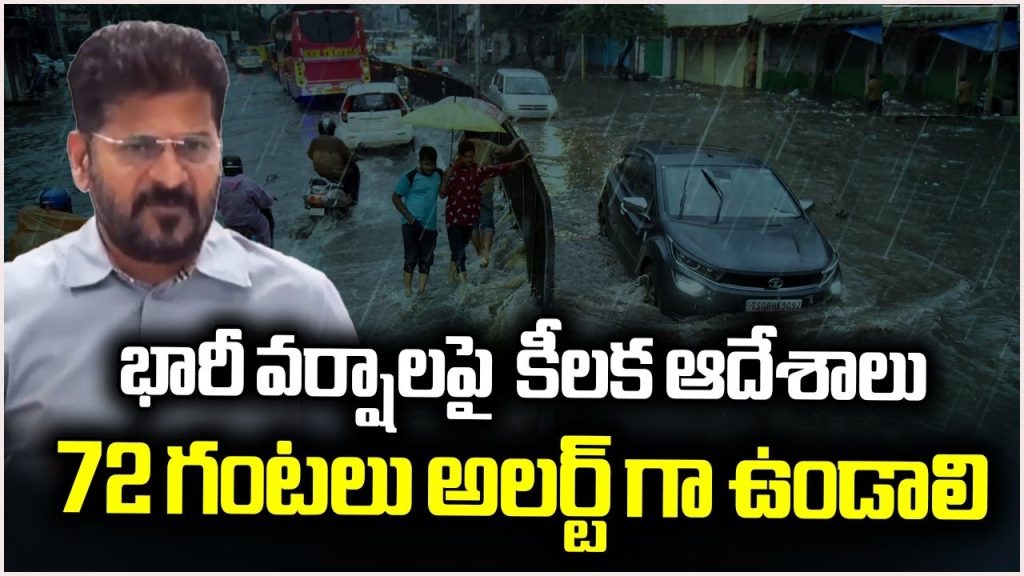
Telangana on High Alert for next 72 Hours: CM Revanth Reddy’s Amid Heavy Rainfall Forecast

Telangana on High Alert: CM Revanth Reddy's Urgent Directives Amid Heavy Rainfall Forecast Telangana faces a critical weather challenge as the India Meteorological Department (IMD) predicts heavy to very heavy rains across the state over the next 72 hours. Chief Minister A. Revanth Reddy swiftly responds by issuing comprehensive directives to officials, emphasizing proactive measures to safeguard lives, property, and livestock. In a video conference from the Command Control Center in Banjara Hills, Hyderabad, the CM rallies senior officials and district collectors to ensure no repeat of past flood disasters. This article delves into the CM's instructions, the broader implications of climate change on Telangana's rainfall patterns, lessons from historical floods, and essential tips for residents to stay safe during such events. Heavy Rainfall Alert Triggers Statewide Preparedness in Telangana The IMD's warning signals a potential deluge that could disrupt daily life in multiple districts, including Hyderabad, Khammam, Warangal, and Mahabubabad. Revanth Reddy directs all government departments to heighten vigilance, underscoring the need for real-time monitoring and rapid response. He stresses that officials must collect local information continuously and assess situations on the ground to prevent any escalation. In recent years, Telangana has witnessed erratic weather patterns, with sudden downpours leading to flash floods. For instance, the state government steps up relief measures following heavy rains, as seen in coordinated efforts across affected areas. The CM's proactive stance aims to mitigate risks in low-lying areas, where waterlogging often turns deadly. By alerting residents in vulnerable zones ahead of time, authorities can evacuate people before conditions worsen. This approach not only saves lives but also minimizes economic losses from damaged infrastructure and agriculture. Revanth Reddy highlights the plight of shepherds and livestock owners, who frequently get trapped in overflowing streams during monsoons. He urges officials to warn these groups in advance, ensuring they move to safer grounds with their animals. Such targeted alerts form a cornerstone of Telangana's disaster management strategy, reflecting a commitment to inclusive protection. CM Revanth Reddy Instructs Officials on Flood Mitigation Strategies During the video conference, Revanth Reddy outlines a series of actionable steps for officials. He mandates the cancellation of all leaves for government employees across departments, ensuring full manpower availability for the next three days. Senior officials receive appointments as special officers in districts forecasted to experience the heaviest rainfall, such as those in northern Telangana. The CM emphasizes deploying additional staff to high-risk areas prone to flooding and heavy rains. Electricity department personnel must remain on 24/7 alert to address power outages promptly, preventing further chaos during storms. Medical teams, including doctors and paramedics, need to stay vigilant, with ambulances ready to transport pregnant women and other vulnerable individuals from flood-prone zones. Revanth Reddy also calls for the utilization of disaster relief funds by district collectors for immediate local interventions. This includes setting up temporary shelters, distributing essential supplies, and repairing minor infrastructure damages on the spot. In urban centers like Hyderabad, Cyberabad, and Rachakonda, police commissioners must coordinate traffic management to minimize road usage and prevent accidents in waterlogged areas. The Greater Hyderabad Municipal Corporation (GHMC) plays a key role here, monitoring water levels in nalas and lakes to avert overflows. Continuous Communication: Key to Effective Disaster Response in Telangana Revanth Reddy stresses the importance of uninterrupted information exchange among departments. He insists that any incident, no matter how minor, must reach the central control room immediately for coordinated action. This real-time data flow enables quick decision-making, such as deploying rescue teams or issuing public warnings. In his address, the CM notes how climate change exacerbates these issues, with two months' worth of rain falling in just hours due to phenomena like cloud bursts. Past events in Khammam and Warangal demonstrate the devastating potential: unexpected floods have claimed lives and destroyed property worth crores. To avoid such repetitions, officials must foster a culture of constant vigilance and collaboration. The establishment of toll-free helplines and dedicated control rooms further enhances communication. Residents can report issues like blocked drains or rising water levels, allowing authorities to respond swiftly. This system not only builds public trust but also integrates community input into the response framework, making disaster management more effective. Special Measures for Vulnerable Populations and Livestock in Flood-Prone Areas One of the CM's key focuses lies on protecting at-risk groups, including shepherds, farmers, and residents in low-lying areas. He directs officials to issue advance warnings to livestock herders, who often venture near streams and rivers. In Telangana's rural districts, where agriculture and animal husbandry dominate, such precautions can prevent tragic losses. For pregnant women and the elderly, Revanth Reddy mandates round-the-clock medical readiness. Ambulances equipped for emergencies must stand by in high-risk zones, ensuring swift evacuations. This humane approach underscores the government's priority on human life over all else. Additionally, the CM advises minimizing traffic on roads to reduce accident risks during heavy rains. In Hyderabad's bustling streets, where waterlogging is common, police must divert vehicles from danger zones and enforce restrictions. These measures, combined with public awareness campaigns, aim to create a resilient community capable of weathering severe storms. Emergency Preparedness: Helicopters, Army Support, and Relief Operations Revanth Reddy prepares for worst-case scenarios by instructing officials to arrange helicopter evacuations if needed. In coordination with the Indian Army, the state can mobilize additional resources for rescue operations in inaccessible areas. This readiness proved vital in past floods, where airlifts saved numerous lives. District collectors gain authorization to tap into disaster funds for on-ground relief, such as providing food, water, and temporary housing. The CM also urges IT companies to implement work-from-home policies and suggests holidays for schools based on rain intensity, reducing exposure to hazards. These preparations extend to infrastructure, with teams monitoring bridges, roads, and railways for potential breaches. By acting preemptively, Telangana aims to transform reactive responses into proactive defenses against nature's fury. Ensuring Uninterrupted Power and Healthcare During Telangana Monsoons Power disruptions during rains can compound problems, leading to communication blackouts and health risks. Revanth Reddy orders electricity officials to resolve issues immediately, maintaining supply to critical facilities like hospitals and control rooms. Healthcare readiness forms another pillar of the strategy. Primary Health Centers (PHCs) and government hospitals must have doctors available 24/7, stocked with essential medicines. Special attention goes to flood-related ailments, such as waterborne diseases, with preventive measures like chlorination of water sources. In rural areas, where access is limited, mobile medical units can bridge gaps, delivering care directly to affected communities. This holistic approach ensures that health emergencies do not overwhelm the system during climatic crises. Traffic Management and Urban Safety in Hyderabad Amid Heavy Rains Hyderabad's urban sprawl makes it particularly susceptible to flooding, with areas under GHMC often experiencing severe waterlogging. Revanth Reddy directs police commissioners in Hyderabad, Cyberabad, and Rachakonda to collaborate on traffic control, restricting access to high-risk zones. Minimizing vehicular movement on roads reduces congestion and accident risks. Officials must monitor water levels in lakes and nalas, issuing alerts via apps and sirens. Public transport adjustments, like rerouting buses, further aid in keeping people safe indoors. The CM also visits flood-hit areas personally, inspecting infrastructure flaws and ordering urgent interventions. Such hands-on leadership inspires confidence and ensures accountability at all levels. Media's Role in Preventing Panic During Telangana Weather Emergencies Revanth Reddy cautions against spreading false information or creating panic through media channels. He urges responsible reporting that focuses on facts, warnings, and safety tips, rather than sensationalism. Broadcasting accurate updates from official sources helps residents make informed decisions. Media partnerships with the government can amplify alerts, reaching remote areas via radio and TV. This balanced approach maintains public calm while promoting preparedness. Collaborative Efforts: Ministers and Officials Unite for Flood Response The video conference includes key figures like Ministers Tummala Nageswara Rao, Duddilla Sridhar Babu, Komatireddy Venkat Reddy, Ponnam Prabhakar, Chief Secretary K. Ramakrishna Rao, and DGP Jitender. Their collective input strengthens the state's response, covering agriculture, infrastructure, and law enforcement. This teamwork exemplifies Telangana's integrated disaster management, where diverse expertise converges to tackle multifaceted challenges. Lessons from Past Floods in Khammam and Warangal Districts Telangana's history of floods offers sobering lessons. In September 2024, Khammam witnessed its worst floods in 30 years, with the Munneru river overflowing and stranding hundreds. Over 100 villages in Khammam, Mahabubabad, and Suryapet submerged, damaging roads, railways, and crops across lakhs of acres. Warangal faced similar devastation, with heavy rains washing away railway tracks and disrupting transport. These events, triggered by unprecedented rainfall, highlighted vulnerabilities in drainage and early warning systems. Satellite imagery revealed extensive inundation, underscoring the need for better infrastructure. By learning from these, current directives aim to fortify defenses, preventing recurrence through enhanced monitoring and community involvement. Climate Change Amplifies Rainfall Intensity in Telangana and India Climate change significantly alters rainfall patterns in India, with Telangana experiencing more extreme events. Projections indicate a 10% to 14% increase in southwest monsoon rainfall by the end of the century. Variability in annual rainfall, coupled with dry spells and heat waves, impacts agriculture severely. Studies show negative effects on crop yields, like maize in Telangana, due to precipitation changes. Multi-day extreme precipitation during the 2024 monsoon caused major floods, a trend linked to global warming. Addressing this requires adaptive strategies, from sustainable farming to urban planning resilient to floods. Essential Flood Safety Tips for Telangana Residents To stay safe during heavy rains, residents should prepare in advance. Know your flood risk and avoid building in prone areas; elevate homes if necessary. Create an emergency kit with water, food, medications, and important documents. During floods, move to higher ground immediately if warned. Never walk or drive through floodwaters—"Turn around, don't drown." Evacuate if advised, disconnecting utilities to prevent hazards. After floods, avoid contaminated water and clean wounds promptly to prevent infections. Inspect homes for damage before re-entering, and report issues to authorities. Telangana Government's Initiatives for Long-Term Flood Control The state advances several initiatives to combat flooding. The Musi River rejuvenation project stands out as vital for Hyderabad's flood control, addressing pollution and encroachments. GHMC develops a stormwater drainage master plan, incorporating geo-referenced databases and modeling for better runoff management. The Integrated Flood Management System (IFMS) provides advance warnings, enabling timely evacuations. Revamping the Telangana State Disaster Management Authority (TGSDMA) aims to minimize losses through strengthened frameworks. These efforts, including de-silting and stormwater drain construction, build resilience against future calamities. Staying Vigilant: Telangana's Path Forward in the Next 72 Hours As Telangana braces for the impending rains, CM Revanth Reddy's directives set a robust framework for action. By prioritizing alertness, coordination, and community safety, the state positions itself to weather the storm effectively. Residents must heed warnings, prepare adequately, and support government efforts. With climate change intensifying challenges, sustained investments in infrastructure and education will ensure a safer future. Stay informed, stay safe—Telangana's resilience shines through unity in adversity.

Telangana faces a critical weather challenge as the India Meteorological Department (IMD) predicts heavy to very heavy rains across the state over the next 72 hours. Chief Minister A. Revanth Reddy swiftly responds by issuing comprehensive directives to officials, emphasizing proactive measures to safeguard lives, property, and livestock. In a video conference from the Command Control Center in Banjara Hills, Hyderabad, the CM rallies senior officials and district collectors to ensure no repeat of past flood disasters. This article delves into the CM’s instructions, the broader implications of climate change on Telangana’s rainfall patterns, lessons from historical floods, and essential tips for residents to stay safe during such events.

Heavy Rainfall Alert Triggers Statewide Preparedness in Telangana

The IMD’s warning signals a potential deluge that could disrupt daily life in multiple districts, including Hyderabad, Khammam, Warangal, and Mahabubabad. Revanth Reddy directs all government departments to heighten vigilance, underscoring the need for real-time monitoring and rapid response. He stresses that officials must collect local information continuously and assess situations on the ground to prevent any escalation.

In recent years, Telangana has witnessed erratic weather patterns, with sudden downpours leading to flash floods. For instance, the state government steps up relief measures following heavy rains, as seen in coordinated efforts across affected areas. The CM’s proactive stance aims to mitigate risks in low-lying areas, where waterlogging often turns deadly. By alerting residents in vulnerable zones ahead of time, authorities can evacuate people before conditions worsen. This approach not only saves lives but also minimizes economic losses from damaged infrastructure and agriculture.

Revanth Reddy highlights the plight of shepherds and livestock owners, who frequently get trapped in overflowing streams during monsoons. He urges officials to warn these groups in advance, ensuring they move to safer grounds with their animals. Such targeted alerts form a cornerstone of Telangana’s disaster management strategy, reflecting a commitment to inclusive protection.

CM Revanth Reddy Instructs Officials on Flood Mitigation Strategies

During the video conference, Revanth Reddy outlines a series of actionable steps for officials. He mandates the cancellation of all leaves for government employees across departments, ensuring full manpower availability for the next three days. Senior officials receive appointments as special officers in districts forecasted to experience the heaviest rainfall, such as those in northern Telangana.

The CM emphasizes deploying additional staff to high-risk areas prone to flooding and heavy rains. Electricity department personnel must remain on 24/7 alert to address power outages promptly, preventing further chaos during storms. Medical teams, including doctors and paramedics, need to stay vigilant, with ambulances ready to transport pregnant women and other vulnerable individuals from flood-prone zones.

Revanth Reddy also calls for the utilization of disaster relief funds by district collectors for immediate local interventions. This includes setting up temporary shelters, distributing essential supplies, and repairing minor infrastructure damages on the spot. In urban centers like Hyderabad, Cyberabad, and Rachakonda, police commissioners must coordinate traffic management to minimize road usage and prevent accidents in waterlogged areas. The Greater Hyderabad Municipal Corporation (GHMC) plays a key role here, monitoring water levels in nalas and lakes to avert overflows.

Continuous Communication: Key to Effective Disaster Response in Telangana

Revanth Reddy stresses the importance of uninterrupted information exchange among departments. He insists that any incident, no matter how minor, must reach the central control room immediately for coordinated action. This real-time data flow enables quick decision-making, such as deploying rescue teams or issuing public warnings.

In his address, the CM notes how climate change exacerbates these issues, with two months’ worth of rain falling in just hours due to phenomena like cloud bursts. Past events in Khammam and Warangal demonstrate the devastating potential: unexpected floods have claimed lives and destroyed property worth crores. To avoid such repetitions, officials must foster a culture of constant vigilance and collaboration.

The establishment of toll-free helplines and dedicated control rooms further enhances communication. Residents can report issues like blocked drains or rising water levels, allowing authorities to respond swiftly. This system not only builds public trust but also integrates community input into the response framework, making disaster management more effective.

Special Measures for Vulnerable Populations and Livestock in Flood-Prone Areas

One of the CM’s key focuses lies on protecting at-risk groups, including shepherds, farmers, and residents in low-lying areas. He directs officials to issue advance warnings to livestock herders, who often venture near streams and rivers. In Telangana’s rural districts, where agriculture and animal husbandry dominate, such precautions can prevent tragic losses.

For pregnant women and the elderly, Revanth Reddy mandates round-the-clock medical readiness. Ambulances equipped for emergencies must stand by in high-risk zones, ensuring swift evacuations. This humane approach underscores the government’s priority on human life over all else.

Additionally, the CM advises minimizing traffic on roads to reduce accident risks during heavy rains. In Hyderabad’s bustling streets, where waterlogging is common, police must divert vehicles from danger zones and enforce restrictions. These measures, combined with public awareness campaigns, aim to create a resilient community capable of weathering severe storms.

Emergency Preparedness: Helicopters, Army Support, and Relief Operations

Revanth Reddy prepares for worst-case scenarios by instructing officials to arrange helicopter evacuations if needed. In coordination with the Indian Army, the state can mobilize additional resources for rescue operations in inaccessible areas. This readiness proved vital in past floods, where airlifts saved numerous lives.

District collectors gain authorization to tap into disaster funds for on-ground relief, such as providing food, water, and temporary housing. The CM also urges IT companies to implement work-from-home policies and suggests holidays for schools based on rain intensity, reducing exposure to hazards.

These preparations extend to infrastructure, with teams monitoring bridges, roads, and railways for potential breaches. By acting preemptively, Telangana aims to transform reactive responses into proactive defenses against nature’s fury.

Ensuring Uninterrupted Power and Healthcare During Telangana Monsoons

Power disruptions during rains can compound problems, leading to communication blackouts and health risks. Revanth Reddy orders electricity officials to resolve issues immediately, maintaining supply to critical facilities like hospitals and control rooms.

Healthcare readiness forms another pillar of the strategy. Primary Health Centers (PHCs) and government hospitals must have doctors available 24/7, stocked with essential medicines. Special attention goes to flood-related ailments, such as waterborne diseases, with preventive measures like chlorination of water sources.

In rural areas, where access is limited, mobile medical units can bridge gaps, delivering care directly to affected communities. This holistic approach ensures that health emergencies do not overwhelm the system during climatic crises.

Traffic Management and Urban Safety in Hyderabad Amid Heavy Rains

Hyderabad’s urban sprawl makes it particularly susceptible to flooding, with areas under GHMC often experiencing severe waterlogging. Revanth Reddy directs police commissioners in Hyderabad, Cyberabad, and Rachakonda to collaborate on traffic control, restricting access to high-risk zones.

Minimizing vehicular movement on roads reduces congestion and accident risks. Officials must monitor water levels in lakes and nalas, issuing alerts via apps and sirens. Public transport adjustments, like rerouting buses, further aid in keeping people safe indoors.

The CM also visits flood-hit areas personally, inspecting infrastructure flaws and ordering urgent interventions. Such hands-on leadership inspires confidence and ensures accountability at all levels.

Media’s Role in Preventing Panic During Telangana Weather Emergencies

Revanth Reddy cautions against spreading false information or creating panic through media channels. He urges responsible reporting that focuses on facts, warnings, and safety tips, rather than sensationalism.

Broadcasting accurate updates from official sources helps residents make informed decisions. Media partnerships with the government can amplify alerts, reaching remote areas via radio and TV. This balanced approach maintains public calm while promoting preparedness.

Collaborative Efforts: Ministers and Officials Unite for Flood Response

The video conference includes key figures like Ministers Tummala Nageswara Rao, Duddilla Sridhar Babu, Komatireddy Venkat Reddy, Ponnam Prabhakar, Chief Secretary K. Ramakrishna Rao, and DGP Jitender. Their collective input strengthens the state’s response, covering agriculture, infrastructure, and law enforcement.

This teamwork exemplifies Telangana’s integrated disaster management, where diverse expertise converges to tackle multifaceted challenges.

Lessons from Past Floods in Khammam and Warangal Districts

Telangana’s history of floods offers sobering lessons. In September 2024, Khammam witnessed its worst floods in 30 years, with the Munneru river overflowing and stranding hundreds. Over 100 villages in Khammam, Mahabubabad, and Suryapet submerged, damaging roads, railways, and crops across lakhs of acres.

Warangal faced similar devastation, with heavy rains washing away railway tracks and disrupting transport. These events, triggered by unprecedented rainfall, highlighted vulnerabilities in drainage and early warning systems. Satellite imagery revealed extensive inundation, underscoring the need for better infrastructure.

By learning from these, current directives aim to fortify defenses, preventing recurrence through enhanced monitoring and community involvement.

Climate Change Amplifies Rainfall Intensity in Telangana and India

Climate change significantly alters rainfall patterns in India, with Telangana experiencing more extreme events. Projections indicate a 10% to 14% increase in southwest monsoon rainfall by the end of the century. Variability in annual rainfall, coupled with dry spells and heat waves, impacts agriculture severely.

Studies show negative effects on crop yields, like maize in Telangana, due to precipitation changes. Multi-day extreme precipitation during the 2024 monsoon caused major floods, a trend linked to global warming. Addressing this requires adaptive strategies, from sustainable farming to urban planning resilient to floods.

Essential Flood Safety Tips for Telangana Residents

To stay safe during heavy rains, residents should prepare in advance. Know your flood risk and avoid building in prone areas; elevate homes if necessary. Create an emergency kit with water, food, medications, and important documents.

During floods, move to higher ground immediately if warned. Never walk or drive through floodwaters—”Turn around, don’t drown.” Evacuate if advised, disconnecting utilities to prevent hazards.

After floods, avoid contaminated water and clean wounds promptly to prevent infections. Inspect homes for damage before re-entering, and report issues to authorities.

Telangana Government’s Initiatives for Long-Term Flood Control

The state advances several initiatives to combat flooding. The Musi River rejuvenation project stands out as vital for Hyderabad’s flood control, addressing pollution and encroachments. GHMC develops a stormwater drainage master plan, incorporating geo-referenced databases and modeling for better runoff management.

The Integrated Flood Management System (IFMS) provides advance warnings, enabling timely evacuations. Revamping the Telangana State Disaster Management Authority (TGSDMA) aims to minimize losses through strengthened frameworks. These efforts, including de-silting and stormwater drain construction, build resilience against future calamities.

Staying Vigilant: Telangana’s Path Forward in the Next 72 Hours

As Telangana braces for the impending rains, CM Revanth Reddy’s directives set a robust framework for action. By prioritizing alertness, coordination, and community safety, the state positions itself to weather the storm effectively. Residents must heed warnings, prepare adequately, and support government efforts. With climate change intensifying challenges, sustained investments in infrastructure and education will ensure a safer future. Stay informed, stay safe—Telangana’s resilience shines through unity in adversity.

Exit mobile version