


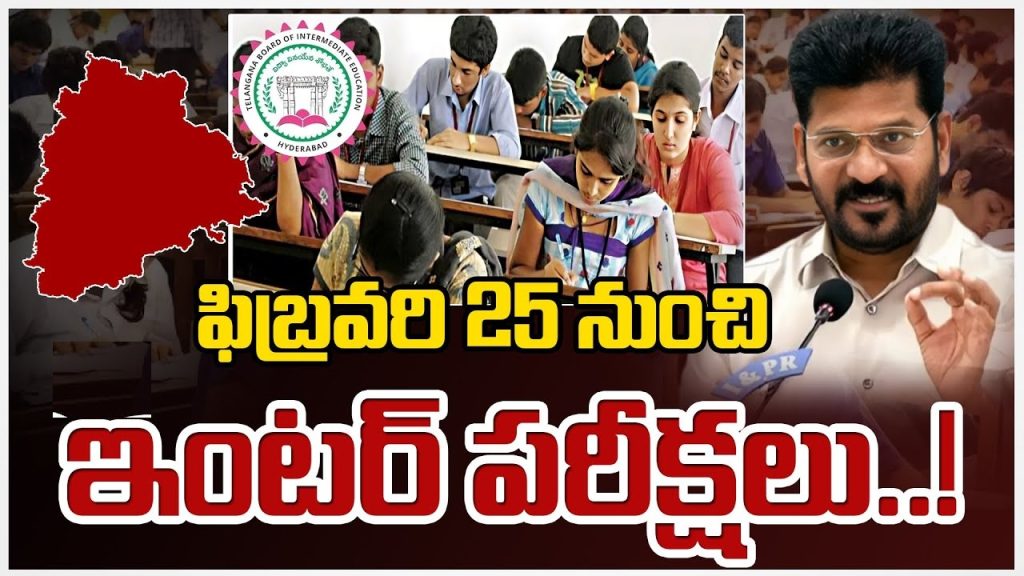
The Telangana State Board of Intermediate Education has officially announced the schedule for the Intermediate Public Examinations (IPE) 2026, marking significant changes in the examination system. Over nine lakh students across Telangana are preparing for these crucial examinations that will commence on February 25, 2026, and continue through March 18, 2026. This comprehensive announcement brings several transformative changes to the intermediate education system, including the introduction of practical examinations for first-year students and modifications to the syllabus structure.
TS Inter Time Table 2026: Expected Subject-Wise Schedule
While the full timetable is pending, here’s a predicted pattern based on previous years:
TS Inter Time Table 2026: Expected Subject-Wise Schedule
While the full timetable is pending, here’s a predicted pattern based on previous years:
| Date | 1st Year | 2nd Year |
|---|---|---|
| Feb 25 | Language Paper-I | Language Paper-II |
| Feb 27 | English Paper-I | English Paper-II |
| Mar 1 | Mathematics IA / Biology I | Mathematics IIA / Biology II |
| Mar 4 | Physics I | Physics II |
| Mar 6 | Chemistry I | Chemistry II |
| Mar 9 | Mathematics IB | Mathematics IIB |
| Mar 12 | Economics / Commerce | Economics / Commerce |
| Mar 15 | History / Civics | History / Political Science |
| Mar 18 | Optional / Vocational | Optional / Vocational |
Note: Exact dates will be confirmed soon. Avoid fake timetables circulating on social media.
Breaking News: TS Intermediate Exam Schedule Officially Confirmed
The Telangana Board of Intermediate Education (TG BIE) Secretary S Krishna Aditya confirmed during a press conference on October 24, 2025, that the State government has granted in-principle approval for the intermediate examination timetable. The examinations will span from February 25 to March 18, 2026, with a detailed schedule to be released shortly by the board authorities. This announcement comes after the board proposed two different timetables to the government, with options commencing from February 23 and February 25. The final decision favored the February 25 start date to provide students with adequate preparation time for national-level entrance examinations such as JEE and NEET.
The decision to advance the examination schedule from the traditional March dates to late February represents a strategic shift in Telangana’s educational planning. Before the COVID-19 pandemic, intermediate examinations typically commenced in the last week of February. However, due to pandemic-related disruptions, the timetable was rescheduled to March in subsequent years. The 2024 IPE commenced on February 28, and the 2025 examinations were held from March 5 to 25, 2025.
More than nine lakh students are expected to register and appear for both first-year and second-year intermediate examinations in 2026. The examination registration process will commence from November 1, 2025, when students can pay their examination fees to their respective colleges. The fee structure has been revised, with an increase of Rs. 30 for the academic year 2025-26.
Official Telangana Inter Exam Dates 2026: Key Timeline
The TSBIE has released the start and end dates, with the detailed subject-wise TS Inter Time Table 2026 expected within the next 2–3 days.
| Event | Date |
|---|---|
| Practical Exams (All Streams) | February 1–4, 2026 (Tentative) |
| Theory Exams Start | February 25, 2026 |
| Theory Exams End | March 18, 2026 |
| Result Declaration (Expected) | May 2026 |
Pro Tip: Download the official TS Inter Exam Schedule 2026 PDF from tsbie.cgg.gov.in as soon as it’s released.
How Telangana & AP Inter Exam Dates Compare in 2026
| Parameter | Telangana | Andhra Pradesh |
|---|---|---|
| Theory Exams | Feb 25 – Mar 18 | Feb 23 – Mar 17 |
| Practical Exams | Early February | Early February |
| Exam Duration | 22 days | 23 days |
| Post-Exam Gap for EAPCET | ~40 days | ~40 days |
This near-identical schedule benefits students appearing for TS EAMCET 2026 and AP EAPCET 2026, offering over 40 days of focused preparation post-inter exams.
Revolutionary Changes: First-Year Students to Face Practical Examinations
One of the most significant reforms introduced by the Telangana Board of Intermediate Education is the implementation of practical examinations for first-year intermediate students. Historically, practical examinations were conducted exclusively for second-year students in science streams such as Physics, Chemistry, and Biology, with their marks contributing to the final assessment. Starting from the academic year 2025-26, this system has undergone a complete transformation, with practicals now being mandatory for first-year students as well.
According to official notifications, the government has decided to conduct annual examinations for MPC (Mathematics, Physics, Chemistry) and BiPC (Biology, Physics, Chemistry) groups with practical examinations included in the first-year schedule. For students enrolled in Physics, Chemistry, and Biology streams, the practical examination will carry 30 marks. The new marking structure allocates 70 marks for theory examinations and 30 marks for practical assessments. For BiPC group subjects like Botany and Zoology, practicals will carry 30 marks each, while the theory examination will carry 120 marks. These structural changes have been implemented from the current academic year.
The practical examinations for first-year students will be conducted from the first week of February 2026, coinciding with the second-year practical examination schedule. The examinations will be held in two sessions: a morning session from 9:00 AM to 12:00 noon and an afternoon session from 2:00 PM to 5:00 PM. The practical examination period will extend from early February to late February 2026, including second Saturdays and Sundays to accommodate the large number of students.
For the first time, students enrolled in vocational courses will also have practical examinations in the first year. This applies to students taking Engineering, Commerce, and other vocational streams. Examinations will continue as before for vocational courses, with practicals being introduced for the first time this year. For language subjects, students will have project work as before, with detailed instructions to be released soon by board officials.
There is no change in the examination pattern for students in the Arts stream; their examinations will continue according to the previous format. Students in these streams are advised to plan their preparation accordingly to ensure they meet the new requirements.
Comprehensive Examination Timeline and Practical Schedule
The Telangana Intermediate Public Examinations 2026 follow a carefully structured timeline designed to minimize student stress while ensuring comprehensive assessment. The theory examinations for first-year students will commence on February 25, 2026, followed by second-year subject examinations on the next day. This alternating pattern ensures that examination centers can efficiently manage the flow of students and maintain the integrity of the examination process.
Based on the tentative schedule released by the board, the TS Inter first-year examinations are expected to begin with the Second Language Paper-I, followed by English Paper-I and various subject-specific papers across different streams. The examination schedule has been designed to provide adequate gaps between examinations of related subjects, allowing students sufficient time for preparation and revision.
The second-year examination schedule similarly commences with the Second Language Paper-II, followed by English Paper-II and stream-specific subjects. Each examination paper will be conducted for a duration of three hours, from 9:00 AM to 12:00 noon for theory papers. Students must arrive at the examination center before 8:30 AM to complete necessary formalities and locate their assigned seating arrangements.
Practical examinations for science students will be conducted extensively in January and February 2026. These practical assessments cover subjects including Physics, Chemistry, Biology (Botany and Zoology), and other laboratory-based disciplines. The practical examination schedule has been designed to ensure that students in both general and vocational courses receive adequate laboratory time and proper evaluation of their hands-on skills.
The practical examinations will be conducted at government colleges to ensure standardized facilities and fair evaluation. Approximately 4.2 lakh first-year students are expected to face practical examinations conducted exclusively at these designated centers. This decision was made to maintain consistency in evaluation standards and provide all students with access to well-equipped laboratories and qualified examiners.
Syllabus Modifications and Educational Reforms
The Telangana Board of Intermediate Education has undertaken significant efforts to revise and modernize the intermediate syllabus to align with contemporary educational standards and the National Education Policy (NEP) 2020 guidelines. However, these proposed changes have faced delays and modifications based on government directives and practical implementation challenges.
The board’s Education and Research Wing initially reviewed the syllabus to identify topics requiring deletion and those needing incorporation in sync with NCERT and NEP 2020 guidelines. The original plan involved reducing the syllabus burden on students and promoting practical learning experiences. The board had intended to introduce the new syllabus for first-year students from the 2025-26 academic year, followed by implementation of the revised second-year syllabus in 2026-27.
However, following detailed examination, the government ordered the board to conduct a more comprehensive study before implementing any changes. The government advised that syllabus changes at the proposed stage would lead to confusion and that printing new textbooks in a short timeframe would be challenging, given that the academic year begins on June 2, 2025. Consequently, the Telangana Board of Intermediate Education decided to postpone the proposed syllabus changes after receiving the government’s directive.
Despite the postponement of comprehensive syllabus revision, the board continues its study and analysis work. A new committee will be formed as per government directions to ensure that any future changes are thoroughly planned and smoothly implemented. Senior faculty members and subject experts have emphasized that syllabus revision exercises must be carried out over a full year rather than being rushed, ensuring quality and comprehensive coverage of all necessary topics.
The current Telangana Intermediate syllabus was last revised in 2012, and experts have noted that the Telangana Inter syllabus is larger compared to the NCERT syllabus. This disparity has been a subject of ongoing discussion among educators and policymakers, with many advocating for alignment with national standards while maintaining state-specific educational requirements.
Major Educational Reforms Approved for Implementation from 2026-27
While the syllabus revision has been deferred, the Telangana government has approved several other major reforms in the intermediate education system that will be implemented starting from the academic year 2026-27. Chief Minister Revanth Reddy has greenlit these transformative changes based on proposals submitted by the Intermediate Board.
Introduction of Internal Assessment System
Commencing from the academic year 2026-27, intermediate students will have internal assessments worth 20 marks, while external examinations (Intermediate Public Examinations) will be conducted for 80 marks. This represents a fundamental shift from the current system where only English language courses include internal assessments. The new 80:20 evaluation pattern will be extended to all subjects irrespective of the stream of study.
According to BIE Secretary S Krishna Aditya, the internal assessments will be activity-based work designed to enhance practical knowledge and communication skills. This initiative aligns with the CBSE pattern, which is also followed by 13 other education boards across the country. The internal assessments are expected to reduce academic pressure and stress among students while increasing their participation in learning activities.
For different subjects, the internal assessment activities have been carefully designed by expert committees. In Arabic, the focus will be on improving speaking skills to benefit students who plan to go abroad. In Economics, students will participate in activities related to the state budget, analyzing financial documents and understanding economic policies. For History students, the internal assessment may include presenting thesis projects based on their local region, visiting historical monuments such as forts, and preparing detailed project reports. These hands-on experiences are designed to enhance students’ ability to express and apply what they learn.
Year-Wise Practical Examination Structure
The board has decided to implement year-wise practical examinations, doing away with the current practice of holding practical assessments only in the second year. This means practicals related to first and second years will be conducted at the end of the respective academic year. These will be external practical examinations conducted for 15 marks each in first-year and second-year intermediate.
For MPC students, practical examinations in Physics and Chemistry currently carry 30 marks each in the second year. From the academic year 2026-27, these will be split evenly: 15 marks in the first year and 15 marks in the second year. For BiPC students, the 120 marks allocated for practicals across four subjects will also be divided equally between both years. This restructuring ensures continuous practical learning throughout the two-year intermediate program rather than concentrating all laboratory work in the final year.
Mathematics Syllabus Adjustment for MEC Stream
The board will tone down the question paper difficulty of mathematics examinations in the Mathematics, Economics, and Commerce (MEC) stream. Presently, the Mathematics (MEC) subject question paper difficulty is on par with the MPC (Mathematics, Physics, and Chemistry) stream, which has created challenges for commerce students. The revised structure will make mathematics more accessible to MEC students while maintaining academic rigor appropriate to their stream.
Introduction of New Course Combinations
A new course will be introduced to strengthen the foundation of students opting for commerce in higher studies. The ACE (Accounts, Commerce, and Economics) course will be launched from the next academic year, providing students with specialized training in commerce-related disciplines. This addition expands the available options for students and better prepares them for commerce-focused undergraduate programs.
Integration of QR Codes in Textbooks
The board plans to incorporate QR codes into textbooks for digital learning in collaboration with SCERT (State Council of Educational Research and Training). This technological integration will provide students with access to supplementary digital resources, video lectures, and interactive learning materials. A committee of subject experts will finalize the syllabus and internal examination pattern by December, with printing of new textbooks expected to be completed one month before the new academic year begins.
Detailed Subject-Wise Examination Pattern and Marks Distribution
Understanding the examination pattern and marks distribution is crucial for students to develop effective preparation strategies. The Telangana Intermediate examination system follows a comprehensive structure that varies across different subjects and streams.
Language Papers
English and optional languages (Telugu, Hindi, Sanskrit, Urdu, Arabic, French, Tamil, Kannada, Oriya, Marathi) carry a total of 100 marks. The examination duration is three hours, and the passing marks requirement is 35% per subject. The English examination for second-year students is structured into three sections: Section A (40 marks), Section B (16 marks), and Section C (44 marks). Students must demonstrate proficiency in comprehension, writing skills, and grammar.
Science Subjects
Physics, Chemistry, Botany, and Zoology papers are conducted for 60 marks each, with a three-hour examination duration. The minimum passing requirement is 21 marks (35%). The examination structure includes three sections: Section A comprises 10 questions worth 20 marks, Section B contains 6 questions worth 24 marks, and Section C includes 2 questions worth 16 marks. Students must demonstrate both theoretical knowledge and practical application skills.
Under the current system for second-year students, science practical examinations carry 40 marks per subject. However, with the implementation of new reforms from 2026-27, the practical marks will be redistributed across both years, with 15 marks allocated for first-year practicals and 15 marks for second-year practicals in each science subject.
Mathematics Papers
Mathematics papers (both Paper-IIA and Paper-IIB) carry 75 marks with a three-hour examination duration. The minimum passing requirement is 26 marks (35%). The examination is divided into three sections: Section A contains 10 questions worth 20 marks, Section B includes 5 questions worth 20 marks, and Section C comprises 5 questions worth 35 marks. Students must demonstrate proficiency in analytical thinking and problem-solving skills.
Commerce and Economics
Commerce and Economics papers are conducted for 100 marks each, with a three-hour examination duration and a minimum passing requirement of 35 marks. These subjects assess students’ understanding of business concepts, economic theories, and real-world applications through a combination of theoretical questions and practical scenarios.
Social Science Subjects
History, Geography, Political Science, Sociology, Psychology, Public Administration, and other social science subjects carry 100 marks each. Geography also follows a 75-mark pattern similar to Mathematics. These examinations test students’ knowledge of social, political, and cultural concepts through various question formats including multiple-choice questions, short answer questions, and long answer questions.
Hall Ticket Distribution and Examination Day Guidelines
The Telangana Board of Intermediate Education will release hall tickets (admit cards) for both theory and practical examinations through the official website at tgbie.cgg.gov.in. The hall ticket release follows a systematic process designed to ensure all students receive their examination credentials in a timely manner.
Hall Ticket Release Schedule
For practical examinations, hall tickets are typically released in late January to early February, approximately one to two weeks before the commencement of practical assessments. For theory examinations, the TS Intermediate hall tickets are released in the last week of February, giving students sufficient time to verify their details and make necessary corrections if required.
The hall ticket distribution system operates primarily through colleges rather than individual student downloads. Schools and colleges can download hall tickets for all their students through a dedicated institutional login on the TSBIE portal. College principals are responsible for taking printouts, affixing their signature and official seal, and distributing the hall tickets to students before the examination dates.
Private candidates and those not enrolled in regular colleges can download their TS Class 12 admit card directly from the official website using their login credentials, which typically include their previous year’s hall ticket number or registration number and date of birth.
Information Contained in Hall Tickets
The TS Intermediate hall ticket contains comprehensive information essential for examination participation. Key details include the student’s name, roll number, father’s name, mother’s name, student’s photograph, student’s signature, year of study (first year or second year), medium of instruction, district, examination center name and complete address, subject-wise examination schedule, and examination timings.
The hall ticket number follows a specific 10-digit format: YY-DC-CDC-SIN, where YY represents the last two digits of the examination year, DC indicates the district code, CDC denotes the student’s college code, and SIN represents the student identity number, providing each student with a unique identifier.
Examination Day Instructions and Requirements
Students must adhere to several critical guidelines on examination days to ensure smooth conduct of the examinations. Candidates must reach the examination hall before 8:30 AM to allow sufficient time for verification procedures and locating their assigned seats. At the examination center, students should check the seating plan displayed at the entrance to avoid last-minute confusion.
The TS Intermediate hall ticket is mandatory for entry into the examination hall. Students who fail to produce their hall ticket will not be permitted to write the examination under any circumstances. Therefore, students must carefully preserve their hall tickets throughout the examination period and carry them on all exam days.
Electronic devices including mobile phones, calculators, smartwatches, and any other electronic gadgets are strictly prohibited inside the examination hall. Students found in possession of such devices may face severe penalties including disqualification from the examination. Students should refrain from carrying these items to the examination center altogether.
Students must carry their own essential stationery items including pens (blue or black ink), pencils, erasers, rulers, geometry boxes, and other necessary materials. During examinations, students are responsible for their own supplies, and sharing or borrowing items from other candidates is generally not permitted
Candidates must not indulge in any unfair means during the examination, including copying, using prohibited materials, communicating with other students, or attempting to smuggle notes or reference materials. Such activities can lead to severe consequences including disqualification, cancellation of examination results, and potential bans from future examinations.
Strategic Preparation Tips for TS Intermediate Examinations 2026
Effective preparation strategies are essential for students to excel in the Telangana Intermediate examinations. With the announcement of examination dates and the introduction of new practical requirements, students must adopt comprehensive study approaches that address both theoretical knowledge and practical skills.
Complete Syllabus Coverage and Time Management
Students should begin by thoroughly reviewing the complete TS Intermediate syllabus for their respective streams and subjects. Creating a realistic study schedule that allocates appropriate time to each subject based on its difficulty level and the student’s proficiency is crucial. The schedule should account for the new practical examination requirements for first-year students, ensuring adequate time for laboratory practice and hands-on learning.
Time management experts recommend that students aim to complete the entire syllabus at least two months before the examination dates. This approach provides ample time for multiple rounds of revision, practice with previous years’ question papers, and addressing any remaining doubts or weaknesses. Students should prioritize their areas of weakness before tackling subjects they find easier, ensuring balanced preparation across all subjects.
The recommended study commitment is seven to eight hours per day, distributed strategically across different subjects. Students should avoid studying a single subject for extended periods, as this can lead to mental fatigue and reduced retention. Instead, alternating between subjects and incorporating regular breaks enhances focus and learning effectiveness.
Textbook-Centric Learning and Conceptual Understanding
The Telangana Board emphasizes textbook-based learning, with examination questions primarily drawn from prescribed textbooks and supplementary materials. Students should prioritize thorough reading and understanding of their textbooks, making detailed notes on important concepts, definitions, formulas, and theorems. Subjects that students find challenging deserve extra attention and additional practice.
Rather than relying solely on rote memorization, students should focus on developing deep conceptual understanding. Many examination questions, particularly in science and mathematics subjects, require application of concepts to novel situations rather than mere recall of memorized information. Active learning strategies including concept mapping, creating summaries in one’s own words, using flashcards for key terms, and explaining concepts to peers or family members enhance retention and understanding.
Practice with Previous Years’ Question Papers
One of the most effective preparation strategies involves extensive practice with previous years’ question papers and sample papers. This practice helps students understand the examination format, identify frequently tested topics, become familiar with question types and difficulty levels, improve time management skills, and build confidence for the actual examination.
Students should solve previous years’ papers under timed conditions, simulating actual examination scenarios. After completing each paper, students should carefully analyze their performance, identifying areas where they made mistakes or struggled with concepts. This analysis guides focused revision and targeted improvement efforts.
Practical Examination Preparation
With the introduction of practical examinations for first-year students, laboratory preparation has become equally important as theoretical study. Students enrolled in science streams should ensure they have completed all prescribed experiments and observations listed in the practical syllabus. For physics practicals, this includes experiments with vernier calipers, screw gauges, pendulums, and various measurement instruments.
Chemistry practical preparation involves understanding chemical reactions, compound identification, volumetric analysis, and salt analysis procedures. Biology students must be proficient in preparing slides, using microscopes, identifying specimens, and conducting dissections or observations as required by the syllabus. Students should maintain neat, accurate practical notebooks with proper diagrams, observations, and calculations, as these may be evaluated during practical examinations.
Vocational course students should similarly ensure they have completed all practical components relevant to their specialization, whether in computer programming, accounting software, or other technical skills. Regular practice in laboratory settings builds the confidence and competence necessary for successful performance in practical examinations.
Health and Well-being During Preparation
Maintaining physical and mental health during the intensive preparation period is crucial for optimal performance. Students should ensure adequate sleep (7-8 hours per night), regular nutritious meals, and periodic physical activity or exercise. Taking short breaks during study sessions prevents mental fatigue and improves concentration. Students should avoid excessive consumption of caffeine or energy drinks, which can disrupt sleep patterns and cause anxiety.
Managing examination-related stress through relaxation techniques, meditation, or yoga can significantly enhance mental clarity and emotional stability. Students experiencing severe anxiety or stress should seek support from parents, teachers, or school counselors rather than attempting to cope alone.
Final Revision and Last-Minute Preparation
In the weeks immediately preceding the examinations, students should focus on comprehensive revision rather than attempting to learn new topics or concepts. Quick revision of notes, summary sheets, and key formulas helps reinforce memory and build confidence. Students should avoid starting any new topic or chapter in the last few days before examinations, as this can create confusion and increase anxiety.
Creating concise summary sheets or formula cards for quick reference during final revision proves highly effective. These condensed materials allow rapid review of essential information without the need to revisit entire chapters. Students should also ensure they have all necessary materials prepared in advance, including examination stationery, hall tickets, and any permitted reference materials.
Registration Process and Fee Structure
The examination registration process for TS Intermediate 2026 will commence from November 1, 2025. Students must pay their examination fees to their respective colleges during this registration period. The Board of Intermediate Education has revised the fee structure for the academic year 2025-26, with an increase of Rs. 30 compared to the previous year.
Regular students enrolled in recognized intermediate colleges will complete their registration through their institutions. College administrations are responsible for collecting examination fees, verifying student details, and submitting consolidated registration information to the Board. Students should ensure they receive proper receipts and acknowledgment of their registration and fee payment.
Private candidates or those appearing for improvement examinations must complete their registration directly through the TSBIE portal or designated registration centers. These candidates should carefully follow the instructions provided on the official website and ensure all required documents are submitted within the specified deadlines.
Results Declaration and Supplementary Examinations
Following the completion of examinations, the Telangana Board of Intermediate Education conducts a rigorous evaluation process. The board employs spot evaluation methods, beginning immediately after papers are conducted and typically completing within 20-25 days. Results for the TS Intermediate examinations 2026 are expected to be announced in April 2026.
Students can access their results through the official TSBIE website, where they will need to enter their hall ticket number and date of birth. Results will display subject-wise marks, total marks obtained, pass/fail status, and division or grade awarded. The board follows a grading system from A to D based on marks obtained, with students requiring a minimum of 35% marks in each subject and an aggregate of 350 marks out of 1000 to pass the examination.
The Telangana Board provides a second opportunity through supplementary examinations for students who could not clear the annual board examinations. The TS Intermediate supplementary examinations are typically conducted in May 2026, approximately one month after the declaration of regular examination results. The board releases the supplementary examination timetable in April 2026, providing details of examination dates for both first-year and second-year students.
Supplementary examinations follow a different schedule compared to regular examinations, with both first-year and second-year papers often conducted on the same days in different sessions. First-year supplementary papers are typically held in the morning session from 9:00 AM to 12:00 noon, while second-year papers are conducted in the afternoon session from 2:30 PM to 5:30 PM.
Impact of Educational Reforms on Student Preparation
The introduction of practical examinations for first-year students and the planned implementation of internal assessments from 2026-27 represent significant shifts in Telangana’s intermediate education system. These changes align with national educational trends and the National Education Policy 2020, which emphasizes holistic development, practical learning, and continuous assessment rather than relying solely on final examinations.
For current first-year students appearing for examinations in 2026, the immediate impact is the requirement to prepare for practical assessments in addition to theory examinations. This necessitates regular laboratory attendance, completion of all prescribed experiments, and development of hands-on skills that were previously not evaluated until the second year. Students must allocate time in their preparation schedules for practical work, ensuring they develop both theoretical knowledge and practical competence.
The future implementation of internal assessments will require students to maintain consistent performance throughout the academic year rather than focusing exclusively on final examination preparation. Project work, field visits, presentations, and activity-based learning will become integral components of the evaluation system. This shift encourages deeper engagement with subject matter and development of research skills, analytical abilities, and communication competencies.
Educational experts believe these reforms address concerns raised by central university professors about the lack of necessary research skills among students enrolling for undergraduate courses. The introduction of hands-on and experiential learning from the first year of intermediate education is expected to better prepare students for higher education demands and professional career requirements.
However, some concerns have been raised about potential implementation challenges, particularly regarding the fairness and standardization of internal assessment evaluation. To address these concerns, the board has decided to conduct first-year practical examinations exclusively at government colleges to ensure standardized facilities and consistent evaluation criteria across all examination centers.
Government Infrastructure and Support Initiatives
The Telangana government has made substantial investments in improving intermediate education infrastructure and providing additional support to students. For the academic year 2025-26, approximately 9.77 lakh intermediate students registered across 3,400 affiliated colleges, including 430 government colleges, 1,650 government sector colleges, and 1,400 private colleges.
This year marked a significant increase in admissions in government and government sector colleges, with an increase of up to 20,000 students, while private college admissions decreased by approximately 20,000 students. The increase in government college admissions can be attributed to several factors, including the provision of free competitive examination coaching. The board, in collaboration with Physics Wallah and Nandan Nilekani Foundation, is providing coaching for JEE and NEET in the 430 government junior colleges and procuring necessary equipment and facilities.
The Director of Intermediate Education Krishna Aditya has set an ambitious target of achieving one lakh admissions in government junior colleges. To accomplish this goal, the department has directed college principals and lecturers to proactively coordinate with nearby school headmasters and parents to create awareness about the advantages of enrolling in government junior colleges. These institutions offer several benefits including free supply of textbooks, well-qualified and dedicated teaching faculty, well-equipped laboratories and computer labs, playgrounds and sports facilities, stress-free academic environment with structured academic planning, career guidance and awareness programs, remedial classes for academically weaker students, and holistic development through cultural, sports, and community-oriented activities.
Infrastructure improvements have been prioritized, with the installation of CCTV cameras and facial recognition attendance systems in colleges to enhance security and monitor attendance. Regular inspections by special officers ensure compliance with educational standards and help identify areas requiring additional support or resources. Principals and lecturers have been instructed to identify infrastructural requirements and submit proposals to the department for necessary upgrades.
Conclusion and Key Takeaways
The Telangana Intermediate Public Examinations 2026 represent a critical milestone for over nine lakh students across the state. The examination schedule commencing from February 25, 2026, and extending through March 18, 2026, provides students with adequate preparation time while ensuring they can subsequently focus on national-level competitive examinations.
The introduction of practical examinations for first-year students marks a revolutionary change in the intermediate education system, ensuring continuous hands-on learning throughout the two-year program rather than concentrating all practical work in the final year. This reform addresses long-standing concerns about the gap in laboratory experience during the first year and better prepares students for both higher education and professional careers.
Students must begin their examination preparation immediately, ensuring comprehensive coverage of the syllabus while incorporating regular practical work into their study schedules. The examination registration process commencing November 1, 2025, requires timely payment of fees and verification of registration details.
Looking ahead to the academic year 2026-27, the planned implementation of internal assessments across all subjects and the restructuring of practical examination marks distribution will further transform the intermediate education landscape. These reforms align with national educational policies and international best practices, emphasizing continuous evaluation, practical learning, and holistic student development.
Students, parents, and educators should regularly monitor the official TSBIE website at tgbie.cgg.gov.in for detailed timetable announcements, hall ticket releases, and any additional notifications or instructions. The detailed examination schedule, once released, will provide specific dates for each subject, enabling students to finalize their preparation strategies and revision plans.
The success of these educational reforms depends on collaborative efforts from students, teachers, parents, and education administrators. With proper preparation, dedication, and utilization of available resources and support systems, students can successfully navigate these examinations and achieve their academic and career aspirations.