


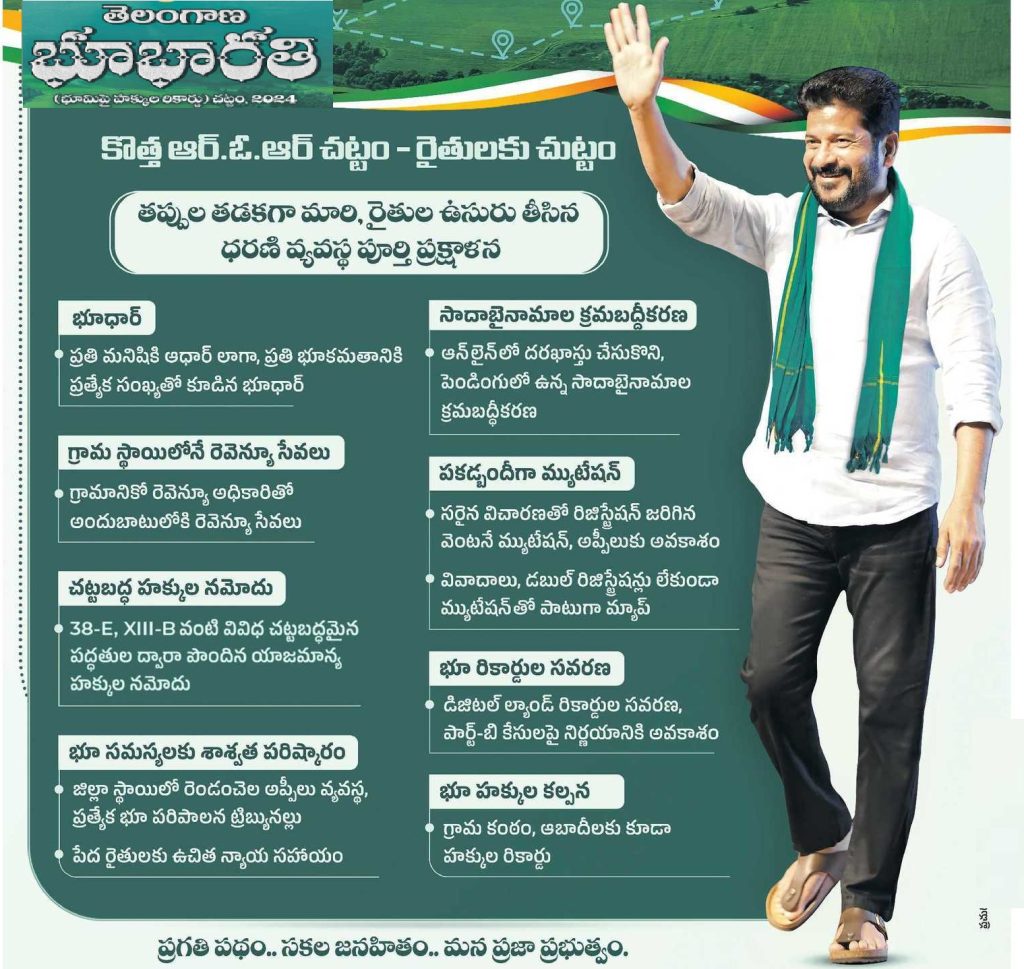
The Telangana Bhu Bharathi Bill 2024, Portal and App is a major change for land management in the state. It aims to make land administration more modern. This bill could greatly help farmers and landowners in Telangana by fixing old problems in land revenue and RoR Act Telangana 2024.
In this article, we will look at the main points of the Bhu Bharati Bill. We will also see how it could change things for the better.
Key Takeaways
- The Telangana Bhu Bhu Bharathi aims to digitize land records and streamline property registration processes.
- It introduces a transparent land management system to address long-standing issues in the land revenue administration.
- The bill has the potential to significantly benefit farmers and landowners in Telangana.
- The digitization of land records will enhance the efficiency of the revenue department and reduce the risk of land disputes.
- The implementation of the Bhu Bharati Bill is expected to bring about revolutionary changes in the way land administration is handled in Telangana.
From Dharani to Bhu Bharathi: A Strategic Shift
The Dharani portal was initially introduced on November 2, 2020, as an integrated platform for agricultural land registrations and mutations. However, the government observed several limitations in its functionality, leading to a lack of trust among users. In response, the state decided to overhaul the system and reintroduce it under the name “Bhu Bharati.”
The new system incorporates advanced features to address past inefficiencies. For instance, the number of application modules has been reduced from 33 to six, making the process simpler and more user-friendly for farmers with limited technical expertise.
Key Features of Bhu Bharathi
- Simplified Application Process
Earlier, farmers often struggled with the complexity of Dharani’s 33 modules, leading to frequent application errors and rejections. Bhu Bharati streamlines this by reducing the modules to six, minimizing confusion and ensuring faster processing. - Real-Time SMS Notifications
Landowners now receive real-time updates on their application status via SMS. This ensures transparency and keeps users informed at every stage of the process. - Enhanced Transparency
Unlike its predecessor, Bhu Bharati eliminates the “hidden” option, which allowed sensitive land records to be concealed. This change ensures that land details are accessible to authorized individuals from anywhere, fostering trust and accountability. - Revamped Pahani Records
The government has reinstated the Pahani record format, previously reduced to minimal details. The updated Pahani now includes 11 critical columns, providing comprehensive information about the land, including ownership details, survey numbers, and whether the land is private or government-owned.
Historical Context: Learning from the Past
The concept of Bhu Bharati isn’t entirely new. In 2004, the central government’s UPA administration launched a nationwide initiative under the same name, piloting the project in Nizamabad district. Telangana has now revived this concept, incorporating lessons learned over the years to introduce the “Telangana Bhu Bharati Record of Rights in Land Act 2024.”
This reform builds on the legacy of the Record of Rights (RoR) Act of 1971, which was successfully implemented for decades. By blending modern technology with tried-and-tested policies, the government aims to create a system that is both robust and adaptable.
Understanding the Telangana Bhu Bhu Bharathi
The Telangana Bhu Bharati Bill aims to change the state’s land system. It tackles old problems and brings in new ways to work. Knowing the history of land systems in Telangana helps understand why this bill is important.
The Bhu Bharati Bill replaces the existing Dharani system and introduces a robust legal framework with 19 new sections. Key features include:
- Appeals Mechanism: A structured appeals process involving the RDO (Revenue Divisional Officer) and District Collectors ensures transparent resolution of disputes.
- Land Tribunals: Dedicated land tribunals address legal issues, offering free legal aid to underprivileged individuals.
- Comprehensive Ownership Rights: Residents in Abadi and Gram Kantam areas are granted full ownership rights over their lands.
- Regularization of Sadabainama Transactions: Pre-2014 land transactions conducted through informal agreements are now formalized.
Key Provisions in the Telangana Bhu Bhu Bharathi
The Telangana Bhu Bharati Bill introduces innovative measures to address land-related concerns:
- Legal Protection for Every Inch of Land: The bill guarantees legal ownership and protection for every parcel of land.
- Free Legal Advice for Farmers: Farmers facing land disputes can access free legal advice without incurring any costs.
- Simplified Appeals Process: A two-tier appeals system at the district level minimizes the need for prolonged court cases.
The bill emphasizes swift implementation. Within three months of its enactment, detailed guidelines will be prepared, ensuring its seamless execution. The legislation also draws inspiration from the best land administration laws across India to meet both current and future needs effectively.
Permanent Land Survey and Digital Records
The Land Title Act, envisioned by the central government, aims to introduce permanent land surveys using advanced technology.
- Unique Land Numbers: Every parcel of land will be assigned a unique identification number and card for precise demarcation and protection.
- Survey Process: Initially, temporary records will be used. Upon completing the land survey, permanent titles will be issued to eliminate ownership disputes.
Streamlined Appeals System
For unresolved issues at the Tahsildar level, appeals can be escalated to the RDO, followed by the District Collector. Additional provisions include:
- Land Tribunals: These will be established at district or divisional levels based on the requirements to handle land-related disputes.
- Flexible Timelines: Appeals must be resolved within 30 to 60 days, ensuring expedited dispute resolution.
Support for the Underprivileged
The government plans to appoint volunteers at the mandal level to provide free legal assistance and guidance on land-related matters. This initiative ensures that even economically weaker sections have access to justice without incurring additional expenses.
Regularization of Informal Transactions
One of the bill’s pivotal sections addresses informal land transactions (Sadabainama).
- Transactions executed before June 2, 2014, will now be regularized through Section 6(1).
- Applications pending from the previous ROR-1971 Act are being reviewed, ensuring swift regularization at the RDO level.
Enhanced Mutation Process
To streamline ownership transfers, the new legislation introduces stricter guidelines:
- Family Declarations: Heirs must submit a unified family declaration for property mutations.
- Mandatory Notices: Tahsildars will issue notices to all family members before completing the mutation process, ensuring transparency.
Safeguarding Government Lands
New sections in the bill focus on protecting government lands from unauthorized alterations or encroachments:
- Automated Investigations: The Chief Commissioner of Land Administration (CCLA) can initiate suo moto investigations into fraudulent activities.
- Strict Penalties: District Collectors are empowered to revoke fraudulent land rights and take legal action against offenders.
Flexibility for Amendments
Unlike its predecessor, the ROR-2020 Act, the Bhu Bharathi allows for amendments to address emerging needs. This adaptability ensures that the legislation remains relevant over time.
Clarity on Pending Land Records
The bill addresses discrepancies in land records created during the 2017-18 land purification drive. Over 18 lakh acres of land will be clarified, ensuring rightful ownership rights.
Digital Integration and Mapping
Under Section 4(1), the government will digitize all land records in the state, leveraging drone technology for accurate mapping.
- Ownership Clarity: Details of landowners, tenants, and mortgagees will be recorded and made accessible online.
- Simplified Transactions: Sale deeds must now include land survey maps to prevent disputes and unauthorized encroachments.
Historical Context of Land Revenue Systems
Telangana’s land system has changed a lot over time. It went from the Nizam’s rule to after India gained independence. The old systems had issues like bad records, hard mutation processes, and no teamwork between agencies. The Bhu Bharati Bill wants to fix these issues and make land management better.
Core Objectives and Implementation Timeline
The Bhu Bharati Bill focuses on two main goals. It wants to make one database for land records and automate the process of changing land ownership. These changes aim to make land work better and faster. The plan is to start with non-agricultural land and then cover all types of land.
Key Stakeholders and Beneficiaries
Many people will benefit from the Bhu Bharati Bill. Farmers, landowners, government workers, and everyone else will see improvements. The bill makes land records clear and the process of changing land ownership easier. This will help avoid delays and make planning and decision-making better for the state’s growth.
| Stakeholder | Potential Benefits |
|---|---|
| Farmers | Faster and more reliable access to land records, simplified mutation process for land transactions |
| Landowners | Enhanced security of land ownership, reduced risk of disputes, easier management of property transactions |
| Government Officials | Improved efficiency in land administration, better coordination between agencies, more accurate data for policymaking |
| General Public | Streamlined access to land records and mutation services, increased transparency in land-related matters |
The Bhu Bharati Bill can make big changes in Telangana’s land system. It will help many people and help the state grow.
Revolutionary Changes in Land Administration System
The Telangana Bhu Bharati Bill is set to bring big changes to the state’s land system. It focuses on a detailed land survey to check and update land records. This will help make property lines clear and cut down on disputes.
The use of geomapping technology is key to these changes. It will help the government set clear land boundaries. This is important for making property deals smoother and protecting landowners’ rights.
The Bhu Bharati Bill also brings in farmer welfare measures. These are aimed at helping farmers in Telangana. They include making land documents easier to get and access to land records. These steps are meant to improve farmers’ lives and support green farming.
These big changes in land management will greatly affect Telangana’s people. They will help solve land issues, improve property rights, and lead to a better future for the state.
“The Bhu Bharati Bill represents a transformative vision for Telangana’s land management system, leveraging technology and progressive policies to benefit farmers and landowners alike.”
A Vision for the Future
The introduction of Bhu Bharati marks a significant step toward achieving the government’s vision of land management reform. By leveraging technology, the platform aims to resolve long-standing issues, including ownership disputes and data accessibility challenges.
The government has also implemented a tracking system for applications, enabling users to monitor progress and ensure accountability. With these measures, Bhu Bharati is poised to set a new standard in agricultural land governance.
Empowering Farmers and Landowners
Land is a crucial resource for millions of farmers in Telangana. Recognizing this, the government has prioritized initiatives that protect their interests and ensure their livelihoods. Bhu Bharati provides a framework that not only safeguards ownership rights but also simplifies the process of accessing critical land information.
With its focus on transparency and efficiency, Bhu Bharati empowers landowners to manage their assets effectively, reducing the time and cost associated with traditional land transactions.
Conclusion
The Telangana Bhu Bharati Bill is a big step forward in land reforms. It aims to change how land records are handled. This change will make land management more transparent, efficient, and fair.
This bill focuses on creating a digital system for land records. It will help citizens and build trust. With modern land records and ways to solve disputes, people in Telangana will find it easier to manage their land.
The Bhu Bharati Bill has the power to boost Telangana’s agriculture and economy. It will make land management better, leading to more investment and better farming. This will help make Telangana a more prosperous place for everyone.
FAQ
What is the Telangana Bhu Bharati Bill?
The Telangana Bhu Bharati Bill is a new law. It aims to update how land is managed in the state. It makes land records digital, makes buying and selling land easier, and makes land management clear.
What are the core objectives of the Telangana Bhu Bharati Bill?
The main goals of the bill are to create one database for land records. It also wants to make changes to land ownership and conduct a detailed land survey. The bill uses new technology to mark land boundaries accurately.
Who are the key stakeholders and beneficiaries of the Telangana Bhu Bharati Bill?
The main people affected by the bill are farmers, landowners, and government workers. The bill aims to help them by solving land disputes, making buying and selling land easier, and improving land management.
How will the Telangana Bhu Bharati Bill revolutionize the land administration system?
The bill will change the way land is managed in Telangana. It will do a detailed land survey, use new technology to mark land, and help farmers. These steps will make land management more transparent, reduce disputes, and work better.
What is the timeline for the implementation of the Telangana Bhu Bharati Bill?
The bill has a plan for when things will happen. It includes making land records digital, starting an automated process for land changes, and checking non-agricultural land. It also plans a big land survey to update records.