


Introduction
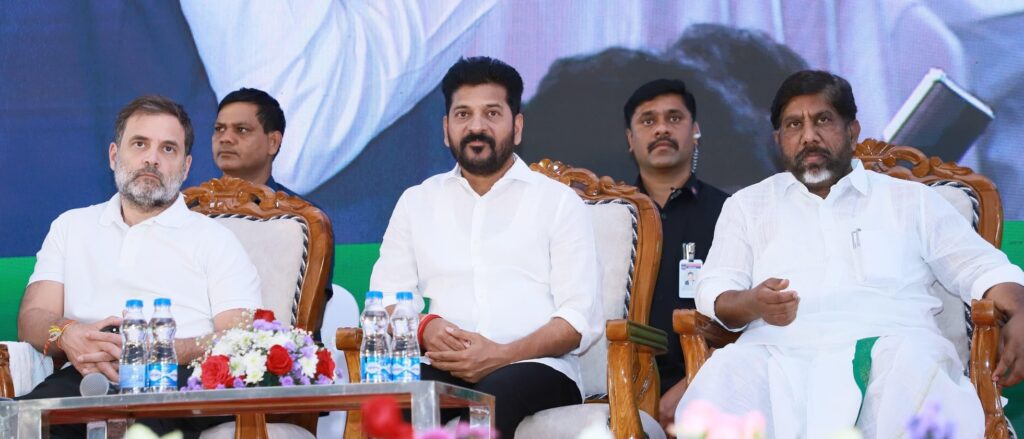
Congress leader Rahul Gandhi recently emphasized the need for a comprehensive caste census in India, arguing that such an initiative would serve as both a developmental and political tool. Speaking in Telangana, Gandhi praised the state’s approach to the caste census and argued that it could set a national standard. This article explores his key points, including the importance of accurately assessing caste demographics, the potential social benefits of a caste census, and the significance of transparency in wealth distribution.
Telangana’s Lead in the Caste Census
Rahul Gandhi commended Telangana for its efforts in implementing a caste census, suggesting that the state’s approach could become a model for the entire country. According to him, understanding the composition of India’s diverse communities is essential not only for fair representation but also for targeted development. A caste census, in his view, goes beyond politics and enables data-driven policies that directly address inequalities.

The Role of Caste Census as a Developmental Tool
Gandhi argued that a caste census would function as a crucial developmental tool. By gathering detailed demographic data, the government can more accurately assess the socioeconomic status of various communities. This information would allow for tailored policies that address specific challenges faced by marginalized groups, ensuring that public resources are distributed more equitably. “A caste census is not merely a political tool,” he stated. “It is a means for inclusive development.”
Overcoming the 50% Reservation Barrier
In his address, Gandhi asserted the need to challenge the current reservation cap of 50%. He argued that this limitation restricts opportunities for disadvantaged communities. According to him, removing this barrier is essential to creating a fairer society, where all groups can access resources based on their actual population size and needs.
Opposition to a Bureaucratic Caste Census
Gandhi expressed strong opposition to a bureaucratic approach to the caste census, warning that it could undermine the purpose of the exercise. He stressed that a bureaucrat-led census could turn into an impersonal and detached process, failing to address the real issues faced by marginalized groups. Instead, he advocated for a grassroots approach that genuinely reflects the lived experiences of people across castes.
Acknowledging Caste Discrimination in India
Without seeking to ignite controversy, Gandhi candidly acknowledged the existence of caste discrimination in India. He called for an honest examination of caste-based disparities, urging leaders to confront uncomfortable truths. Recognizing and understanding the extent of caste discrimination, he argued, is necessary to drive meaningful social change.
“Some may accuse me of dividing the country,” he stated, “but we must seek the truth.” Gandhi’s perspective reflects his belief in facing the reality of social divisions to find lasting solutions rather than avoiding the issue.
Truth and Non-Violence as the Foundation of Reform
Gandhi emphasized that truth and non-violence (Ahimsa) are the guiding principles of India’s major religions and should also serve as the foundation for any social reform. According to him, facing the truth about social inequality is a step toward justice and inclusivity. By acknowledging caste disparities and acting on them, the government would be following the moral principles that have long been part of India’s cultural and religious heritage.
A Call to Understand the True Extent of Wealth Distribution
Gandhi raised important questions about wealth distribution, advocating for a detailed analysis of how resources are divided across caste lines. He urged the nation to examine the share of wealth held by Dalits, Adivasis, Other Backward Classes (OBCs), women, and other marginalized groups, as well as to identify poor individuals within general castes. This, he argued, is essential for developing policies that address economic inequalities and promote equitable growth.
Why Is the Modi Government Reluctant?
Gandhi questioned Prime Minister Narendra Modi’s hesitation in conducting a caste census. He suggested that this reluctance could stem from an unwillingness to address India’s social and economic inequalities. By asking, “Why is Modi scared of asking questions?” Gandhi hinted at a perceived lack of commitment to addressing deep-rooted societal issues.
India’s Position as One of the Most Unequal Societies
Highlighting the severity of inequality in India, Gandhi remarked that the country ranks among the most unequal societies in the world. He pointed to the unique and pervasive discrimination faced by marginalized groups, arguing that these challenges need to be addressed for India to achieve true social progress. A caste census, he asserted, is an essential first step toward understanding and addressing these disparities.
Conclusion
Rahul Gandhi’s call for a caste census goes beyond mere political rhetoric. He envisions it as a means to recognize and address the inequalities faced by marginalized communities across India. By advocating for transparency in wealth distribution and questioning the limits of the current reservation system, Gandhi’s message underscores the need for a more equitable society. As Telangana sets an example, the rest of the country may soon follow in conducting a caste census that could reshape India’s approach to social justice and inclusivity.