


Teacher Allocation Reforms in Government Primary Schools: Key Changes and Implications
Introduction: Enhancing Teacher-Student Ratios in Primary Education, Teacher Allocation Reforms, How the 2 Teacher for 10 Students Ratio is Transforming Primary Education
The government of Telangana State has introduced a new policy to improve teacher-student ratios in primary schools. Under this policy, schools with more than 10 students will have two teachers, and those with over 41 students will have three teachers.
Rationale Behind Teacher Allocation Adjustments
The recent decision by the Department of School Education aims to align teacher assignments with student numbers. This partial implementation of rationalization reflects a significant shift from previous guidelines issued in 2015 and 2021, which stipulated different thresholds for teacher allocation based on student numbers. Previously, two teachers were assigned only if there were more than 19 students, but the new policy lowers this threshold to benefit students more effectively.
Detailed Allocation Criteria Based on Student Numbers
The state government issued GO 17 in 2015 and GO 25 in 2021 to structure teacher allocations based on student numbers:
- 0-19 students: 1 teacher
- 20-60 students: 2 teachers
- 61-90 students: 3 teachers
- 91-120 students: 4 teachers
- 121-150 students: 5 teachers
- 151-200 students: 6 teachers
- 201-240 students: 7 teachers
- 241-280 students: 8 teachers
- 361-400 students: 11 teachers
In practice, however, these allocations were not always implemented effectively at the ground level.
Implementation of the New Transfer Policy
The state is currently undertaking a comprehensive transfer process for Secondary Grade Teachers (SGTs). This process follows the rationalization guidelines but also addresses disparities between student populations and teacher availability. The revised policy stipulates:
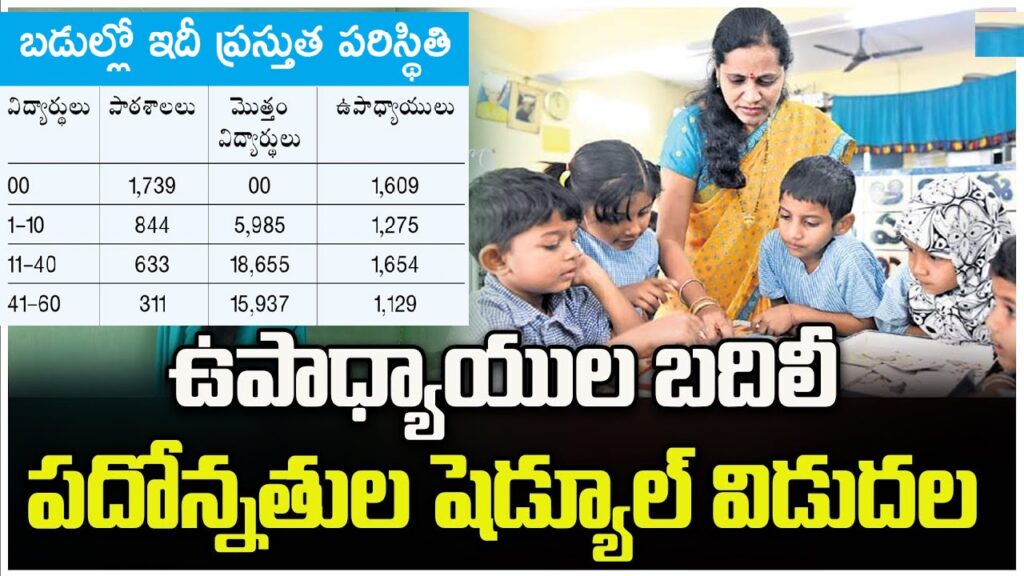
- 1-10 students: 1 teacher
- 11-40 students: 2 teachers
- 41-60 students: 3 teachers
For schools with more than 60 students, additional vacancies have been identified to ensure adequate teacher presence.
Addressing Disparities and Ensuring Effective Implementation
The Department of School Education Commissioner, Sridevasena, clarified that the new policy aims to rectify imbalances where some schools have students but no teachers, and vice versa. For instance, if a school currently has 10 students and two teachers, only one vacancy will be shown. Conversely, if a school with 11 students has only one teacher, a second teacher will be allocated.
Concerns from Teacher Associations
Despite the policy’s intentions, some teacher associations express dissatisfaction. They argue that all vacancies should be displayed, as was the case previously. Jaddi Rajanna, the President of the SC and ST Teacher Federation, voiced concerns about the lack of increased vacancies in schools with higher student numbers. The Chief Minister’s Office, however, stated that the revised transfer process is designed to deliver quality education by revising existing regulations.
Conclusion: Aiming for Quality Education Through Better Teacher Distribution
The state’s initiative to reform teacher allocation in government primary schools is a strategic move towards improving educational quality. By ensuring that teacher assignments are more closely aligned with student numbers, the policy seeks to address existing disparities and enhance the overall learning environment for students.