


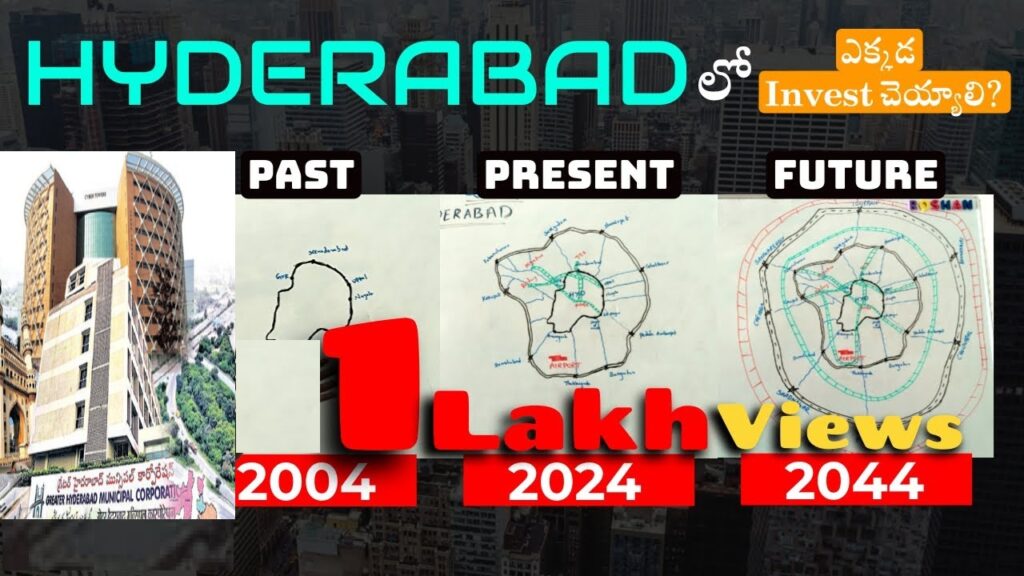
Splitting Hyderabad into Two Major Municipal Corporations: A Strategy for Urban Development
The state government is moving towards a decision to split the Greater Hyderabad area within the Outer Ring Road (ORR) into two major municipal corporations: Greater Hyderabad and Greater Secunderabad. This strategic move aims to facilitate better urban management and development, addressing the challenges faced by the current unified structure.
Current Municipal Challenges and Proposed Solutions
Administrative Hurdles in the Unified Structure
The administration of a single municipal corporation encompassing municipalities, corporations, and some villages within the ORR presents technical challenges. The officials have expressed concerns about managing such a large area effectively under one administration. When these concerns were presented to Chief Minister Revanth Reddy, he showed interest in establishing two separate corporations. This model is inspired by Mumbai, where the existence of two corporations has reportedly led to improved urban development.
Lessons from Mumbai’s Dual Corporation Model
Mumbai’s successful dual municipal corporation model has been cited as a positive example. The city’s bifurcation into two corporations has facilitated focused development and efficient governance. Drawing parallels, the state government believes that splitting the Hyderabad region similarly can yield similar benefits.
Steps Towards Establishing Two Corporations
Proposed Division
To implement this division, the government plans to divide the existing Greater Hyderabad area, which covers approximately 2,100 square kilometers within the ORR, into two distinct municipal corporations: Greater Hyderabad Municipal Corporation and Greater Secunderabad Municipal Corporation. This division will require restructuring administrative divisions and assigning responsibilities to various levels of officers, ensuring smooth governance.
Implementation Strategy
The government has devised a strategy to execute this division carefully. The Chief Minister has directed officials to prepare a plan that aligns with this vision, ensuring that the administrative framework of the new corporations is robust and efficient.
Expanding Urban Governance Within the ORR
Current Administrative Composition
Within the ORR, the area currently includes the Greater Hyderabad Municipal Corporation (GHMC), seven city administrative bodies, 20 municipalities, and 33 village panchayats, along with the Cantonment Board and other organizations.
Proposed Integration of Panchayats
The state’s municipal department has prepared proposals to integrate an additional 10 panchayats located outside the ORR into the GHMC. This integration aims to streamline governance and bring more areas under effective municipal management.
The Merger Process and Its Implications
Expiry of Current Panchayat Terms
The terms of several village panchayats have already expired, prompting their planned merger with nearby municipalities and city administrative bodies. These bodies will see their terms conclude in January 2025, providing an opportune moment for integration into the GHMC.
Formation of New Municipalities
Villages that cannot be merged will be declared separate municipalities. Eventually, the government will announce the formation of two Greater cities by dividing the GHMC, setting the stage for enhanced urban management.
Hyderabad Metropolitan Development Authority’s Expanded Role
Extending HMDA’s Jurisdiction
If the GHMC expands to the Outer Ring Road, the jurisdiction of the Hyderabad Metropolitan Development Authority (HMDA) will also increase. Some areas within the ORR already fall under HMDA, and plans are underway to extend this coverage to the remaining regions. This expansion will likely double the number of HMDA zones, enhancing its capacity to manage urban growth and infrastructure development.
Anticipated Impact on Urban Planning
The expansion of HMDA’s jurisdiction is expected to have a significant impact on urban planning in Hyderabad. With more areas under its purview, HMDA can implement comprehensive planning and development strategies that align with the city’s growth objectives.
Conclusion: A Path to Sustainable Urban Growth
The state government’s decision to split Greater Hyderabad into two major municipal corporations marks a strategic step toward sustainable urban development. By learning from successful models like Mumbai and addressing current administrative challenges, this move aims to foster focused growth and improved governance. The integration of surrounding areas and the expansion of HMDA’s role further underscore the government’s commitment to building a well-planned and efficiently managed metropolitan region.
As Hyderabad continues to grow, these changes promise to enhance the quality of life for its residents and ensure the city’s infrastructure and services keep pace with its expanding population. This strategic vision for urban development is expected to position Hyderabad as a model city for efficient governance and sustainable growth.